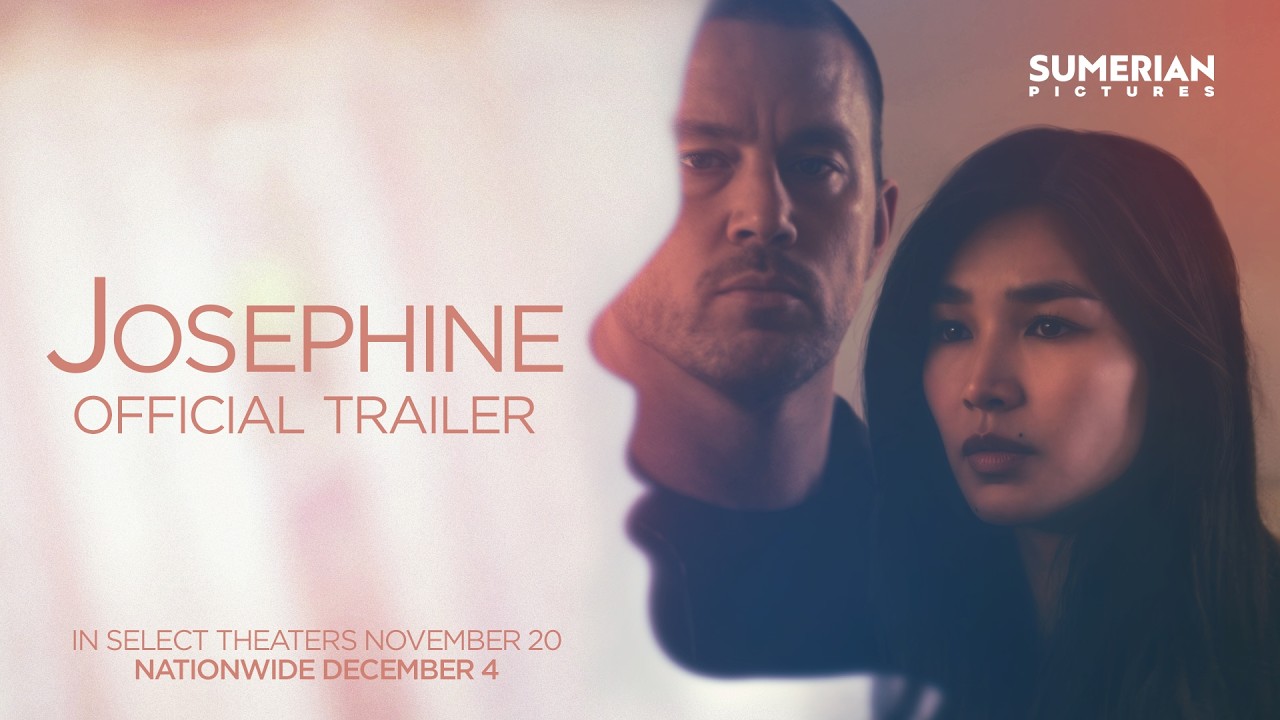
Josephine is an exceptionally affecting drama anchored by Mason Reeves and Channing Tatum, with striking child-perspective filmmaking. Its graphic sexual assault and sustained emotional distress make it difficult viewing.
Mature viewers seeking intense psychological drama, exceptional acting, or challenging discussions of trauma, parenting and justice. Adventurous film lovers willing to engage with painful material will find much to appreciate.
Anyone sensitive to sexual assault depiction or seeking gentle comfort viewing. Younger audiences and viewers who require straightforward legal closure or consistently plausible parental decisions may struggle.
Verdict
Josephine stands out for the extraordinary naturalism of Mason Reeves, whose eight-year-old witness reacts to a sexual assault with fear, fury and confusion that adults cannot easily untangle. Channing Tatum gives an especially compelling dramatic performance as her protective father, while Gemma Chan adds a quieter, often moving counterweight. Beth de Araújo's child-height framing turns familiar surroundings into threatening spaces, and the courtroom sequence is a major emotional high point. The drama is not without contention: some parental decisions seem implausible, a few symbolic images feel heavy-handed, and the unresolved legal outcome frustrates viewers seeking closure. More importantly, its opening sexual violence is shown directly and the emotional pressure scarcely lets up. For mature viewers prepared for that material, this is unusually forceful, compassionate filmmaking, not an easy evening's entertainment.
Content guidance
Scorata recommended age18+
Contains an extended, graphic depiction of rape with nudity, disturbing threats and violent behavior, and sustained psychological distress involving a child. Mature sexual discussions and some strong language add to the intensity.
lead performance: 5.0, 33 reviews, strong consensus
Mason Reeves carries an exceptionally demanding part through expressions, silence and abrupt behavioral changes. Her work is repeatedly described as the film's defining achievement.
The acting is a major strength, led by a startlingly assured child performance and intense work from the parents. Even less enthusiastic assessments tend to single out the young lead.
The camera and narrative stay unusually close to an eight-year-old's confusion, giving everyday spaces a frightening new scale. Most find this approach immersive, although a dissenting view considers some symbolism overdetermined.
Josephine's fear, aggression, intrusive images and loss of trust make the aftermath of violence feel complex and lived-in. A minority consider the behavior too schematic or the adults' responses implausible.
Beth de Araújo brings intimate, unflinching control to a difficult subject, often making ordinary interactions feel frightening. The main reservations concern conspicuous symbolism and choices that can feel contrived.
Tatum and Chan make the parental helplessness feel affecting and human, with especially strong praise for Tatum. Some find the mother given less depth or the parents' confrontations strained.
The experience lingers powerfully, yet several admirers say they may never willingly sit through it again. Its emotional force works against casual repeat viewing.
Character decision plausibility: 2.0, 5 reviews, strong consensus
The parents' avoidance and conflicting interventions feel human to some but maddeningly illogical to others. Decisions about therapy, the child's safety and the trial draw particular criticism.
The father-daughter bond can feel warm and lived-in, but the parental pairing divides opinion. Their arguments are convincing to some and strangely theatrical to others.
A compelling match for viewers seeking an intense, character-centered study of traumatic change. The film's refusal to provide easy comfort is part of its appeal and its challenge.
Its painful subject, explicit opening and difficult ethical questions make it an adult-oriented drama. Several strongly recommend it for mature audiences prepared for the material.
The bold perspective, intricate visual grammar and forceful performances make it rewarding for adventurous film lovers. The experience is more demanding than a conventional crowd-pleaser.
This is a poor fit for someone wanting a gentle, reassuring film: the sustained distress can be overwhelming. Even strong admirers caution that the experience takes an emotional toll.
Sexual assault survivor-sensitive viewing
1.0
3 reviewsstrong consensus
Sexual assault survivor-sensitive viewing: 1.0, 3 reviews, strong consensus
The explicit depiction of sexual violence and recurring image of the attacker make this especially difficult for viewers sensitive to assault material. Advance awareness of the content is essential.
Reeves anchors the film with remarkably natural, emotionally precise acting, moving between innocence, rage, silence and fear. Her courtroom work is a particular highlight.
Tatum's protective, increasingly helpless father is widely seen as a career-best dramatic turn, combining warmth, anger and painful vulnerability. One dissenting assessment questions how convincingly the parental arguments play.
Chan brings restraint and tenderness to a mother struggling to connect with her daughter. Her performance is admired, although some find Claire underwritten or overshadowed by the father-daughter relationship.
De Araújo earns strong praise for her controlled, compassionate direction and psychologically attuned writing. A few choices feel forced or repetitive to less convinced viewers.
Zozula's low-angle, child-height compositions make adult spaces feel looming and unfamiliar, drawing the audience into Josephine's anxious perspective. The visual approach is a recurring standout.
Ross uses restrained electronic pulses and unsettling textures to keep anxiety humming under ordinary scenes. A few passages are criticized for becoming too prominent or losing their impact through repetition.
Compared with other Movies, this product is above average in sexual assault portrayal, Justice and accountability, dialogue quality, near average in score quality, visual style, below average in Investigative procedure, Symbolism, cast chemistry.
Comparison summary
37 compared features
Above average0.4+ pts higher
29(78%)
Same as averagewithin 0.3 pts
2(5%)
Below average0.4+ pts lower
6(16%)
Largest category differences
Attribute
This product
Category average
Difference
sexual assault portrayal
4.8
2.5
+2.3
Investigative procedure
1.0
3.1
-2.1
Justice and accountability
5.0
3.1
+1.9
dialogue quality
5.0
3.0
+2.0
character development
5.0
3.1
+1.9
originality
5.0
3.2
+1.8
Gender and sexism portrayal
4.8
3.2
+1.6
Symbolism
2.0
3.5
-1.5
Consider This Instead
If you want better film framing
Choose Everytime. It scores 4.8 vs 3.0 for film framing, with a 4.3 overall score.
WorseA striking debut, but the newer film is considered a stronger achievement overall.
ComparedUses a more continuous real-time approach, while the subsequent film is edited more conventionally.
SimilarShares a quiet psychological dread that intrudes on otherwise realistic situations.
Sorry, Baby (2025)
ComparedAlso offers an impressive treatment of sexual assault without an overall ranking.
ComparedLets viewers infer the attack instead of depicting it as this film does.
Law & Order: Special Victims Unit (1999)
ComparedUses a familiar episodic crime framework, where this drama refuses comfortable distance from the aftermath.
FAQ
Does Josephine show sexual assault on screen?
Yes. An extended assault occurs early in the film and includes graphic sexual violence and nudity. It is particularly difficult to watch.
Is Mason Reeves good in the lead role?
Her performance is one of the film’s most consistently praised elements, especially her naturalistic reactions and extended courtroom scenes.
How are Channing Tatum and Gemma Chan?
Tatum is repeatedly singled out for exceptional dramatic work, while Chan is praised for restraint and empathy. Some find her character less developed.
Is Josephine a horror film or a drama?
It is primarily psychological and family drama, but the recurring imagined presence of the attacker creates genuine horror-like tension.
Does the ending reveal the court verdict?
No. The legal outcome remains ambiguous, keeping the emphasis on the child’s emotional aftermath. Some find this moving; others want more closure.
Is it suitable for a casual family movie night?
No. Graphic rape, frightening psychological imagery and sustained distress make it adult-oriented, demanding viewing.
Sample Expert Reviews We Analyzed
These are a few of the reviews included in our analysis.
Choose this inventive, unsettling documentary for fearless questioning, dark humor, and unpredictable storytelling. Skip it if you want a short, straightforward exposé with definitive answers.
A singular voice, powerful piano playing and intimate film photography make this concert absorbing for receptive listeners. Its uninterrupted, often similar-sounding songs and lack of background context are an acquired...
Extraordinary performances and richly observed relationships make this a rewarding, emotionally forceful drama. Its nearly three-hour length and slow opening demand patience and undivided attention.
Best for a hypnotic, bookish mystery with tactile visuals and cerebral chills. Skip it if reading-heavy, attention-demanding storytelling sounds more exhausting than exciting.