
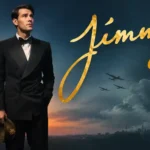
Jimmy Feature Scores
Explore all 64 feature scores for Jimmy, organized into pros and cons.
Scores by Feature
Summary
64 reviewed features-
Very positive 4.5-5.010 (16%)
-
Positive 3.5-4.413 (20%)
-
Neutral 2.5-3.421 (33%)
-
Negative 1.5-2.413 (20%)
-
Very negative below 1.57 (11%)
Pros
Sort
-
Apa’s command of Stewart’s familiar pauses, drawl, and vocal rhythm is widely admired, even by critics who find his broader portrayal unconvincing.
-
Clips of the real Stewart and his family give the ending authenticity and emotional resonance, sometimes more effectively than the dramatization itself.
-
Period interiors, costumes, and studio settings create a convincing 1940s atmosphere for admirers, even when visual-effects shots clash with those practical details.
-
KJ Apa is the main attraction: some find a startlingly human, vulnerable Stewart, while others see a skillful impersonation that lacks emotional depth.
-
The warmth between Stewart and Capra, and the quieter moments with Lady Julia, work particularly well when the dialogue gives the actors room.
-
Strong admirers praise the heartfelt ensemble and distinctive lead, but harsher critics find some performances broad and theatrical.
-
The end credits are worth staying for: historical footage and commemorative images expand the portrait beyond the drama.
-
Its open Christian faith and prayers are warmly received by some audiences, but others find the framework reductive or too pat in explaining trauma.
-
War trauma and survivor’s guilt are central to the film’s emotional appeal. Some find the depiction sensitive and affecting; others say it reduces psychological suffering to familiar dramatic shorthand.
-
The film earns appreciation as a warm, accessible tribute, though mixed and negative critics say its flaws outweigh the enjoyable moments.
-
The real-life material accompanying the credits is welcomed as a touching tribute to Stewart’s later life.
-
Period clothing helps ground the drama in the 1940s and complements the more convincing practical surroundings.
-
For supportive viewers, the reconstructed bombing missions make the dangers of wartime aviation vivid and suspenseful.
-
Studio-office maneuvering and the working relationship with Capra are among the most engaging depictions of the Hollywood side of Stewart’s life.
-
Sound layering and recalled voices are especially effective when wartime memories surface during the recreation of the famous prayer scene.
-
The closing song adds a wistful, old-Hollywood atmosphere, giving the film a memorable musical farewell.
-
The accent and physical mannerisms come close enough to impress some observers, although others question the overall resemblance.
-
Stewart’s effort to lead and protect his squadron gives the story a worthwhile portrait of responsibility, with varying success in the speech-heavy scenes.
-
The period contrasts and cockpit compositions impress one critic, but others object to confusing action geography and unconvincing digital staging.
-
Re-created scenes on the set of the classic film give a welcome glimpse into the challenges of making a movie.
-
When its wartime dilemmas gain momentum, the film briefly becomes engrossing drama, even for a critic otherwise unhappy with the script.
-
Faith, courage, and compassionate relationships suit some family audiences, with wartime violence making it a better choice for older children.
-
For a modestly funded production, the real-world settings are often attractive; the ambition of the war sequences occasionally exceeds what the budget can show convincingly.
Cons
Sort
-
The weakest technical area for many critics is the airborne imagery: artificial-looking planes, compositing, and backgrounds frequently break immersion, though a few allow for the modest budget.
-
Its limited time span does not guarantee intimacy: repeated complaints concern a sanitized portrait that celebrates the man more readily than it understands him.
-
Artificial backgrounds and suspected or visible AI imagery attract pronounced criticism, especially when they interrupt otherwise sincere wartime scenes.
-
This is a major dividing line: admirers find the portrait sincere and respectful, whereas detractors consider it uncritical hero worship.
-
Its heartfelt, old-fashioned sincerity appeals to some; for others, the combination of predictable speeches and heightened emotion becomes cloying.
-
Disjointed transitions and rushed biographical beats are recurring drawbacks; the film can simultaneously feel long and underdeveloped.
-
The return to filmmaking produces some of the film’s best moments, but the vision of fallen comrades and a drawn-out resolution strike many as forced.
-
Stewart’s relationships with his father, comrades, and romantic partners rarely receive the depth needed to make the biography feel fully lived-in.
-
Familiar war-movie speeches, love-story beats, and biopic shortcuts make the dramatization feel more formulaic than inventive.
-
Detractors find the visual presentation flat or uncanny, with glossy images that rarely convey the harshness of combat.
-
Criticism centers on anachronistic, expository, or sentimental lines that spell out emotions rather than letting them emerge naturally.
-
The romantic composite character and other dramatized incidents prompt doubts about authenticity, despite the film’s historical foundation.
-
The shallow procession of events leaves some viewers with a surprisingly forgettable experience.
-
One badly assembled action scene makes the timing and location of the rescue difficult to follow.
-
A few value the sweeping orchestration, but the more frequent complaint is that the music overwhelms scenes and insists on a prescribed emotional response.
-
The script contains worthwhile questions about identity and duty, but its broad dialogue and tidy links to a beloved classic often feel overly schematic.
-
The father’s influence and family commitment provide emotional grounding, yet multiple critics say family relationships are rushed or barely developed.
-
Apa’s vocal performance is praised, but one critic considers him physically wrong for Stewart’s unmistakable build.
-
Some cinematic shorthand, including a flashbulb-triggered trauma moment, feels overly familiar.
-
The carefully imitated deep voice is sometimes hard to understand, according to one viewer.
-
One critique finds the political and patriotic framework too simplified and supportive of the war effort.
-
The story’s patriotic outlook can feel one-sided to viewers seeking a more questioning treatment of war.
-
Some view the reconstruction as persuasive, while others challenge invented scenes or the film’s smooth causal explanation of historical events.
-
The wartime romance lets Stewart show vulnerability, but the fictional composite love interest often feels too thin or conventional.
-
Some appreciate the tense bomber missions and cockpit scenes, while others find the air battles inert, hard to follow, or compromised by artificial effects.
-
The wartime years and connection to the classic Christmas film provide an engaging historical framework, though much of Stewart’s inner life and personal history is only lightly explored.
-
The two-hour running time divides viewers: some find it brisk despite the chronology, while others wish the extended final minutes were cut.
-
The two-period design wins some praise, but other viewers find the leaps between war, Hollywood, and personal life abrupt or overexplained.
-
The 1941–46 focus illuminates a lesser-known chapter of Stewart’s life, yet several critics argue that important relationships and motivations remain unexplored.
-
A fascinating shift from Hollywood fame to bomber-pilot duty provides an inherently promising story, but many find its treatment conventional, heavily sentimental, or shallow.
-
Transitions can feel choppy and action editing confusing, but a few carefully intercut moments near the end are particularly effective.
-
The hopeful moral story is more suited to teens and older children than very young viewers because of combat deaths and bloody images.
-
The old-Hollywood melodrama occasionally approaches an excessive level of cheesiness.
-
Nostalgia for Stewart and his classic films is a significant attraction, but it cannot replace new biographical insight.
-
An intentionally lush and old-fashioned melodramatic tone suits the setting for some, but becomes cloying for others.
-
The air-war losses are distressing but meaningful to some viewers; their emotional difficulty is worth considering.
-
Sensitive direction is praised for giving the wartime losses room to accumulate, though others fault its glossy, overly idealized approach.
-
Hope, service, humility, and the relationship between identity and fame provide the film’s chief moral appeal, though detractors want a less congratulatory perspective.
-
Duty and patriotism are inspiring to supportive viewers, while critics of the idealized military framing see uncomfortable propaganda and too little complexity.
-
The experiences of wartime loss and emotional recovery move many viewers, though some feel the soaring music and melodrama strain too hard for tears.
-
The supporting cast divides opinion. Casella and McDonald earn warm praise in some accounts, while exaggerated minor roles and underwritten characters frustrate others.
Use Cases
Best for
Sort
-
Viewers who respond to stories of sacrifice and determination find genuine encouragement in Stewart’s choice to serve and his eventual return to acting.
-
Stewart admirers receive familiar mannerisms, an affectionate tribute, and a connection to his most famous Christmas film, though even some fans wish for greater insight.
-
Veterans and audiences interested in military service may be moved by the focus on duty, loss, PTSD, and supportive leadership.
-
Christian audiences looking for a strong depiction of faith, prayer, service, and moral duty are likely to appreciate this perspective.
-
The film’s themes of hope, duty, and kindness make it useful for discussion with older children and teens.
-
The 1940s studio world and wartime setting offer convincing period detail for fans of mid-century history.
-
The nostalgic treatment of classic Hollywood and Stewart’s familiar screen presence is likely to resonate with older viewers.
-
Older children and teens can discuss courage, faith, and self-sacrifice, provided they can handle intense combat imagery.
-
The aircraft action adds wartime tension, though its purpose is primarily to illustrate Stewart’s service and sacrifice.
Conditional or not ideal for
Sort
-
Film-buff viewingFilm buffs may enjoy the glimpses of studio life and a classic director–actor friendship, but cinephiles seeking sophistication often reject the simplified portrait.
-
Children's viewingIntense combat and images of the dead make this a poor choice for little children.
-
Cinephile viewingViewers already familiar with Stewart’s filmography may find his original films more rewarding than this shallow dramatization.
-
Action-fan viewingThis is not a nonstop combat spectacle; bombing runs are part of a broader historical and psychological drama.
-
Action-fan viewingIts airborne missions deliver a few engaging stretches for action-oriented viewers, without making the film a sustained action experience.
-
Family viewingFamilies with older children can appreciate its positive themes, but on-screen death and graphic wartime images call for discretion.
-
Biographical insight viewingA revealing glimpse of the actor’s Air Force years attracts biographical curiosity, but viewers seeking a genuinely probing life story may leave frustrated.
Cast & Creators
-
Frank CapraSeveral viewers enjoy his warmth and chemistry with Apa as Frank Capra, although some find his characterization overly excited or unconvincing.
-
DirectorHis direction is credited with sensitive wartime material and powerful action by supporters, while detractors fault its sentimental, flattering framing.
-
Lady JuliaHer Lady Julia supplies tender warmth and genuine rapport, despite complaints that the role is thinly written.
-
James StewartHis imitation of Stewart’s cadence and gestures earns considerable praise, but assessments of the deeper performance range from remarkably humane to exaggerated mimicry.
-
AlexanderHis father portrayal is appreciated for providing a stabilizing presence and a credible family connection.
-
Lionel BarrymoreHis Lionel Barrymore cameo stands out for warmth and a restrained, convincing presence.
-
Hedda HopperHer theatrical gossip-columnist portrayal divides audiences, drawing praise for panache and criticism for caricature.
-
ComposerHis score is praised by one critic for shifting expressively between lush melody and ominous orchestration.
-
CinematographerHis cinematography receives praise for visually contrasting elegant civilian settings with the hardships of war.
-
SingerHer closing song performance is described as haunting and especially well suited to the vintage-Hollywood atmosphere.
-
Glenn MillerHis cameo as Glenn Miller is singled out as a striking, enjoyable surprise.
-
WriterHis script gets credit for meaningful time-period connections in positive accounts, but others find its character work shallow and dialogue expository.
-
GloriaHer romantic supporting part is treated as part of a capable period ensemble, without much individual attention.
-
ActorHis supporting appearance as a tragic aviator is included among the film’s memorable ensemble moments.
-
TerrillHis commanding officer is considered convincing and restrained, although the role gives him little room to develop.
-
Louis B. MayerThe energetic studio-boss performance works for some as a deliberate contrast with war; others consider it too exaggerated.