
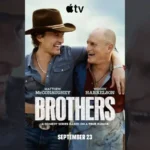
Brothers (2026) Feature Scores
Explore all 52 feature scores for Brothers (2026), organized into pros and cons.
Scores by Feature
Summary
52 reviewed features-
Very positive 4.5-5.06 (12%)
-
Positive 3.5-4.417 (33%)
-
Neutral 2.5-3.411 (21%)
-
Negative 1.5-2.418 (35%)
Pros
Sort
-
McConaughey and Harrelson’s relaxed, lived-in chemistry is the clearest point of agreement and the show’s biggest asset. Even many negative takes say their rapport keeps weak material watchable.
-
Holland Taylor and Lisa Gilroy are the most consistent standouts, repeatedly stealing scenes and supplying sharper laughs. Other supporting performers are often praised even when their characters are underwritten.
-
The strongest visual praise goes to the Texas photography, with Austin and Hill Country locations often looking warm, vibrant, and cinematic. One take found the presentation less consistent from scene to scene.
-
This plays best for viewers who already enjoy McConaughey and Harrelson and want something light. Some critics found the celebrity-centered premise much less compelling for casual viewers.
-
Individual episodes generally move briskly, and several critics specifically praised the snappy half-hour rhythm even when they disliked the larger season.
-
The premiere setup is brisk, warm, and promising, with the central friendship, family secret, and governor storyline established efficiently.
-
The warmer family moments land better than the broadest jokes, especially scenes about fathers, children, and inherited family history. The emotional payoff is strongest late in the season.
-
The show is stocked with performers widely seen as overqualified for the material, which helps elevate otherwise familiar sitcom plotting.
-
The fictionalized leads can be very lovable and charismatic when the show lets their friendship breathe, even when their behavior is foolish.
-
Enjoyment varies sharply: some found it easy, charming comfort viewing, while others saw little more than background TV or a celebrity indulgence. The leads’ company is the deciding factor.
-
McConaughey and Harrelson are comfortable and committed, but reactions to their self-caricatures range from charmingly natural to underwhelming and overly safe.
-
As a light, old-school family sitcom, it works better than it does as ambitious meta satire. Viewers willing to accept the throwback format are more likely to enjoy it.
-
The Austin and Texas setting feels tangible and lived-in, giving the show more sense of place than its conventional sitcom plotting might suggest.
-
The short, easygoing episodes can fly by quickly, making the season simple to binge despite the thin plotting.
-
The direction is praised for giving the comedy a polished, visually pleasing finish and for handling blocking and presentation with confidence.
-
The show is fundamentally sold on McConaughey and Harrelson’s charisma, and on that specific promise it delivers.
-
Austin is presented with warm, sun-dappled color and an attractive travelogue-like polish that gives the sitcom unusual visual texture.
-
The acting is generally capable, with the central performances naturalistic even when the material is broad. Strong supporting work often compensates for thin characterization.
-
The heightened scrapes, including kidnappings and fist fights, can be lively fun when the show embraces its sillier side.
-
When the show finally leans into family legacy, fatherhood, and strained relationships, its dramatic material can work surprisingly well.
-
The comfortable ranch-and-garage environment supports the hangout tone, with small details such as the garage bar getting specific praise.
-
Roughly half-hour episodes suit the loose hangout format and keep individual installments from overstaying too badly.
-
Interest in another season is mild rather than urgent; the first season leaves room for more, but does not create a must-see continuation hook.
Cons
Sort
-
The true-rumor premise is unusual, but most episode stories fall back on familiar sitcom devices. Critics repeatedly wished the show pushed its stranger idea much further.
-
The hybrid of real celebrities and fictional families can feel artificial or difficult to buy into. The show’s reality-fiction boundary is a recurring source of unease.
-
The writing is the most repeated structural complaint, with stock plots, softened satire, and recycled sitcom setups. A minority response appreciated the lighter, less clichéd approach.
-
The show shifts between broad network-style sitcom, celebrity meta-comedy, political subplot, and occasional crime farce. That mix can feel fuzzy or tonally incoherent.
-
The overall story is divisive but leans negative: charm and warmth are often acknowledged, while thin, familiar plotting keeps the central rumor from reaching its potential.
-
Family, fatherhood, friendship, and public identity give the show real thematic possibilities, but many critics felt it stays too safe or shallow to explore them fully.
-
The series often overweights its two stars, leaving wives, children, and satellite relationships with too little to do. A few warmer responses felt the broader household gave the comedy useful balance.
-
Character work is one of the more common weaknesses: many family members stay one-note or thin. Harrelson’s late efforts to reconnect with his daughters provide one of the clearer growth arcs.
-
The season can drag before reaching its stronger emotional material, creating a sense that the payoff arrives too late.
-
Comic violence is usually low-stakes, but animal deaths used as punchlines were specifically called off-putting.
-
The younger romances are among the weaker subplots, often described as thin, pat, or awkward. A few moments of young-love sincerity soften that criticism.
-
The weakest dialogue is described as dull or clunky, especially for supporting characters who already have limited material.
-
The Kai–Wyatt romance is a notable sticking point: the show explains away the possible family connection, but that meta acknowledgment did not make the subplot comfortable for everyone.
-
The mix of family sitcom, celebrity satire, political story, and DNA mystery can feel unfocused, with at least one critic saying the show never decides what it wants to be.
-
The season’s central revelation lands weakly for critics who found the plotting predictable or the final turn clumsily handled.
-
The fictionalized leads shift noticeably in how clueless or self-aware they seem, creating a midseason characterization wobble.
-
The family-sitcom shell is undercut by lowbrow jokes, strong profanity, drug use, and some violent animal humor, limiting its suitability for younger family viewing.
-
Strong language is frequent enough to stand out, including abundant f-bombs that clash with the otherwise traditional family-sitcom shape.
-
The big family revelation loses impact when the surrounding plotting is easy to predict.
-
At least one critic found the branded drinks conspicuously positioned on camera, making the placement hard to ignore.
-
The scripts are frequently criticized as routine and stock, with familiar sitcom mechanics doing too much of the work.
-
Eight episodes can feel longer than this premise needs, especially for critics who thought a tighter film-length version would have worked better.
-
The finale points toward more story but feels rushed compared with the season’s generally laid-back rhythm.
-
The DNA mystery provides a hook, but stretching it across the season weakens its ability to generate sustained suspense.
-
The first season ends with an invitation for more rather than a hard cliffhanger, creating mild curiosity without a particularly strong hook.
-
Critical reception is notably split rather than unified, with praise for chemistry and charm offset by recurring complaints about thin plotting and familiar jokes.
-
Traditional sitcom A/B plotting produces mixed results, with some episodes working as breezy family comedy and others feeling forced or dated.
-
Comedy is the biggest fault line: some found the show genuinely or even extremely funny, while many others called the jokes stale, mild, or inconsistent. The best laughs usually come from the leads riffing or from Taylor and Gilroy.
-
Matthew’s fictional run for governor can be a useful comic extension of the celebrity theme, but some critics wanted sharper or more substantive political satire.
Cast & Creators
-
Ma MacTaylor is one of the broadest points of agreement: Ma Mac is repeatedly described as delightful, hilarious, scene-stealing, and one of the show’s best supporting creations.
-
Gwen Hillcrest Barnes-DaviesGilroy is a near-universal supporting standout, with her campaign manager repeatedly called hilarious, fierce, and scene-stealing.
-
WoodyHarrelson’s comic looseness and disruptive energy make him the livelier fictionalized lead for several critics, though some feel the self-caricature becomes repetitive.
-
ClaraHelton is singled out for sharp comic timing and a withering presence that helps the younger cast land laughs.
-
MatthewMcConaughey’s relaxed comic ease and introspective moments earn praise, but some critics feel the self-fictionalized role leaves him coasting on his established persona.
-
JimmyGisondo makes a strong late impression for some viewers, though others feel the role is underused and too narrowly defined.
-
JoyIshibashi finds warmth and meaning in Joy even when the role is constrained by the show’s focus on the two leads.
-
OliveKuan is praised for matching Harrelson’s energy and bringing life to Olive despite the ensemble’s uneven character development.
-
ValentinaMartinez brings a steady, grounded quality to Valentina even though the character is often given less material than the central men.
-
KaiYaffe is praised for a dry, withering comic presence that helps the younger family dynamic.
-
ShowrunnerEisenberg’s contribution draws mixed reactions: his sitcom experience is credited for entertaining moments, while harsher takes blame the finished show for playing things too safe.
-
DirectorO’Malley is part of a directing team credited with loose, unforced moments and pleasant Texas photography.
-
DirectorWiner is part of a directing team credited with capturing loose performances and appealing Texas imagery.
-
DirectorO’Donnell is part of the directing team credited with an unforced tone and attractive Texas photography.
-
CreatorRead’s credited creative involvement is viewed skeptically in one strongly negative take that calls the finished series safe and underwritten.