Compare Sony Bravia 7 II vs Hisense UR9SG

Sony Bravia 7 II

Sony Bravia 7 II

Overall score 4.2 / 5

Based on 41 scored reviews

vs
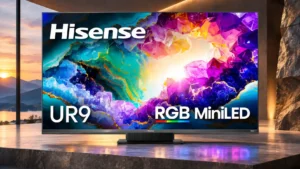
Hisense UR9SG

Hisense UR9SG

Overall score 4.1 / 5

Based on 27 scored reviews

How we score

Scorata scores summarize analyzed review evidence on a 1–5 scale; they are not laboratory measurements or a simple average of customer star ratings. Feature scores summarize the reviews covering that feature. The overall score averages feature scores within each review, then combines review averages. When both expert and customer evidence are available, those two groups receive equal weight. Products can have different review coverage, so small score gaps do not establish a winner.

Recommendations prioritize important features for the category, with a score of at least 3.5, a gap of at least 0.25 points and at least two supporting reviews per product. Features with widely varying scores or broad connectivity contexts are excluded from recommendations. These safeguards do not establish statistical significance.

Quick verdict

What each product is best for

The review evidence points to a tradeoff: picture quality and white balance accuracy versus refresh rate and HDR brightness. Choose according to which strengths matter more to you; the overall score alone does not settle that choice.

Choose Sony Bravia 7 II for picture quality and white balance accuracy.

Choose Hisense UR9SG for refresh rate and HDR brightness.

Why these recommendations?

Sony Bravia 7 II

Where It Has the Edge

  • picture quality is 4.7 vs 4.3. Picture quality is the core attraction: vivid but controlled color, deep blacks, sharp detail and strong processing create...
  • white balance accuracy is 5.0 vs 1.8. White balance is notably stable, even when the panel is driven to high brightness.
  • screen uniformity is 4.8 vs 3.8. Uniformity is consistently strong, with clean dark fields and little cloudiness across the panel.

Hisense UR9SG

Where It Has the Edge

  • refresh rate is 4.8 vs 3.1. Up to 4K/180Hz and lower-resolution 330Hz support are unusually high specifications for a television.
  • HDR brightness is 5.0 vs 4.3. Highlights can reach exceptionally high brightness, making HDR highlights and daylight scenes jump off the screen.
  • search quality is 4.8 vs 4.4. Gemini can find shows across apps using conversational descriptions, although voice commands are not always reliable.
Sony Bravia 7 II 4.2 overall score
Hisense UR9SG 4.1 overall score

Compare features

Scores are out of 5. Missing scores mean missing review evidence, not a missing feature.

Scored on both products

Performance

Picture quality
Sony Bravia 7 II
4.7

Picture quality is the core attraction: vivid but controlled color, deep blacks, sharp detail and strong processing create a refined, dimensional image. A few critics prefer OLED or rival RGB models in tougher scenes.

Hisense UR9SG
4.3

The UR9SG is vivid, bright and often spectacular, though its picture can lack the consistent polish of premium OLED and some LED rivals.

White balance accuracy
Sony Bravia 7 II
5.0

White balance is notably stable, even when the panel is driven to high brightness.

Hisense UR9SG
1.8

Red or blue casts in brighter grays and whites are a recurring weakness of default picture modes.

Color accuracy
Sony Bravia 7 II
4.5

Color is the defining strength: it is usually rich, natural and highly accurate without looking cartoonish. A minority of tests found oversaturated reds, warm white balance or skin-tone errors in some modes.

Hisense UR9SG
3.3

Factory color varies sharply with unit and mode: some settings look balanced, while others have red or blue casts. Calibration greatly improves results.

Bass performance
Sony Bravia 7 II
3.8

Built-in bass is stronger than typical TV audio and can add convincing punch, but some listening tests found it hollow, thick or lacking control in demanding scenes.

Hisense UR9SG
3.0

The built-in bass has adequate weight for television audio, but opinions diverge on warmth and fullness. Deep theatrical bass still benefits from external speakers.

HDR brightness
Sony Bravia 7 II
4.3

HDR is bright and impactful enough to make highlights pop and colors stay vivid. Measurements vary by mode and source, and several rivals can go brighter.

Hisense UR9SG
5.0

Highlights can reach exceptionally high brightness, making HDR highlights and daylight scenes jump off the screen.

HDR performance
Sony Bravia 7 II
5.0

HDR is a major strength, combining strong highlight detail, controlled blacks and excellent tone mapping without simply over-brightening dark scenes.

Hisense UR9SG
4.3

The screen gives HDR material tremendous impact through brightness, contrast and wide color, but aggressive whites and uneven tone control can reduce accuracy.

Local dimming performance
Sony Bravia 7 II
4.9

Local dimming is exceptionally well controlled for an LCD, balancing deep blacks with bright highlights without obvious brightness pumping in most real content.

Hisense UR9SG
4.3

The dimming system keeps most blacks dark while bright objects pop, with only occasional flicker and difficult transitions.

Sound quality
Sony Bravia 7 II
3.9

Built-in sound is above average in several tests, with good clarity, bass and useful volume. Other tests find it contained, shouty or not worthy of the picture, so a soundbar remains sensible for movies.

Hisense UR9SG
3.5

The multichannel system can sound spacious and loud, but warmth, clarity and high-volume distortion are inconsistent.

Peak brightness
Sony Bravia 7 II
4.5

Peak output is strong enough for impactful HDR and bright-room use, though measured results vary substantially by mode and some competing RGB sets are brighter.

Hisense UR9SG
4.9

Exceptionally high peak and full-screen brightness is its standout strength, although some default settings push whites too far.

Daytime viewing performance
Sony Bravia 7 II
3.8

The panel has enough brightness for sports and general daytime viewing, but direct windows and lamps can create distracting reflections. Bright rooms are its most context-dependent use case.

Hisense UR9SG
3.5

The TV has ample output for daytime viewing, but direct mirror-like reflections can obscure darker material.

Gaming performance
Sony Bravia 7 II
4.2

Gaming is fast, colorful and responsive for consoles, particularly PS5. Enthusiast PC gamers may be less satisfied by 120Hz, two HDMI 2.1 ports and slower pixel transitions.

Hisense UR9SG
3.9

Low input lag and extensive gaming features earn praise, while slow pixel transitions and alternative OLED sets prompt notable criticism.

Contrast ratio
Sony Bravia 7 II
4.2

Contrast is generally strong, with bright highlights set against deep blacks, but OLED still produces cleaner absolute blacks and stronger pinpoint contrast in the toughest scenes.

Hisense UR9SG
4.4

Strong native contrast combined with effective dimming produces impressively deep blacks and punchy highlights, although challenging scenes still reveal halos.

Soundstage
Sony Bravia 7 II
4.0

The TV can create a surprisingly wide, spacious stage, but some setups still make the sound feel tied to or behind the screen.

Hisense UR9SG
3.8

The sound system offers respectable width and a sense of space, though it falls short of dedicated surround speakers.

Dark-room performance
Sony Bravia 7 II
3.6

In a controlled room the TV can look cinematic, detailed and impressively close to OLED in many scenes. A few critical tests found some very dark material difficult to read without raising brightness and exposing other artifacts.

Hisense UR9SG
3.6

Movies look dramatic in dark rooms thanks to strong blacks, but halos, shadow behavior and OLED comparisons make this a conditional choice for purists.

Other features

Motion handling
Sony Bravia 7 II
4.4

Motion is usually smooth, composed and artifact-free, continuing a traditional Sony strength. A few critical tests found less of an advantage over rivals than expected.

Hisense UR9SG
3.8

Sports and movies can look smooth, but the slower LCD transitions draw criticism when scenes or games move quickly.

Input lag
Sony Bravia 7 II
4.8

Input response is consistently fast, with measured lag around the low-10ms range at 60Hz and an even snappier feel at 120Hz.

Hisense UR9SG
4.1

Controls feel quick at most tested refresh rates, although one comparison found the latency less competitive than rival TVs.

HDMI 2.1 port count
Sony Bravia 7 II
1.9

Only two of the four HDMI inputs are full-bandwidth HDMI 2.1, and one doubles as eARC. This is the most repeated hardware complaint, especially for multi-console setups.

Hisense UR9SG
4.5

Three full-bandwidth HDMI inputs are more than many rivals offer, but fewer than some competing TVs and only two remain for sources when eARC is used.

Refresh rate
Sony Bravia 7 II
3.1

A native 120Hz panel is ideal for current consoles, but it looks conservative beside PC-focused rivals offering 144Hz, 165Hz or higher.

Hisense UR9SG
4.8

Up to 4K/180Hz and lower-resolution 330Hz support are unusually high specifications for a television.

Glare resistance
Sony Bravia 7 II
2.4

Glare control is a recurring weakness because the 7 II lacks the flagship’s anti-reflective coating. Some owners may find the semi-gloss screen acceptable, but direct light can be distracting.

Hisense UR9SG
4.0

The anti-glare coating can help in real living rooms, but its performance against direct windows and lamps divides opinion.

Maximum volume
Sony Bravia 7 II
4.8

The speakers can play surprisingly loud for a TV without immediately falling apart, making them usable in more than just a small room.

Hisense UR9SG
3.3

The speakers can get loud enough for noisy rooms, though higher volumes can make tonal flaws more obvious.

Shadow detail
Sony Bravia 7 II
4.5

The TV usually preserves subtle near-black texture without lifting the whole image, a major reason dark films look detailed and cinematic. One critical test found some very dark scenes too difficult to read.

Hisense UR9SG
3.0

Some dark material retains subtle details well, while particular night sequences show black crush.

Remote layout
Sony Bravia 7 II
4.1

The remotes are generally easy to understand with useful direct-access buttons, though button placement and reduced controls do not please everyone.

Hisense UR9SG
2.8

The plentiful shortcuts and customization add convenience, but the mute placement and crowded controls can feel awkward.

Reflection handling
Sony Bravia 7 II
2.9

Reflection handling is the clearest environmental weakness. The semi-gloss screen can show mirror-like windows and lamps, although some hands-on tests found it improved enough for ordinary rooms.

Hisense UR9SG
4.3

The coating reduces general reflected light, but mirror-like direct reflections remain a mixed point across real-world rooms.

Content recommendations
Sony Bravia 7 II
4.3

Google TV and Gemini provide useful, personalized recommendations, with conversational discovery making it easier to find something to watch.

Hisense UR9SG
3.0

Google TV suggestions can be convenient, but the mix is heavily Google-oriented and some recommendations miss the mark.

Gradient handling
Sony Bravia 7 II
5.0

Gradients are exceptionally smooth in most content, with difficult skies and color transitions showing very little banding.

Hisense UR9SG
3.8

Smooth gradients are often a strength, with a few observations of brighter-color banding or poorer transitions than competing sets.

Color crosstalk
Sony Bravia 7 II
3.7

Sony’s True RGB implementation usually keeps adjacent colors clean with little contamination, though a few demanding scenes and settings can still trigger color bleeding or shifts.

Hisense UR9SG
2.7

The RGB backlight can tint whites with neighboring colors, particularly in complex mixed-color scenes; it is one of the clearest technical compromises.

Motion clarity
Sony Bravia 7 II
3.6

Fast motion can look clean and well defined in films and sports, but gaming tests exposed blur from relatively slow pixel transitions.

Hisense UR9SG
2.6

Fast action can smear, especially in dark games and lower-refresh content, despite the unusually high maximum refresh rate.

High-refresh-rate gaming
Sony Bravia 7 II
4.0

The TV is well suited to 120Hz console gaming, but its ceiling is less ambitious than newer 144Hz-and-higher competitors.

Hisense UR9SG
5.0

Native 4K/180Hz and a separate lower-resolution 330Hz option stand out for PC gaming, but refresh-rate figures do not eliminate response-time blur.

Low-resolution content handling
Sony Bravia 7 II
3.0

Sony can make DVDs and weak sources look impressively clean, but not every source benefits; some tests found older video overprocessed or artificial.

Hisense UR9SG
4.0

Ordinary streams are smoothed effectively, though the poorest low-bitrate or old video still exposes limits.

Screen uniformity
Sony Bravia 7 II
4.8

Uniformity is consistently strong, with clean dark fields and little cloudiness across the panel.

Hisense UR9SG
3.8

Large portions of the panel look even, but subtle magenta borders, clouding or brightness patches appear on some units.

Cable management
Sony Bravia 7 II
4.9

The Mirage Stand’s cable-hiding trick is a consistent design highlight, making power and HDMI leads nearly disappear from the front.

Hisense UR9SG
4.0

Tracks behind the stand provide a tidy path for attached cables.

Blooming control
Sony Bravia 7 II
4.4

Blooming control is one of the TV’s standout strengths, with halos often barely visible in normal head-on viewing. Blooming becomes easier to see off-axis, around subtitles or in stress-test patterns.

Hisense UR9SG
3.7

Bright-object halos are often restrained but can emerge around subtitles and high-contrast scenes. Off-axis viewing and brighter presets make them more noticeable.

Banding control
Sony Bravia 7 II
4.4

True RGB and Sony’s processing usually produce exceptionally smooth gradients with little visible color banding. One test found distracting light banding from direct reflections, so lighting conditions can still expose artifacts.

Hisense UR9SG
3.8

Gradients generally look smooth, although occasional color bands or low-bitrate blocking can remain visible.

Judder handling
Sony Bravia 7 II
4.0

Film motion is mostly judder-free, and the small amount that can appear is easy to reduce with a modest MotionFlow adjustment.

Hisense UR9SG
3.3

Film cadence can look clean with light interpolation, but judder or blur remains visible in difficult pans.

Color volume
Sony Bravia 7 II
4.9

True RGB delivers exceptional color volume, preserving vivid reds, greens and blues even at high brightness instead of washing them toward white.

Hisense UR9SG
4.3

Saturated colors remain strikingly vivid at high brightness, especially in vivid HDR images. The gains are less consistent in complex or very light scenes.

Viewing angles
Sony Bravia 7 II
4.0

Off-axis performance is much better than conventional VA-based Mini-LED in many tests, preserving color surprisingly well. Other tests still see contrast loss, washout or extra blooming from the side.

Hisense UR9SG
3.4

Off-center colors and blacks vary by panel and review, with some obvious washout and some relatively good results.

Calibration options
Sony Bravia 7 II
3.7

Sony provides useful picture modes and calibrated presets, but the lack of a full color-management system frustrates enthusiasts. Some settings are also less intuitive than they should be.

Hisense UR9SG
4.2

Picture calibration can bring color and grayscale much closer to reference targets, but getting there may require careful setup.

Auto low-latency mode
Sony Bravia 7 II
4.5

ALLM is a useful part of the gaming package, automatically helping consoles get a low-latency presentation without manual mode switching.

Hisense UR9SG
5.0

Compatible consoles trigger low-latency gaming automatically instead of requiring manual Game Mode changes.

Gaming dashboard
Sony Bravia 7 II
4.5

The dedicated gaming bar makes it easy to reach game-specific settings without digging through the full TV menus.

Hisense UR9SG
4.0

Game-specific overlays and genre presets are useful, but opening the panel requires more menu navigation than it should.

Panel type
Sony Bravia 7 II
3.5

The LCD foundation delivers impressive brightness and near-OLED blacks, but it still cannot fully match self-emissive OLED for absolute black, off-axis consistency and pinpoint contrast.

Hisense UR9SG
4.0

The RGB MiniLED layout produces pure, bright color but introduces its own color-management compromises.

Variable refresh rate
Sony Bravia 7 II
4.5

VRR works reliably across console and PC use, with HDMI VRR and G-SYNC helping smooth frame-rate changes.

Hisense UR9SG
5.0

VRR reduces tearing on compatible consoles and PCs across a wide refresh range.

Search quality
Sony Bravia 7 II
4.4

Gemini’s conversational search is a useful upgrade, allowing natural-language discovery by topic, mood or follow-up request.

Hisense UR9SG
4.8

Gemini can find shows across apps using conversational descriptions, although voice commands are not always reliable.

Motion interpolation
Sony Bravia 7 II
3.5

Sony’s interpolation can look exceptionally polished when tuned well, but the default processing can also introduce glitches or brief blur in difficult scenes.

Hisense UR9SG
3.9

Light interpolation can reduce film stutter naturally; stronger smoothing can add artifacts or an unwanted processed look.

Wall-mount compatibility
Sony Bravia 7 II
2.2

The relatively thick chassis is a poor fit for buyers who want a flush, ultra-slim wall installation.

Hisense UR9SG
2.5

The large, thick cabinet may protrude farther from the wall than slimmer OLED alternatives.

Dirty screen effect
Sony Bravia 7 II
3.0

Fast gaming scenes can occasionally look muddied by a dirty-screen-like effect, but it does not appear constantly.

Hisense UR9SG
3.3

Subtle patches or a dirty-screen effect can show during sports and uniform backgrounds, though other impressions find it unobtrusive.

Response time
Sony Bravia 7 II
2.0

Pixel transitions in Game Mode can be slow enough to create visible motion blur in fast titles, despite otherwise low input lag.

Hisense UR9SG
1.8

Pixel transitions are much slower than OLED, creating visible smear at both high and lower refresh rates.

Upscaling quality
Sony Bravia 7 II
4.1

Upscaling is generally a Sony strength and can rescue low-resolution or compressed sources impressively. A few tests found Reality Creation too aggressive on weaker material.

Hisense UR9SG
3.9

Lower-resolution content often gains crisp detail and less noise, although some comparisons favor rival upscalers.

Color gamut
Sony Bravia 7 II
4.8

The TV reaches an unusually wide gamut for an LCD and keeps saturated colors strong in HDR. Its measured coverage is repeatedly competitive with premium OLED and RGB rivals.

Hisense UR9SG
5.0

The RGB backlight delivers exceptionally wide color coverage, including colors beyond conventional P3 material. Much everyday content cannot exploit its full range.

Black levels
Sony Bravia 7 II
4.6

Head-on black levels are often described as deep, inky and unusually OLED-like for an LCD. OLED still retains the edge in the hardest dark scenes, and a few tests noted slightly raised or tinted near-blacks.

Hisense UR9SG
4.8

Local dimming produces impressively deep blacks and dramatic contrast. OLED still has the edge for the darkest and most demanding scenes.

Stand quality
Sony Bravia 7 II
4.5

The central Mirage Stand is sturdy, attractive and unusually practical, with its floating illusion earning repeated praise.

Hisense UR9SG
4.4

The narrow central stand saves furniture space and supports the TV securely, with useful height choices.

Dialogue clarity
Sony Bravia 7 II
4.3

Speech is usually crisp and easy to follow, and Sony’s dialogue tools can help further. Some tests found male voices a little thick or the overall tonal balance less natural than expected.

Hisense UR9SG
4.3

Dialogue stays intelligible and can be enhanced with speech settings, despite some complaints about missing lower-midrange body.

Remote control quality
Sony Bravia 7 II
3.9

Remote impressions vary by package: some units get a premium backlit rechargeable design, while standard remotes can feel light, cheap or frustratingly unlit.

Hisense UR9SG
3.8

The backlit remote is practical and easy to find, though its large shape and dense button layout split opinions.

Overall satisfaction
Sony Bravia 7 II
4.4

The broad consensus is highly positive because the TV combines premium color, processing and black control at a lower cost than Sony’s flagship. The main dissent centers on reflections, HDMI limits and whether OLED or cheaper rivals offer better value.

Hisense UR9SG
4.4

The UR9SG earns enthusiastic praise for vivid brightness and ambition, but its uneven fine-tuning prevents a unanimous recommendation.

Stand stability
Sony Bravia 7 II
4.8

The heavy metal base feels secure and rock-solid once assembled.

Hisense UR9SG
4.8

Its substantial metal base supports the large screen with little concern about wobble.

Advertising intrusiveness
Sony Bravia 7 II
2.0

Google TV’s home screen is not ad-free, and large promotional banners can be distracting.

Hisense UR9SG
2.0

Google TV displays ads even when personalization is disabled. Basic TV mode can hide them but also removes many smart features.

Controls and connectivity

Tone mapping
Sony Bravia 7 II
4.9

Sony’s tone mapping is repeatedly praised for preserving highlight and shadow detail while respecting the intended overall brightness of the scene.

Hisense UR9SG
2.0

Taming aggressively bright whites can compromise black depth, making preset and tone controls an important tradeoff.

App performance
Sony Bravia 7 II
3.3

Apps are generally usable and smooth, but occasional loading delays and stutters keep performance from feeling consistently premium.

Hisense UR9SG
4.5

The Google TV interface moves quickly through setup and navigation on working units.

Privacy controls
Sony Bravia 7 II
4.0

A physical microphone switch provides a useful hardware privacy control for users who do not want the TV listening for voice commands.

Hisense UR9SG
3.0

The ad-free Basic Google TV path trades away several smart features, while disabling personalized ads alone does not remove them.

Operating system speed
Sony Bravia 7 II
3.7

Google TV is generally smooth and polished once running, but occasional app stutters and slow cold starts keep it from feeling uniformly fast.

Hisense UR9SG
4.5

The Google TV interface is generally quick and fluid on properly functioning units.

Voice assistant support
Sony Bravia 7 II
4.5

Gemini adds a capable conversational assistant layer to Google TV, especially for finding content and answering follow-up requests.

Hisense UR9SG
3.8

Conversational Gemini voice tools are capable and convenient for broad queries, but less reliable for direct playback tasks.

Menu responsiveness
Sony Bravia 7 II
4.3

Quick Settings and My Cinema make common adjustments easy to reach, although deeper picture controls can feel layered or confusing.

Hisense UR9SG
4.0

Google TV responds quickly, but deeper audio and gaming controls are not always easy to reach.

App selection
Sony Bravia 7 II
4.9

Google TV offers an exceptionally broad app catalog, with the major streaming services and plenty of downloadable options covered.

Hisense UR9SG
5.0

Google TV gives access to a broad selection of streaming and gaming apps, with support for separate profiles.

Ownership and support

FreeSync support
Sony Bravia 7 II
2.0

FreeSync is missing, which is a drawback for gamers who specifically rely on AMD’s branded VRR implementation.

Hisense UR9SG
4.5

FreeSync and VRR help prevent tearing when a compatible console or graphics card varies its frame rate.

Dolby Atmos support
Sony Bravia 7 II
4.5

Dolby Atmos content benefits from the built-in speaker system’s power and spaciousness, making the format worthwhile even before adding external audio.

Hisense UR9SG
4.0

The TV can render a sense of height with its internal speakers, but this remains virtual rather than true speaker-separated surround.

Value for money
Sony Bravia 7 II
3.6

Value depends heavily on sale price and what it is compared against. It looks compelling beside the far pricier Bravia 9 II, but OLED and cheaper RGB rivals make full retail pricing harder to defend.

Hisense UR9SG
3.3

Discounts make RGB MiniLED much more appealing, but standard MiniLED sets and OLED alternatives may still deliver stronger value.

Setup ease
Sony Bravia 7 II
2.8

Basic setup is manageable, but stand assembly and account sign-in can add friction compared with simpler snap-in designs.

Hisense UR9SG
3.0

Google TV setup is typically straightforward, but QR sign-in glitches and complicated stand assembly can slow the process.

Comfort and build

Build quality
Sony Bravia 7 II
4.2

The chassis and metal stand feel solid and secure, although the TV is bulkier and deeper than many premium alternatives.

Hisense UR9SG
4.5

The substantial chassis and metal stand feel reassuringly solid. Its bulk is harder to ignore when lifting or installing it.

Design and appearance
Sony Bravia 7 II
4.7

The floating Mirage Stand and restrained front design make the TV look distinctive and premium, even though the chassis itself is thicker than an OLED.

Hisense UR9SG
4.5

A premium-looking checkerboard back and centered stand give the television a polished appearance, though its profile is relatively thick.

Evidence available for one product

Ownership and support

Reliability
Sony Bravia 7 IINo score yet
Hisense UR9SG
3.0

An early test unit suffered significant software faults and both initial units needed a reset, raising questions about consistency.

4K at 120 Hz support
Sony Bravia 7 II
4.6

4K/120Hz works well for current consoles and is repeatedly praised as enough for PS5 and Xbox gaming. The limitation is that only two HDMI inputs can carry the full signal.

Hisense UR9SGNo score yet
4K at 144 Hz support
Sony Bravia 7 II
2.0

The TV tops out at 120Hz at 4K, leaving PC gamers without the 144Hz-and-higher options available on several rivals.

Hisense UR9SGNo score yet
4K gaming support
Sony Bravia 7 II
5.0

PS5 games look excellent in 4K, with rich color, crisp detail and responsive play.

Hisense UR9SGNo score yet
Casting support
Sony Bravia 7 II
5.0

Casting worked reliably in hands-on use and avoided glitches seen on at least one competing RGB TV.

Hisense UR9SGNo score yet
Chromecast support
Sony Bravia 7 II
4.5

Built-in Chromecast adds convenient everyday casting to an already strong Google TV streaming experience.

Hisense UR9SGNo score yet
Dolby Vision support
Sony Bravia 7 IINo score yet
Hisense UR9SG
4.5

A later software update improved Dolby Vision picture processing and made existing compatible titles look more balanced.

DTS support
Sony Bravia 7 II
4.5

DTS:X playback is handled well by the integrated audio system and contributes to a broader, more cinematic presentation.

Hisense UR9SGNo score yet
EARC support
Sony Bravia 7 IINo score yet
Hisense UR9SG
5.0

The eARC connection can feed uncompressed audio to a soundbar or receiver, though using that HDMI input reduces free slots.

HDMI 2.1 support
Sony Bravia 7 IINo score yet
Hisense UR9SG
4.5

Its high-bandwidth HDMI inputs are useful for modern consoles and PC signals; shoppers needing four sockets may be constrained.

HDR10+ support
Sony Bravia 7 II
2.0

HDR10+ is absent, and several sources call that omission disappointing on a premium-priced TV.

Hisense UR9SGNo score yet
HDR format support
Sony Bravia 7 II
2.0

The format lineup is strong but incomplete because HDR10+ is missing, an omission that feels harder to justify at this price.

Hisense UR9SGNo score yet
Headphone support
Sony Bravia 7 II
4.5

Bluetooth headphones are a convenient option for private listening and work well for late-night viewing.

Hisense UR9SGNo score yet
Large-screen value
Sony Bravia 7 IINo score yet
Hisense UR9SG
4.0

The bigger sizes bring ambitious RGB technology to large-screen buyers at prices below some rival premium televisions.

Warranty
Sony Bravia 7 II
5.0

The optional Pro package’s three-year on-site replacement coverage adds meaningful peace of mind over the standard one-year warranty.

Hisense UR9SGNo score yet

Other features

Ease of use
Sony Bravia 7 IINo score yet
Hisense UR9SG
4.5

The familiar Google TV layout keeps navigation approachable and makes finding the main apps easy.

Account requirements
Sony Bravia 7 II
2.5

Google TV setup can require a Google account, and one installation hit enough sign-in friction to require manual email and password entry.

Hisense UR9SGNo score yet
AI scene optimization
Sony Bravia 7 IINo score yet
Hisense UR9SG
3.5

Automatic picture processing adds convenience and some useful sharpening, but stronger settings can look artificial or have little benefit.

Backlight strobing
Sony Bravia 7 IINo score yet
Hisense UR9SG
2.0

Black frame insertion fails to provide a clean improvement: image duplication and blurry pulses undermine its purpose.

Black uniformity
Sony Bravia 7 IINo score yet
Hisense UR9SG
3.0

Local dimming reduces panel clouding, but light halos surrounding highlights make a completely even dark screen elusive.

Built-in speaker surround immersion
Sony Bravia 7 IINo score yet
Hisense UR9SG
5.0

The multichannel speakers can produce a more spacious sound than ordinary TV audio, though they cannot fully replace discrete surrounds.

Burn-in resistance
Sony Bravia 7 IINo score yet
Hisense UR9SG
5.0

Its LCD backlight avoids permanent OLED-style burn-in, making persistent static images less of a worry.

Device compatibility
Sony Bravia 7 IINo score yet
Hisense UR9SG
3.8

The USB-C DisplayPort input makes it easy to mirror compatible phones, tablets and laptops without occupying an HDMI input.

Distortion control
Sony Bravia 7 II
4.5

The speakers stay impressively clean at high volume most of the time, though extreme bass can introduce a small amount of crackle.

Hisense UR9SGNo score yet
Dolby Vision 2 improvements
Sony Bravia 7 IINo score yet
Hisense UR9SG
5.0

The Dolby Vision 2 update improves the balance of brightness and color on existing compatible material, adding meaningful long-term appeal.

Energy efficiency
Sony Bravia 7 II
5.0

The native RGB backlight is praised for delivering very high brightness with unusually efficient light production and lower power waste.

Hisense UR9SGNo score yet
Firmware updateability
Sony Bravia 7 IINo score yet
Hisense UR9SG
5.0

An over-the-air update brought Dolby Vision 2, adding features after launch rather than leaving the set at its initial capabilities.

Flicker control
Sony Bravia 7 IINo score yet
Hisense UR9SG
4.0

The backlight flickers at a very high frequency, making it invisible for most viewers, although sensitivity remains possible.

G-SYNC compatibility
Sony Bravia 7 II
4.5

G-SYNC support broadens PC gaming compatibility and gives Nvidia users a useful variable-refresh option.

Hisense UR9SGNo score yet
Gaming mode quality
Sony Bravia 7 II
4.9

Game Mode keeps brightness high while minimizing latency, and PlayStation-specific automation makes the experience especially seamless.

Hisense UR9SGNo score yet
HDMI port count
Sony Bravia 7 IINo score yet
Hisense UR9SG
2.8

The three-HDMI arrangement is workable for simple setups but tight for multiple consoles, streamers and a soundbar.

HDR highlight detail
Sony Bravia 7 IINo score yet
Hisense UR9SG
3.8

Small highlights can be dimmed by local dimming, while other content retains pleasing specular detail and shadow separation.

Image processing
Sony Bravia 7 II
4.6

Sony’s processing remains a major advantage for detail, motion, scaling and tonal control. A small number of critical tests found some enhancements ineffective or overaggressive.

Hisense UR9SGNo score yet
Image realism and naturalness
Sony Bravia 7 IINo score yet
Hisense UR9SG
3.9

Some picture modes produce pleasingly natural tones, while others create washed-out colors or an artificial brightness balance.

Local dimming zone transitions
Sony Bravia 7 IINo score yet
Hisense UR9SG
4.0

Zones generally follow moving highlights smoothly, although brief flickering and excess halos can appear.

Mac integration
Sony Bravia 7 IINo score yet
Hisense UR9SG
5.0

USB-C DisplayPort makes it practical to connect a MacBook directly as a large external display.

Motion artifacts
Sony Bravia 7 IINo score yet
Hisense UR9SG
1.5

Overshoot and color transitions sometimes leave pale trails or intermediate colors behind moving objects.

PC text clarity
Sony Bravia 7 IINo score yet
Hisense UR9SG
3.0

Standard 4:4:4 support helps, but the BGR pixel structure can make fine text appear less crisp on a computer desktop.

Portability and versatility
Sony Bravia 7 II
2.5

The set is relatively thick and heavy for a premium TV, so it is less graceful to move or integrate than slimmer OLED models.

Hisense UR9SGNo score yet
Resolution
Sony Bravia 7 II
5.0

4K material looks crisp and highly detailed, with games and movies gaining convincing depth and texture.

Hisense UR9SGNo score yet
Screen coating clarity
Sony Bravia 7 IINo score yet
Hisense UR9SG
4.0

The glossy finish retains fine image clarity without the graininess found on some matte screens.

Stand assembly
Sony Bravia 7 IINo score yet
Hisense UR9SG
2.3

The heavy pedestal is secure once installed, but screw-heavy assembly and limited instructions are frustrating.

Stand width
Sony Bravia 7 II
5.0

The central pedestal lets the TV fit on narrower furniture more easily than widely spaced feet.

Hisense UR9SGNo score yet
Stutter handling
Sony Bravia 7 II
5.0

120fps VRR gaming showed no noticeable micro-stutter in hands-on play.

Hisense UR9SGNo score yet
Video input versatility
Sony Bravia 7 IINo score yet
Hisense UR9SG
5.0

A versatile USB-C DisplayPort connection complements the HDMI inputs for fast PC connections and handheld devices.

VRR range
Sony Bravia 7 IINo score yet
Hisense UR9SG
5.0

Low Framerate Compensation keeps tearing suppressed even when frame rates fall below the normal VRR floor.

Performance

Art display mode
Sony Bravia 7 IINo score yet
Hisense UR9SG
3.8

The screensaver can display striking artwork, and AI-generated images are a pleasant extra rather than a reason to buy the TV.

Audio/video sync
Sony Bravia 7 II
2.5

A firmware update was reported to introduce lip-sync issues, although the problem was not experienced consistently and was expected to be fixable in software.

Hisense UR9SGNo score yet
Audio passthrough
Sony Bravia 7 IINo score yet
Hisense UR9SG
5.0

eARC passes major audio formats to compatible home theater equipment without troublesome format restrictions.

Audio settings
Sony Bravia 7 IINo score yet
Hisense UR9SG
4.6

The equalizer, presets and room correction offer meaningful ways to improve the speaker sound. Some options are buried in menus.

Display technology
Sony Bravia 7 II
4.6

True RGB is treated as a meaningful step forward for LCD, especially for color volume and backlight control. It narrows several OLED advantages without eliminating every LCD limitation.

Hisense UR9SGNo score yet
Noise reduction
Sony Bravia 7 IINo score yet
Hisense UR9SG
4.5

Lower-bitrate streaming material becomes cleaner with fewer compression blocks and little loss of fine detail.

On-screen game visibility tools
Sony Bravia 7 IINo score yet
Hisense UR9SG
4.5

Aiming reticles and an FPS counter are convenient extras inside the Game Bar.

Operating noise
Sony Bravia 7 IINo score yet
Hisense UR9SG
2.0

A standby relay click is a noticeable annoyance on at least one unit.

Overall image accuracy
Sony Bravia 7 II
4.5

The TV can be exceptionally faithful to creative intent, with several tests calling its tuning reference-like. Accuracy depends on mode, and some factory presets show red or white-balance errors.

Hisense UR9SGNo score yet
Picture detail
Sony Bravia 7 IINo score yet
Hisense UR9SG
4.4

High-quality 4K material renders fine textures and specular highlights convincingly, with some disagreements over lower-resolution detail.

Picture mode tuning
Sony Bravia 7 IINo score yet
Hisense UR9SG
3.0

Moving away from default presets can bring a more natural image, but finding a balanced picture may demand more adjustment than expected.

SDR picture performance
Sony Bravia 7 IINo score yet
Hisense UR9SG
4.5

Full-screen and peak SDR brightness make ordinary television programming especially punchy in well-lit rooms.

Soundbar clearance
Sony Bravia 7 IINo score yet
Hisense UR9SG
4.5

The centered pedestal allows height adjustments to clear most soundbars without blocking the bottom of the screen.

Sustained brightness
Sony Bravia 7 II
4.5

Full-screen brightness is strong for the class, though the 7 II gives up substantial sustained output to the Bravia 9 II.

Hisense UR9SGNo score yet
USB-C DisplayPort connectivity
Sony Bravia 7 IINo score yet
Hisense UR9SG
4.8

The extra USB-C DisplayPort input is a standout convenience for PC gaming, laptops and mobile devices.

Comfort and build

Bezel size
Sony Bravia 7 II
4.5

The slim bezels reinforce the floating, screen-first look and help the set appear sleeker from the front.

Hisense UR9SGNo score yet
Inconsistent panel and coating by size
Sony Bravia 7 IINo score yet
Hisense UR9SG
3.0

The 65-inch panel has denser local-dimming-zone coverage than larger models, so exact contrast behavior cannot be assumed identical.

Size options
Sony Bravia 7 II
4.8

The unusually broad 50- to 98-inch range is a major advantage, especially for buyers who want premium RGB performance in smaller rooms.

Hisense UR9SGNo score yet

Controls and connectivity

Bluetooth audio support
Sony Bravia 7 II
4.5

Bluetooth headphone use is a genuinely useful option for private late-night viewing.

Hisense UR9SGNo score yet
Bluetooth connectivity
Sony Bravia 7 II
4.5

Bluetooth pairing worked smoothly with wireless headphones and proved useful for private listening.

Hisense UR9SGNo score yet

Review contexts may differ, so use caution when interpreting the score gap.

HDR tone mapping accuracy
Sony Bravia 7 IINo score yet
Hisense UR9SG
3.9

HDR tracking is often close to its target, though the best balance depends on the chosen mode and some content appears too bright or dark.

Picture settings menu flexibility
Sony Bravia 7 IINo score yet
Hisense UR9SG
4.5

Gamma, motion and other picture adjustments provide useful flexibility for viewers who want to fine-tune the image.

Smart home integration
Sony Bravia 7 II
4.0

Google Home integration gives the TV useful control and visibility within a broader smart-home setup.

Hisense UR9SGNo score yet
Smart TV platform
Sony Bravia 7 II
4.5

Google TV is broadly praised for app coverage, discoverability and familiar navigation. Ads and occasional performance hiccups are the main drawbacks.

Hisense UR9SGNo score yet
Smart TV platform
Sony Bravia 7 IINo score yet
Hisense UR9SG
4.5

Google TV is fast and app-rich, with useful search; ads, occasional software faults and buried settings hold it back.

Software updates
Sony Bravia 7 II
3.5

A firmware-related lip-sync issue was reported, but confidence was expressed that Sony would address it quickly.

Hisense UR9SGNo score yet
Streaming app support
Sony Bravia 7 II
5.0

Mainstream streaming coverage is excellent, with no meaningful gaps called out across the major services.

Hisense UR9SGNo score yet
Voice control accuracy
Sony Bravia 7 IINo score yet
Hisense UR9SG
2.0

Gemini can misidentify streaming locations or return YouTube results instead of performing the requested action.

Other Top TVs to Consider

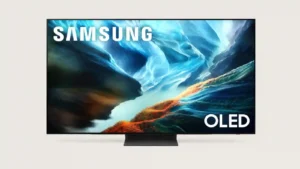
#1 Samsung S90H
4.5

Choose the S90H for bright-room OLED viewing, deep blacks and top-tier gaming without flagship pricing. Skip it if you want Dolby Vision, a glossy screen or the simplest smart-TV software.

Pros: glare resistance, black levels

Cons: Dolby Vision support, color gamut

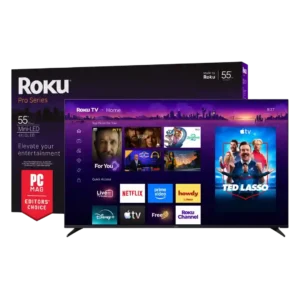
#2 Roku Pro Series (2025)
4.4

Best for bright Mini-LED picture, excellent built-in audio, easy Roku navigation, and responsive 4K/120 gaming. Skip it if you want ad-free menus, premium motion consistency, or stronger confidence in long-term...

Pros: overall satisfaction, picture quality

Cons: reliability, portability and versatility

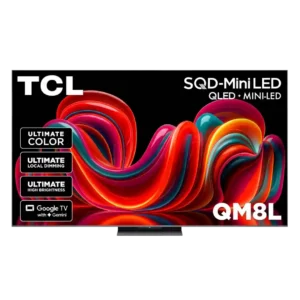
#3 TCL QM8L
4.4

Choose the QM8L for a big, brilliantly bright TV with vivid HDR, deep mini-LED blacks, low input lag, and four HDMI 2.1 ports. Skip it if you need OLED-clean motion,...

Pros: picture quality, value for money

Cons: stand quality, judder handling

#4 LG G6
4.4

Choose the G6 for class-leading bright-room OLED picture, rich color, deep blacks and elite gaming. Skip it if you want strong built-in audio, polished launch firmware, no account sign-in, or...

Pros: picture quality, peak brightness

Cons: value for money, sound quality