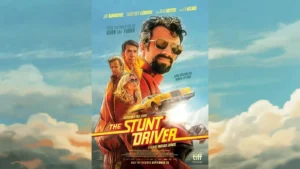

The Stunt Driver
Where It Has the Edge
- acting performance is 5.0 vs 4.0. The performances are strongest when they turn the broad stunt-world personalities into vulnerable, physically specific people. Baruchel in...

Scorata scores summarize analyzed review evidence on a 1–5 scale; they are not laboratory measurements or a simple average of customer star ratings. Feature scores summarize the reviews covering that feature. The overall score averages feature scores within each review, then combines review averages. When both expert and customer evidence are available, those two groups receive equal weight. Products can have different review coverage, so small score gaps do not establish a winner.
Recommendations prioritize important features for the category, with a score of at least 3.5, a gap of at least 0.25 points and at least two supporting reviews per product. Features with widely varying scores or broad connectivity contexts are excluded from recommendations. These safeguards do not establish statistical significance.
Quick verdict
The review evidence points to a tradeoff: acting performance versus costume design and friendship portrayal. Choose according to which strengths matter more to you; the overall score alone does not settle that choice.
Choose The Stunt Driver for acting performance.
Choose Bitter Christmas for costume design and friendship portrayal.
Scores are out of 5. Missing scores mean missing review evidence, not a missing feature.
The script produces strong character moments and, for some, an excellent emotional framework, but repeated criticism targets tonal indecision, thin supporting roles, and stretches that feel padded or overly conventional.
The best exchanges are sharp and emotionally exposing, especially late in the film. In contrast, the deliberate first-draft quality of the nested story makes the whole feel uneven.
The dialogue can be colorful and characterful, but repeated speeches that spell out feelings or inspiration eventually wear thin. The weakest moments are criticized for sacrificing subtlety.
The conversations remain lively and perceptive even when the plot seems to wander without a destination.
Many reviews find surprising tenderness beneath the comedy, particularly in Carter’s fear, his marriage, and his relationship with Keller. Even some mixed notices acknowledge a potent final or late-film emotional punch.
The music and fierce arguments can be moving, but the layers of fictionalization keep many viewers at arm’s length from the grief and loss.
Opinions split sharply on how deeply the film gets inside Carter. Some find a compelling portrait of fear, insecurity, and showmanship, while others see a one-note or shallow character study.
The fictionalized lovers and friends can feel more like devices than complete people, even when strongly acted. Their thinness is partly intentional, but that does not satisfy everyone.
The uncertainty over whether Carter will actually attempt the jump gives the film effective will-he-or-won’t-he tension. Not every critic buys the suspense, especially when the historical outcome or dramatic misdirection is obvious.
The opening pain crisis has a genuine undercurrent of unease, assisted by urgent music and threatening weather.
The synth-leaning score is praised for having personality and supplying enough emotion without overwhelming the period atmosphere.
Alberto Iglesias’s melodic, surging score adds urgency and melancholy to the story, especially the scenes of writing and confrontation.
Most of the central stunt setup is easy to follow, but one review finds the final moments confusing enough to obscure exactly what happened and why the emotional turn matters.
The nested script and abrupt temporal shifts create confusion for some viewers, while others appreciate how the film eventually clarifies its multiple realities.
The true story is inherently unusual and, for many, engaging or heartfelt. The split comes over depth: supporters see a compelling underdog portrait, while critics argue the film never finds enough meaning beyond the stunt and Carter’s need for recognition.
The film has ideas worth exploring but often gives its people too little narrative momentum or payoff.
The drama works best when Carter’s confidence gives way to fear and the life-or-death stakes become unavoidable. Some reviewers find those moments genuinely affecting, while harsher notices call the dramatic construction blunt or rudimentary.
The emotional conflicts are recognizably Almodóvarian, mixing sadness with theatrical flair. At times the melodrama slips into moroseness or feels insubstantial.
Pacing is the most persistent structural complaint. Several reviews praise an energetic opening or strong build, then note stalls, repetitive delays, or a third act that feels longer than the 99-minute runtime.
The opening stretches spend a long time with Elsa’s unfinished story; the tension and momentum often arrive only when the late confrontations begin.
The subject is unusual, but the dramatic treatment sometimes falls back on familiar biopic beats. The harshest review of this aspect calls the screenplay safe and clichéd.
The self-reflexive premise is clever, but the themes and colorful tricks are familiar territory for this filmmaker. Admiration for the conceit coexists with frustration at the repetition.
Carter’s bond with Dick Keller is repeatedly singled out as one of the film’s warmest and most convincing relationships. Keller’s shift from skeptical engineer to protective friend gives the story an emotional anchor.
The furious breaches of trust between old friends feel especially vivid, showing how creative ambition can damage the people providing support.
The transitions between documentary footage, recreations, and different aspect ratios are widely admired. Reginald Harkema’s work helps old and new material feel unusually cohesive.
The transitions between the two eras can be graceful and briskly paced, although the editing cannot always prevent the structure from feeling labored.
The movie’s unapologetically Canadian identity is treated as a strength, not a limitation. Its local specificity, national humor, and Carter’s place in Canadian culture give the story a distinct personality.
The Spanish setting, musical traditions and familiar artistic milieu give the film a lively sense of place and creative identity.
The film’s most successful message is about ambition, legacy, and the cost of needing to prove oneself. Supportive reviews find that idea moving and inspirational without reducing Carter to a simple hero.
The film’s strongest argument is that art can alter lives as well as appropriate them, making its self-criticism more than a private exercise.
Carter and Gloria’s relationship receives mixed treatment. Some reviews find genuine affection and emotional grounding, while others criticize Gloria as underwritten or inconsistent and the marriage as less convincing than Carter’s friendships.
Bonifacio’s devotion and the stylized striptease have charm, though the love interests can feel too idealized and secondary to the creative crises.
Sara Mishara’s photography is one of the clearest consensus strengths, with multiple formats, grain, and period lighting used to evoke the 1970s. Several reviews call the images distinctive, handsome, or outright bravura.
Elegant framing and the striking black volcanic beaches supply memorable visual highlights, although one dissenting view finds some coverage too plain.
The ending is one of the most divisive elements: some find it fitting, perilous, or gut-punching, while others see the final stretch as confused, overextended, or emotionally unearned.
A searing late encounter partially redeems the meandering setup for some, but abrupt closure and unresolved arcs leave others with a sense of incompletion.
The first half and Baruchel’s performance draw frequent praise for absurd, character-driven comedy. The main reservation is that the laughs thin out as the story darkens, and a few critics find it less funny than expected.
Self-deprecating jokes, a flamboyant striptease and cutting dialogue add welcome lightness; some find the wit too thin to lift the heavy structure.
The performances are strongest when they turn the broad stunt-world personalities into vulnerable, physically specific people. Baruchel in particular draws praise for finding fear and softness beneath the bravado.
The ensemble generally handles the theatrical dialogue with assurance, and the major clashes are especially alive. A few viewers nevertheless find the material less demanding than the cast deserves.
Period rock selections help establish the film’s 1970s atmosphere and add energy to the overall presentation.
Chavela Vargas’s aching recordings and carefully placed songs give the film emotional texture that its narrative sometimes cannot reach.
The period wardrobe helps sell the 1970s setting and Carter’s outsized personality. Reviewers repeatedly note that the costumes contribute materially to the film’s authenticity and visual character.
Bright knits, designer clothes and expressive color coordination make the costumes an essential part of the movie’s appeal.
The shifting aspect ratios, film stocks, archival textures, smoke-hazed interiors, and faded palette create one of the movie’s most distinctive strengths. A minority view sees the same formal devices as stylish distractions from a shallow core.
Saturated reds, vivid greens, stylish interiors and the contrast of black volcanic sand deliver unmistakable visual pleasure, though a few find the look more muted or routine than usual.
The ramp, period spaces, and 1970s detail are repeatedly praised for making the modestly scaled production feel convincing. The design work helps ground the more outrageous stunt material.
Highly styled homes, saturated furnishings and carefully arranged objects are among the movie’s most consistent pleasures, even for viewers unmoved by the plot.
The consensus is mixed but tilted positive: admirers call it funny, gonzo, theatrical, and engaging, while detractors find the film slow, underpowered, or less entertaining than its documentary source.
There is plenty to enjoy in the visuals, performances and sharp exchanges, but the wandering middle and intellectually tangled setup can make the whole feel less exciting.
The real and recreated stunt material repeatedly earns praise for communicating speed, danger, and the sheer absurdity of Carter’s ambitions. Several sources call the jump footage spectacular or jaw-dropping.
The archival stunt footage is a major visual asset, especially when it is woven into newly shot material without obvious seams. Its documentary texture also strengthens the period feel.
The strongest chemistry comes from Carter’s interactions with Dick Keller and Evel Knievel. Their affection, sparring, and competing ideas about risk give the film some of its liveliest scenes.
Amusing exchanges and recurring jokes give the dense material occasional, welcome relief.
The writing scenes and revisions make artistic inspiration, block and exploitation unusually tangible. Some enjoy the self-interrogation, while others feel it returns to ideas explored more memorably before.
At least one critic finds the striptease routine clumsy and uninspired rather than exuberant.
Michael Dowse earns praise for the film’s warmth, hybrid form, and human touch, but the response is divided. Critics who are less convinced point to uneven momentum, a muddled final act, and missed opportunities to probe Carter more deeply.
The movie closely draws from The Devil at Your Heels, re-creating scenes and incorporating original footage while making selective fictional changes. Some appreciate that fidelity; others question whether the dramatization adds enough.
The film honors women whose care and private lives support male artists, even as it shows how that support can be taken for granted.
The mockery of prestige appearances, lucrative invitations and streaming pressures adds pointed industry humor.
The clash over using a friend’s grief as screenplay material gives the film its sharpest moral bite. Whether that self-criticism amounts to a satisfying answer divides opinion.
The heated argument between Raúl and Mónica gives the closing stretch its strongest drama, wit and moral pressure. It is frequently seen as the scene that makes the earlier detours worthwhile.
Darkly funny clashes and searching emotional drama sit together with an unusually agile, self-questioning tone.
As a biopic, the film benefits from a stranger-than-fiction subject and a more gonzo presentation than the genre usually gets. Viewers who enjoy offbeat sports or true-story movies are the clearest fit.
The blinking cursor and typed text visually dramatize the act of screenwriting with surprising energy.
Songs and moments of intimate pain bring emotional weight, but several critics find the fictionalized tragedies too abstract or exploited to resonate fully.
The interview-heavy structure is a notable weakness for at least one critic, who finds the repeated talking-head material aimless and obstructive rather than revealing.
Profanity is part of Carter’s coarse public persona, and one review specifically criticizes his speeches as both dumb and frequently profane. The language is therefore a notable content consideration even though most reviews focus elsewhere.
A carefully chosen novel adds a subtle wink toward the film’s shifting identities and artistic self-invention.
The parallel plots occasionally repeat familiar patterns so mechanically that the design itself becomes more visible than the people.
The 2004 story, the 2026 screenwriter and the screenplay-within-a-screenplay create a clever puzzle for some viewers. Others find the switches convoluted, mechanical and emotionally distancing.
The film’s period recreation feels convincing thanks to authentic design, costumes, formats, and archival integration. That tactile authenticity is one of the main reasons the hybrid approach works for its admirers.
At 99 minutes, the film is objectively concise, but reactions differ sharply: one critic praises the tight length while another says the movie still feels longer because of its stops and starts.
The director turns accusations of repetition and creative selfishness into pointed jokes, making self-criticism funny as well as uncomfortable.
The film’s playful focus on male beauty refreshes the usual gendered gaze, although its explicit attraction may not suit everyone.
The strongest readings focus on legacy, masculinity, fear, identity, obsession, and the cost of spectacle. Detractors see those same ideas as underexplored, leaving the film more sentimental than probing.
The comedy-to-tragedy balance is one of the film’s biggest dividing lines. Some find the shift tender and controlled, while others feel the movie lurches between broad comedy and bruised drama without fully reconciling the two.
Festival and interview coverage points to a warm crowd response, especially to the film’s Canadian identity and emotional turns. The subject’s eccentricity appears to travel well beyond viewers already familiar with Carter.
The witty, well-dressed company is pleasant to spend time with even when the story gives them nowhere decisive to go.
The title suggests a more traditionally seasonal and bitter story than the film actually delivers.
The recreations of Carter’s world, stunt preparations, and documentary material are praised for close attention to the real events. The film also openly fictionalizes or consolidates some details for dramatic purposes.
Jay Baruchel is the strongest point of agreement across the coverage. His Carter is repeatedly described as career-best, pitch-perfect, heartfelt, funny, vulnerable, and capable of carrying weaker stretches of the movie.
The ensemble is generally well regarded, with especially strong notices for Ben Foster, Ed Helms, Joe Cobden, and Laurence Leboeuf. A recurring frustration is that several of those performers are working with thin or underused characters.
For viewers drawn to the layered structure, a second viewing can reveal earlier parallels and subtler clues that are easy to miss at first.

Choose this inventive, unsettling documentary for fearless questioning, dark humor, and unpredictable storytelling. Skip it if you want a short, straightforward exposé with definitive answers.
Pros: originality, humor

Extraordinary performances and richly observed relationships make this a rewarding, emotionally forceful drama. Its nearly three-hour length and slow opening demand patience and undivided attention.
Pros: class commentary, character development

Best for a hypnotic, bookish mystery with tactile visuals and cerebral chills. Skip it if reading-heavy, attention-demanding storytelling sounds more exhausting than exciting.
Pros: Atmosphere, cinematography
Cons: audience appeal

Best for an intimate, searching documentary that rewards focused attention and invites discussion. Skip it when devastating grief, addiction footage, and unresolved family tensions would be too much.
Pros: emotional impact, theme depth