
Filipiñana
Where It Has the Edge
- screenplay quality is 5.0 vs 4.7. The writing is strongest when it sets Isabel and Clara against each other as parallel expressions of entitlement,...

Scorata scores summarize analyzed review evidence on a 1–5 scale; they are not laboratory measurements or a simple average of customer star ratings. Feature scores summarize the reviews covering that feature. The overall score averages feature scores within each review, then combines review averages. When both expert and customer evidence are available, those two groups receive equal weight. Products can have different review coverage, so small score gaps do not establish a winner.
Recommendations prioritize important features for the category, with a score of at least 3.5, a gap of at least 0.25 points and at least two supporting reviews per product. Features with widely varying scores or broad connectivity contexts are excluded from recommendations. These safeguards do not establish statistical significance.
Quick verdict
The review evidence points to a tradeoff: screenplay quality versus acting performance and audience appeal. Choose according to which strengths matter more to you; the overall score alone does not settle that choice.
Choose Filipiñana for screenplay quality.
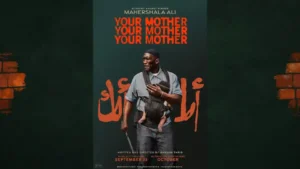
Choose Your Mother Your Mother Your Mother for acting performance and audience appeal.
Scores are out of 5. Missing scores mean missing review evidence, not a missing feature.
Dialogue is a weak point for some viewers: long pauses and exchanges that seem to go nowhere can feel unnatural or painfully sluggish.
Dialogue is praised as purposeful, with lines tied closely to character, faith, and payoff. The film’s conversations often carry as much weight as its fights.
The drama is intentionally internal and subdued rather than conventionally eventful, which can leave viewers seeking external excitement unsatisfied.
The family drama gives the action story its emotional center, particularly grief, parenthood, and strained faith. Reviewers generally find those domestic stakes more involving than a conventional hitman setup.
The film can build to devastating, shattering unease, especially late, but not everyone connects with its emotional distance; one critic wanted a stronger lingering emotional aftereffect.
Grief, family pressure, and spiritual doubt give the film a strong emotional pull. Several reviewers describe the final stretch and father-daughter material as especially affecting.
The film’s blend of dry humor, oppressive heat, surreal artificiality, and quiet menace is praised as singular and cohesive.
The film often succeeds at balancing brutality, grief, comedy, and spirituality, but this is also a source of disagreement. Some praise the tonal control; others find certain jokes, caricatures, or antagonist shifts jarring.
The ending is widely praised as the payoff to the slow build, with the final images and action continuing through the credits to deliver a dark, haunting final provocation.
The conclusion is one of the clearest points of disagreement: some call it daring, audacious, or powerful, while others find it divisive, too convenient, or insufficiently satisfying. Its spiritual resolution works best for viewers already invested in the film’s themes.
Suspense stays low-key rather than thriller-like. Several critics hear a persistent hum of tension and premonition, while others warn that viewers seeking conventional thrills will find little of them.
The film builds strong tension through both violent threats and family stakes. Its most effective stretches are described as gripping, nail-biting, or edge-of-your-seat.
The sparse story divides opinion: its careful convergence and side stories can be gripping and meaningful, but some critics want more narrative substance and less contemplation.
The core story is praised as involving and emotionally grounded, especially when focused on Latif’s everyday struggle to care for his children. Its more eccentric criminal threads draw somewhat more mixed reactions.
The central story is easy to grasp early, which keeps the sparse narrative readable but can also make its major direction feel predictable.
The many religious, family, criminal, and satirical threads do not always connect cleanly. Some reviewers admire how details pay off, while others describe the narrative as scattered, tenuous, or not fully coherent.
The class and colonial critique often lands with force and incisiveness, but several critics find the message too obvious, repetitive, or heavily underlined.
The film’s ideas about mercy, grace, faith, responsibility, and being present for family resonate strongly. Its moral argument avoids reducing redemption to one heroic act.
Rafael Manuel’s precise framing, atmosphere, and visual satire earn widespread praise, but the same deliberate control can feel repetitive, overextended, or too withholding for some viewers.
Bassam Tariq earns strong praise for balancing intimate family drama, religious reflection, humor, and violent action without losing a distinct point of view. Even critics of the film’s messier passages tend to admire his ambition and visual command.
The pace is deliberately languorous and is the film’s biggest dividing line. Some critics find the slowness hypnotic and purposeful, while others call it punishing, glacial, repetitive, or indulgent.
Pacing is mixed: some praise the swift narrative economy, while others find the first half deliberately slow or the overall rhythm sluggish. Its contemplative approach is likely to work better for patient viewers.
The writing is strongest when it sets Isabel and Clara against each other as parallel expressions of entitlement, complicity, and awakening. Individual exchanges are also praised as sharply observed.
The screenplay is praised for turning a practical parenting crisis into a vehicle for questions about faith, violence, and grace. Some reviewers note clunkier or scattered material, but the writing is generally seen as ambitious and purposeful.
Isabel’s gradual disillusionment and awakening is one of the film’s stronger arcs, with Clara providing a contrasting path toward compromise and inaction. Some viewers may still feel emotionally held at a distance.
Latif’s progression from rigid provider and killer toward a more vulnerable father is widely viewed as compelling. His inner journey often matters more than the external hitman plot.
The editing often stretches scenes and comic beats to match the languor of the golf course. Some critics admire that deliberate rhythm even when the film’s overall slowness remains divisive.
The editing is singled out as fluid and supportive of the film’s momentum. It keeps the action readable rather than reducing fights to a blur of cuts.
Its humor is dark, dry, and visual, emerging from synchronized labor, absurd privilege, and carefully prolonged compositions rather than conventional jokes.
The humor is a consistent surprise, ranging from awkward parenting to eccentric side characters and darkly comic violence. Most reviewers find it effective levity, though a few note tonal clashes.
The film’s Philippine setting, Ilocos connections, land displacement, class hierarchy, and colonial legacy give the satire a specifically local texture even as it reaches for universal themes.
The film is praised for centering Black Muslim and Pakistani-American perspectives with specificity rather than treating faith as decoration. Its Muslim family life feels ordinary, textured, and unusually prominent for a studio action film.
The film draws layered connections among class, colonialism, gender, labor, displacement, and memory. Its ideas are often praised as powerful, though some critics think the treatment can be too blunt or not fully developed.
Faith, grief, violence, hypocrisy, mercy, and parental duty are treated as intertwined rather than separate topics. Reviewers generally find the spiritual questions unusually serious for an action film, even when some themes get lost in the chaos.
The resort works as a convincing realistic-satirical bubble, grounding its heightened class critique in recognizable labor, luxury, heat, and inequality.
Even with heightened villains and genre flourishes, the family dynamics and emotional pressure are often described as grounded and lived-in. The action also benefits from a sense of physical consequence.
The cinematography is the clearest consensus strength: painterly 4:3 compositions, precise blocking, long static frames, and lush surfaces repeatedly turn the golf course into something beautiful and unsettling.
The humid, saturated imagery and intimate close-ups earn strong praise, with several reviewers calling the film gorgeous or among the year’s best-looking. The camera gives both family scenes and violence a tactile presence.
As a class satire, it is praised as beguiling, restrained, and effective rather than built around broad comic punchlines or explosive catharsis.
As an action-thriller, the film stands out for mixing hitman conventions with faith, grief, and parenthood. Genre fans who accept the introspective emphasis generally find the result fresh and rewarding.
The film feels distinctive in its formalism, compressed framing, sensory heat, and unusual golf-course microcosm, even while working within a familiar tradition of class satire.
Reviewers repeatedly call the film fresh, singular, or unlike other studio action movies, especially for building a hitman story around breast milk, Muslim faith, and fatherhood. The familiar one-last-job framework is made strange in productive ways.
The trailer’s visually creative impression is borne out by the finished film, whose framing and artistic presentation remain major strengths.
One review directly argues that the action-heavy promotion misrepresents a film that is far more meditative and family-focused. Viewers expecting a nonstop samurai-style action movie may be surprised by how sparse the combat is.
The cast generally handles the stylized, unhurried delivery well, but one dissenting take says the monotone direction makes several performances hard to read.
Performances are a major strength, with repeated praise for the cast’s control, vulnerability, menace, and comic timing. Even more mixed reactions to the film rarely fault the acting.
Jorrybell Agoto’s Isabel is often praised for watchful restraint, curiosity, and latent rage. A more skeptical take found the monotone style made her difficult to judge until a brief late breakthrough.
Mahershala Ali’s performance is the strongest point of consensus, praised for physical authority, restraint, grief, warmth, and quiet shame. Multiple reviewers call it among his best work or among the year’s best performances.
The ensemble is generally seen as capable within the stylized direction, with Carmen Castellanos singled out for having more range and visible emotion.
The ensemble is widely praised, with the younger cast and colorful antagonists giving the film warmth, humor, and tension around Ali’s central performance.
For some, the film is mesmerizing and terrific; for others, its glacial pace and austere storytelling make it tiring or hard to recommend. Enjoyment depends heavily on patience for slow cinema.
Despite its meditative stretches, the film is repeatedly described as entertaining, funny, and gripping. Its appeal comes from the contrast between domestic urgency and bursts of heightened action.
Its formal beauty can win over patient art-house viewers, but the extreme slowness and austere style are repeatedly flagged as barriers to broader mainstream appeal.
The film is seen as a strong theatrical proposition for viewers open to an action movie with spiritual and family concerns. Its unusual mix may be less immediate for audiences expecting nonstop combat.
The film arrived with strong festival reception and strong critical notices, reinforcing its standing as a formally ambitious art-house debut.
Early critical response is described as exceptionally enthusiastic, including a perfect initial aggregate score cited by one source. The supplied reviews themselves are overwhelmingly favorable despite recurring caveats.
The soundscape is a major craft strength, using crisp cuts, amplified nature, golf impacts, water, footsteps, and ambient detail to deepen both serenity and unease.
The sound work receives a direct positive mention for adding noticeably to the film. It supports the intensity of the action and atmosphere.
The country club becomes a vivid self-contained world, with small side stories, labor routines, sound, and spatial detail making its hierarchy and artificiality feel immersive.
Houston is rendered as an immersive collision of Muslim, evangelical, Mormon, criminal, and working-class communities. The detailed social environment makes the heightened premise feel unusually specific.
The visual style is overwhelmingly praised: boxy framing, symmetry, color, painterly long takes, and precise mise-en-scène make nearly every image feel deliberately composed.
The saturated color, sweaty close-ups, neon, shadow, and stylized religious imagery give the film a distinctive look. Reviewers frequently describe it as beautiful, rich, or visually immaculate.
The golf resort’s production design is called excellent, with detailed interiors, landscaping, and color helping create an alluring but ominous environment.
The film’s wealthy compounds, worship spaces, strip-club environments, and other heightened locations are praised for looking colorful and spectacular. Those spaces help the action feel specific rather than generic.
The action is usually praised as sharp, physical, and unusually legible, with sword fights that carry emotional consequence. A minority found the set pieces too brief or sparse for the way the film was marketed.
The father-daughter relationship is the clearest chemistry highlight, especially the push-and-pull between Latif and Fatiha. Other family and comic pairings also help the film feel lived-in.
The film’s most distinctive emotional thread is Latif learning that providing and protecting are not enough; he has to become present, nurturing, and vulnerable. Reviewers repeatedly praise that treatment of fatherhood as the story’s heart.
The familiar retiring-hitman premise is substantially complicated by family drama and an unusually serious examination of Islamic faith. Reviewers praise that combination as a fresh hybrid.
The feature-length expansion can feel overextended when paired with the glacial pace. The harshest take felt scenes were padded rather than gaining impact from their extra duration.
Hwan’s menace works because it is controlled rather than purely theatrical. Reviewers describe him as genuinely scary, frightening, unpredictable, and effectively menacing.
Son Lux’s electronic score receives emphatic praise, with several reviewers calling it incredible, wonderful, or among the year’s best. It adds propulsion while reinforcing the film’s spiritual and cultural texture.
The violence is graphic and bloody, but several reviewers appreciate that it carries consequence rather than functioning as empty spectacle. One critic found the graphic intensity distracting enough to slow the story.
The color-coded costumes are called striking, using mint green, hot pink, and white clothing to make the club’s social hierarchy immediately legible.
At least one critic found the film substantially more riveting on a second viewing, suggesting its deliberate details can reward revisiting.
Music is used sparingly but effectively, with synchronized musical passages and ambient, diegetic sound creating a meditative, slightly fantastical atmosphere.

Best for pristine archival footage, immersive sound, and a surprisingly tense look at Disneyland’s construction. Skip it if you want a comprehensive, deeply critical history; several reviewers found the 78–79-minute...
Pros: plot clarity, realism
Cons: plot originality, runtime
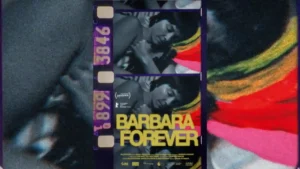
Best for an intimate, inventive archival portrait with strong emotional and cultural impact. Skip it if substantial nudity or an occasionally wandering biographical structure will frustrate you.
Pros: chemistry between characters, emotional impact
Cons: runtime, plot clarity
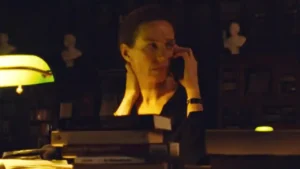
Best for an audacious, text-driven conspiracy thriller with gorgeous 16mm atmosphere and mounting dread. Skip it if long stretches of reading, deliberate repetition, and an intentionally austere narrative sound more...
Pros: story quality, plot clarity
Cons: chemistry between characters, sound design

Best for slow-burn suspense, iconic synth music, and shadow-soaked filmmaking that still feels influential. Skip it if you need fast pacing, polished sound, consistently natural dialogue, or modern gore-heavy kills.
Pros: chemistry between characters, directing quality
Cons: sound design, dialogue quality