
Runner
Where It Has the Edge
No clear scored advantage over the other product.

Scorata scores summarize analyzed review evidence on a 1–5 scale; they are not laboratory measurements or a simple average of customer star ratings. Feature scores summarize the reviews covering that feature. The overall score averages feature scores within each review, then combines review averages. When both expert and customer evidence are available, those two groups receive equal weight. Products can have different review coverage, so small score gaps do not establish a winner.
Recommendations prioritize important features for the category, with a score of at least 3.5, a gap of at least 0.25 points and at least two supporting reviews per product. Features with widely varying scores or broad connectivity contexts are excluded from recommendations. These safeguards do not establish statistical significance.
Quick verdict
The available evidence supports the recommendation below, but does not establish an overall winner. Check the remaining features against your priorities.
There is not enough comparable review evidence to recommend Runner over the other product.
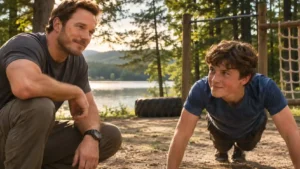
Choose Way of the Warrior Kid for family friendliness and acting performance.
No clear scored advantage over the other product.
Scores are out of 5. Missing scores mean missing review evidence, not a missing feature.
Despite the distributor’s family-friendly reputation, this is not treated as a strong kids’ pick. The violence, deaths, child peril, and language push it toward older teens and adults.
The film has family-friendly themes and an appealing underdog premise, but the action and heavier content make age an important consideration.
The ticking clock and pursuit create strong tension for some viewers, especially once the stakes are established. Others feel the stop-start structure and toothless villains drain urgency.
The lengthy training sequences are criticized for lacking dramatic tension.
The roughly 90–98 minute runtime is usually considered efficient, brisk, and well judged. One negative take says it feels noticeably longer than its actual length.
The film feels overlong when the training arc reaches a natural stopping point before a substantial final stretch.
Redemption, selflessness, courage, sacrifice, and family give the film more thematic weight than its action setup suggests. One critic finds the redemption arc too bluntly inserted.
The story's treatment of war, masculinity and growing up is criticized for lacking moral complexity.
The conclusion earns a strong positive note for tying Hank’s personal grief into the mission and landing an emotional payoff.
The fiery rescue finale is frequently described as exciting or effective despite its implausibility. Others find it so exaggerated that it undermines the film's earlier goodwill.
Character work is better than the simple premise suggests in several takes, especially Hank’s grief, Ben’s growth, and the villain’s motivation. Others find key subplots thin, undercooked, or too familiar.
Marc and Jake have emotionally promising arcs, but their characterization often feels shallow, rushed or inconsistent.
The brisk chase structure and ticking clock keep the movie moving for most viewers, and the roughly 90–100 minute length often helps. Hospital cutaways and extended chatter are the main momentum killers.
Training gives the story momentum for some, but unnecessary sequences, repetitive workouts and rushed emotional development create uneven pacing.
Editing quality is uneven. Precise, readable action earns praise in some places, but choppy cutting and shaky presentation are recurring complaints elsewhere.
Abrupt cuts and limited variety in action coverage undermine the sense of movement and craftsmanship.
Scott Waugh earns strong marks for physical action staging and keeping a modest thriller lively. The main criticism is that some sequences become choppy or the broader structure loses momentum.
McG's inventive visual touches and energetic rescue sequence earn praise, but critics also find the direction overly polished, abrupt or lacking distinctiveness.
Assessments of the language differ: one calls the film mostly free of foul language, while another warns that foul language runs throughout. Family suitability is therefore treated cautiously.
Mild foul language is one of the reasons younger children are advised to skip the film.
The plot is widely considered formulaic, predictable, and built from familiar buddy-action tropes. Better notices still credit a few twists and surprising character choices with keeping it from feeling completely stale.
The film follows a well-worn mentor-and-underdog template, with little novelty in its plot or expected story beats.
Themes of kindness, sacrifice, redemption, family, and doing the right thing are usually seen as sincere without becoming overly preachy. One take finds some hospital material sanctimonious.
Courage, perseverance and empathy are widely appreciated ideas, but the military-centered and sometimes preachy delivery divides opinion.
The central mission is simple and easy to follow, which several critics see as a strength. It gives the action a clear engine without requiring a complicated setup.
The plot is straightforward and easy to follow even when its developments feel derivative.
The comedy works best when Wilson’s lighter persona bounces off Ritchson’s seriousness. Reactions range from genuinely funny to forced or underpowered, so the laughs are not equally reliable throughout.
Dry humor and some playful performances work well, but a cutesy makeover montage and awkward jokes draw criticism.
The script is one of the most divisive areas: some praise smart twists, emotional depth, and surprise, while others call it thin, generic, undercooked, or poorly written.
The writing has occasional subtlety and efficient exposition, yet predictable plotting, didactic dialogue and simplistic characterization are major drawbacks.
The action photography can be immersive and stylish, especially when wide lenses and mobile cameras keep viewers close to the stunts. Shaky camera work also draws complaints when it obscures the choreography.
Expressive camera techniques capture Marc's nervousness, but the broader cinematography is sometimes considered flat or ordinary.
The brutality is highly divisive. Some action fans enjoy the crunchy, surprisingly hard PG-13 mayhem, while others find it excessive, off-putting, or too intense for younger viewers.
Combat flashbacks and the dangerous climax are considered unusually intense for a family-oriented film.
For a straightforward action movie, the story lands more heart than many expected, especially around grief, sacrifice, and the child awaiting the organ. A few emotional beats are judged forced or unearned.
The uncle-nephew bond supplies touching moments, but sentimentality and artificial storytelling can prevent the emotion from lasting.
The simple organ-delivery premise works as a clear action engine, but opinions split on how well the story supports it. Stronger takes enjoy the heart and twists; weaker ones see thin logic and generic construction.
The underdog premise offers genuine warmth and an appealing arc, but many find the predictable plot, didactic writing and split focus limiting.
Ritchson and Wilson’s odd-couple pairing is one of the most praised elements, with many finding their contrasting styles charming and fun. A few critics see only serviceable chemistry or no spark at all.
The uncle and nephew share convincing chemistry, especially when allowed to interact naturally rather than exchange lessons.
The fights, chases, crashes, and stunt-heavy mayhem are the movie’s clearest strength for most critics. A minority dislike the shaky presentation or feel the PG-13 staging pulls its punches.
The rescue finale frequently earns praise for energy and staging, though one strongly critical assessment finds the action flat and static.
Tone is one of the movie’s biggest weaknesses. The mix of brutal action, goofy comedy, melodrama, and sincerity works for some as camp, but often feels uneven or poorly blended.
A light mood works at times, but shifts into exaggerated comedy or excessive drama can be jarring.
Realism is a weak point overall. Grounded character moments and some convincing action help, but implausible collisions, geography, injuries, and plot logic repeatedly break believability.
The online humiliation can feel recognizable, but stereotypical characters, an easy transformation and a larger-than-life rescue frequently strain credibility.
Dialogue is a recurring weak spot. It is variously called merely fine, exposition-heavy, not great, or cringey, with banter sometimes becoming too chatty.
Motivational speeches and prescriptive lines can make the characters sound like mouthpieces rather than real people.
Australia’s sunny coastal locations and action environments are often attractive, with some praise for how the camera uses them. One critic feels the locations could have been showcased far more effectively.
Gaming-inspired imagery and energetic stylings provide some personality, though the overall look can feel generic or overly slick.
Alan Ritchson is widely seen as the movie’s anchor, bringing physical credibility, likability, and dry humor to a familiar action-hero role. Even several mixed reviews say he carries weak material.
Jude Hill's vulnerability often makes Marc engaging, while Chris Pratt's subdued or familiar performance divides opinion.
The cast is usually a strength, with the leads often praised for carrying familiar material through charisma, physicality, and comic timing. Even some negative takes credit the performers more than the script.
Strong performances give the familiar story heart, particularly in its central family relationships.
Music choices are more often criticized than praised. Covers, soundalikes, out-of-place needle drops, and a Christian-rock closing song all attract complaints of varying severity.
Vintage needle drops can lighten the mood, but the constant parade of recognizable pop songs becomes distracting for some.
The supporting players generally help the movie, with Leila George and Owen Wilson receiving particular praise in different takes. A few critics argue Wilson is underused despite his charm.
Linda Cardellini's warmth is repeatedly praised, although her role offers limited room to make an impact.
This skews older than a typical family action movie. Violence, deaths, child peril, and some language led family-focused assessments to steer younger kids away.
The PG-13 content and intense peril make the film more appropriate for teenagers than young children.
The film is framed as a crowd-pleasing action vehicle, with its brisk runtime, familiar star personas, and absurd mayhem seen as accessible strengths.
The reassuring, traditional storytelling is likely to appeal to audiences who enjoy familiar feel-good films.
Most reactions find it fun, watchable, or easy to enjoy despite obvious flaws. The harshest takes call it generic, mildly entertaining, or simply a miss.
Enjoyment ranges from genuine affection for the warm family drama to frustration with its predictable story and excessive instruction.
The film's emphasis on avoiding revenge and showing empathy is appreciated. Reactions are divided over whether its depiction of bullying is recognizable or simplistic and whether the response is proportionate.
CGI impressions are split. One take found no obvious cheap CGI or blue-screen work, while another singled out a car-chase moment as distractingly game-like.
Sarah repeatedly recedes into the background once Jake takes over, leaving relatively little room for the mother's perspective despite her appealing performance.
The film's focus on adult concerns and masculine guidance can obscure Marc's own perspective and needs.
The familiar formula is executed with warmth for some, but others find the by-the-numbers approach derivative.
The dramatic material divides sharply. Some find genuine sadness and emotional weight, while others see the hospital drama as manufactured and unbelievable.
The adult star's prominence repeatedly pulls attention away from the boy's own development.
The script efficiently establishes the loss of Marc's father.
The film preserves the book's central philosophy of self-improvement, accountability and discipline.
The family offers opportunities for mutual support and healing, but some object to the marginalization of the single mother.
The story's examination of the lasting absence of fathers provides meaningful emotional questions about mentorship and childhood.
The failed-mission flashbacks add emotional weight and context to Jake's struggles, though they can be harrowing.
As a throwback buddy-action thriller, it generally delivers the chases, fights, banter, and pace fans expect. Its formulaic writing and uneven presentation keep it from winning over everyone.
Shared loss gives the family bond emotional potential, but the film often rushes through grief rather than exploring it fully.
The growing bond between uncle and nephew, including their capacity to help each other heal, supplies much of the warmth.
Some welcome a model of manhood grounded in kindness and vulnerability, while others find the military and physical-toughness emphasis stereotypical or excessively narrow.
The story gives emotional struggles too little room, presenting exercise and structured routines as a simplified answer to complex problems.
Jake's combination of discipline, tenderness and practical guidance is effective for many, but the film sometimes treats his methods as unquestionable rather than allowing genuine dialogue.
Some appreciate a military mentor who combines discipline with vulnerability, while others find the pervasive military language and recruitment-like worldview excessive.
Repeated drills and workout routines can become tedious rather than dramatically engaging.
Most obstacles are too easy to anticipate, diminishing the suspense over whether Marc will succeed.
The dual journey of uncle and nephew feels uneven, with neither story receiving quite the attention it needs.
The appreciation of military service is welcomed by some, but others object to its recruitment-like emphasis.
Sarah's role is criticized for relegating her to a supporting position or questioning her parenting rather than giving her a meaningful perspective.
The physical stunt work stands out as a major production strength, with one assessment calling it a cut above.
Jake's combat trauma adds emotional depth for some, but others find the film too quick to gloss over its complexity.
The positive references to loving God and country complement the film's encouragement to do the right thing.
Marc's crush adds sweetness without becoming a conventional romance, although the fair sequence can feel contrived.
The musical score draws a severe complaint for sounding generic and cheaply assembled rather than distinctive or cinematic.
The emphasis on developing the will to pursue goals, rather than just reaching physical benchmarks, makes Marc's inner growth meaningful.
Some appreciate the film's relative restraint and sincerity, while others find the sweetness and moralizing cloying.
Brief suggestive humor contributes to concerns about suitability for younger children.
A well-chosen rock song can enliven the training, but the near-constant placement of pop hits is criticized as excessive.
Visual-effects quality is mixed. Some effects are considered good overall, but moving vehicle backgrounds are singled out as needing another pass.
The treatment of boys' struggles is criticized for failing to engage meaningfully with contemporary concerns.
The training sequences are often enjoyable and give Marc's progress a clear direction, though their repetition and length frustrate some viewers.
The imaginative shifts in Marc's surroundings while gaming communicate his feelings of empowerment.
Kenny can be convincingly nasty, but his characterization and motivation often feel one-dimensional or insufficiently explored.
Marc is easy to root for when his vulnerability and determination make him relatable.
Critical reception lands on the positive side overall, with reported Rotten Tomatoes scores in the upper-60s to 70% range. The enthusiasm is real but not unanimous.
The movie's throwback sensibility recalls uplifting older family dramas, blending affecting sincerity with corniness.
The filmmaking craft is criticized for lacking the energy and ingenuity expected from an experienced blockbuster director.
Rewatch interest is limited. Several takes describe it as forgettable, a one-time watch, or something worth revisiting only casually with someone who has not seen it.
Several critics say the movie is more comfortable as a home or streaming watch than a must-see theatrical event. Its entertainment is solid, but the premium big-screen value is questioned.

A deeply human coming-of-age drama carried by remarkable performances and an honest portrayal of grief. Its gentle optimism moves most viewers, though some find the final stretch hurried or overly...
Pros: Grief portrayal, acting performance
Cons: pacing

Billie Jean King’s magnetic first-person storytelling makes this an exhilarating portrait of athletic courage and social change. The filmmaking follows a familiar documentary structure, and her full tennis résumé gets...
Pros: entertainment value, Biographical coverage
Cons: Narrative structure

Choose this inventive, unsettling documentary for fearless questioning, dark humor, and unpredictable storytelling. Skip it if you want a short, straightforward exposé with definitive answers.
Pros: originality, humor

A singular voice, powerful piano playing and intimate film photography make this concert absorbing for receptive listeners. Its uninterrupted, often similar-sounding songs and lack of background context are an acquired...
Pros: directing quality, cinematography
Cons: pacing, Song variety