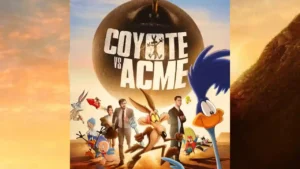

Coyote vs. Acme
Where It Has the Edge
- character development is 3.7 vs 2.3. Reviewers appreciate how the film gives Wile E. Coyote more dimension without erasing his familiar identity. His failures,...

Scorata scores summarize analyzed review evidence on a 1–5 scale; they are not laboratory measurements or a simple average of customer star ratings. Feature scores summarize the reviews covering that feature. The overall score averages feature scores within each review, then combines review averages. When both expert and customer evidence are available, those two groups receive equal weight. Products can have different review coverage, so small score gaps do not establish a winner.
Recommendations prioritize important features for the category, with a score of at least 3.5, a gap of at least 0.25 points and at least two supporting reviews per product. Features with widely varying scores or broad connectivity contexts are excluded from recommendations. These safeguards do not establish statistical significance.
Quick verdict
The review evidence points to a tradeoff: character development versus soundtrack quality and special effects quality. Choose according to which strengths matter more to you; the overall score alone does not settle that choice.
Choose Coyote vs. Acme for character development.
Choose Elf for soundtrack quality and special effects quality.
Scores are out of 5. Missing scores mean missing review evidence, not a missing feature.
One reviewer specifically praises how naturally the live-action world accommodates animated characters, making the mixed reality feel internally believable.
The film happily suspends practical questions about parentage, relationships and adulthood. Its lighthearted logic won't satisfy those seeking believable reactions to Buddy.
One enthusiastic reviewer calls it the best court-procedural film of the decade so far, signaling very strong satisfaction with the legal-comedy format.
It combines Christmas fantasy with broad comedy and genuine affection. The split comes from whether that cozy holiday formula feels classic or forgettable.
Runtime opinions are mixed. Some reviewers think the feature-length format works surprisingly well, while others feel the short-form gag style strains over 90-plus minutes or could lose a few minutes late.
The compact length makes it an easy seasonal watch, with little commitment required for a cheerful burst of comedy.
The only direct sexual-content assessment flags a few unexpectedly ribald asides as a family-viewing concern.
The shower-related misunderstanding is brief and treated innocently rather than graphically, making the moment a mild rather than sustained concern.
Most comments on the ending are positive, praising an unexpectedly moving or funny wrap-up. A few reviewers wanted a less rushed, less muddled final act.
The finale is the most repeated weakness: a Santa-sleigh crisis, odd park-ranger pursuit and abrupt emotional resolution often feel forced. Some still enjoy its uplifting payoff.
Reviewers appreciate how the film gives Wile E. Coyote more dimension without erasing his familiar identity. His failures, trauma, perspective, and persistence make him feel more fully realized.
Walter's change of heart delivers the expected holiday payoff, but some find it rushed or unconvincing. The supporting arcs are simple rather than deeply developed.
The screenplay is widely praised as clever, witty, and better constructed than the premise might suggest. Even favorable reviews acknowledge a few loose strands, repetitive beats, or conventional turns.
At its best the dialogue is quick, silly and sincere; at its weakest the film leans on formula, predictable turns and underdeveloped subplots.
Reviewers generally find the legal-conspiracy story clever, engaging, and surprisingly substantial for a Looney Tunes premise. One strong dissenter calls the concept high-concept inanity, but most say the story gives the comedy real shape.
A simple search-for-family premise carries the humor and warmth, but the familiar redemption arc and contrived Santa rescue offer little surprise.
The live-action/animation effects are mostly praised as seamless and convincing, though a few reviewers stop short of calling the hybrid work top-tier.
Forced perspective and restrained CGI work especially well in the North Pole scenes. The practical-looking spectacle has aged better than many more digital productions.
The central pairings generally work: Wile E. and Kevin develop an engaging buddy dynamic, while other hero-villain and human-toon combinations add comic energy and emotional connection.
Buddy and his eccentric family play off one another especially well. Chemistry with Jovie earns praise too, though a few viewers never buy the romance.
The only direct language assessment warns that the movie goes beyond the mild obscenities associated with older Looney Tunes material.
The movie generally stays within mild, child-friendly language. Some parents still object to its insults and occasional stronger phrases.
Steven Price's score is praised for playful orchestral writing and Looney Tunes-style musical touches, including clever use of the Road Runner's signature sound.
A pleasant main theme serves the holiday setting, although the underlying score can feel generic beside the stronger song selections.
Animation is broadly praised as expressive, energetic, and faithful in motion, but several reviewers dislike the 3D-made-to-look-2D technique or notice rough character models and inconsistent polish.
Old-fashioned stop-motion creatures add personality to the North Pole. Their handmade look helps the fantasy age more gracefully than CGI-heavy holiday films.
Cinematography is praised for making animated characters feel integrated with real offices, streets, and sets. Lighting and compositions help the hybrid world feel physical rather than pasted together.
Lively, controlled holiday colors suit the fantasy well. One detractor finds the camera placement uninspired, but the bright imagery generally creates inviting energy.
A major surprise for many reviewers is the film's heart. Wile E.'s persistence, his relationships, and the underdog story repeatedly register as touching, moving, or unexpectedly emotional.
The warm family resolution and Christmas singalong can be surprisingly moving. A few critics find the emotion contrived, but the goodwill is a major draw.
One reviewer says the editing follows the comic rhythms of a Looney Tunes short, helping the feature preserve some of the source material's snap.
Most of the movie moves nimbly, but a few self-contained gags feel pasted between story scenes instead of growing naturally from them.
Most reviewers like the film's messages about perseverance, friendship, justice, and corporate power, often calling them timely or meaningful. One ideological dissenter strongly rejects the anti-corporate framing.
Its emphasis on kindness, belief, family and simple joy gives the comedy real heart. The lesson is sincere, though not especially subtle or complex.
The lawsuit premise is repeatedly described as simple, clever, ingenious, and unusually well suited to Wile E. Coyote. Several reviewers say the familiar cartoon setup feels fresh when reframed as a legal battle.
Retro effects and a fully sincere comic approach stand apart from slicker holiday spectacles. Some find the larger story dependent on predictable Christmas conventions.
Most reviewers see it as workable family entertainment with jokes for children and adults. Content-focused criticism warns parents about the violence, language, and ribald asides.
This is largely approachable, affectionate family comedy, and adults often find plenty to laugh at too. A few jokes, mild language and Santa-related concerns complicate the youngest viewers' experience.
Humor is the clearest point of agreement: most reviewers find the film genuinely funny, often hilarious, with rapid-fire visual gags and slapstick. A smaller group thinks the comedy is too tame, inconsistent, or less anarchic than the classic shorts.
Fish-out-of-water misunderstandings, physical gags and quotable lines deliver abundant laughs. Some viewers find the shouting repetitive or wish the script were sharper.
Pacing draws the most consistent structural caveat: some reviewers call the film brisk or never dull, while others flag middle stretches, courtroom material, or late-act sections that drag.
The opening journey and New York discoveries move briskly, while the latter half is more uneven. Its brief running time keeps most of the silliness light.
Practical stunt work and on-location filmmaking receive especially strong praise for giving the cartoon mayhem tangible weight.
Forced-perspective tricks and stop-motion creatures let Buddy tower naturally over the elves. The handmade approach remains one of the movie's most distinctive strengths.
The human-and-toon world often feels natural and easy to accept, though one reviewer wishes the movie developed that society more deeply.
The North Pole looks imaginative and inviting, but its strange customs and whimsical inhabitants receive less exploration than some hoped.
Visual reactions are more divided than the overall reception: many like the look and physical integration, while others call parts of the rendering rough, unpolished, or insufficiently abstract.
Bright colors, retro animation and cleverly scaled sets produce a distinctive storybook world. The charm is strongest before the setting shifts to conventional Manhattan.
The practical sets receive positive notice for supporting physical gags and helping the cartoon action feel grounded in real spaces.
Candy-colored North Pole sets and contrasting Manhattan locations give the world a playful, cohesive identity, without relying on spectacle for every joke.
Soundtrack comments are mixed to negative overall: a rap cue gets some approval, while the closing-credit song choice disappoints one franchise fan.
Classic Christmas standards and upbeat jazz choices enrich the retro atmosphere and help carry the comedy without overwhelming the emotion.
The ensemble is usually viewed as well cast and game for the hybrid format. A minority finds the live-action performances merely okay or too flat beside the animated characters.
The ensemble largely sells a ridiculous fantasy as emotionally sincere, with the central performances keeping the jokes grounded in character.
The supporting cast is commonly described as fun and effective, with several comic turns singled out. One reviewer is notably unimpressed with Lana Condor's presence.
The gruff dad, droll adoptive elf, kindly stepmother and amusing cameos contribute plenty, even when some talented actors get too little to do.
Will Forte receives broad praise as the human lead and straight-man foil, with several reviewers calling him ideal or perfectly cast. A few dissenters find him one-note, disconnected, or too subdued.
Will Ferrell's all-in, childlike conviction is the centerpiece; his wide-eyed excitement gives the movie its pulse. Broad outbursts divide those who prefer subtler jokes.
Several reviewers expect the comedy to reward repeat viewing and explicitly want to see it again. A smaller group considers it worth one viewing but not a repeat purchase or rewatch.
Many return every December for the familiar lines and cozy spirit. Others enjoy it only occasionally because the thin plot leaves less to rediscover once the jokes are known.
Entertainment value is very strong across the set: reviewers repeatedly call the movie fun, charming, delightful, or a good time. The main exceptions see it as merely likable or held back by uneven execution.
Lively performances and goofy gags make for an easy, enjoyable holiday watch. Viewers less keen on broad comedy can find the story too slight.
Age appeal is somewhat split: many say children can enjoy the slapstick, while adults get the satire and nostalgia. Others think the legal material and older references skew more toward grown-up Looney Tunes fans.
The friendly holiday story suits many families, though a handful of adult jokes and Santa-related questions may be awkward for younger children.
Reviewers praise the chase scenes, stunt work, and set pieces for using cartoon logic in lively ways. The car chase and practical action are among the specifically highlighted sequences.
The one direct comment on archival material praises the use of older clips as a smart, affectionate way to connect the new film with Looney Tunes history.
A bright, buoyant Christmas mood drives the appeal, turning Buddy's relentless optimism into a cheerful contrast with cynical New York. Even several skeptics find the mood infectious.
The Infinifilm DVD adds commentaries, deleted scenes, family games and substantial behind-the-scenes footage. Some unrelated festive featurettes are weaker filler.
Unusual choices pay off, from the gruff father to the soft-spoken elf guardian and the imposing Santa. The cast is often praised as crucial to the movie's success.
CGI reactions are mixed: one reviewer dislikes the cell-shaded CG approach, while another praises specific rendered environments. The compromise works better for some viewers than others.
The comedy is at its strongest when Buddy stays center stage. Shifting attention to the Santa-rescue plot leaves some wishing for more time with him.
Tightly timed dialogue and visual reactions keep the comedy moving, with especially sharp timing in the father-son clashes.
Buddy's innocent approach to dating occasionally crosses boundaries, notably the shower scene. The awkwardness is a sticking point even for people who enjoy his sweetness.
The comedy has settled into Christmas tradition, with enduring lines, holiday screenings and an unusually long cultural afterlife.
The dialogue earns praise for sharp one-liners, dry delivery, and lines that land cleanly within the cartoon-meets-courtroom tone.
Dave Green's direction is one of the strongest creative points, with reviewers praising his grasp of Looney Tunes timing, affection for the material, and ability to make the hybrid world work.
The joke built around mistaking a short-statured writer for an elf can come across as mean-spirited and stereotyped rather than harmlessly goofy.
The one direct comparison on dramatic impact says the film's drama does not land as strongly as Roger Rabbit's. That is a narrow but clearly negative assessment.
Most reviewers think the movie understands and respects Looney Tunes, preserving character personalities, slapstick grammar, and affectionate deep cuts. A vocal minority finds it tamer or less true to the old cartoons' anarchic spirit.
Buddy's strained reunion with his cynical father and warmer reception from the rest of the family create an appealing emotional center, even when the reconciliation feels convenient.
Buddy's North Pole habits colliding with everyday New York life generate many of the best jokes. Some bits feel like recycled fish-out-of-water sketches, but the setup remains appealing.
Its best absurd little exchanges feel inspired, but several Manhattan mishaps rely on familiar misunderstandings or let the setup do more work than the punch line.
Buddy's gentleness, openness and enthusiasm make him an unexpectedly positive kind of romantic lead, despite his poor sense of boundaries.
Lines, visual gags and Buddy's exuberant persona have stuck with viewers long after release, helping the film become an annual holiday favorite.
Ferrell's escalator splits, oversized movements and awkward encounters create memorable slapstick. A few jokes or rougher scuffles haven't aged as smoothly.
The clearest plot-clarity criticism is that the final act becomes somewhat muddled and formulaic. That concern is isolated rather than a broad consensus.
Buddy and Jovie's unlikely attraction has some charming, sweet moments, especially their date. Their chemistry and the romance's plausibility remain divisive.
The film wavers over how Santa and belief work in its world. The loose rules become especially conspicuous when Christmas spirit powers the final rescue.
It usually balances unabashed sweetness with a wink, avoiding overly harsh cynicism. The closing sentiment is a little too sugary for some.
The conspiracy and legal-thriller elements give the film more tension than a simple gag reel, with reviewers enjoying the mystery, noir flavor, and escalating stakes.
The film earns some thematic credit for treating Wile E.'s endless struggle through a Sisyphus-like lens, adding a philosophical layer to the comedy.
Most reviewers think the film finds the right Looney Tunes tone, balancing silliness, sincerity, and satire. Some note that getting the tone right does not always prevent individual story beats from falling flat.
Cartoon violence is treated as fun by some reviewers but as overly prevalent by a content-focused critic. Approval therefore depends heavily on tolerance for classic slapstick harm.
Looney Tunes fans are the clearest audience, but many reviewers also expect families and casual viewers to have fun. The courtroom stretches and nostalgia-heavy references may be less immediate for some children or newcomers.
The two-disc Infinifilm extras are harder to browse than they should be. Menus bury features several levels down, and pop-up prompts distract from the movie.
Buddy's boundless sincerity is hard to resist, and his gleeful way of meeting the world keeps the film likable even when the plot is thin.
The North Pole deliberately echoes vintage stop-motion Christmas specials, and the film now inspires its own holiday nostalgia.
Buddy's bright green suit, yellow tights and pointy shoes make his adult size immediately funny and memorable. The outfits also reinforce the retro holiday aesthetic.
Sound gets conflicting reactions: one review says the movie sounds like a proper Looney Tunes feature, while another criticizes the presentation as subpar.
Zooey Deschanel's gentle singing is a recurring highlight, especially the duet. The musical moments bring warmth without turning the movie into a full-blown musical.
Value opinions are polarized: one viewer calls it their best movie-ticket money in years, while another says weak sound and image quality make a family theater outing a tough sell.

A deeply human coming-of-age drama carried by remarkable performances and an honest portrayal of grief. Its gentle optimism moves most viewers, though some find the final stretch hurried or overly...
Pros: Grief portrayal, acting performance
Cons: pacing

Billie Jean King’s magnetic first-person storytelling makes this an exhilarating portrait of athletic courage and social change. The filmmaking follows a familiar documentary structure, and her full tennis résumé gets...
Pros: entertainment value, Biographical coverage
Cons: Narrative structure

Choose this inventive, unsettling documentary for fearless questioning, dark humor, and unpredictable storytelling. Skip it if you want a short, straightforward exposé with definitive answers.
Pros: originality, humor

A singular voice, powerful piano playing and intimate film photography make this concert absorbing for receptive listeners. Its uninterrupted, often similar-sounding songs and lack of background context are an acquired...
Pros: directing quality, cinematography
Cons: pacing, Song variety