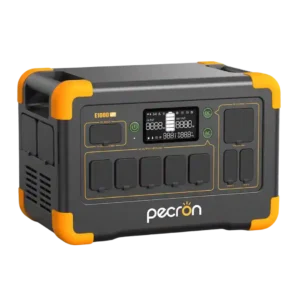
Pecron E1000LFP
Where It Has the Edge
- weight is 3.6 vs 1.9. Around 29–30 pounds is manageable for short carries but heavy enough that some users will notice it, especially...

Scorata scores summarize analyzed review evidence on a 1–5 scale; they are not laboratory measurements or a simple average of customer star ratings. Feature scores summarize the reviews covering that feature. The overall score averages feature scores within each review, then combines review averages. When both expert and customer evidence are available, those two groups receive equal weight. Products can have different review coverage, so small score gaps do not establish a winner.
Recommendations prioritize important features for the category, with a score of at least 3.5, a gap of at least 0.25 points and at least two supporting reviews per product. Features with widely varying scores or broad connectivity contexts are excluded from recommendations. These safeguards do not establish statistical significance.
Quick verdict
The review evidence points to a tradeoff: weight versus battery reliability and surge capacity. Choose according to which strengths matter more to you; the overall score alone does not settle that choice.
Choose Pecron E1000LFP for weight.
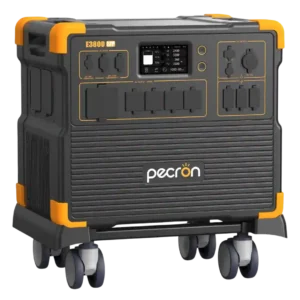
Choose Pecron E3800LFP for battery reliability and surge capacity.
Scores are out of 5. Missing scores mean missing review evidence, not a missing feature.
A true master power button, clear controls, and deliberate shutdown behavior make everyday operation simple and reassuring.
On-device controls are extensive and generally straightforward, and customers often describe basic operation as easy.
After the battery drains completely, AC output does not automatically re-arm when power or solar returns, so unattended loads such as a refrigerator need manual intervention.
Solar wake-and-charge/dark-start behavior works automatically after depletion and is considered a valuable resilience feature.
The E1000LFP is not a whole-home solution; it is better suited to selected essential loads and lighter outage coverage.
A single unit is limited to 120V, but two E3800LFP units with Pecron’s 240V box can support broader home circuits and split-phase loads.
Surge headroom is the most consistent performance weakness: motors and large power tools can trip the inverter quickly, and several competitors handle startup spikes better.
Surge handling is a standout strength, with reviewers repeatedly confirming demanding startup loads and short peaks well above continuous rating.
All-front access is convenient in tight spaces, yet floppy protective covers and crowded spacing can make actual plug access less pleasant than the layout first suggests.
Front-facing, labeled ports and grouped DC connections are described as logical and easy to reach.
Clear labels and a straightforward front panel are positives, but tight AC outlet spacing and awkward side covers can make bulky plugs or frequent access frustrating.
Owners find the physical panel straightforward for common adjustments without relying on a phone.
Around 29–30 pounds is manageable for short carries but heavy enough that some users will notice it, especially compared with newer lighter alternatives.
The roughly 87–90 lb unit is widely described as heavy. It is movable, especially with the cart, but stairs and frequent lifting can require a second person.
Idle draw is inconsistent across measurements, from acceptable or better-than-average to enough to drain roughly 40% in a day; turning unused outputs off is important.
Idle draw is generally considered low to acceptable, though one reviewer dislikes the UPS cycling behavior that can add battery cycles.
It is well suited to basic outage loads such as refrigerators, lights, routers, and smaller appliances, but weak surge headroom and one severe overheating report make it less convincing for demanding whole-home backup.
Reviewers consistently find it well suited to essential home backup, with enough 120V output for refrigerators, pumps, lights, networking gear, tools, and other outage loads.
Power quality is generally usable to good, but high-load waveform distortion and at least one cleaner competing inverter keep it from being a class leader.
Scope and audio testing found the AC output to be a clean sine wave suitable for sensitive electronics and radio/audio use.
The high-current XT60 DC output is one of the E1000LFP's clearest advantages, giving vehicle, fridge, heater, and RV users much more useful 12V capability than a basic car socket.
DC capability is flexible, but one test found materially lower usable capacity through the 12V path than through AC.
The E1000LFP packs substantial capability into a relatively compact body that is easy to place and move compared with many similarly capable stations.
For its capacity class, the E3800LFP is considered relatively compact, although it is still heavy and best suited to semi-permanent use.
Transfer time is serviceable to strong, with a measured 13.5 ms cutover keeping a desktop running, though one comparison notes faster competitors exist.
Transfer between grid and battery is described as smooth and fast enough to keep computers and other electronics running without visible interruption.
System expansion to around 4kWh meaningfully broadens backup capability, even if a few competitors support still larger totals.
The platform can grow from one 120V unit into a larger battery bank or two-unit 240V system, giving buyers room to scale.
App-based temperature and operating information adds useful visibility beyond the front display.
The touchscreen and app expose unusually detailed telemetry, but a few owners report inaccurate wattage readings or awkward presentation.
The 20A current allowance is excellent for parallel and rigid-panel setups, but the 60V ceiling limits how many common panels can be placed in series.
Owners report successful use with external panels, and the wide solar voltage range supports many array configurations.
Usable efficiency is generally strong, often in the mid-80s to mid-90s depending on AC or DC output; the strongest DC results are excellent, though one run was merely average.
Measured AC efficiency around the mid-80s to low-90s is rated very highly by testers.
Most units sustained demanding loads at or near the 1,800W rating without trouble, but one sample repeatedly shut down from heat during continuous discharge.
Testing and owner reports show confident operation with appliances, pumps, tools, RV loads, and mixed devices, with limits mainly when multiple large startup loads coincide.
The supplied AC, car, and solar charging cables cover the core charging methods without requiring immediate extra purchases.
The bundled rolling base, charging cables, solar leads, and cable case add meaningful practical value.
The 1,800W continuous inverter gives the E1000LFP more AC headroom than some compact rivals, though the benefit depends on how many devices are used together.
The 4,200W-class inverter repeatedly handles heavy real-world loads and can even exceed its rating briefly without instability.
App control makes it convenient to switch outputs and manage the station without standing next to it.
Reviewers generally view remote control positively where discussed, with the comments reflecting real-world use rather than specifications alone.
The lack of an integrated light is a repeated annoyance for camping and blackout use, especially because several competing stations include one.
Multiple reviewers consider the lack of a built-in light an avoidable inconvenience during outages.
Real refrigerator results ranged from roughly 13 to over 16 hours depending on the appliance and test, with one comparison giving the Pecron the longest runtime among several similar stations.
Runtime is strong on essential and moderate loads, including refrigerator tests lasting roughly a day to nearly three days; heavy loads naturally shorten endurance.
The port mix is broad and practical for camping, cameras, small electronics, and backup use, with AC, USB, car-socket, barrel, and high-current XT60 options.
Reviewers appreciate the broad mix of AC and DC outputs for backup, RV, and off-grid use.
Most owners see the E1000LFP as an unusually capable budget station and recommend it strongly, but a minority encountered severe thermal behavior that makes the overall picture less uniform than the price alone suggests.
Overall sentiment is strongly positive: most reviewers recommend the E3800LFP for its hardware capability and value despite software, weight, and refinement caveats.
Voltage remained stable near heavy continuous loads in the favorable stress tests, with little or no sag.
Sustained heavy-load testing remained stable without aggressive throttling or erratic behavior.
The 600W solar ceiling is strong for a 1,024Wh station and beats some direct competitors, though it becomes less adequate if the battery system is expanded heavily.
Dual high-voltage MPPT inputs provide unusually large solar capacity for the price, though one reviewer wanted more voltage headroom near the 150V ceiling.
Solar operation is dependable: the station accepts rated input, works during pass-through use, and can wake itself to begin charging when sunlight returns.
Owners use the E3800LFP effectively for solar-powered home loads, RVs, and off-grid camping.
One hands-on evaluation called the inverter outstanding after it powered a broad set of real appliances without instability.
The inverter repeatedly delivers stable, strong real-world output near its limits and is one of the hardware highlights.
When pushed past its limit, the inverter shut down cleanly rather than continuing an unsafe overload, which is the desired behavior.
Testing confirmed the unit eventually trips protection when held above its continuous rating, while still allowing useful short-term headroom.
Despite weighing around 29–30 pounds, the compact case and dual handles make it practical for camping, car travel, RV use, and moving around the home.
The included rolling base makes flat-floor movement easy, but the station is better treated as semi-portable than grab-and-go.
UPS behavior is generally dependable and fast enough for computers and home backup, though one specialist rates its backup implementation as only average for the class.
UPS behavior is generally reliable and fast enough for sensitive electronics, but output limits and some charge-state behavior create caveats in certain setups.
Confidence is weakened by reports that one unit would not stay fully topped off while plugged in, particularly for emergency standby use.
Hardware and cell charging were reported as reliable even when software communications caused problems.
The selectable 8A/20A DC input is unusually flexible, accommodating car charging, direct batteries, and varied solar configurations when used with the correct wiring.
The broad voltage range is useful, but XT60-only primary solar inputs can require adapters for existing MC4 or Anderson setups.
There is no wireless phone charging pad; some users miss it, while others consider it a convenience rather than a requirement.
Several reviewers miss the wireless charging pads found on the E3600 and view their removal as a small step backward.
The 1,024Wh pack offers decent capacity for the size, but capacity alone does not offset concerns about heat and standby behavior in the most negative evaluation.
Owners generally praise the large base capacity, though heavier long-duration use may still justify expansion batteries.
Usable capacity is generally solid to excellent, commonly returning the mid-to-high 80% range or better, though extreme cold can erase the E1000LFP's nominal capacity advantage.
AC discharge testing produced about 93% usable capacity, an excellent result, while low-voltage DC use was less efficient.
Wall charging is generally very fast, often around an hour, though one thermal-stressed unit made that speed a liability by overheating and delaying subsequent charging.
AC charging is a major strength, with 30A charging commonly reaching full in around 1.4–1.5 hours and standard outlets taking about 2.5 hours.
Expansion is a major advantage: the E1000LFP can grow to roughly 4kWh, making it much more adaptable than fixed-capacity alternatives, though some rivals scale slightly higher.
Expansion is one of the platform’s strongest advantages, allowing much longer outage runtime without replacing the main unit.
The 3,500-cycle rating is consistently viewed as a strong longevity figure and compares well with several competing 1kWh stations.
The 3,500-cycle rating is viewed as a major longevity advantage for long-term backup ownership.
Cold-weather self-heating can confuse the state-of-charge display, with readings temporarily stuck or implausibly high; the charging system may still be functioning correctly underneath.
One owner reported substantial state-of-charge differences among connected batteries, reducing confidence in pack balancing/readouts.
Simultaneous AC and DC charging works well, with the station intelligently giving priority to DC input while filling the remainder from AC.
The station can combine solar with AC or generator charging smoothly, a flexibility testers found especially useful.
With enough panel power, a full solar recharge can take roughly two to two-and-a-half hours, which is strong for a 1kWh-class station.
Solar charging is consistently praised as fast when the array and sun are adequate.
The BMS successfully protected the pack during a frozen recharge scenario, even though the displayed state of charge became inaccurate.
BMS behavior is generally positive, including good factory calibration and useful cell-level diagnostics, but one owner saw uneven discharge among expansion batteries.
LiFePO4 chemistry adds to the value proposition, especially at the sub-$400 pricing highlighted by one owner.
Reviewers strongly approve of the LiFePO4 chemistry for longevity, thermal stability, and backup use.
Bright backlighting and clear information make the screen easy to read indoors and in sunlight.
The touchscreen carries lots of information, but opinions are mixed: some find it bright and easy to read, while others criticize tiny text and low-contrast state-of-charge information.
The refreshed display is broadly liked for its size, brightness, and cleaner presentation, and compares well with more premium competitors.
The touchscreen is generally responsive and useful, though a customer reported a persistent temperature-unit display quirk.
Fan noise varies notably by unit and workload, ranging from whisper-quiet to clearly louder than competitors; most owners find it acceptable, but noise-sensitive bedroom users should be cautious.
Most lab-style testing found the E3800LFP relatively quiet even under high load, but one customer found the cooling fan unacceptably intrusive even below 200W.
One problematic sample kept its internal fans running even at full charge with all output ports disabled, an undesirable behavior for quiet standby use.
One customer reports the cooling fan is plainly audible even at low output, making nearby living-room use unpleasant.
Warranty coverage is adequate rather than generous: registration can extend it to three years, but some close rivals provide five years.
The five-year registered warranty is repeatedly viewed as reassuring for a high-cost power product.
Basic hardware setup is simple and clearly labeled, but app onboarding can be clunky enough to drag down the otherwise easy experience.
The station and 240V bundle are generally straightforward to deploy, with plug-and-play behavior praised by beginners.
Support is improving with phone access and successful callbacks, but knowledge and consistency still lag stronger service organizations and remain a common budget-brand concern.
Support feedback is mostly positive by email, including fast replies and repair/replacement options, though phone availability can be limited.
The many ports support several devices at once, but heavy use of the high-current DC output can disable the 100W USB-C ports to protect the shared DC power budget.
The inverter can power several devices at once with substantial headroom, though coincident startup surges can still cause overloads.
Value is the strongest consensus point: sale prices around the high-$300s deliver unusually rich features, strong DC capability, expansion, and fast charging, although reliability concerns can erase that advantage for heavy-duty users.
Reviewers repeatedly call the E3800LFP an unusually strong bargain, pairing large capacity, high output, and fast charging with pricing well below many premium rivals.
Wi-Fi worked reliably in regular use and was especially useful for checking the station remotely, even when Bluetooth setup was less straightforward.
Wi-Fi remote telemetry is useful where available, but some testing found slower updates, and one review describes configurations without Wi-Fi as a weakness.
Review contexts may differ, so use caution when interpreting the score gap.
Wireless control is useful once connected, but setup quality varies sharply: some users had seamless Wi-Fi/Bluetooth access while others found pairing clunky or dependent on Wi-Fi first.
Reviewers generally view app connectivity positively where discussed, with the comments reflecting real-world use rather than specifications alone.
Bluetooth pairing is a weak spot: multiple users had trouble connecting directly and ended up relying on Wi-Fi or setting Wi-Fi up first.
Bluetooth can be quick with useful in-home range, but some reports describe inconsistent pairing or complete communication failure.
Review contexts may differ, so use caution when interpreting the score gap.
The 1,800W inverter handles kettles, mixers, air fryers, refrigerators, and some tools well, but high-inrush saws, large vacuums, and simultaneous heavy loads can exceed its limited surge headroom.
The E3800LFP handles pumps, microwaves, tools, air conditioners, and other demanding loads well, though simultaneous startup-heavy RV loads can still exceed its limits.
The app itself is a strong feature, with remote controls, charging-rate settings, display options, status information, and even the manual; setup friction is the main caveat.
App experiences vary: some users find it functional or trouble-free, while others report rough UI, setup trouble, or outright dislike.
Construction impressions are mixed: some units feel solid and substantial, while another lost a bumper foot despite careful handling and raised durability concerns.
The E3800LFP is described as solid, durable, and utilitarian rather than luxurious, with construction oriented toward practical backup use.
The redesign is more modern and rounded than older Pecron stations, yet opinions range from sharp and good-looking to utilitarian or outright unattractive next to sleeker EcoFlow models.
The industrial E-series look is practical and clean to some reviewers, but less visually refined than newer rounded competitors.
The side handles are consistently comfortable and make the roughly 30-pound station easier to carry.
Large smooth side handles make two-person or short-distance lifting easier despite the unit’s weight.
The retained 12V car socket is a real strength for camping and overlanding gear, especially alongside the barrel and XT60 DC outputs.
The 30A output is a particularly useful feature for RVs and certain backup connections.
Pecron's optional direct-battery and expansion accessories add unusual flexibility, including ways to move substantial DC power to other equipment.
Five AC receptacles are unusually generous for a compact 1kWh station and are widely appreciated, although one owner felt five was more than this inverter really needs.
The included drawstring cable bag is a simple but useful touch for keeping the charging leads together.
Large ventilation openings make this a poor choice for very dusty environments unless it is kept well protected.
Measured inverter EMI was relatively low, and an audio test produced no noticeable interference.
Reviewers generally view firmware updates positively where discussed, with the comments reflecting real-world use rather than specifications alone.
The inverter held 60Hz during a sustained heavy-load run, supporting stable operation under stress.
Thermal behavior is the biggest point of disagreement: multiple units handled full load without overheating, while one sample repeatedly ran dangerously hot and shut down.
Solid corner bumpers provide useful protection against everyday knocks and handling, adding confidence when moving the station around.
The manual is reasonably comprehensive and covers the information a typical owner is likely to need.
At about 30 pounds it is not light, but the dual handles make it manageable for an average adult to lift and move.
Thermal protection correctly prevented charging when the pack was too hot, helping protect the battery after a demanding run.
One unboxing found extensive foam protection that kept the heavy unit secure in transit.
The inverter does produce a pure sine wave and can look very clean at moderate loads, although visible distortion increases as output approaches the maximum.
Wi-Fi/app access is genuinely useful for checking remaining charge and operating status from a tent, another room, or another building.
RV owners report strong results, with the 30A connection making dedicated RV use straightforward.
Pecron’s US service footprint is viewed as less established than larger competitors, a caveat for buyers prioritizing local support.
The customer who commented on delivery said the unit shipped on time.
Reviewers dislike that the unit lacks a simple powered-on ready state without an inverter or DC output active, which can create unnecessary idle drain.
The included MC4-to-XT60 lead is useful, but its very short length may require an extension with some panels.
With most connections on the front and one side, the station can sit flush near a wall while remaining easy to access.
Reviewers generally view transfer switch compatibility positively where discussed, with the comments reflecting real-world use rather than specifications alone.
The two USB-A ports are a welcome addition alongside USB-C, preserving support for older accessories and charging cables.
Dual USB-C ports complement the legacy USB-A connections and give the front panel a well-rounded device-charging setup.
Both USB-C ports can deliver up to 100W and performed well, but some rivals now offer 140W ports and heavy DC loads can temporarily disable the 100W outputs.
Voltage held near the expected 120V level during sustained high-load operation, indicating solid regulation in that test.
Its open ventilation and need for a dry environment make it poorly suited to unprotected exposure in rain, dust, or harsh weather.
The cart is widely praised for smooth, easy movement, though one long-term user warns the stacked system can tip if all casters are locked in the same direction.
Automation is feature-rich but immature. Multiple testers found conditions that did not reset as expected, making the feature less dependable than the core hardware.
Long-term confidence is mixed: LiFePO4 cycle life is promising, but severe thermal behavior in one sample created legitimate concerns about component longevity.
The portable panels are easy to fold, carry, clean, and deploy, though their output is more modest than larger fixed arrays.
Its long-cycle LiFePO4 pack is positioned as something to keep for years rather than replace quickly.
Storage retention trails at least one close competitor, making the Pecron less ideal for buyers who plan to leave it sitting for long periods between outages.
Car charging works but is slow enough to be a meaningful limitation for users who depend on topping up while driving.
AC charging efficiency measured about 90.6%, a strong result for this size of portable station.
Pass-through operation is consistently reliable, allowing connected loads to keep running while the station recharges from AC or solar.
Self-heating is the E1000LFP's signature advantage and repeatedly works well in freezing conditions, but some users dislike that heating requires incoming wall or solar power rather than using stored battery energy.
Cooling results conflict sharply: several units stayed cool with smooth, quiet fan control, while one sample overheated repeatedly and required long cooldown periods.
At maximum output, some units remained surprisingly quiet and non-intrusive, showing that the fan system can behave very well under load.
Most core behavior matched its ratings, but surge performance fell well short of the advertised 3,000W claim in at least one controlled test.
One carefully handled sample lost a bottom bumper foot, creating a serious concern about long-term physical durability.
Rubberized bumpers and a rugged shell feel ready for vehicle and RV use, although broader durability feedback is not uniformly positive.
Compared directly with EcoFlow, the Pecron's plastics feel less premium and contribute to its more utilitarian presentation.
The power-to-size ratio is a strong point, providing 1,800W output and 1kWh-class storage without an oversized enclosure.
The vented enclosure does not inspire confidence around water, so it is better treated as a dry-location power station.
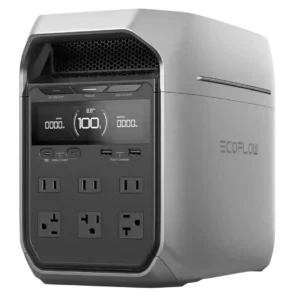
Best for rapid charging, versatile ports, excellent app control, and portable backup for appliances or electronics. Skip it for unattended low-load use or sustained heavy loads unless fan behavior and...
Pros: overall product satisfaction, solar panel compatibility
Cons: long-term reliability, standby power loss
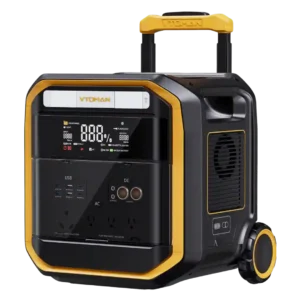
Best for fast-charging, high-output backup power that can run major appliances and roll easily between locations. Skip it if you need frequent lifting, a small footprint, or a screen that...
Pros: overall product satisfaction, recharge speed
Cons: weight, lifting ease
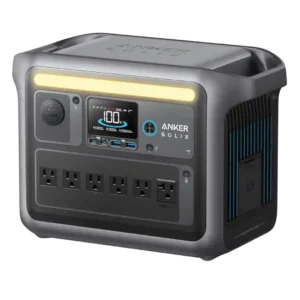
Best for fast charging, strong portable output, and short outage or camping duty. Skip it for quiet rooms, multi-day whole-home backup, or solar-only use with small panels.
Pros: overall product satisfaction, runtime
Cons: noise level, weight
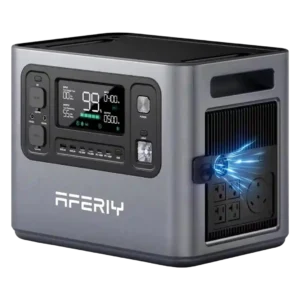
Choose the P280 for high-output home, RV, or off-grid backup with fast charging, strong usable capacity, UPS protection, and expansion. Skip it if you need lightweight portability, polished app control,...
Pros: overall product satisfaction, battery expandability
Cons: weight, built-in light