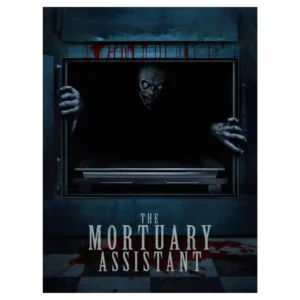
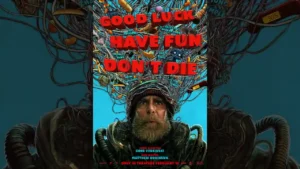
The Mortuary Assistant
Where It Has the Edge
- special effects quality is 4.6 vs 4.0. Effects work is overwhelmingly praised, especially the visceral corpse preparation, gore, prosthetics, and body-horror imagery. Even reviewers who...

Scorata scores summarize analyzed review evidence on a 1–5 scale; they are not laboratory measurements or a simple average of customer star ratings. Feature scores summarize the reviews covering that feature. The overall score averages feature scores within each review, then combines review averages. When both expert and customer evidence are available, those two groups receive equal weight. Products can have different review coverage, so small score gaps do not establish a winner.
Recommendations prioritize important features for the category, with a score of at least 3.5, a gap of at least 0.25 points and at least two supporting reviews per product. Features with widely varying scores or broad connectivity contexts are excluded from recommendations. These safeguards do not establish statistical significance.
Quick verdict
The available evidence supports the recommendation below, but does not establish an overall winner. Check the remaining features against your priorities.
Choose The Mortuary Assistant for special effects quality.
There is not enough comparable review evidence to recommend Good Luck, Have Fun, Don’t Die over the other product.
No clear scored advantage over the other product.
Scores are out of 5. Missing scores mean missing review evidence, not a missing feature.
The demonic rules and mortuary mythology are a major fault line. Fans sometimes enjoy the expanded lore and game callbacks, but many reviewers find the explanations simultaneously dense, incomplete, and difficult to translate into movie logic.
The strange anti-tech world is compelling enough to inspire interest in spending more time with the premise and its characters.
The film has striking pockets of grim lighting, clinical close-ups, game-faithful compositions, and creepy creature imagery. Other reviewers find the palette drab or the lighting too dark, so the visual style is more admired in moments than universally.
The film’s look is one of its most consistent strengths: grimy, blue-tinged, kinetic, surreal, and packed with odd imagery. Even mixed reviews often credit its visual personality.
Sound design is a major technical strength, from clinical embalming noises to oppressive institutional clangs and subtle mortuary ambience. Even mixed reviews credit it with doing heavy atmospheric work.
The sound design is singled out for how fully it reinforces the film’s heightened comic-sci-fi identity and recurring title motif.
River Fields Mortuary is widely praised as a claustrophobic, detailed central location that often resembles the game closely. Even negative reviews commonly acknowledge the set work and low-budget production effort.
The production design turns modest locations into a vivid, grimy, surreal world, with the diner, future-tech props, AI room, and bizarre creatures giving the film a distinctive personality.
The core premise has potential, but the movie’s story is usually judged too cluttered, repetitive, or lore-heavy to fully work. A smaller group likes how it reshapes multiple game threads into one night and gives Rebecca more personal context.
The story wins praise for energy, ideas, and memorable character vignettes, but its central mission can feel thinner than the side stories. Reviewers most often disagree over whether the messy structure enriches or weakens the experience.
The limited physical action drew a sharp complaint for awkward staging and editing when characters are thrown around or fight supernatural forces.
The action is often praised for kinetic staging, readable movement, and oddball set pieces. Some reviewers find the later action less exciting or too dependent on chaotic spectacle.
Character chemistry is inconsistent. Some reviewers liked the uneasy interplay around Rebecca and Raymond, while others felt the cast lacked connection and that this weakened the film’s emotional pull.
Character interplay is frequently enjoyable, with Sam Rockwell and Haley Lu Richardson singled out for strong chemistry and banter. Some relationships feel less developed than the performances themselves.
Editing is a recurring problem: several reviewers describe scenes as disconnected, oddly ordered, or abruptly cut between scares and exposition. A few found the construction serviceable, but the overall pattern is negative.
The editing helps organize rapid shifts between action, flashbacks, and surreal imagery, though the stop-start structure and long detours make the overall flow feel uneven to some reviewers.
Humor is mostly accidental rather than intentional. Reviewers who laughed did so at stiff performances or awkward horror beats, not because the script successfully plays as comedy.
The comedy is frequently praised as sharp, dark, and laugh-out-loud funny, especially when it turns modern anxieties into absurd set pieces. Some reviewers find the gallows humor mean, obvious, or ineffective.
Dialogue is a consistent weakness, with repeated complaints about unnatural exchanges, robotic delivery, exposition-heavy conversations, and lines that feel carried over from game logic rather than film dialogue.
The dialogue has sharp one-liners, comic rhythms, and memorable verbal bits, but several critics think the script becomes overly expositional or obvious in the final stretch.
The screenplay is the film’s most consistently criticized creative component. Dense lore, repetitive explanations, awkward structure, and game-like task progression often crowd out a clean cinematic narrative.
The screenplay is admired for ambition, sharp satire, funny ideas, and inventive structure, but it is also the main target of criticism for repetition, overstuffing, exposition, and uneven late plotting.
CGI impressions are mixed-to-positive: some reviewers found the digital work solid or unobtrusive, while another thought noticeable CGI use undercut creature scenes that would have benefited from more practical work.
The CG is divisive: some like the deliberately strange, AI-slop look of the creatures and finale, while others call parts of it rough or distracting.
As horror, the movie is divisive and leans negative: practical gore and creepy mortuary imagery satisfy some genre fans, while many others say it simply is not scary or tense enough.
As a sci-fi dark comedy, it embraces time travel, horror, action, satire, and surrealism with unusual confidence. Fans of weird genre mashups tend to respond much more strongly than viewers wanting a conventional thriller.
The score divides reviewers: some found it enveloping or appropriately eerie, while others thought the cues were intrusive, generic, or forgettable and sometimes spoiled otherwise tense moments.
The score is praised for shifting between ominous electronic textures and bigger orchestral energy without losing the movie’s playful, anxious tone.
A handful of reviewers liked the unusual mortuary-and-demon concept and reality-bending setup, giving the core premise stronger marks than the execution around it.
The core time-travel and rogue-AI setup is familiar, yet many reviewers think the film finds a fresh angle through its bizarre vignettes and satire. Others see the story as too indebted to earlier genre landmarks.
Several reviewers felt the movie stays flat or shifts awkwardly between trauma drama, game-like tasks, and supernatural horror. Its grim mood is consistent visually, but dramatic escalation often feels uneven.
The movie intentionally jumps between slapstick, grief, horror, action, and bleak satire. Many reviewers admire how boldly those tones coexist, while others find the shifts jarring, unstable, or exhausting.
The finale is one of the weakest consensus areas, often described as rushed, underwhelming, confusing, or not worth the buildup. A minority liked how it folded multiple game endings together and left room for more.
The ending is one of the biggest points of disagreement. Some like its open, strange, thematic finish, while others find the final act drawn out, confusing, over-explained, or less satisfying than the setup.
Scare effectiveness is the central disappointment for many reviewers. Creepy background figures, the Mimic, body horror, and occasional fake-outs work, but repetitive jump scares and weak buildup often keep the film from feeling truly frightening.
The movie is more unsettling than traditionally frightening, using horror imagery, technology anxiety, and disturbing social ideas to create discomfort. Viewers wanting straightforward scares may find the tone too comic or surreal.
Addiction, grief, guilt, self-harm, and the idea of a lifelong struggle against inner demons give the film thematic ambition. Reviewers split sharply on whether those ideas feel poignant or overly familiar and explicit.
The film has substantial ideas about grief, distraction, technology, authenticity, and choosing painful reality over comforting simulation. Reviewers disagree on how deeply those ideas are explored versus loudly stated.
Pacing is one of the strongest recurring complaints. Many reviewers found the 90-ish-minute film slow, uneven, repetitive, or burdened by exposition, although a few liked its concise slow-burn rhythm.
The opening is commonly praised for immediate momentum, but the flashback structure often slows the central mission. Many reviewers say the movie regains energy in bursts rather than sustaining it cleanly for the full runtime.
The film can generate dread through isolation, shadows, and clinical routine, especially early on. Many reviewers say that tension repeatedly collapses under exposition, predictable jump scares, or overexposed monsters.
Verbinski can generate real tension inside the comedy, especially in escape scenes and uncertain reality shifts. Some reviewers think jokes or detours repeatedly deflate that tension before it can fully build.
Jeremiah Kipp earns credit for atmosphere, clinical detail, and isolated creepy images, but opinions split on his handling of pacing, action, and narrative coherence. The craft is often stronger than the movie’s overall flow.
Gore Verbinski’s direction is mostly praised for energy, visual invention, and control of the film’s chaos. Critics who are cooler on the movie still often credit his staging, even while calling the result overlong or indulgent.
The mortuary is often photographed with immersive close-ups, shadows, tracking shots, and claustrophobic framing. A smaller group found the lighting muddy, washed out, or visually bland.
The film’s camera work earns strong praise for inventive framing, movement, lighting, and a grubby blue-toned look that keeps the lower-budget production visually lively.
Effects work is overwhelmingly praised, especially the visceral corpse preparation, gore, prosthetics, and body-horror imagery. Even reviewers who dislike the movie often single out the effects as worth seeing.
The effects are generally viewed as imaginative and resourceful for the scale, especially the surreal creatures and action imagery. Some late digital work looks deliberately or unintentionally rough, which splits opinion.
The addiction-and-trauma material can hit hard when Rebecca’s guilt and recovery are foregrounded, and one reviewer found it deeply resonant. Others felt weak chemistry or clumsy integration blunted that impact.
Despite the manic premise, the film repeatedly finds real sadness and heart in grief, loneliness, and the desire for human connection. Susan and Ingrid’s material is most often cited as the emotional core.
The addiction-and-possession parallel works for reviewers who connect with Rebecca’s lifelong struggle against guilt and relapse. Others find the metaphor obvious, overexplained, or too loosely attached to the plot.
The anti-AI and anti-distraction message feels timely, pointed, and emotionally relevant to many reviewers. Others find it repetitive, preachy, condescending, or less nuanced than its ambitious setup suggests.
Practical mortuary effects are the film’s most consistent triumph. Embalming, autopsy, gore, wounds, corpses, and prosthetic work are repeatedly called convincing, visceral, gross, and memorable.
The practical effects blend nearly seamlessly with the visual effects, helping the movie’s handmade chaos feel cohesive.
The mythology and cause-and-effect are frequently hard to follow, especially for newcomers. A few reviewers found the reveals clear enough, but many describe unanswered questions, confusing rules, and scenes that fail to connect.
The basic mission is easy enough to follow, but dream logic, shifting reality, and late reveals make the larger mechanics deliberately slippery. Some enjoy that uncertainty; others find the logic inconsistent or confusing.
At roughly an hour and a half, the film is objectively compact, yet many reviewers say it feels much longer because of repetition and exposition. A few thought the concise length worked in its favor.
The two-hour-plus runtime is the most repeated complaint. Even many positive reviewers say the film would be stronger with tighter trimming, especially around flashbacks and the extended finale.
The clinical mortuary work benefits from tactile sets and convincing practical detail, making embalming and corpse preparation feel unusually immediate. A few effects break the illusion, but the procedural material is a major grounding force.
Its sci-fi events are intentionally absurd, but the social behavior underneath them often feels uncomfortably plausible and recognizable. That near-future familiarity gives the satire much of its sting.
Rebecca’s recovery, grief, and growing confidence give the film an emotional spine for some viewers. Others found her backstory thin, clichéd, or awkwardly connected to the demonic plot.
The flashback chapters give several recruits memorable emotional context, especially Susan and Ingrid. Reviewers also note that some supporting characters remain thin and that the backstories can interrupt momentum.
One reviewer felt Holland could make dramatic moments land even when the script had not fully earned them, highlighting how much the emotional material depends on her performance.
The dramatic material can land surprisingly hard beneath the absurd comedy, particularly around grief, isolation, and damaged relationships. Its tonal shifts make those beats powerful for some viewers and awkward for others.
Music reactions lean negative overall: some liked the creepy game-derived theme, but others found the broader music distracting, overbearing, or too eager to manufacture scares.
The music and end-credit material fit the film’s manic, darkly playful personality, with a few reviewers calling the soundtrack a strong tonal match.
Supporting performances are much more divisive than the lead. Paul Sparks is praised by some as perfectly eerie and detached, while others call him robotic, one-note, or unintentionally funny; smaller supporting turns fare better.
The supporting cast is widely praised for fully committing to the film’s strange tone, with Haley Lu Richardson and Juno Temple receiving especially strong notices. A few roles are considered underused despite the talent involved.
The cast is one of the film’s most disputed elements. Willa Holland is frequently praised for grounding Rebecca, while several reviewers found other performances stiff, robotic, or uneven.
The performances are widely seen as a major strength, with the ensemble committing fully to the movie’s eccentric mix of comedy, anxiety, and heart. A few critics think the shifting tone leaves some actors less grounded.
Willa Holland is the clearest acting strength and is repeatedly credited with carrying the film through weak exposition and uneven scares. Even mixed reviews usually describe her as committed, grounded, or effective.
Sam Rockwell is the clearest consensus strength: charismatic, funny, manic, and emotionally frayed without turning the character into a one-note joke. Even mixed reviews often say he keeps the movie watchable.
Overall enjoyment skews negative despite pockets of enthusiasm. Viewers who respond to the gore, mortuary setting, and game callbacks can have fun, but many found the movie boring, tedious, or forgettable.
Most reviewers find it energetic, funny, and highly entertaining, often calling it a blast or a wild ride. A smaller group finds the experience exhausting, disjointed, or simply not entertaining enough to justify the length.
Rewatch interest is split but generally positive among supporters: some expect repeat viewings to reveal missed details or reward devoted fans, while confusion made at least one reviewer’s repeat attempts feel like work.
Its dense ideas and details invite repeat viewing, with the appeal growing as the ending and themes are unpacked.
Value depends heavily on the viewer: game fans and body-horror devotees can find the faithful details worth the ticket or rental, while one severe detractor regretted even a tiny booking fee.
Enthusiastic reviewers call it worth the ticket price and particularly suited to a theatrical crowd, while more mixed reactions stop short of urging an immediate cinema trip.
Game fans are the clearest target, with several reviewers saying familiarity adds recognition and context. Newcomer appeal is much less certain because the lore can be hard to follow, though a few reviewers found it accessible without playing.
Its oddball style has clear cult-movie potential and many reviewers recommend seeing it with a crowd. The same weirdness, blunt satire, and long runtime make it an acquired taste rather than a universal crowd-pleaser.
The UHD transfer is praised for razor-sharp detail, clean imagery, strong texture, and a cool-toned grade that suits the movie’s look.
The film recreates the game’s location, rituals, creatures, and recognizable beats with considerable fidelity. Reviewers disagree on whether that loyalty is a strength or the reason game mechanics and lore feel clumsy on screen.
One horror-focused review treats the foul-mouthed possession material as part of the film’s enjoyable extreme-horror texture rather than a distracting excess.
Body and creature makeup is usually praised, especially the grisly mortuary work. The main monster is more divisive, with some calling it memorable and others saying visible low-budget seams make it look costume-like.
For viewers seeking graphic horror, the violence is a feature rather than a flaw: mutilation, bloodletting, corpse work, and gore are described as nasty, visceral, and enthusiastically effective.
One reviewer treated the film as plausible high-school sleepover horror, while another informally pegged its gore, profanity, and embalming imagery around a PG-13 level. The material is still deliberately grisly.
The Atmos mix is described as bold and active, with deep bass, wide surrounds, directional effects, and strong action impact.
The costumes help sell the movie’s handmade, surreal personality, especially the Man from the Future’s improvised plastic-and-wires outfit and Ingrid’s battered princess look.

A deeply human coming-of-age drama carried by remarkable performances and an honest portrayal of grief. Its gentle optimism moves most viewers, though some find the final stretch hurried or overly...
Pros: Grief portrayal, acting performance
Cons: pacing

Billie Jean King’s magnetic first-person storytelling makes this an exhilarating portrait of athletic courage and social change. The filmmaking follows a familiar documentary structure, and her full tennis résumé gets...
Pros: entertainment value, Biographical coverage
Cons: Narrative structure

Choose this inventive, unsettling documentary for fearless questioning, dark humor, and unpredictable storytelling. Skip it if you want a short, straightforward exposé with definitive answers.
Pros: originality, humor

A singular voice, powerful piano playing and intimate film photography make this concert absorbing for receptive listeners. Its uninterrupted, often similar-sounding songs and lack of background context are an acquired...
Pros: directing quality, cinematography
Cons: pacing, Song variety