Compare Cambridge L/R S vs Cambridge Audio L/R X

Cambridge L/R S

Cambridge L/R S

Overall score 4.3 / 5

Based on 18 scored reviews

vs
Cambridge Audio L/R X

Cambridge Audio L/R X

Overall score 4.2 / 5

Based on 10 scored reviews

How we score

Scorata scores summarize analyzed review evidence on a 1–5 scale; they are not laboratory measurements or a simple average of customer star ratings. Feature scores summarize the reviews covering that feature. The overall score averages feature scores within each review, then combines review averages. When both expert and customer evidence are available, those two groups receive equal weight. Products can have different review coverage, so small score gaps do not establish a winner.

Recommendations prioritize important features for the category, with a score of at least 3.5, a gap of at least 0.25 points and at least two supporting reviews per product. Features with widely varying scores or broad connectivity contexts are excluded from recommendations. These safeguards do not establish statistical significance.

Quick verdict

What each product is best for

The review evidence points to a tradeoff: Value for money and Treble performance versus Distortion at high volume and Inter-speaker connectivity. Choose according to which strengths matter more to you; the overall score alone does not settle that choice.

Choose Cambridge L/R S for Value for money and Treble performance.

Choose Cambridge Audio L/R X for Distortion at high volume and Inter-speaker connectivity.

Why these recommendations?

Cambridge L/R S

Where It Has the Edge

  • Value for money is 4.3 vs 3.7. Value is generally strong once sound, build and engineering are considered together. It costs more than some desktop...
  • Treble performance is 4.4 vs 3.9. Treble is usually smooth, clear and substantial without turning sharp or sibilant, which helps long listening sessions stay...
  • Tonal balance is 4.1 vs 3.8. The overall balance is generally smooth, even and close to neutral, making long sessions easy to tolerate. It...

Cambridge Audio L/R X

Where It Has the Edge

  • Distortion at high volume is 4.3 vs 2.9. High-volume playback is generally judged composed, including an encouraging absence of concentrated distortion peaks in measurement-led testing.
  • Inter-speaker connectivity is 4.8 vs 3.9. Wireless linking gives welcome freedom to move the speakers without a connecting cable. A wired option offers faster...
  • Dialogue clarity is 4.8 vs 4.0. TV dialogue is notably intelligible, and Movie mode can further emphasize speech clarity.
Cambridge L/R S 4.3 overall score
Cambridge Audio L/R X 4.2 overall score

Compare features

Scores are out of 5. Missing scores mean missing review evidence, not a missing feature.

Scored on both products

Other features

Auto-off and standby behavior
Cambridge L/R S
2.0

Automatic standby works, but waking from an idle state can take roughly seven to eight seconds. That delay is long enough to miss the opening seconds of content unless playback is restarted.

Cambridge Audio L/R X
4.0

Using the wired speaker link can shorten the secondary speaker’s wake-up time.

Cable management
Cambridge L/R S
2.5

The included inter-speaker cable is short for lowboard, shelf or wider stereo placement. A longer cable is available, but broader layouts may require that extra purchase.

Cambridge Audio L/R X
4.5

Removing the inter-speaker cable makes repositioning easier and reduces an annoying wire across the room.

Small-room suitability
Cambridge L/R S
4.5

The L/R S is especially well suited to desks, offices, bedrooms and other smaller spaces, where its compact footprint can still produce room-filling scale. It is larger than some desktop rivals, so very narrow desks need more care.

Cambridge Audio L/R X
2.5

Very small rooms favor the competing KEF in one direct comparison; the Cambridge’s strengths are more convincing where its larger scale has room to work.

Distortion at high volume
Cambridge L/R S
2.9

Very high volume is the clearest sonic limit: the stage can flatten, become shouty or compressed, and demanding bass can introduce audible strain. One first-listen report found the broader L/R range clean at high levels, but the S-specific tests are more cautious.

Cambridge Audio L/R X
4.3

High-volume playback is generally judged composed, including an encouraging absence of concentrated distortion peaks in measurement-led testing.

Included accessories
Cambridge L/R S
2.5

The basic package covers power, the inter-speaker link and remote control, but source cables are sparse. USB-C, RCA and optical cables may need to be supplied separately.

Cambridge Audio L/R X
3.5

The supplied cable and essentials make it easy to get started, and lifting straps ease unpacking. Missing matching stands at launch drew criticism.

Inter-speaker connectivity
Cambridge L/R S
3.9

The speaker-to-speaker link feels unusually well engineered, with a secure locking connection and a sophisticated active architecture. The tradeoff is that the pair must be physically linked, with no wireless inter-speaker option.

Cambridge Audio L/R X
4.8

Wireless linking gives welcome freedom to move the speakers without a connecting cable. A wired option offers faster wake-up and a fallback for difficult wireless conditions, while extended wireless testing found no dropouts.

Dialogue clarity
Cambridge L/R S
4.0

The Voice and Movie modes make speech more prominent by lifting the mids without becoming excessively aggressive. That makes podcasts, dialogue-heavy TV and movie use easier to follow.

Cambridge Audio L/R X
4.8

TV dialogue is notably intelligible, and Movie mode can further emphasize speech clarity.

Driver protection
Cambridge L/R S
3.3

Driver protection is mixed because the speakers have no grille option, leaving the woofer exposed to fingers. The tweeter's phase cap does provide some useful physical protection.

Cambridge Audio L/R X
4.0

Protection offers reassurance against damage, but can soften transients near maximum output. Exposed front woofers also deserve care around curious children or pets.

Amplifier power requirements
Cambridge L/R S
5.0

Because amplification is built in, no separate amplifier is required. That self-contained approach is a major part of the product's simplicity and desktop appeal.

Cambridge Audio L/R X
4.3

Built-in amplification makes the system self-contained and removes the task of choosing a matching amplifier.

Remote control usability and quality
Cambridge L/R S
3.6

The Bluetooth remote is functionally comprehensive and does not need line of sight, but its execution is mixed. Hard plastic, no backlight, occasional lag or sync issues, and heavy dependence on the handset all reduce convenience.

Cambridge Audio L/R X
4.2

The remote is convenient to use and gets strong praise for its feel in one account. Another found its clipped housing came apart when dropped, though it snapped back together.

Loudness / maximum volume
Cambridge L/R S
4.1

It plays surprisingly loud for a compact desktop pair and can fill offices and small rooms with ease. The strongest results come below all-out volume, where composure is better preserved.

Cambridge Audio L/R X
4.6

The speakers can play remarkably loudly for their size while staying composed. Available output is ample for normal room listening, though party-level extremes have limits.

Dynamic headroom
Cambridge L/R S
4.0

There is ample dynamic headroom through normal and fairly loud listening, and energetic passages can sound confident and lively. Some material still feels a touch reserved, and the advantage fades as the system approaches its volume ceiling.

Cambridge Audio L/R X
4.4

Dynamic scale and headroom are standout strengths on demanding music. Protection and limiting can soften impact when the system is pushed to its upper range.

Vocal clarity
Cambridge L/R S
4.5

Voices come through with strong character, clarity and stable placement, from spoken content to sung vocals. Even more critical takes still describe the vocal presentation as natural and easy to follow.

Cambridge Audio L/R X
4.8

Voices are generally clear, full-bodied, and convincingly centered. A little extra consonant emphasis can accompany the forward presentation.

Tonal balance
Cambridge L/R S
4.1

The overall balance is generally smooth, even and close to neutral, making long sessions easy to tolerate. It is not strictly reference-flat, though, with some bass warmth and a touch of enjoyable sonic coloring.

Cambridge Audio L/R X
3.8

Balance is sensitive to room settings and placement: some listeners find it convincingly even, while others hear bass excess, forward mids, or treble irregularities. Tuning often improves the result.

Home theater integration
Cambridge L/R S
4.3

In bedrooms, offices and other small rooms, the pair can serve as a convincing TV or soundbar alternative with wide, theater-like presentation. Optical connection works well for that role, though HDMI ARC is not available.

Cambridge Audio L/R X
4.1

The system works well as a powerful stereo TV and movie setup. Surround decoding, a dedicated LFE channel, and very deep cinematic rumble remain outside its standalone strengths.

Overall product quality
Cambridge L/R S
4.5

As a complete product, the L/R S combines premium build, attractive design, easy setup and broad small-room versatility unusually well. It is better framed as a polished lifestyle hi-fi system than a purist studio tool.

Cambridge Audio L/R X
4.7

The complete package draws strong recommendations for combining serious sound with everyday convenience. Even the preliminary and promotional accounts emphasize its unusually comprehensive design.

Cabinet construction / bracing
Cambridge L/R S
4.6

Cabinet construction feels unusually solid and premium for the size, with crisp edges, dense enclosures and finishes that hold up in more upscale rooms. Build quality is one of the safest reasons to justify the price.

Cambridge Audio L/R X
4.8

Seamless cabinet assembly and the force-cancelling radiator arrangement earn praise for thoughtful construction.

Detail retrieval
Cambridge L/R S
4.5

Detail retrieval is consistently strong, revealing fine textures, small harmonic changes and background elements without making the presentation clinical. Resolution remains convincing across Bluetooth, USB and other sources.

Cambridge Audio L/R X
4.3

Percussion and layered arrangements generally stay clear and distinct without sounding sterile. One measurement-led account notes a mild clarity compromise from the recessed lower treble.

Controls and connectivity

Bluetooth connectivity
Cambridge L/R S
4.7

Bluetooth connectivity is straightforward, with pairing described as immediate, easy or a breeze across phones used in testing. It fits the system's simple, no-network approach well.

Cambridge Audio L/R X
3.0

Bluetooth is usable, but Wi-Fi is favored when maximizing sound quality matters.

Review contexts may differ, so use caution when interpreting the score gap.

Bluetooth codec support
Cambridge L/R S
4.0

aptX HD is viewed as a solid choice for higher-quality Bluetooth listening. It gives the wireless side of the system more credibility than basic Bluetooth alone.

Cambridge Audio L/R X
2.5

SBC and AAC support feels basic for this class, with higher-quality Bluetooth codecs missed.

On-device controls
Cambridge L/R S
2.0

On-device control is one of the clearest weaknesses. Beyond rear-mounted power/source and setup switches, there is no convenient speaker-mounted volume or mute control, leaving everyday operation heavily dependent on the remote.

Cambridge Audio L/R X
3.0

Basic playback and volume controls are accessible on the main cabinet. Track skipping and radio-station navigation remain shortcomings.

EQ customization
Cambridge L/R S
3.8

The EQ options are subtle rather than dramatic, with Normal usually preferred for balanced listening and Voice or Movie useful for specific content. Placement EQ can make a noticeable improvement when the desk or wall setting matches the room.

Cambridge Audio L/R X
3.8

EQ helps tame excess bass and lively highs, though the controls are relatively basic. Listeners wanting deeper adjustment may find the available tools limited.

Music performance
Cambridge L/R S
4.5

Music is the core strength: the speakers sound lively, spacious, detailed and engaging across rock, electronic, jazz, classical and other material. The voicing favors enjoyable, fatigue-free listening over strict studio-monitor neutrality.

Cambridge Audio L/R X
4.5

Energetic beats, demanding rock, and a wide range of genres benefit from the speakers’ scale and control. Spacious jazz and classical recordings can expose subtler refinement limits.

Performance

Audio format support
Cambridge L/R S
3.0

The digital inputs top out at 24-bit/96kHz, and one test found a higher-resolution SACD rip would not play. That is adequate for common desktop use but restrictive for listeners with higher-resolution source libraries.

Cambridge Audio L/R X
4.5

Wide file compatibility is a practical strength. One comparison considers the inter-speaker resolution gap too small to drive a buying decision.

Wired audio connectivity
Cambridge L/R S
4.3

USB-C, optical and RCA give the system useful wired flexibility, with USB-C setup described as immediate and sound quality remaining consistent across digital inputs. The wired options are a strong part of the desktop-friendly design.

Cambridge Audio L/R X
5.0

The extensive digital and analog connections are a major strength, allowing several household sources to share one system.

Bass performance
Cambridge L/R S
3.8

Bass is strong for the cabinet size, often described as tight, punchy and surprisingly full. Opinions split on tuning: some hear a little too much warmth or bloom, while deeper sub-bass and extreme-volume impact remain physically limited.

Cambridge Audio L/R X
4.4

Bass delivers unusual weight, punch, and control for compact speakers. Wall placement can make it overpowering, and the deepest movie rumble or loudest passages may still call for a subwoofer.

Background noise
Cambridge L/R S
4.5

A clean, quiet background helps small details emerge without obvious hiss or grit. Low noise and low distortion at normal listening levels contribute to the polished presentation.

Cambridge Audio L/R X
5.0

Signal-to-noise performance is praised as setting a new standard among compact active speakers.

Treble performance
Cambridge L/R S
4.4

Treble is usually smooth, clear and substantial without turning sharp or sibilant, which helps long listening sessions stay comfortable. A more critical take hears a slight upper-frequency rolloff that trades accuracy for forgiveness.

Cambridge Audio L/R X
3.9

Treble ranges from airy and natural to bright or hard at volume, depending on the room and material. App adjustments improve comfort, while one extended listening test found it consistently fatigue-free.

Subwoofer performance
Cambridge L/R S
4.4

The subwoofer output is a welcome expansion path, though the built-in bass is strong enough that some listeners may not feel an immediate need for one. A sub becomes more worthwhile if deep low-end extension is a priority.

Cambridge Audio L/R X
4.2

Subwoofer integration offers useful level, phase, and bass-management controls. One test needed unusually high subwoofer gain to compensate for low output from the speakers.

Low-volume performance
Cambridge L/R S
4.0

DynamEQ helps quiet listening retain punch and tonal body, so background-level playback stays natural and engaging. The speakers still reveal more of their ability once the volume rises beyond very low levels.

Cambridge Audio L/R X
4.2

Quiet listening usually retains detail and bass weight, helped by DynamEQ. One listening account found DynamEQ needed improvement and advised restrained adjustment.

Stereo imaging accuracy
Cambridge L/R S
4.6

Stereo imaging is a standout strength, with wide, precise placement, a solid center image and an unusually spacious feel for the cabinet size. Careful toe-in or tilt helps preserve that focus, especially off-axis.

Cambridge Audio L/R X
4.4

A wide, open stage and convincing separation are frequent strengths, sometimes making the cabinets seem to disappear. Spatially deep acoustic recordings reveal less air and precision than the best alternatives.

Midrange performance
Cambridge L/R S
3.5

Midrange performance is the most divided part of the tonal picture. Some listening finds it crisp, clear and beautifully expressive, while other tests hear a slight veil, less energy and reduced nuance compared with stronger rivals.

Cambridge Audio L/R X
3.4

Vocals can sound warm and substantial, but dense guitars and acoustic recordings sometimes lose texture or clarity. Positioning helps, although some fullness remains.

Overall sound quality
Cambridge L/R S
4.7

Overall sound quality is the product's strongest consensus point: spacious, refined, detailed and much larger-sounding than the cabinets suggest. The main caveats are bass tuning, slightly restrained mids in some tests and reduced composure at the very top of the volume range.

Cambridge Audio L/R X
4.8

The dominant impression is big, clear, energetic sound from compact cabinets. Most enthusiasm comes with caveats about tuning, midrange refinement, or the deepest loudest bass.

Gaming performance
Cambridge L/R S
4.5

Gaming benefits from the strong low end and precise directional imaging, giving explosions more impact and positional cues more clarity. The same spacious presentation that works for music translates well to games.

Cambridge Audio L/R X
4.5

Gaming audio is positively assessed alongside TV, movies, and music, without a separate latency test.

Ownership and support

Value for money
Cambridge L/R S
4.3

Value is generally strong once sound, build and engineering are considered together. It costs more than some desktop alternatives, but the combination of scale, imaging, finish and simplicity repeatedly makes the premium feel defensible.

Cambridge Audio L/R X
3.7

The price is substantial, but integrated streaming, amplification, inputs, and finish quality help justify it. Value depends on whether those conveniences matter more than cheaper alternatives.

Setup simplicity
Cambridge L/R S
4.6

Setup is one of the easiest parts of ownership: Bluetooth pairing can take seconds, USB-C is recognized quickly, and the placement switches are simple to understand. The self-contained active design also avoids amplifier setup.

Cambridge Audio L/R X
4.4

App-guided network setup is generally quick and intuitive, and integrated electronics simplify system assembly. Ethernet can make initial discovery faster than fully wireless setup.

Comfort and build

Design and aesthetics
Cambridge L/R S
4.5

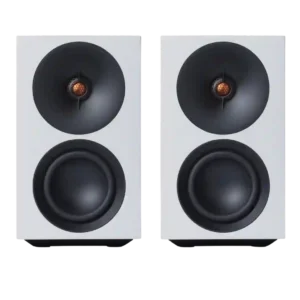
The clean, minimal cabinet design is one of the most consistently praised aspects of the product. Crisp lines, the exposed copper/orange tweeter and premium-feeling finishes give it a modern look that works on desks or in living spaces.

Cambridge Audio L/R X
4.8

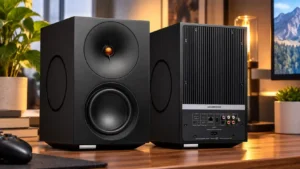
Clean lines, a floating base, colorful finishes, and walnut veneer make the speakers distinctive living-room objects. Enthusiasm for the look is broad, though taste and household preferences differ.

Evidence available for one product

Controls and connectivity

App usability and reliability
Cambridge L/R SNo score yet
Cambridge Audio L/R X
4.7

StreamMagic earns praise for its polished interface, straightforward setup, and useful acoustic controls. Its broad feature set can take some time to learn.

Multi-speaker pairing reliability
Cambridge L/R SNo score yet
Cambridge Audio L/R X
4.5

Automatic discovery of the second speaker makes initial pairing effortless.

Smart features
Cambridge L/R SNo score yet
Cambridge Audio L/R X
4.8

Integrated streaming and extensive customization make the speakers unusually complete. Direct service access removes the need for a separate streamer or hub.

Other features

Bass adjustment
Cambridge L/R SNo score yet
Cambridge Audio L/R X
4.5

Bass controls can reduce room-driven excess and help manage an added subwoofer. The adjustable high-pass filter is a welcome capability.

Cohesive presentation
Cambridge L/R S
4.4

The presentation stays cohesive even while creating plenty of space between instruments. Complex material tends to feel layered and unified rather than fragmented or disconnected.

Cambridge Audio L/R XNo score yet
HDMI ARC
Cambridge L/R SNo score yet
Cambridge Audio L/R X
4.6

HDMI eARC makes TV use convenient, including volume control from the television remote. Tested power and volume integration worked as expected.

Lighting effects
Cambridge L/R SNo score yet
Cambridge Audio L/R X
5.0

The gentle lighting beneath the cabinets adds an especially appealing floating effect.

Listening dispersion
Cambridge L/R SNo score yet
Cambridge Audio L/R X
4.3

Wide horizontal coverage helps several seats share good sound and stable imaging. Listening height matters more, with the larger model showing a narrower vertical window.

Multiroom integration
Cambridge L/R SNo score yet
Cambridge Audio L/R X
2.5

StreamMagic lacks native grouping of multiple Cambridge systems. Whole-home playback instead depends on platforms such as AirPlay, Google Cast, or Roon.

Packaging quality
Cambridge L/R SNo score yet
Cambridge Audio L/R X
5.0

High-quality packaging and dedicated lifting straps make unpacking feel thoughtfully handled.

Physical control responsiveness
Cambridge L/R S
2.5

Remote button response can occasionally lag enough to require another press. It is not constant, but it happens often enough to make control feel less immediate than it should.

Cambridge Audio L/R XNo score yet
Placement footprint
Cambridge L/R SNo score yet
Cambridge Audio L/R X
3.1

The two-box format saves space compared with separates, but these substantial speakers need clearance and supportive surfaces. Stands are often the more practical choice than desks or shallow shelves.

Recording quality tolerance
Cambridge L/R SNo score yet
Cambridge Audio L/R X
3.8

Older and noisier recordings can remain pleasantly listenable, but especially bright material may still become sibilant at high volume.

Room calibration and correction
Cambridge L/R SNo score yet
Cambridge Audio L/R X
4.3

Room settings can quickly improve brightness, bass control, and listening comfort. They require manual input rather than microphone measurement, and physical placement still matters.

Status indicators
Cambridge L/R S
3.2

The color-coded LED makes input identification straightforward, but feedback is otherwise sparse. Precise volume status is difficult to judge, and the lack of a volume indicator is a recurring usability limitation.

Cambridge Audio L/R XNo score yet
Treble adjustment
Cambridge L/R SNo score yet
Cambridge Audio L/R X
4.5

Reducing treble brightness through the app can improve comfort while preserving openness.

Weight convenience
Cambridge L/R SNo score yet
Cambridge Audio L/R X
2.5

The cabinets are heavy enough to make ordinary bookshelf support a concern.

Comfort and build

Build quality
Cambridge L/R SNo score yet
Cambridge Audio L/R X
5.0

Precise assembly, flawless edges, and uniform finishes suggest craftsmanship beyond the price class.

Performance

Display support and experience
Cambridge L/R SNo score yet
Cambridge Audio L/R X
2.5

The absence of a built-in display is a small usability drawback.

Phono stage performance
Cambridge L/R SNo score yet
Cambridge Audio L/R X
4.3

The integrated moving-magnet phono input is valued for making vinyl playback a simple turntable-and-speakers setup. These comments praise convenience rather than establish a tested fidelity verdict.

Ownership and support

Optical input support
Cambridge L/R S
3.5

Optical is a practical TV connection and was singled out as the preferred route when HDMI is unavailable. It works well, but it does not offer the same convenience as HDMI ARC.

Cambridge Audio L/R XNo score yet

Reviews Comparing These Products

These are a few of the reviews included in our analysis.

Other Top Bookshelf Speakers to Consider

#1 Wharfedale Diamond 12.1i
4.7

Choose the Diamond 12.1i for balanced, punchy hi-fi sound, strong bass and premium build at a budget price. Skip it if you mostly listen very quietly, need shallow-shelf placement, or...

Pros: Design and aesthetics, Music performance

Cons: Low-volume performance

#2 Dali Kupid
4.5

Choose the Kupid for lively, detailed sound in a desk or small-room system where compact size matters. Skip it if you need deep bass, huge-room output, or want to pair...

Pros: Bass performance, Value for money

Cons: Amplifier power requirements, Break-in period

#3 Edifier S880DB MKII
4.5

Choose these if you want detailed, room-filling sound, excellent connectivity, and premium styling in a compact powered pair. Skip them if you need effortless remote control, native streaming services, HDMI...

Pros: Overall product quality, Overall sound quality

Cons: Remote control usability, Control button responsiveness

#4 KEF Coda W
4.4

Choose the Coda W if you want big, precise stereo sound, strong bass, HDMI ARC and simple turntable/desktop connectivity without a separates stack. Skip it if built-in Wi-Fi/multi-room streaming, compact...

Pros: Stereo imaging accuracy, Aesthetic design / Finish options

Cons: Smart features, EQ customization