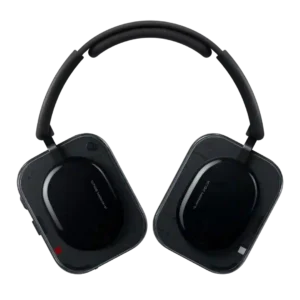
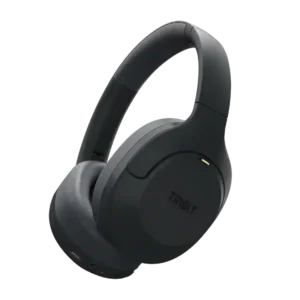
Nothing Headphone (a)
Where It Has the Edge
No clear scored advantage over the other product.

Scorata scores summarize analyzed review evidence on a 1–5 scale; they are not laboratory measurements or a simple average of customer star ratings. Feature scores summarize the reviews covering that feature. The overall score averages feature scores within each review, then combines review averages. When both expert and customer evidence are available, those two groups receive equal weight. Products can have different review coverage, so small score gaps do not establish a winner.
Recommendations prioritize important features for the category, with a score of at least 3.5, a gap of at least 0.25 points and at least two supporting reviews per product. Features with widely varying scores or broad connectivity contexts are excluded from recommendations. These safeguards do not establish statistical significance.
Quick verdict
The available evidence supports the recommendation below, but does not establish an overall winner. Check the remaining features against your priorities.
There is not enough comparable review evidence to recommend Nothing Headphone (a) over the other product.
Choose Tribit QuietPlus 81 for Portability/foldability and Headband adjustability.
No clear scored advantage over the other product.
Scores are out of 5. Missing scores mean missing review evidence, not a missing feature.
Most reviewers find the sound enjoyable and impressively capable for the price, especially after a little EQ work. Critical listeners still hear some loss of refinement versus pricier models.
Sound is sharply divided: it can come across clear and enjoyable, but the stock tuning can also sound muddy, flat, or short on detail and refinement. EQ helps, but it does not fully erase the gap.
The sound is lively and dynamic, with energetic playback that gives pop and electronic music plenty of momentum.
Attack and energy can feel muted, with transients lacking the sharp delivery needed to make punchy tracks hit hard.
The presentation can feel immersive for music, even if the dedicated spatial processing is less consistently liked.
Immersion is limited by bass that can sound too muddy and sluggish to deliver the clean, enveloping impact more refined headphones provide.
Video use showed excellent sync in the tested cases, with reviewers reporting no noticeable Bluetooth lag during everyday playback and editing.
Low-latency mode helps keep audio closer to on-screen action, making video watching and phone gaming more usable.
Fine detail is only average for the class: reviewers hear enough clarity for casual listening, but several note softer resolution and less precision than more expensive or hi-fi-oriented models.
Fine detail is a weak point, with dense music losing clarity, texture, and nuance compared with stronger budget options.
Passive isolation can be quite effective with a good seal, but glasses or fit issues can weaken it noticeably.
The earcups seal well even before ANC is switched on, cutting some outside distraction and giving the active cancellation a stronger starting point.
ANC is widely considered good to very good for the price, especially on low-frequency travel noise. It usually trails premium Sony and Bose models and can let more voices or higher-frequency sounds through.
ANC is good for the price and works best on steady low-frequency noise. Voices, typing, traffic, and sharper sounds can still break through, so it is not flagship-level isolation.
Gaming performance is promising in the test that covered it, with clear positional cues and useful low-latency behavior.
Game Mode reduces latency enough for casual gaming, while the 3.5mm wired connection can cut lag further. It is capable for games without being a dedicated competitive headset.
Bass is one of the most divisive traits: many enjoy its punch and sub-bass weight, while others find the default tuning boomy, muddy, or overly dominant.
Bass is powerful and often fun, but it can also become bloated, muddy, or short on nuance. Bass-focused listeners may enjoy it more than detail-focused listeners.
Background-noise suppression can be impressively strong, including traffic, fans, and wind in some tests, but other reviewers found the voice processing less reliable.
Background noise is reduced effectively during calls, leaving only a small amount of surrounding construction noise audible in a demanding test.
Once adjusted, the fit can stay securely in place while walking without unwanted shifting.
Fit security can be imperfect, with the headphones capable of sliding off the head a little during relaxed outdoor use.
Portability is a weak spot because the headphones do not fold inward and remain bulky in a bag, even though the cups can rotate flat.
Foldability is a major win. The cups rotate and collapse into a compact shape that is easy to toss into a backpack or small bag.
The cups rotate for around-the-neck wear, but one reviewer found the rectangular shells rub or knock together when rotated.
The earcups pivot and swivel usefully, helping them lie flatter around the neck and pack more neatly for storage.
Headband adjustment works, but multiple reviewers find the slider friction, top-mounted sizing, or general adjustment process fiddly.
The headband is easy to size and offers useful adjustment range, making fit straightforward for most medium to larger heads.
The included cables are mostly praised as sturdy or high quality, although one reviewer questioned the strain relief.
The included charging cable works, but the USB-A-to-USB-C format feels dated compared with a USB-C-to-USB-C cable.
Instrument separation is usually described as clean and easy to follow, though it does not consistently reach the layering precision of more audiophile-focused rivals.
Instrument separation can struggle in busy arrangements, with treble-range instruments becoming concealed instead of standing clearly apart.
Glasses compatibility depends on fit: one reviewer found little pressure on glasses, another found them comfortable over spectacles, while seal loss bothered a different tester.
Glasses can worsen comfort because the clamp may press the frames into the side of the head after a while.
IP52 is useful for sweat and light drizzle, but reviewers consistently caution that it is not protection for heavy rain or serious water exposure.
Wet-use confidence is low because no waterproof rating is specified, making heavy rain or sweaty workouts a questionable fit.
The thin headband padding can create pressure on the top of the head during longer sessions.
Headband padding is soft enough for many users, but it can feel thin during extended wear and does not always match the plushness of the earcups.
The included cables make a positive impression, with one reviewer specifically surprised by their high quality.
The essential charging and 3.5mm cables are covered, but the lack of a storage bag or pouch makes travel protection less convenient.
Treble is often praised for crispness and detail, but several reviewers also report sibilance or abrasive upper frequencies on certain tracks.
Treble can sound clear on simpler material, but busier tracks may turn dull, concealed, or tinny, especially in percussion.
One reviewer found the maximum loudness a little restrained and wanted a few more volume steps for very loud listening.
Output is generally strong and can get plenty loud without obvious strain. Some units or listeners may find the level modest, and the sound often comes together best around 70% volume.
Overall sentiment is strongly positive, although not unanimous. Most of the explicit satisfaction comments are enthusiastic, while one reviewer remains clearly lukewarm on the sound.
Everyday satisfaction is high when expectations match the price, with the battery, comfort, feature set, and punchy presentation making the headphones easy to enjoy.
The overall recommendation is strongly positive: reviewers repeatedly call these an easy recommendation, a great pick, or a no-brainer in their price class.
The QuietPlus 81 makes the most sense when price, battery life, ANC, and features matter more than refined sound. Serious music listening is the main reason to spend more.
The integrated microphone array can capture speech clearly in favorable conditions, although broader call-quality tests are more mixed.
The built-in microphone is solid for everyday calling and general voice use, without standing out as a studio-grade feature.
Travel use benefits from the huge battery and competent ANC, with reviewers reporting comfortable multi-hour or flight use in favorable fits.
The folding design packs down neatly into a backpack, and the huge battery makes the headphones especially convenient for trips and commutes.
Automatic pause on removal is absent and repeatedly called out as a feature reviewers miss.
Wear detection is unreliable, sometimes reacting when the headphones come off but often failing to pause consistently.
The preset options are useful starting points, with Balanced often taming excess bass and the bass-focused modes appealing more to listeners who want extra low-end weight.
The preset selection is useful and varied, with modes such as Podcast giving an immediately noticeable change that can suit specific content.
The plastic-heavy construction does not feel flagship-premium, and multiple reviewers notice the downgrade in material luxury compared with the Headphone (1).
The headphones feel more substantial than the price suggests, but the all-plastic construction keeps them from matching the tactile finish of premium models.
Transparency is usable for conversation and awareness, but opinions range from natural and effective to boxy, dark, or slightly artificial.
Quick-attention transparency is useful for rapidly hearing the outside world. It can be slower, less natural, or less forceful than premium implementations, but it remains handy.
The 3.5mm input is genuinely useful for wired listening, including plane use while keeping ANC active.
The 3.5mm input is a practical fallback, letting the headphones work wired without relying on battery power. It is also useful for reducing gaming latency.
Vocals and mids are generally clear and well controlled, though a few reviewers hear recessed body or odd upper-mid emphasis in the stock tuning.
Vocals can sound warm, clear, and well balanced, making the midrange one of the stronger parts of the tuning. Heavy bass can still veil some detail.
Android pairing is especially smooth with Google Fast Pair, which worked seamlessly in the review test.
Android use is smooth in the tested setup, including successful multipoint operation with a Google Pixel phone alongside a laptop.
Connectivity is unusually versatile, combining Bluetooth with USB-C digital audio and a 3.5mm wired option.
The mix of stable Bluetooth, multipoint, and a 3.5mm wired fallback gives the headphones unusually flexible connectivity for the price.
The large ear cushions provide plentiful padding and enough room to keep ears from feeling cramped.
The ear cushions are a comfort highlight, with soft, plush padding that balances support with long-session wearability.
Even when pushed loud, the headphones were praised for staying composed rather than falling apart with obvious distortion.
The headphones can reach high output without obvious distortion, keeping louder playback clean rather than rough or compressed.
The feature set works well across Android and iPhone, making the headphones a strong cross-platform option rather than a single-ecosystem accessory.
Compatibility with a recent iPhone is smooth, with normal functions working as expected and no platform-specific problem called out.
Heat buildup is a recurring comfort weakness. The synthetic pads and closed design can make ears or the sides of the head warm, especially during longer sessions or workouts.
Heat buildup is well controlled during long indoor wear, with the earcups staying comfortable rather than becoming noticeably hot.
At roughly 310g, the headphones are lighter than their predecessor but still heavier than many rivals, so some reviewers remain aware of the weight over time.
The headphones feel light enough for long stretches of wear without becoming burdensome, even though they still have enough mass to feel substantial.
Long-session comfort is highly head-dependent. Many reviewers wore them for hours or flights comfortably, while others needed breaks because of pressure, weight, or heat.
Long-session comfort is usually strong thanks to soft cushions and manageable weight. Tight clamping or thin headband padding can still become noticeable for some head shapes.
Early durability impressions are positive, including flexible headbands, a sturdier feel, and one harsh accidental-impact test that left no visible mark.
Durability is uncertain: the structure can feel sturdy in normal use, but squeaking plastic during folding creates some concern about how well it will age.
Clamping force is a recurring comfort concern. Some find the grip secure and well judged, but several describe it as too firm during extended wear.
Clamp pressure varies by wearer: it can feel relaxed and secure, but it may also press too firmly during longer sessions, especially with glasses.
The retro-futuristic, transparent styling earns substantial praise for being distinctive and fashion-forward. It is deliberately bold, so buyers who prefer conventional headphones may not share that enthusiasm.
The rounded, all-black design is clean and understated rather than flashy. It looks respectable for the price, though it does not project a truly premium identity.
Despite the move to more plastic, build quality is generally rated as sturdy and better than the price suggests. The construction feels less luxurious than flagship models but not broadly flimsy.
The build feels solid and substantial for the price, but the plastic construction is unmistakable. Squeaking during folding raises some concern about long-term toughness.
The Roller, Paddle, and physical buttons are one of the strongest points of agreement. Reviewers repeatedly call them intuitive, tactile, distinctive, and easier to use than touch controls.
The physical controls are a recurring weak point because the volume control is small and the mixed touch/button layout can feel awkward. Once learned, the raised buttons are manageable.
Call quality is inconsistent across tests. Some reviewers hear clear, usable speech, while others report muffling, compression, or poor intelligibility in noisier conditions.
Call quality is a strong point, with voices coming through loud, clean, clear, and crisp during phone and work calls.
The smart feature set is broad and potentially useful, though one reviewer questions how often extras such as AI-oriented functions will matter in everyday listening.
Quick-attention listening is a standout convenience, temporarily opening the outside world with a hand over the right earcup.
Nothing X is repeatedly praised as a clean, fast, capable companion app with unusually deep control over sound and headphone behavior.
The app covers the essentials—EQ, ANC modes, firmware, and control settings—but polish is inconsistent. Its simple layout is approachable, yet parts can feel rudimentary or clunky.
The headphones pack in a broad modern feature set, and reviewers who discuss the software breadth consider it unusually rich for the price.
The broad settings menu adds useful flexibility, letting the headphones adapt more closely to different listening preferences and use cases.
The dedicated assistant control is appreciated as a convenient physical shortcut by the reviewer who discussed it.
Voice-assistant activation by double-tapping is easy to trigger and works as a useful hands-free shortcut.
The advanced EQ is a standout feature, offering unusually deep frequency and Q-factor control for wireless headphones. It can substantially improve the stock tuning, though a few reviewers find it fiddly or constrained.
The EQ is a major advantage, with presets plus manual tuning that can materially improve the stock sound. Spending a little time customizing the profile can make these much more satisfying.
Bluetooth performance is a strength in the positive tests, with rock-solid connections, seamless switching, and no noticeable lag reported.
Bluetooth performance is consistently stable, with quick pairing and no meaningful dropouts during normal room-to-room use.
Setup is consistently easy, with quick pairing and straightforward first-use behavior across the reviews that tested it directly.
Pairing is quick and easy, and basic setup rarely gets in the way. Firmware updates and initial configuration are also straightforward.
Codec support is useful but not exhaustive: LDAC is a welcome inclusion at this price, while one reviewer wished Qualcomm codecs were also available.
Bluetooth audio is limited to SBC, so higher-resolution options such as AAC, LDAC, or aptX are not available.
Value is a major strength across the review set. Reviewers repeatedly say the $199/£149 positioning delivers unusually strong battery, controls, features, and sound for the money.
The low price buys exceptional battery life, ANC, EQ, wired playback, and modern connectivity, creating strong value. Better-sounding alternatives can still justify a higher spend for critical listeners.
Multipoint is generally easy and reliable once enabled, with reviewers praising quick switching between a phone and laptop or other paired devices.
Multipoint works smoothly, keeping two devices paired and making input switching convenient without repeated disconnecting and re-pairing.
Battery life is the clearest consensus strength. Reviewers repeatedly call the 75-hour ANC figure and roughly 135-hour maximum class-leading, with real-world use generally supporting the claim.
Battery life is the clearest strength, stretching to days of use with up to 110 hours without ANC and 70 hours with it. Even heavy use barely dents the charge.
Fast charging is excellent: several reviewers highlight that just a few minutes on USB-C can provide hours of playback.
Fast charging is highly practical, adding roughly five hours of playback from about ten minutes on power. Combined with the huge battery, charging rarely becomes a hassle.
ANC itself avoids obvious hiss in one test, while another reviewer hears a moderate background hiss in the strongest mode.
ANC and transparency can slightly alter the tonal balance, especially by changing bass weight, but the effect is described as noticeable rather than disastrous.
The tuning lands between balanced and consumer-friendly V-shaped depending on the reviewer, with bass and treble emphasis keeping it from being truly neutral.
A strange underwater-like static can be audible when no music is playing. It disappears once playback starts, but the idle-state noise is still an unwanted flaw.
Sound leakage is context-dependent: two reviewers noticed some bleed at louder levels, while another found virtually none.
Soundstage impressions are mixed. Some hear a notably open or wider-than-expected presentation, while others find it close, narrow, or only average for closed-back headphones.
Spatial modes are mostly a mixed-to-negative extra: several reviewers hear hollow, processed, or echoey results, while a minority find the Concert effect useful for expanding the presentation.
Wind handling is inconsistent: some microphone tests suppress wind remarkably well, while another reviewer found wind routinely cut through during outdoor use.
PCMag awarded the headphones its Editors' Choice for midrange noise-cancelling headphones.
USB-C high-resolution playback can add a small improvement in separation and detail, though the reviewer considered the difference minor.
The drawstring pouch is one of the most repeated complaints. Reviewers generally see it as flimsy or inadequate protection compared with a proper hard case.
Nothing-phone integration adds extra shortcuts such as Channel Hop, but some functions work best inside Nothing’s own ecosystem rather than equally across Android devices.
The feature package is strong for a budget model, combining ANC, multipoint, wired playback, EQ controls, wear detection, and other useful extras.
The glossy black finish can collect fingerprints and dust extremely quickly.
The optional hearing-protection setting can cap volume for safer listening, making it especially useful for children or anyone who tends to play music very loud.
Imaging is strong enough for positional gaming cues such as footsteps and gunshots to come through clearly.
LDAC can produce a cleaner, clearer presentation than standard AAC on compatible devices, and reviewers value seeing it at this price.
The pads are not officially replaceable, and reviewers specifically note that Nothing does not sell replacement cushions.
The missing wear sensor is a clear hardware omission because the headphones cannot detect removal for automatic pause behavior.
Repairability takes a hit because replacement ear cushions are not officially sold, limiting an obvious wear-part replacement path.
Touch response can be quick, but the gesture system is limited and sometimes inconsistent. Key playback functions cannot always be assigned to touch, which reduces its usefulness.
USB-C is especially useful because it handles both charging and digital audio while retaining physical-control functionality in the tested setup.
Xbox use is only partial: wired game audio works, but the reviewer could not get the headset microphones to function through the controller setup.
The ear cushions cannot officially be replaced, which is a meaningful long-term ownership drawback.
The revised swivel hinges were specifically described as sturdier than the predecessor's.
Mode-change audio cues are exceptionally clear and avoid the ambiguity or annoying spoken prompts found on some headphones.
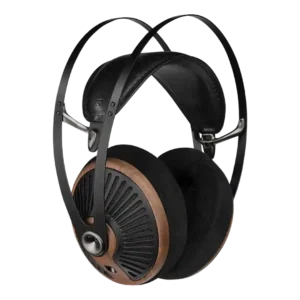
Choose the 105 Silva for beautiful, repairable construction, superb comfort, easy driveability, and an engaging spacious sound. Skip it if you need isolation, balanced connectivity, heavy sub-bass, or consistently smooth...
Pros: Design and Aesthetics, Overall recommendation
Cons: Noise isolation (passive), Connectivity options
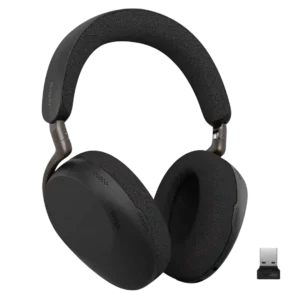
Choose it if your workday revolves around calls and you want exceptional mic isolation, huge battery life, all-day comfort, and a slim travel-friendly design. Skip it if music fidelity, class-leading...
Pros: Battery, Charging
Cons: Value for money, Codec support
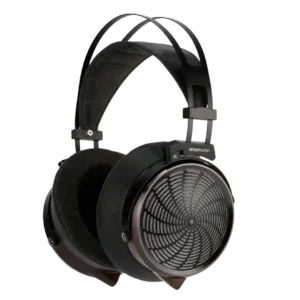
Best for spacious, detailed home listening, excellent comfort, and premium construction. Skip it for commuting, private shared-space use, built-in voice chat, or subwoofer-like bass impact.
Pros: Build quality, Comfort during long use
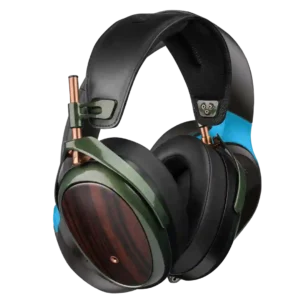
Choose the Strada for premium build, long-session comfort, strong isolation and an unusually spacious closed-back presentation. Skip it if you have a small head, dislike energetic treble, or want consistently...
Pros: Bass performance, Design and Aesthetics
Cons: Headband adjustability