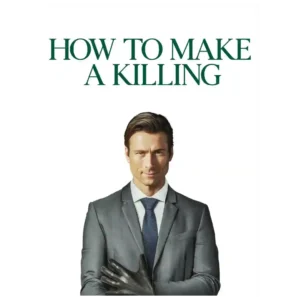
How to Make a Killing
Where It Has the Edge
No clear scored advantage over the other product.

Scorata scores summarize analyzed review evidence on a 1–5 scale; they are not laboratory measurements or a simple average of customer star ratings. Feature scores summarize the reviews covering that feature. The overall score averages feature scores within each review, then combines review averages. When both expert and customer evidence are available, those two groups receive equal weight. Products can have different review coverage, so small score gaps do not establish a winner.
Recommendations prioritize important features for the category, with a score of at least 3.5, a gap of at least 0.25 points and at least two supporting reviews per product. Features with widely varying scores or broad connectivity contexts are excluded from recommendations. These safeguards do not establish statistical significance.
Quick verdict
There is not enough consistent, comparable evidence for a clear recommendation. Use the feature details and supporting reviews to weigh the tradeoffs.
There is not enough comparable review evidence to recommend How to Make a Killing over the other product.
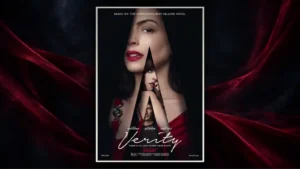
There is not enough comparable review evidence to recommend Verity over the other product.
No clear scored advantage over the other product.
No clear scored advantage over the other product.
Scores are out of 5. Missing scores mean missing review evidence, not a missing feature.
One critic broadly praised how strong the film looks and sounds, though sound-specific commentary is otherwise scarce.
One strongly negative take calls the sound design empty, arguing that the sonic work does little to energize scenes that already feel inert.
The film’s slick, colorful, polished look is a regular positive, even among critics who think the style never fully coheres with the tone.
The visual presentation is largely attractive, especially the snowy setting, dramatic interiors, and throwback thriller flourishes. The main dissent is that the direction sometimes lacks a stronger, more distinctive visual identity.
The wealthy settings and glossy surfaces help sell the Redfellows’ world, giving the movie a convincingly lavish presentation.
Production design is one of the strongest areas of agreement. The Crawford house, office, glass, stone, wood, and architectural details create a striking Gothic-luxury environment that often feels like a character itself.
One customer considered the restrained sex and language suitable for younger teens, despite the movie’s murder-heavy premise.
Its explicit sexual content, disturbing family violence, and mature psychological themes push it firmly toward older teen and adult audiences.
Audience reactions lean warmer than the critic consensus, with many calling it watchable, fun, or worth seeing even when imperfect.
Crowd response is a genuine strength. Multiple accounts describe laughter, gasps, screams, and lively group reactions, suggesting the movie plays especially well with book fans and a social audience.
Early reactions were reported as positive, but the broader critical response represented here is substantially more divided and often cool.
Early critical reception is mixed to negative rather than broadly enthusiastic. Aggregated coverage describes a divided field, with substantial praise for Hathaway but many reservations about the film around her.
One customer felt the restrained sexual content and language made it more teen-suitable than the premise might suggest.
The film is strongly unsuitable for family viewing because of graphic sexual material, disturbing themes, violence, and morally dark subject matter.
The roughly 100–110 minute length is usually manageable, though some feel the film either drags or needs more time to develop its crowded cast.
The nearly two-hour length is widely viewed as excessive. Multiple critics argue that trimming substantial time would make the thriller tighter, nastier, and more effective.
One customer approvingly notes that there is no sex, helping make the film feel less explicit than its R-rated premise suggests.
Sexual content is a major point of disagreement. Some viewers appreciate that the film is spicy without feeling gratuitous, while others think it is either too explicit or, conversely, too sanitized to satisfy the erotic-thriller premise.
The inheritance-murder premise has obvious appeal, but opinions split on whether the story remains engaging or becomes repetitive and implausible.
The central premise is widely seen as juicy, but the story often loses credibility once its twists pile up. A few find it serviceable or fun, while many call the plotting thin, illogical, or simply dull.
John Patton Ford draws praise for visual control and some set-pieces, yet several critics fault his tonal decisions and handling of the remake.
Michael Showalter’s direction draws praise for polish and occasional tonal control, but the broader response is skeptical. Many feel the film is too safe, too smooth, or insufficiently stylish and frightening for an erotic psychological thriller.
The film finds occasional gravitas, especially late, but many critics say its serious dramatic side never earns enough emotional investment.
The melodrama is intentionally heightened, but one account finds it cheesy rather than compelling. The film’s serious and campy impulses do not always reinforce each other.
The script has clever ideas and occasional sharp scenes, but exposition, thin characterization, and underdeveloped themes keep it from fully landing.
The screenplay has an effective premise and occasional strong stretches, but criticism centers on predictable writing, unanswered questions, heavy foreshadowing, and overstuffed twists. A minority finds it well written or methodically structured.
The ending is sharply divisive: some viewers love the twists and coda, while others find the resolution contrived or unsatisfying.
The ending is the movie’s biggest sticking point. The final twists generate discussion, but many find the denouement rushed, implausible, overly ambiguous, or burdened with one twist too many.
Pacing is uneven across the set. Some call it brisk and fleet-footed, while others find the middle repetitive, sluggish, or poorly proportioned.
Pacing is one of the most repeated complaints: the middle frequently drags, the setup runs long, and momentum often arrives only in the final stretch. One more favorable take appreciates the deliberate slow-burn approach.
It works best for viewers who accept it as a light dark-comedy thriller; critics wanting sharper farce or tougher suspense are often disappointed.
As an erotic psychological thriller, the film is deeply divisive. Supporters enjoy the glossy camp, sex, mystery, and melodrama; detractors say it is too safe, too slow, insufficiently scary, or not sexy enough.
Customers often find the murder-inheritance setup fun or fresh, while critics repeatedly point out how closely it echoes earlier films and familiar genre beats.
The film leans heavily on familiar erotic-thriller and domestic-thriller templates. Its echoes of Gone Girl, Rebecca, and other genre touchstones often feel derivative rather than freshly reworked.
There are isolated moments of genuine feeling, but much of the film is described as emotionally distant, hollow, or hard to invest in.
The movie can leave viewers feeling deeply uneasy, twisted, and uncomfortable. That disturbing aftertaste is especially pronounced around the family material and Verity’s confessional passages.
Plausibility is one of the sharpest recurring complaints, especially around the FBI, forensic gaps, and how easily Becket gets away with repeated murders.
Believability is a major weak point, from the opening traffic accident to the way institutions and characters respond to violence. The film often asks viewers to accept implausible behavior in service of its twists.
Chemistry varies by pairing. Becket and Ruth earn some warm praise, while other romantic dynamics are described as forced or unconvincing.
Romantic chemistry is sharply divided: one take finds Johnson and Hartnett smoldering, while another says they have no chemistry at all. That split mirrors broader disagreement over whether the affair feels seductive or merely scripted.
A few quips and bits of repartee land, but narration-heavy exposition and a shortage of sharper wit are frequent complaints.
The heightened dialogue can work as camp, but it is more often called cheesy, clunky, unnatural, or lazily functional. A few enjoy the over-the-top lines as part of the guilty-pleasure tone.
The Ruth relationship provides warmth and a moral counterweight, but several critics find the romance too thin, perfunctory, or underdeveloped.
The central affair is a common weakness. Several critics find Lowen and Jeremy forced, underpowered, or lacking believable electricity, even though a few early encounters and sex scenes have genuine charge.
The class-and-greed commentary sometimes resonates, but a common criticism is that the satire stays obvious, shallow, or less incisive than it promises.
The cautionary ideas about manipulation, obsession, revenge, and self-deception are clear, but one values-based assessment argues that graphic sex and a lack of redemption undercut the moral warning.
The murder set-pieces can be brisk, clever, and tense, but several critics found later deaths too throwaway or lacking in impact.
The film is praised in one strongly positive account for feeling compelling and action-packed, with audience reactions staying lively from start to finish.
The film raises worthwhile questions about greed, class, contentment, and entitlement, but many critics say it stops short of exploring them deeply.
Ideas about truth, authorship, envy, desire, and the stories people tell themselves give the film something to chew on. Still, several critics feel those themes are introduced more convincingly than they are ultimately developed.
Character depth is a recurring weakness: Becket’s motives and several supporting players are often described as thin, rushed, or underwritten.
Lowen, Jeremy, and several supporting characters are often described as thin or underwritten. Even when the premise gives them intriguing conflicts, their motivations and inner lives frequently feel less developed than the plot requires.
The comedy is inconsistent. Some scenes and supporting performances draw real laughs, but many critics say the film never becomes funny enough.
The movie generates a surprising amount of laughter, often through camp, line delivery, and exaggerated seriousness. Some of that comedy appears intentional and some does not, but crowd laughter is a recurring part of the experience.
The film’s polish and some modern touches are appreciated, yet its remake roots and familiar eat-the-rich ideas make originality a major weakness.
The movie has recognizable style but struggles to establish a distinctive identity. Critics who dislike it see familiar clichés and safer choices where a more singular, riskier approach was needed.
The modern reworking of Kind Hearts and Coronets divides critics, with a few admiring the update but many finding it far weaker than its inspiration.
The adaptation is generally very faithful, and book readers may appreciate how much of the novel survives. That fidelity is also divisive: some see it as a strength, while others think sticking so closely to the source preserves its biggest weaknesses.
The confession structure helps some viewers follow the story, but others find the narration cumbersome and the timeline or logic needlessly confusing.
Ambiguity is central to the mystery, but several viewers feel the movie confuses ambiguity with muddled storytelling. Structural jumbling and under-explained details make the final logic harder to accept.
A few critics argue that protracted or loosely shaped passages sap momentum and blunt the film’s comic-thriller rhythm.
Editing is a recurring weakness, with complaints about jumbled structure, too many framing devices, continuity issues, and stylish sequences being over-cut. Several viewers feel the film’s assembly works against tension rather than sharpening it.
The framing device and predictability often weaken suspense, though several viewers still enjoy the late-game tension and third-act escalation.
Suspense works inconsistently. The mystery and memoir passages can be gripping, but several critics say the film goes long stretches without enough tension and lands its twists too predictably.
Emile Mosseri’s score is a notable craft strength, praised for giving the movie momentum and a distinctive propulsive texture.
The orchestral score is usually praised for its Bernard Herrmann-style tension and heightened mood. One dissenting account finds it irritating and says it worsens scenes that are already struggling.
Tone is one of the most repeated weaknesses, with the movie often described as caught between farce, noir, thriller, and moral drama.
The blend of camp, eroticism, menace, and seriousness is one of the film’s most divisive choices. Some think the balance is controlled and fun; others find the movie tonally uncertain for far too long.
The violence is generally restrained rather than graphic; some appreciate the wry approach, while others wanted more bite from the murder set-pieces.
Reactions to the violence split by execution: one account finds the bloodiness restrained enough for horror-wary viewers, while another says unrealistic and over-the-top violence hurts credibility.
The polished, grainy photography is widely admired, with several critics singling out the lighting, texture, and camera work.
The cinematography is consistently praised for sleek surfaces, moody lighting, heightened angles, and glossy erotic-thriller imagery. Even detractors often concede that the movie looks polished.
One video review found the song choices overused, arguing that the film leans on too many needle drops.
Music selections earn strong praise, with one account calling the soundtrack excellent and another singling out a needle drop as a notable saving grace.
The supporting ensemble is frequently praised, especially Zach Woods, Bill Camp, Topher Grace, Jessica Henwick, and Margaret Qualley, despite limited screen time.
The supporting ensemble makes less of an impression than the leads. Brady Wagner earns specific praise, but the rest of the supporting cast is described as comparatively forgettable.
The cast is one of the film’s steadier strengths, with many viewers praising the ensemble even when the material around them feels uneven.
The cast is one of the movie’s clearest strengths, especially when the material gives the leads room to go big. Overall acting reactions are positive, though some critics find the performances too subdued or mismatched for such heightened material.
Glen Powell is the clearest consensus strength, repeatedly praised for charisma and likability even by critics who think he is miscast or too mild.
The three leads are credited with carrying much of the movie’s entertainment value. Their star power helps keep the film watchable even when the writing plays things safely.
Repeat appeal looks limited overall: a few viewers would watch again, but others explicitly call it forgettable or a one-time watch.
One viewer enjoyed the movie but still expressed little interest in watching it again, suggesting the twists and camp may work better as a one-time experience.
Value reactions are polarized: some customers felt rentals were worthwhile, while others explicitly wanted a refund or said it was not worth paying for.
The movie may be easier to recommend as a discounted or casual theater outing than as a must-see at full price. The right crowd and expectations can improve the value considerably.
Reactions are mixed overall. Many customers found it fun and easy to watch, while a large share of critics called it dull, forgettable, or underwhelming.
Entertainment is highly context-dependent. Some find it plain fun, wild, or a strong group watch, while others call it dull; the most consistent middle ground is that a lively audience and appreciation for camp can make it much more enjoyable.
Wardrobe choices add polish and noir flavor, especially Julia’s fashion, though one critic wished the film did more with its costume possibilities.
The story’s social world is criticized as unusually thin, with little sense of life beyond the central mansion and plot machinery. That makes the characters’ actions feel less grounded.
Jeremy is presented in one favorable account as a devoted father and caregiver, giving his family role warmth even as the thriller encourages suspicion around his motives.
A customer specifically praised the relatively restrained language, viewing it as a point in favor of teen suitability.
The central question of who is lying and what is real keeps many viewers engaged. Even so, the mystery’s final logic is divisive, with some finding it engrossing and others calling its construction fundamentally weak.
Scares are hit-or-miss. A handful of jump scares genuinely land, while others are described as clunky, silly, badly staged, or easy to laugh off.

Best for pristine archival footage, immersive sound, and a surprisingly tense look at Disneyland’s construction. Skip it if you want a comprehensive, deeply critical history; several reviewers found the 78–79-minute...
Pros: plot clarity, realism
Cons: plot originality, runtime
Best for an intimate, inventive archival portrait with strong emotional and cultural impact. Skip it if substantial nudity or an occasionally wandering biographical structure will frustrate you.
Pros: chemistry between characters, emotional impact
Cons: runtime, plot clarity
Best for an audacious, text-driven conspiracy thriller with gorgeous 16mm atmosphere and mounting dread. Skip it if long stretches of reading, deliberate repetition, and an intentionally austere narrative sound more...
Pros: story quality, plot clarity
Cons: chemistry between characters, sound design

Best for slow-burn suspense, iconic synth music, and shadow-soaked filmmaking that still feels influential. Skip it if you need fast pacing, polished sound, consistently natural dialogue, or modern gore-heavy kills.
Pros: chemistry between characters, directing quality
Cons: sound design, dialogue quality