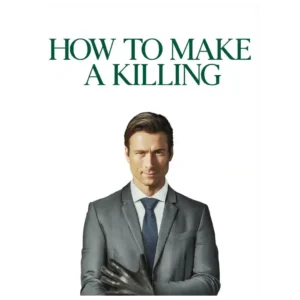

How to Make a Killing
Where It Has the Edge
- acting performance is 4.6 vs 4.3. The cast is one of the film’s steadier strengths, with many viewers praising the ensemble even when the...

Scorata scores summarize analyzed review evidence on a 1–5 scale; they are not laboratory measurements or a simple average of customer star ratings. Feature scores summarize the reviews covering that feature. The overall score averages feature scores within each review, then combines review averages. When both expert and customer evidence are available, those two groups receive equal weight. Products can have different review coverage, so small score gaps do not establish a winner.
Recommendations prioritize important features for the category, with a score of at least 3.5, a gap of at least 0.25 points and at least two supporting reviews per product. Features with widely varying scores or broad connectivity contexts are excluded from recommendations. These safeguards do not establish statistical significance.
Quick verdict
The review evidence points to a tradeoff: acting performance versus plot clarity. Choose according to which strengths matter more to you; the overall score alone does not settle that choice.
Choose How to Make a Killing for acting performance.
Choose Runner for plot clarity.
Scores are out of 5. Missing scores mean missing review evidence, not a missing feature.
Emile Mosseri’s score is a notable craft strength, praised for giving the movie momentum and a distinctive propulsive texture.
The musical score draws a severe complaint for sounding generic and cheaply assembled rather than distinctive or cinematic.
One customer felt the restrained sexual content and language made it more teen-suitable than the premise might suggest.
Despite the distributor’s family-friendly reputation, this is not treated as a strong kids’ pick. The violence, deaths, child peril, and language push it toward older teens and adults.
The confession structure helps some viewers follow the story, but others find the narration cumbersome and the timeline or logic needlessly confusing.
The central mission is simple and easy to follow, which several critics see as a strength. It gives the action a clear engine without requiring a complicated setup.
The ending is sharply divisive: some viewers love the twists and coda, while others find the resolution contrived or unsatisfying.
The conclusion earns a strong positive note for tying Hank’s personal grief into the mission and landing an emotional payoff.
A customer specifically praised the relatively restrained language, viewing it as a point in favor of teen suitability.
Assessments of the language differ: one calls the film mostly free of foul language, while another warns that foul language runs throughout. Family suitability is therefore treated cautiously.
The class-and-greed commentary sometimes resonates, but a common criticism is that the satire stays obvious, shallow, or less incisive than it promises.
Themes of kindness, sacrifice, redemption, family, and doing the right thing are usually seen as sincere without becoming overly preachy. One take finds some hospital material sanctimonious.
There are isolated moments of genuine feeling, but much of the film is described as emotionally distant, hollow, or hard to invest in.
For a straightforward action movie, the story lands more heart than many expected, especially around grief, sacrifice, and the child awaiting the organ. A few emotional beats are judged forced or unearned.
Character depth is a recurring weakness: Becket’s motives and several supporting players are often described as thin, rushed, or underwritten.
Character work is better than the simple premise suggests in several takes, especially Hank’s grief, Ben’s growth, and the villain’s motivation. Others find key subplots thin, undercooked, or too familiar.
The polished, grainy photography is widely admired, with several critics singling out the lighting, texture, and camera work.
The action photography can be immersive and stylish, especially when wide lenses and mobile cameras keep viewers close to the stunts. Shaky camera work also draws complaints when it obscures the choreography.
The film finds occasional gravitas, especially late, but many critics say its serious dramatic side never earns enough emotional investment.
The dramatic material divides sharply. Some find genuine sadness and emotional weight, while others see the hospital drama as manufactured and unbelievable.
A few critics argue that protracted or loosely shaped passages sap momentum and blunt the film’s comic-thriller rhythm.
Editing quality is uneven. Precise, readable action earns praise in some places, but choppy cutting and shaky presentation are recurring complaints elsewhere.
A few quips and bits of repartee land, but narration-heavy exposition and a shortage of sharper wit are frequent complaints.
Dialogue is a recurring weak spot. It is variously called merely fine, exposition-heavy, not great, or cringey, with banter sometimes becoming too chatty.
The film raises worthwhile questions about greed, class, contentment, and entitlement, but many critics say it stops short of exploring them deeply.
Redemption, selflessness, courage, sacrifice, and family give the film more thematic weight than its action setup suggests. One critic finds the redemption arc too bluntly inserted.
Pacing is uneven across the set. Some call it brisk and fleet-footed, while others find the middle repetitive, sluggish, or poorly proportioned.
The brisk chase structure and ticking clock keep the movie moving for most viewers, and the roughly 90–100 minute length often helps. Hospital cutaways and extended chatter are the main momentum killers.
Chemistry varies by pairing. Becket and Ruth earn some warm praise, while other romantic dynamics are described as forced or unconvincing.
Ritchson and Wilson’s odd-couple pairing is one of the most praised elements, with many finding their contrasting styles charming and fun. A few critics see only serviceable chemistry or no spark at all.
The murder set-pieces can be brisk, clever, and tense, but several critics found later deaths too throwaway or lacking in impact.
The fights, chases, crashes, and stunt-heavy mayhem are the movie’s clearest strength for most critics. A minority dislike the shaky presentation or feel the PG-13 staging pulls its punches.
The script has clever ideas and occasional sharp scenes, but exposition, thin characterization, and underdeveloped themes keep it from fully landing.
The script is one of the most divisive areas: some praise smart twists, emotional depth, and surprise, while others call it thin, generic, undercooked, or poorly written.
The inheritance-murder premise has obvious appeal, but opinions split on whether the story remains engaging or becomes repetitive and implausible.
The simple organ-delivery premise works as a clear action engine, but opinions split on how well the story supports it. Stronger takes enjoy the heart and twists; weaker ones see thin logic and generic construction.
The violence is generally restrained rather than graphic; some appreciate the wry approach, while others wanted more bite from the murder set-pieces.
The brutality is highly divisive. Some action fans enjoy the crunchy, surprisingly hard PG-13 mayhem, while others find it excessive, off-putting, or too intense for younger viewers.
John Patton Ford draws praise for visual control and some set-pieces, yet several critics fault his tonal decisions and handling of the remake.
Scott Waugh earns strong marks for physical action staging and keeping a modest thriller lively. The main criticism is that some sequences become choppy or the broader structure loses momentum.
The roughly 100–110 minute length is usually manageable, though some feel the film either drags or needs more time to develop its crowded cast.
The roughly 90–98 minute runtime is usually considered efficient, brisk, and well judged. One negative take says it feels noticeably longer than its actual length.
The framing device and predictability often weaken suspense, though several viewers still enjoy the late-game tension and third-act escalation.
The ticking clock and pursuit create strong tension for some viewers, especially once the stakes are established. Others feel the stop-start structure and toothless villains drain urgency.
Plausibility is one of the sharpest recurring complaints, especially around the FBI, forensic gaps, and how easily Becket gets away with repeated murders.
Realism is a weak point overall. Grounded character moments and some convincing action help, but implausible collisions, geography, injuries, and plot logic repeatedly break believability.
The comedy is inconsistent. Some scenes and supporting performances draw real laughs, but many critics say the film never becomes funny enough.
The comedy works best when Wilson’s lighter persona bounces off Ritchson’s seriousness. Reactions range from genuinely funny to forced or underpowered, so the laughs are not equally reliable throughout.
Tone is one of the most repeated weaknesses, with the movie often described as caught between farce, noir, thriller, and moral drama.
Tone is one of the movie’s biggest weaknesses. The mix of brutal action, goofy comedy, melodrama, and sincerity works for some as camp, but often feels uneven or poorly blended.
Customers often find the murder-inheritance setup fun or fresh, while critics repeatedly point out how closely it echoes earlier films and familiar genre beats.
The plot is widely considered formulaic, predictable, and built from familiar buddy-action tropes. Better notices still credit a few twists and surprising character choices with keeping it from feeling completely stale.
It works best for viewers who accept it as a light dark-comedy thriller; critics wanting sharper farce or tougher suspense are often disappointed.
As a throwback buddy-action thriller, it generally delivers the chases, fights, banter, and pace fans expect. Its formulaic writing and uneven presentation keep it from winning over everyone.
One customer considered the restrained sex and language suitable for younger teens, despite the movie’s murder-heavy premise.
This skews older than a typical family action movie. Violence, deaths, child peril, and some language led family-focused assessments to steer younger kids away.
Early reactions were reported as positive, but the broader critical response represented here is substantially more divided and often cool.
Critical reception lands on the positive side overall, with reported Rotten Tomatoes scores in the upper-60s to 70% range. The enthusiasm is real but not unanimous.
Audience reactions lean warmer than the critic consensus, with many calling it watchable, fun, or worth seeing even when imperfect.
The film is framed as a crowd-pleasing action vehicle, with its brisk runtime, familiar star personas, and absurd mayhem seen as accessible strengths.
Value reactions are polarized: some customers felt rentals were worthwhile, while others explicitly wanted a refund or said it was not worth paying for.
Several critics say the movie is more comfortable as a home or streaming watch than a must-see theatrical event. Its entertainment is solid, but the premium big-screen value is questioned.
Reactions are mixed overall. Many customers found it fun and easy to watch, while a large share of critics called it dull, forgettable, or underwhelming.
Most reactions find it fun, watchable, or easy to enjoy despite obvious flaws. The harshest takes call it generic, mildly entertaining, or simply a miss.
Repeat appeal looks limited overall: a few viewers would watch again, but others explicitly call it forgettable or a one-time watch.
Rewatch interest is limited. Several takes describe it as forgettable, a one-time watch, or something worth revisiting only casually with someone who has not seen it.
Glen Powell is the clearest consensus strength, repeatedly praised for charisma and likability even by critics who think he is miscast or too mild.
Alan Ritchson is widely seen as the movie’s anchor, bringing physical credibility, likability, and dry humor to a familiar action-hero role. Even several mixed reviews say he carries weak material.
The supporting ensemble is frequently praised, especially Zach Woods, Bill Camp, Topher Grace, Jessica Henwick, and Margaret Qualley, despite limited screen time.
The supporting players generally help the movie, with Leila George and Owen Wilson receiving particular praise in different takes. A few critics argue Wilson is underused despite his charm.
The cast is one of the film’s steadier strengths, with many viewers praising the ensemble even when the material around them feels uneven.
The cast is usually a strength, with the leads often praised for carrying familiar material through charisma, physicality, and comic timing. Even some negative takes credit the performers more than the script.
One video review found the song choices overused, arguing that the film leans on too many needle drops.
Music choices are more often criticized than praised. Covers, soundalikes, out-of-place needle drops, and a Christian-rock closing song all attract complaints of varying severity.
The film’s slick, colorful, polished look is a regular positive, even among critics who think the style never fully coheres with the tone.
Australia’s sunny coastal locations and action environments are often attractive, with some praise for how the camera uses them. One critic feels the locations could have been showcased far more effectively.
CGI impressions are split. One take found no obvious cheap CGI or blue-screen work, while another singled out a car-chase moment as distractingly game-like.
The modern reworking of Kind Hearts and Coronets divides critics, with a few admiring the update but many finding it far weaker than its inspiration.
The physical stunt work stands out as a major production strength, with one assessment calling it a cut above.
The Ruth relationship provides warmth and a moral counterweight, but several critics find the romance too thin, perfunctory, or underdeveloped.
One customer approvingly notes that there is no sex, helping make the film feel less explicit than its R-rated premise suggests.
Visual-effects quality is mixed. Some effects are considered good overall, but moving vehicle backgrounds are singled out as needing another pass.
Wardrobe choices add polish and noir flavor, especially Julia’s fashion, though one critic wished the film did more with its costume possibilities.
The wealthy settings and glossy surfaces help sell the Redfellows’ world, giving the movie a convincingly lavish presentation.
One critic broadly praised how strong the film looks and sounds, though sound-specific commentary is otherwise scarce.

A deeply human coming-of-age drama carried by remarkable performances and an honest portrayal of grief. Its gentle optimism moves most viewers, though some find the final stretch hurried or overly...
Pros: Grief portrayal, acting performance
Cons: pacing

Billie Jean King’s magnetic first-person storytelling makes this an exhilarating portrait of athletic courage and social change. The filmmaking follows a familiar documentary structure, and her full tennis résumé gets...
Pros: entertainment value, Biographical coverage
Cons: Narrative structure

Choose this inventive, unsettling documentary for fearless questioning, dark humor, and unpredictable storytelling. Skip it if you want a short, straightforward exposé with definitive answers.
Pros: originality, humor

A singular voice, powerful piano playing and intimate film photography make this concert absorbing for receptive listeners. Its uninterrupted, often similar-sounding songs and lack of background context are an acquired...
Pros: directing quality, cinematography
Cons: pacing, Song variety