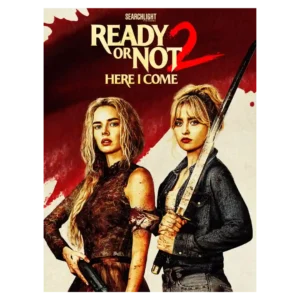
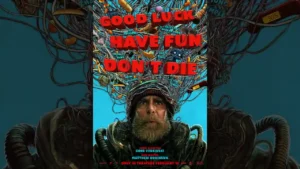
Ready or Not 2: Here I Come
Where It Has the Edge
- audience appeal is 4.3 vs 3.9. The movie plays especially well for horror fans, fans of the first film, and lively theater crowds. Several...

Scorata scores summarize analyzed review evidence on a 1–5 scale; they are not laboratory measurements or a simple average of customer star ratings. Feature scores summarize the reviews covering that feature. The overall score averages feature scores within each review, then combines review averages. When both expert and customer evidence are available, those two groups receive equal weight. Products can have different review coverage, so small score gaps do not establish a winner.
Recommendations prioritize important features for the category, with a score of at least 3.5, a gap of at least 0.25 points and at least two supporting reviews per product. Features with widely varying scores or broad connectivity contexts are excluded from recommendations. These safeguards do not establish statistical significance.
Quick verdict
The review evidence points to a tradeoff: audience appeal versus special effects quality and production design. Choose according to which strengths matter more to you; the overall score alone does not settle that choice.
Choose Ready or Not 2: Here I Come for audience appeal.
Choose Good Luck, Have Fun, Don’t Die for special effects quality and production design.
Scores are out of 5. Missing scores mean missing review evidence, not a missing feature.
The story works best when it keeps Grace moving through the new hunt, but several critics found the expanded premise over-plotted, thin, or harder to justify than the original. A smaller group thought the sequel found a clever enough route forward.
The story wins praise for energy, ideas, and memorable character vignettes, but its central mission can feel thinner than the side stories. Reviewers most often disagree over whether the messy structure enriches or weakens the experience.
The bloody effects can be gleefully satisfying, but repeated spontaneous-combustion gags lose impact for several reviewers. What was once a surprise becomes predictable when the sequel returns to the same goopy payoff too often.
The effects are generally viewed as imaginative and resourceful for the scale, especially the surreal creatures and action imagery. Some late digital work looks deliberately or unintentionally rough, which splits opinion.
The movie’s heightened logic is easier to accept when Weaving grounds Grace’s ordeal, but several reviewers call out extreme plot armor and implausible escapes. The larger, more game-like structure can weaken the sense that the danger is real.
Its sci-fi events are intentionally absurd, but the social behavior underneath them often feels uncomfortably plausible and recognizable. That near-future familiarity gives the satire much of its sting.
The Grace-Faith drama is highly divisive. Their reconciliation adds a welcome personal layer for some viewers, but many critics find the bickering repetitive, the resentment unconvincing, or the emotional beats poorly placed amid a life-or-death hunt.
The dramatic material can land surprisingly hard beneath the absurd comedy, particularly around grief, isolation, and damaged relationships. Its tonal shifts make those beats powerful for some viewers and awkward for others.
Most criticism lands on how closely the sequel repeats the first film’s game and rhythms, with fewer surprises and less novelty. Some reviewers still found enough new rules, characters, and twists to keep the familiar structure lively.
The core time-travel and rogue-AI setup is familiar, yet many reviewers think the film finds a fresh angle through its bizarre vignettes and satire. Others see the story as too indebted to earlier genre landmarks.
The emotional core is inconsistent. Some reviewers are genuinely invested in Grace and Faith reconnecting and appreciate the added heart, while many others find the sister conflict undercooked, forced, or too thin to carry the expanded story.
Despite the manic premise, the film repeatedly finds real sadness and heart in grief, loneliness, and the desire for human connection. Susan and Ingrid’s material is most often cited as the emotional core.
Reviewers who discuss the horror side often say the sequel is less frightening than the first, with action and gore replacing sustained fear. A few still find individual stretches dark, creepy, or tense.
The movie is more unsettling than traditionally frightening, using horror imagery, technology anxiety, and disturbing social ideas to create discomfort. Viewers wanting straightforward scares may find the tone too comic or surreal.
The sequel’s darker social undercurrent works for reviewers who see more weight in its attack on entrenched power. Others find the thematic bite too thin to match the louder scale and bloodshed.
The film has substantial ideas about grief, distraction, technology, authenticity, and choosing painful reality over comforting simulation. Reviewers disagree on how deeply those ideas are explored versus loudly stated.
Weaving and Newton’s sister chemistry works very well for many reviewers, who like their comic friction, physical teamwork, and contrasting energies. Others find the relationship rushed or forced, so the performances often land better than the written estrangement.
Character interplay is frequently enjoyable, with Sam Rockwell and Haley Lu Richardson singled out for strong chemistry and banter. Some relationships feel less developed than the performances themselves.
Pacing is sharply split. Several reviewers praise the immediate start, breakneck movement, and strong momentum, while others say exposition, relationship detours, a long final act, or the second half slow the movie down.
The opening is commonly praised for immediate momentum, but the flashback structure often slows the central mission. Many reviewers say the movie regains energy in bursts rather than sustaining it cleanly for the full runtime.
Dialogue earns praise when the movie fires off snarky one-liners or lets Elijah Wood deliver the rules with dry precision. The sister arguments and heavy exposition draw much harsher reactions, often described as clunky, repetitive, or unnatural.
The dialogue has sharp one-liners, comic rhythms, and memorable verbal bits, but several critics think the script becomes overly expositional or obvious in the final stretch.
Character depth is one of the more consistent weaknesses. Grace gets meaningful growth in some reviews, but many critics find Faith, the hunters, and much of the expanded ensemble underwritten, archetypal, or crowded out by the game mechanics.
The flashback chapters give several recruits memorable emotional context, especially Susan and Ingrid. Reviewers also note that some supporting characters remain thin and that the backstories can interrupt momentum.
As a horror-comedy sequel, reactions range from enthusiastic approval to outright rejection. Fans of its blood-soaked, knowingly ridiculous formula often call it a worthy continuation, while detractors see an unnecessary and inferior repeat.
As a sci-fi dark comedy, it embraces time travel, horror, action, satire, and surrealism with unusual confidence. Fans of weird genre mashups tend to respond much more strongly than viewers wanting a conventional thriller.
Visual reactions range from lush, sinister, and cleanly legible to flat and drab. The strongest praise goes to how the camera handles crowded action and the expanded spaces, while the harshest criticism says the sequel lacks the first film’s moody visual punch.
The film’s camera work earns strong praise for inventive framing, movement, lighting, and a grubby blue-toned look that keeps the lower-budget production visually lively.
The editing receives specific praise for smoothly blending the first movie’s ending into the sequel’s opening and creating a faux-continuous transition. Elsewhere, continuity-style nitpicks temper that positive impression.
The editing helps organize rapid shifts between action, flashbacks, and surreal imagery, though the stop-start structure and long detours make the overall flow feel uneven to some reviewers.
The eat-the-rich message works best for reviewers who enjoy the sequel doubling down on corrupt power and oligarchy. Others find the satire blunt, shallow, repetitive, or less incisive than the first film’s simpler class conflict.
The anti-AI and anti-distraction message feels timely, pointed, and emotionally relevant to many reviewers. Others find it repetitive, preachy, condescending, or less nuanced than its ambitious setup suggests.
The ending divides opinion. Some reviewers enjoyed the final turn, satisfying climax, or setup for more, while others found the payoff unsurprising, rushed, overstuffed, illogical, or simply weaker than the first film’s finish.
The ending is one of the biggest points of disagreement. Some like its open, strange, thematic finish, while others find the final act drawn out, confusing, over-explained, or less satisfying than the setup.
The comedy frequently lands through gruesome slapstick, inept rich villains, Elijah Wood’s deadpan delivery, and the film’s self-aware excess. Still, a sizable group finds the jokes forced, repetitive, tepid, or less sharp than the original.
The comedy is frequently praised as sharp, dark, and laugh-out-loud funny, especially when it turns modern anxieties into absurd set pieces. Some reviewers find the gallows humor mean, obvious, or ineffective.
Runtime is a recurring concern among less enthusiastic reviewers, who say the movie runs long, begins to feel its length, or adds minutes the story does not need. A few faster-paced reviews had no issue with the 108-minute ride.
The two-hour-plus runtime is the most repeated complaint. Even many positive reviewers say the film would be stronger with tighter trimming, especially around flashbacks and the extended finale.
The action is one of the sequel’s strongest and most discussed features. Reviewers repeatedly praise the ballroom fight, brutal brawls, creative kills, and bigger set pieces, though a minority call some fights repetitive, stiff, or overextended.
The action is often praised for kinetic staging, readable movement, and oddball set pieces. Some reviewers find the later action less exciting or too dependent on chaotic spectacle.
The horror-comedy tone works when cartoon gore, deadpan humor, and self-aware absurdity stay in sync. Several critics say that balance breaks when prolonged cruelty or darker violence collides with the movie’s otherwise playful register.
The movie intentionally jumps between slapstick, grief, horror, action, and bleak satire. Many reviewers admire how boldly those tones coexist, while others find the shifts jarring, unstable, or exhausting.
The screenplay gets credit for finding witty variations on the first movie’s structure in the strongest reviews. Less enthusiastic critics think the added rules and emotional subplot make the writing less focused than it should be.
The screenplay is admired for ambition, sharp satire, funny ideas, and inventive structure, but it is also the main target of criticism for repetition, overstuffing, exposition, and uneven late plotting.
Direction is praised when the film turns carnage into readable, energetic horror-comedy and stages its biggest set pieces with confidence. More negative reviews fault the filmmakers for choosing repetition and safe franchise expansion over sharper invention.
Gore Verbinski’s direction is mostly praised for energy, visual invention, and control of the film’s chaos. Critics who are cooler on the movie still often credit his staging, even while calling the result overlong or indulgent.
Suspense is one of the clearest tradeoffs of going bigger. A few critics find strong tension in individual chases and fights, but many miss the first film’s intimate terror and say the wider grounds, predictability, and plot armor drain urgency.
Verbinski can generate real tension inside the comedy, especially in escape scenes and uncertain reality shifts. Some reviewers think jokes or detours repeatedly deflate that tension before it can fully build.
The enlarged rulebook is a frequent stumbling block: multiple reviewers call the mythology convoluted, inconsistent, or overloaded with explanation. Others enjoyed the absurd clauses and thought the rules created fun opportunities for schemes and surprises.
The basic mission is easy enough to follow, but dream logic, shifting reality, and late reveals make the larger mechanics deliberately slippery. Some enjoy that uncertainty; others find the logic inconsistent or confusing.
The practical gore work is singled out as a strength, with prosthetics, makeup, stunts, and physical effects combining to make the biggest kills feel messy and theatrical.
The practical effects blend nearly seamlessly with the visual effects, helping the movie’s handmade chaos feel cohesive.
One reviewer criticizes a sequel music choice as less original than the first film’s use of the song, making the soundtrack feel more recycled than inspired in that moment.
The music and end-credit material fit the film’s manic, darkly playful personality, with a few reviewers calling the soundtrack a strong tonal match.
The supporting cast is a major source of fun, especially Elijah Wood, Shawn Hatosy, Sarah Michelle Gellar, David Cronenberg, and Kathryn Newton. The main caveat is that the larger ensemble leaves some performers and villains with too little material.
The supporting cast is widely praised for fully committing to the film’s strange tone, with Haley Lu Richardson and Juno Temple receiving especially strong notices. A few roles are considered underused despite the talent involved.
The cast is widely viewed as a major asset, with reviewers repeatedly praising the performers’ commitment to the movie’s ridiculous, bloody tone. Even several negative reviews say the acting is stronger than the material around it.
The performances are widely seen as a major strength, with the ensemble committing fully to the movie’s eccentric mix of comedy, anxiety, and heart. A few critics think the shifting tone leaves some actors less grounded.
Samara Weaving is the clearest point of agreement: most reviewers find her magnetic, physical, expressive, funny, and convincing as a traumatized survivor pushed straight back into danger. A small minority felt the sequel gives Grace less range or weakens what made her special.
Sam Rockwell is the clearest consensus strength: charismatic, funny, manic, and emotionally frayed without turning the character into a one-note joke. Even mixed reviews often say he keeps the movie watchable.
The expanded mythology is the biggest point of disagreement. Some reviewers love the larger cabal, stranger rules, and new possibilities; others say the John Wick-style expansion makes a simple premise cluttered, overexplained, or less fun.
The strange anti-tech world is compelling enough to inspire interest in spending more time with the premise and its characters.
Costume work receives mixed notice. One reviewer says the design supports the film well, while another points to visibly cheap construction in some of the wealthy characters’ clothing.
The costumes help sell the movie’s handmade, surreal personality, especially the Man from the Future’s improvised plastic-and-wires outfit and Ingrid’s battered princess look.
The larger estate, golf course, casino, ritual spaces, and other status-heavy environments give the sequel a fitting arena for its expanded game. Reviewers praise the scale and design, though one felt the golf-course potential was not fully used.
The production design turns modest locations into a vivid, grimy, surreal world, with the diner, future-tech props, AI room, and bizarre creatures giving the film a distinctive personality.
The sequel has flashes of striking visual personality, from gothic spaces to Renaissance-inspired imagery and stylized bloodshed. Some reviewers find that look bold and playful, while others see a blander, less audacious presentation than the first film.
The film’s look is one of its most consistent strengths: grimy, blue-tinged, kinetic, surreal, and packed with odd imagery. Even mixed reviews often credit its visual personality.
Rewatch appeal is mixed. One critic says the two movies make an easy back-to-back watch and another is eager for more, while less enthusiastic viewers say this sequel is less memorable and does not demand repeat viewing.
Its dense ideas and details invite repeat viewing, with the appeal growing as the ending and themes are unpacked.
Entertainment value is genuinely split but leans positive: many reviewers call the sequel a blast, a crowd-pleaser, or a solidly fun bloodbath. The negative camp sees repetition, lore, and overlength turning the same ingredients into diminishing returns.
Most reviewers find it energetic, funny, and highly entertaining, often calling it a blast or a wild ride. A smaller group finds the experience exhausting, disjointed, or simply not entertaining enough to justify the length.
The theatrical value depends heavily on taste. One reviewer urges seeing it with a crowd rather than waiting for streaming, while another says streaming is the safer choice if the sequel’s repetition makes a ticket feel hard to justify.
Enthusiastic reviewers call it worth the ticket price and particularly suited to a theatrical crowd, while more mixed reactions stop short of urging an immediate cinema trip.
The movie plays especially well for horror fans, fans of the first film, and lively theater crowds. Several reviewers specifically describe it as a communal screams-and-laughs experience, while colder reactions suggest casual viewers may be less impressed.
Its oddball style has clear cult-movie potential and many reviewers recommend seeing it with a crowd. The same weirdness, blunt satire, and long runtime make it an acquired taste rather than a universal crowd-pleaser.
The UHD transfer is praised for razor-sharp detail, clean imagery, strong texture, and a cool-toned grade that suits the movie’s look.
The CG is divisive: some like the deliberately strange, AI-slop look of the creatures and finale, while others call parts of it rough or distracting.
One review raises concern that the international wealthy families risk leaning on cultural stereotypes, while also crediting the filmmakers with keeping those characters unpredictable enough to avoid a wholly one-note treatment.
Makeup and prosthetic work are praised as part of the movie’s practical gore package, especially in its messiest set pieces. One reviewer also flags rough wig continuity, keeping the reaction from being uniformly positive.
The score is praised for shifting between ominous electronic textures and bigger orchestral energy without losing the movie’s playful, anxious tone.
The gore is intentionally extreme and often part of the fun, but several reviewers think the violence crosses into ugliness when beatings linger or the brutality feels less cartoonish. Others explicitly appreciate that the gore stays purposeful and theatrical.
The Atmos mix is described as bold and active, with deep bass, wide surrounds, directional effects, and strong action impact.
The sound design is singled out for how fully it reinforces the film’s heightened comic-sci-fi identity and recurring title motif.

A deeply human coming-of-age drama carried by remarkable performances and an honest portrayal of grief. Its gentle optimism moves most viewers, though some find the final stretch hurried or overly...
Pros: Grief portrayal, acting performance
Cons: pacing

Billie Jean King’s magnetic first-person storytelling makes this an exhilarating portrait of athletic courage and social change. The filmmaking follows a familiar documentary structure, and her full tennis résumé gets...
Pros: entertainment value, Biographical coverage
Cons: Narrative structure

Choose this inventive, unsettling documentary for fearless questioning, dark humor, and unpredictable storytelling. Skip it if you want a short, straightforward exposé with definitive answers.
Pros: originality, humor

A singular voice, powerful piano playing and intimate film photography make this concert absorbing for receptive listeners. Its uninterrupted, often similar-sounding songs and lack of background context are an acquired...
Pros: directing quality, cinematography
Cons: pacing, Song variety