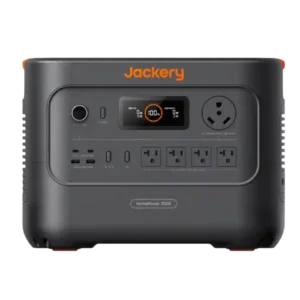
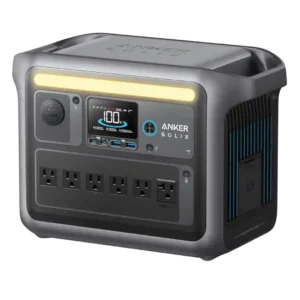
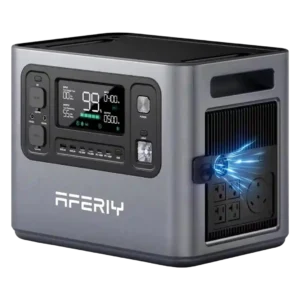
Compare Jackery Explorer 3000 v2 vs Anker SOLIX E10

Jackery Explorer 3000 v2

Jackery Explorer 3000 v2

Overall score 4.3 / 5

Based on 8 scored reviews

vs
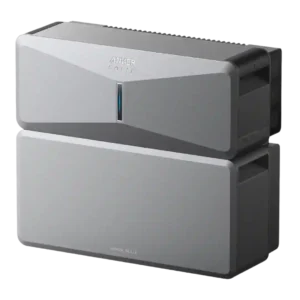
Anker SOLIX E10

Anker SOLIX E10

Overall score 4.4 / 5

Based on 41 scored reviews

How we score

Scorata scores summarize analyzed review evidence on a 1–5 scale; they are not laboratory measurements or a simple average of customer star ratings. Feature scores summarize the reviews covering that feature. The overall score averages feature scores within each review, then combines review averages. When both expert and customer evidence are available, those two groups receive equal weight. Products can have different review coverage, so small score gaps do not establish a winner.

Recommendations prioritize important features for the category, with a score of at least 3.5, a gap of at least 0.25 points and at least two supporting reviews per product. Features with widely varying scores or broad connectivity contexts are excluded from recommendations. These safeguards do not establish statistical significance.

Quick verdict

What each product is best for

The review evidence points to a tradeoff: display quality and energy efficiency versus battery expandability and expandability. Choose according to which strengths matter more to you; the overall score alone does not settle that choice.

Choose Jackery Explorer 3000 v2 for display quality and energy efficiency.

Choose Anker SOLIX E10 for battery expandability and expandability.

Why these recommendations?

Jackery Explorer 3000 v2

Where It Has the Edge

  • display quality is 4.8 vs 1.7. The display is clear and information-rich, showing the essential battery and power-flow details at a glance.
  • energy efficiency is 4.8 vs 4.0. Off-peak scheduling and battery-saving features can improve everyday energy use and reduce unnecessary battery wear.
  • overall product satisfaction is 4.8 vs 4.5. Overall sentiment is highly positive, centered on exceptional output, compact dimensions, and serious backup capability despite a few...

Anker SOLIX E10

Where It Has the Edge

  • battery expandability is 5.0 vs 1.0. Adding storage is one of the E10's clearest strengths: batteries stack directly, expansion is straightforward, and several users...
  • expandability is 5.0 vs 1.0. Scalability is a defining E10 advantage. Buyers can start relatively small and grow toward multiple inverter stacks, more...
Jackery Explorer 3000 v2 4.3 overall score
Anker SOLIX E10 4.4 overall score

Compare features

Scores are out of 5. Missing scores mean missing review evidence, not a missing feature.

Scored on both products

Other features

Ease of use
Jackery Explorer 3000 v2
5.0

Everyday operation is straightforward, with simple AC charging and clearly organized controls.

Anker SOLIX E10
4.5

Day-to-day operation is approachable for a whole-home energy system, though a few configuration menus still have a learning curve.

Expandability
Jackery Explorer 3000 v2
1.0

The system cannot grow beyond its built-in battery, a serious limitation for buyers planning multi-day or scalable home backup.

Anker SOLIX E10
5.0

Scalability is a defining E10 advantage. Buyers can start relatively small and grow toward multiple inverter stacks, more batteries, solar, and generator support without replacing the original core system.

Weather resistance
Jackery Explorer 3000 v2
1.0

The exposed sockets have no ingress protection, so the station should be kept sheltered from weather.

Anker SOLIX E10
5.0

Outdoor durability earns consistent praise. Reviewers repeatedly cite IP66/NEMA-style weather protection and successful use across rain, snow, heat, and cold.

USB-A ports
Jackery Explorer 3000 v2
4.5

Two USB-A ports add useful legacy-device charging alongside the AC and USB-C outputs.

Anker SOLIX E10
1.0

There are no built-in USB-A ports on the E10 inverter, a repeated complaint from reviewers who expected direct device charging.

USB-C ports
Jackery Explorer 3000 v2
4.5

Two USB-C ports make laptops, phones, and modern production equipment easy to power directly.

Anker SOLIX E10
1.0

USB-C is also absent from the inverter, reinforcing that this is a home energy system rather than a conventional portable power station.

Solar panel compatibility
Jackery Explorer 3000 v2
1.8

Solar compatibility is a recurring weakness because Jackery's proprietary connector complicates third-party panel use.

Anker SOLIX E10
5.0

A real AC-coupled Enphase installation continued producing during outages without extra microinverter configuration, a strong result for retrofit solar compatibility.

Outlet selection
Jackery Explorer 3000 v2
3.8

The AC and USB mix covers most everyday needs, but three AC sockets and no 240V output can restrict larger backup setups.

Anker SOLIX E10
1.0

Direct plug-in flexibility is poor because the E10 inverter has no built-in AC outlets; adapters or home-integration hardware are required.

AC outlet count
Jackery Explorer 3000 v2
3.5

Three UK AC outlets are adequate for many uses, yet several accounts wished for the four outlets common on competing models.

Anker SOLIX E10
1.0

The inverter itself has no built-in AC receptacles, forcing buyers to use an adapter or home-integration hardware for plug-in loads.

Whole-home integration
Jackery Explorer 3000 v2
3.5

Transfer-switch compatibility expands home use, yet the lack of 240V output and battery expansion keeps it from being a complete whole-home solution.

Anker SOLIX E10
5.0

With the Power Dock, batteries, solar, and generator connected, the E10 behaves like one coordinated home-energy platform rather than a collection of separate devices.

Runtime
Jackery Explorer 3000 v2
4.9

The 3,072Wh battery offers meaningful endurance: mixed essential loads can last through an outage, while lighter single loads run much longer.

Anker SOLIX E10
3.5

Runtime varies dramatically with load. Light household use can stretch well into a day or overnight, while central AC or other heavy loads can cut a two-battery setup to only a few hours.

Portability
Jackery Explorer 3000 v2
4.6

Portability is exceptional for a 3kWh station. It is still heavy, but far easier to move than many similarly powerful competitors.

Anker SOLIX E10
3.3

Portability is mixed. The E10 is mainly a set-and-forget home installation, but modular components, relocation-friendly architecture, and an optional trolley make occasional movement possible.

Energy efficiency
Jackery Explorer 3000 v2
4.8

Off-peak scheduling and battery-saving features can improve everyday energy use and reduce unnecessary battery wear.

Anker SOLIX E10
4.0

Measured round-trip and inverter efficiency landed in solid-to-above-average territory, competitive with other premium residential storage systems.

Operating temperature range
Jackery Explorer 3000 v2
4.3

The LFP pack supports a broad practical temperature range, though extreme cold can still reduce performance.

Anker SOLIX E10
5.0

The broad rated temperature range impressed off-grid users who need the system to operate through both winter cold and summer heat.

EPS switchover speed
Jackery Explorer 3000 v2
4.2

The claimed 20ms transition is fast enough for many devices, but it trails the quickest dedicated UPS-style competitors.

Anker SOLIX E10
4.6

Most real-world tests describe transfers as effectively seamless, with no flicker, reboot, or brownout. One AC-coupled solar test did produce an abnormal roughly 20-second delay, so that edge case keeps the result from being flawless.

Overall product satisfaction
Jackery Explorer 3000 v2
4.8

Overall sentiment is highly positive, centered on exceptional output, compact dimensions, and serious backup capability despite a few ecosystem limitations.

Anker SOLIX E10
4.5

Overall sentiment is strongly positive: reviewers repeatedly call the E10 powerful, well engineered, and highly capable for whole-home resilience. Reservations center on software maturity, proprietary hardware, local controls, and total installed cost.

Included accessories
Jackery Explorer 3000 v2
2.3

The included kit is sparse. The AC cable is supplied, but car and solar charging cables may need to be purchased separately.

Anker SOLIX E10
2.0

The Smart Generator package drew criticism for omitting a natural-gas hose, leaving one owner to source a custom solution.

Solar cable compatibility
Jackery Explorer 3000 v2
1.8

Solar cable compatibility is poor out of the box because common MC4 and XT-style setups generally require a DC8020 adapter.

Anker SOLIX E10
2.0

Solar wiring is not entirely plug-and-play: one reviewer strongly disliked the isolator arrangement and the lack of pre-fitted MC4 connectors.

Home backup capability
Jackery Explorer 3000 v2
5.0

Home backup is a major strength, with enough output for demanding appliances and enough capacity to carry essential circuits through shorter outages.

Anker SOLIX E10
4.9

Whole-home backup is the E10's strongest use case: reviewers repeatedly report real or simulated outages where the house kept operating normally, often without occupants noticing the grid had failed.

Lifting ease
Jackery Explorer 3000 v2
3.9

Two people can move it comfortably, and stronger users may carry it alone, but loading it into a vehicle can still be difficult.

Anker SOLIX E10
4.0

The batteries are heavy, but splitting the system into modular pieces makes positioning easier than moving a single large residential battery that may require lifting equipment.

Accessory ecosystem
Jackery Explorer 3000 v2
2.3

Jackery offers useful panels, cables, and a trolley, but proprietary connectors and separately sold accessories make the ecosystem restrictive and costly.

Anker SOLIX E10
2.3

The biggest ecosystem complaint is how proprietary the E10 feels: batteries, plugs, and some accessories are E10-specific, with limited crossover to other Anker gear and lingering forward-compatibility questions.

Compactness
Jackery Explorer 3000 v2
5.0

The compact body is one of the product's strongest differentiators, fitting 3kWh capacity and 3,600W output into a surprisingly small enclosure.

Anker SOLIX E10
5.0

Despite its large capability, the stacked layout can be surprisingly low-profile and space-efficient once installed.

Input and output monitoring
Jackery Explorer 3000 v2
5.0

Input and output wattage are presented clearly on both the front display and app.

Anker SOLIX E10
5.0

The app presents energy flow and consumption clearly enough that users can understand where power is coming from and where it is going in real time.

Load handling
Jackery Explorer 3000 v2
5.0

The inverter handles high combined loads smoothly, from kitchen appliances to power tools and filming equipment.

Anker SOLIX E10
5.0

Load management is excellent when properly configured: reviewers praise circuit prioritization, high simultaneous demand handling, and the ability to keep essential loads running as battery levels fall.

Maximum solar input
Jackery Explorer 3000 v2
5.0

Up to 1,000W of solar input gives the station strong off-grid potential, though reaching that ceiling may require several panels and adapters.

Anker SOLIX E10
5.0

The 9kW-per-inverter solar input is one of the most celebrated specifications, repeatedly described as a major advantage over competing modular home-backup systems.

Overload protection
Jackery Explorer 3000 v2
5.0

The inverter tolerated a severe temporary overload before shutting down, showing useful protective headroom.

Anker SOLIX E10
5.0

When overloaded in testing, the E10 recovered automatically instead of remaining shut down, an important advantage for unattended home backup.

Power quality
Jackery Explorer 3000 v2
5.0

Power quality is consistently described as clean and safe for electronics, with stable operation under load.

Anker SOLIX E10
5.0

One off-grid test praised the system's clean output, an important benefit for sensitive electronics when generator support is involved.

Rated output
Jackery Explorer 3000 v2
5.0

The 3,600W rated output feels unusually strong for such a compact station and comfortably sustains demanding household and professional loads.

Anker SOLIX E10
5.0

The E10 sustained its rated 7.6kW-class output without issue in testing before reviewers moved on to much higher surge loads.

Remaining runtime estimate
Jackery Explorer 3000 v2
5.0

Estimated runtime in the app helps users judge how long the connected setup can continue operating.

Anker SOLIX E10
5.0

The app's live remaining-runtime estimate is a practical outage tool, giving owners a direct view of how long their current load can be supported.

Solar generator functionality
Jackery Explorer 3000 v2
5.0

As a solar generator, it delivers quiet, emission-free power with enough capacity for serious off-grid use.

Anker SOLIX E10
5.0

The E10 works particularly well as the center of a solar-plus-storage-plus-generator setup, with reviewers praising the unified hybrid approach for both backup and off-grid use.

Standby power loss
Jackery Explorer 3000 v2
5.0

Standby losses are exceptionally low, reducing the need to recharge the unit periodically while it waits for an outage.

Anker SOLIX E10
5.0

Idle draw around the mid-40-watt range was considered excellent for a whole-home system of this size.

Surge capacity
Jackery Explorer 3000 v2
5.0

Compressors, pumps, and power tools start confidently, with surge performance repeatedly described as a major advantage.

Anker SOLIX E10
5.0

Surge performance is exceptional. Multiple tests pushed the system toward roughly 28-30kW without immediate failure, making large motor and HVAC startup one of its signature strengths.

Transfer switch compatibility
Jackery Explorer 3000 v2
5.0

Manual transfer-switch support makes selected hardwired home circuits practical during an outage without installing a full stationary battery system.

Anker SOLIX E10
5.0

Existing transfer-switch owners can integrate the E10 cleanly, and one reviewer specifically praised being able to do so without buying additional core hardware.

Battery and charging

Battery expandability
Jackery Explorer 3000 v2
1.0

Capacity is fixed at 3,072Wh; buyers cannot add expansion batteries later, which limits multi-day backup growth.

Anker SOLIX E10
5.0

Adding storage is one of the E10's clearest strengths: batteries stack directly, expansion is straightforward, and several users said they could add capacity without reworking the core installation.

AC charging speed
Jackery Explorer 3000 v2
4.6

Most accounts put a full AC recharge around 1.7–1.8 hours, excellent for restoring power between outages; one test reported a slower but still acceptable result.

Anker SOLIX E10
2.0

Standalone 120V charging is a weak point for a system this large; one full-system test called it extremely slow and impractical without faster integration hardware.

Battery capacity
Jackery Explorer 3000 v2
5.0

Capacity is one of the clearest strengths, providing enough stored energy for serious home backup, off-grid work, and long equipment sessions.

Anker SOLIX E10
3.0

Capacity is highly scalable, but the entry configuration can be tight for serious whole-home use. Tested usable capacity was solid, while one guide recommends more than the base battery for meaningful backup.

Solar charging speed
Jackery Explorer 3000 v2
3.1

Solar charging is workable but highly setup-dependent. A large array can recharge it quickly, while one or two 200W panels may take most of a day or longer.

Anker SOLIX E10
5.0

With a large array connected, reviewers found the E10 capable of replenishing a multi-battery stack very quickly each day.

EV charging usefulness
Jackery Explorer 3000 v2
4.5

The large surge reserve is described as capable of supporting EV charging, though no detailed vehicle-charging test was provided.

Anker SOLIX E10
5.0

Reviewers successfully used the system for EV charging, including a roughly 10kW Rivian load and solar-powered Tesla charging.

Dual-input charging
Jackery Explorer 3000 v2
5.0

Combining wall and solar input produces the fastest recharge times and is especially useful when charging windows are short.

Anker SOLIX E10
5.0

The system can combine charging sources simultaneously, a capability reviewers highlighted as especially useful for keeping large battery banks replenished.

Comfort and build

Water resistance
Jackery Explorer 3000 v2
1.0

There is no meaningful water protection around the uncovered sockets.

Anker SOLIX E10
5.0

Rain exposure is not a practical concern for the weather-rated hardware; one tester simply described leaving it in the rain as 'no problem.'

Durability
Jackery Explorer 3000 v2
5.0

The structural design and robust shell inspire confidence for transport, job-site use, and repeated handling.

Anker SOLIX E10
2.0

Overall hardware is sturdy, but one tester broke a battery handle during normal use, exposing a notable durability weak point on a very heavy module.

Materials quality
Jackery Explorer 3000 v2
5.0

The enclosure materials feel robust, while the integrated cell-to-body construction adds structural strength without excess bulk.

Anker SOLIX E10
2.0

A weak spot is the battery handle construction: plastic handles and cheap-looking riveted hardware disappointed one hands-on tester.

Build quality
Jackery Explorer 3000 v2
4.8

Construction feels solid and robust, with the cell-to-body structure adding strength while reducing bulk.

Anker SOLIX E10
5.0

The main enclosures and base hardware earn strong marks for solidity, weather-ready construction, and a premium physical feel.

Design aesthetics
Jackery Explorer 3000 v2
5.0

The familiar orange-accented design looks polished, compact, and thoughtfully arranged.

Anker SOLIX E10
5.0

Owners consistently like the clean, premium appearance; several said the installed hardware looks polished enough to live visibly on or around the home.

Performance

Display quality
Jackery Explorer 3000 v2
4.8

The display is clear and information-rich, showing the essential battery and power-flow details at a glance.

Anker SOLIX E10
1.7

The lack of a meaningful built-in display is one of the most consistent complaints. Status and diagnostics are largely app-dependent, and the light bar or minimal front indicators do not replace a proper screen.

Specification accuracy
Jackery Explorer 3000 v2
3.0

Jackery's dramatic size-and-weight claims appear plausible, but one tester could not independently confirm the exact percentages.

Anker SOLIX E10
5.0

Hands-on testing generally matched or exceeded Anker's advertised performance, and installers said the system does a good job of delivering what it promises.

Full-load noise
Jackery Explorer 3000 v2
5.0

Even under heavy load, fan noise was reported below normal conversational volume.

Anker SOLIX E10
5.0

Even when pushed well beyond normal continuous output in surge testing, the passive-cooled E10 remained whisper quiet.

Noise level
Jackery Explorer 3000 v2
5.0

Quiet operation is a notable advantage, with fan noise staying unobtrusive even during demanding use.

Anker SOLIX E10
5.0

Silence is a major E10 strength. The passive-cooled inverter has no fans, and users repeatedly describe it as effectively unnoticeable indoors, in garages, or overnight.

Controls and connectivity

Bluetooth connectivity
Jackery Explorer 3000 v2
3.0

Bluetooth control works reliably nearby, but the range requirement limits true remote access.

Anker SOLIX E10
5.0

Local Bluetooth control remains available when internet service is down, giving the system a useful fallback during outages.

Review contexts may differ, so use caution when interpreting the score gap.

App quality
Jackery Explorer 3000 v2
4.1

App quality ranges from clean and intuitive to somewhat laggy. Monitoring is strong, but remote commands may take several seconds to register.

Anker SOLIX E10
3.9

App impressions are split. Several long-term users praise the clean interface, energy flow views, and control depth, while others call the software basic, unfinished, or frustratingly mandatory because the inverter lacks a real screen.

High-demand appliance support
Jackery Explorer 3000 v2
5.0

Kettles, heaters, induction hobs, compressors, and other power-hungry appliances are comfortably within its reach.

Anker SOLIX E10
5.0

Central air conditioners and other heavy household loads are a standout strength. Multiple tests report successful startup of large HVAC loads, including 3-ton to 5-ton systems, without trouble.

Ownership and support

Warranty
Jackery Explorer 3000 v2
5.0

A five-year warranty adds meaningful reassurance for a high-priced power station.

Anker SOLIX E10
3.0

Warranty impressions are mixed: some sources criticize five-year coverage and modest capacity-retention terms, while another cites an eight-year offer that compares very favorably with rivals.

Operating cost
Jackery Explorer 3000 v2
4.7

Off-peak charging and stored solar energy can lower operating costs, while a full wall recharge remains relatively inexpensive.

Anker SOLIX E10
4.0

Time-of-use shifting can reduce energy costs substantially in the right rate plan, but the economics are highly utility-dependent; one NEM2 user saw little annual savings despite strong month-to-month results.

Ease of setup
Jackery Explorer 3000 v2
5.0

Basic setup is simple: connect wall power, solar, or both, and the station is ready with little configuration.

Anker SOLIX E10
4.5

Once the required electrical work is complete, battery stacking, color-coded connections, and app commissioning are widely described as unusually simple. The caveat is permitting and professional installation, which can range from painless to months of delay.

Value for money
Jackery Explorer 3000 v2
4.1

Value depends heavily on sale pricing. The performance-to-weight ratio is excellent, but full retail pricing carries a premium and rivals may offer expansion.

Anker SOLIX E10
3.9

Value depends heavily on configuration and installation. Many reviewers see strong long-term value in modular growth, solar use, and outage protection, while others warn that batteries, Power Dock hardware, and electrician costs can make the total system expensive.

Long-term reliability
Jackery Explorer 3000 v2
5.0

LFP chemistry and high cycle ratings support strong long-term reliability for backup and professional use.

Anker SOLIX E10
5.0

In a week-long real-world resilience test, the system was described as rock solid with no meaningful reliability problems.

Tracking and training

Energy usage tracking
Jackery Explorer 3000 v2
4.8

The app can track power flow, solar generation, and related energy savings, making it useful beyond basic battery monitoring.

Anker SOLIX E10
4.0

Energy monitoring is useful for seeing battery, grid, and household consumption, but graph precision varies; one tester loved the live visibility while another wanted clearer numerical summaries.

Evidence available for one product

Controls and connectivity

App connectivity
Jackery Explorer 3000 v2
5.0

Pairing the unit with the app is quick and straightforward.

Anker SOLIX E10No score yet
Push-button start
Jackery Explorer 3000 v2No score yet
Anker SOLIX E10
5.0

The Smart Generator's push-to-start design eliminates routine recoil-pull starting, a convenience reviewers clearly appreciated.

Other features

Automatic start
Jackery Explorer 3000 v2No score yet
Anker SOLIX E10
5.0

Automatic behavior is a major strength when the full system is installed: the Smart Generator can start and stop as needed, and Power Dock configurations can take over without manual intervention.

Built-in light
Jackery Explorer 3000 v2
2.5

The front lamp has been removed; it is a minor disappointment rather than a deal breaker.

Anker SOLIX E10No score yet
CARB compliance
Jackery Explorer 3000 v2No score yet
Anker SOLIX E10
1.0

California is a major limitation for the Smart Generator side of the system: sources note that the generator is not yet CARB-certified for sale or battery-backup use there.

Control panel layout
Jackery Explorer 3000 v2
4.5

Controls and connections are grouped logically on the front, giving the station a simple, thoughtful layout.

Anker SOLIX E10No score yet
Dust resistance
Jackery Explorer 3000 v2
1.0

Uncovered ports leave the unit vulnerable to dust and debris in workshops or outdoor settings.

Anker SOLIX E10No score yet
Electric start
Jackery Explorer 3000 v2No score yet
Anker SOLIX E10
5.0

The Smart Generator's electric start worked on the first try in testing and was described as exceptionally easy to use.

Exhaust emissions
Jackery Explorer 3000 v2
5.0

Battery power provides generator-level capability without exhaust fumes, making indoor and close-quarters use far more practical than fuel equipment.

Anker SOLIX E10No score yet
Heat management
Jackery Explorer 3000 v2
5.0

Smart charging controls monitor overheating and balance fast performance with long-term battery health.

Anker SOLIX E10No score yet
Instruction quality
Jackery Explorer 3000 v2No score yet
Anker SOLIX E10
5.0

The manuals are unusually clear and visual, with simple diagrams and color-coded guidance that make a complex system less intimidating.

Inverter quality
Jackery Explorer 3000 v2
5.0

The inverter earns high marks for clean delivery, stable voltage, and protective shutdown after a severe temporary overload.

Anker SOLIX E10No score yet
Maintenance ease
Jackery Explorer 3000 v2
5.0

Compared with a petrol generator, the battery station avoids fuel-system servicing and routine engine upkeep.

Anker SOLIX E10No score yet
Maintenance frequency
Jackery Explorer 3000 v2
5.0

There are no oil changes, spark-plug jobs, or recurring engine-maintenance intervals to manage.

Anker SOLIX E10No score yet
Outlet accessibility
Jackery Explorer 3000 v2
4.0

Front-mounted outlets and controls are easy to reach during everyday use.

Anker SOLIX E10No score yet
Output stability
Jackery Explorer 3000 v2
5.0

Appliance testing found clean, steady delivery without noticeable interruptions or voltage swings.

Anker SOLIX E10No score yet
Over-temperature protection
Jackery Explorer 3000 v2
5.0

Overheating is actively monitored, adding confidence during fast charging and heavy output.

Anker SOLIX E10No score yet
Packaging quality
Jackery Explorer 3000 v2
4.0

The layered packaging and built-in box handles make safe removal of the heavy unit easier.

Anker SOLIX E10No score yet
Peak output
Jackery Explorer 3000 v2
5.0

The 7,200W peak gives the station enough headroom for brief, demanding startup loads.

Anker SOLIX E10No score yet
Power output
Jackery Explorer 3000 v2
5.0

The 3,600W inverter is a standout strength, powering demanding household appliances and production gear without feeling constrained by the compact chassis.

Anker SOLIX E10No score yet
Pure sine wave output
Jackery Explorer 3000 v2
5.0

Pure sine wave output makes the station well suited to sensitive electronics and production equipment.

Anker SOLIX E10No score yet
Quiet mode
Jackery Explorer 3000 v2
5.0

Quiet charging mode is particularly useful for campsites, bedrooms, studios, and sound-sensitive film sets.

Anker SOLIX E10No score yet
Recharge speed
Jackery Explorer 3000 v2
4.6

Wall and hybrid charging are impressively quick for a 3kWh battery, though one comparison found it slower than the fastest rivals.

Anker SOLIX E10No score yet
Remote control
Jackery Explorer 3000 v2
2.0

Remote switching works, although one test found commands laggy and slow to confirm.

Anker SOLIX E10No score yet
Remote monitoring
Jackery Explorer 3000 v2
5.0

The app gives useful remote visibility into battery level, power flow, and estimated runtime.

Anker SOLIX E10No score yet
Remote start
Jackery Explorer 3000 v2No score yet
Anker SOLIX E10
5.0

Remote generator control works well from the app, letting users start backup generation from inside the home rather than going outdoors.

Safety certifications
Jackery Explorer 3000 v2No score yet
Anker SOLIX E10
5.0

Safety credentials are a meaningful strength, with reviewers highlighting UL testing and fire-propagation protection as important for residential installation and permitting.

Self-discharge rate
Jackery Explorer 3000 v2
5.0

ZeroDrain-style standby performance is presented as excellent, with minimal need for periodic top-ups.

Anker SOLIX E10No score yet
Short-circuit protection
Jackery Explorer 3000 v2
5.0

Short-circuit protection is included within the comprehensive battery management system.

Anker SOLIX E10No score yet
Storage convenience
Jackery Explorer 3000 v2
5.0

The compact form can fit in a closet, under a desk, or in a vehicle without claiming a permanent garage corner.

Anker SOLIX E10No score yet
Tri-fuel capability
Jackery Explorer 3000 v2No score yet
Anker SOLIX E10
5.0

The Smart Generator's gasoline, propane, and natural-gas flexibility is a major resilience advantage when one fuel source is unavailable.

UPS functionality
Jackery Explorer 3000 v2
4.2

UPS behavior is generally useful for backup electronics, though one account warned that sensitive desktop computers may notice the switchover.

Anker SOLIX E10No score yet
USB-C power delivery
Jackery Explorer 3000 v2
4.5

The pair of 100W USB-C outputs is strong enough for laptops and other higher-power USB-C devices.

Anker SOLIX E10No score yet
Voltage regulation
Jackery Explorer 3000 v2
5.0

Voltage stayed stable during multi-device testing, including demanding household loads.

Anker SOLIX E10No score yet
Weight
Jackery Explorer 3000 v2
4.0

At roughly 59 pounds, it feels heavy in isolation yet remarkably light for its capacity and output class.

Anker SOLIX E10No score yet
Wheel quality
Jackery Explorer 3000 v2
2.0

Built-in wheels are absent, an awkward omission for a unit this heavy; an optional trolley is available.

Anker SOLIX E10No score yet

Ownership and support

Automation reliability
Jackery Explorer 3000 v2No score yet
Anker SOLIX E10
4.4

Storm Guard and automatic backup behavior generally worked well in real homes, but not perfectly. One tester saw missed storm preparation, while another found generator start/stop thresholds a little imprecise.

Customer support
Jackery Explorer 3000 v2No score yet
Anker SOLIX E10
5.0

Two hands-on users reported unusually positive phone support, including immediate access to knowledgeable staff who solved setup questions quickly.

Simultaneous device support
Jackery Explorer 3000 v2
5.0

The mix of AC and USB outputs can support several devices together, with ample headroom for typical backup and production setups.

Anker SOLIX E10No score yet
Solar panel bundle value
Jackery Explorer 3000 v2
3.8

Jackery's SolarSaga panels are easy to deploy and well designed, but their high price weakens bundle value.

Anker SOLIX E10No score yet
Startup reliability
Jackery Explorer 3000 v2
5.0

Demanding startup loads such as compressors and power tools engage reliably without immediate tripping.

Anker SOLIX E10No score yet

Battery and charging

Battery chemistry
Jackery Explorer 3000 v2
5.0

LiFePO4 chemistry brings strong safety, thermal stability, and lifespan advantages over older lithium-ion designs.

Anker SOLIX E10No score yet
Battery cycle life
Jackery Explorer 3000 v2
4.9

Cycle-life claims are unusually strong, generally pointing to thousands of cycles before major capacity loss.

Anker SOLIX E10No score yet
Battery longevity
Jackery Explorer 3000 v2
5.0

Long battery life is a core selling point, with the LFP pack expected to remain useful for many years.

Anker SOLIX E10No score yet
Battery management system
Jackery Explorer 3000 v2
5.0

The battery management system provides broad protection against electrical faults and overheating.

Anker SOLIX E10No score yet
Battery percentage accuracy
Jackery Explorer 3000 v2No score yet
Anker SOLIX E10
2.0

Multi-stack state-of-charge reporting can be misleading because the app may average stacks with very different charge levels, obscuring when one stack is nearly empty.

Battery reliability
Jackery Explorer 3000 v2
5.0

The LFP pack is positioned as highly dependable, with long cycle life and years of expected service.

Anker SOLIX E10No score yet
Battery storage performance
Jackery Explorer 3000 v2
5.0

Low standby loss helps the battery remain ready after long storage, an important benefit for emergency use.

Anker SOLIX E10No score yet
Car charging speed
Jackery Explorer 3000 v2
1.0

Charging from a standard vehicle socket is painfully slow and is unsuitable as the primary refill method.

Anker SOLIX E10No score yet
Charging efficiency
Jackery Explorer 3000 v2No score yet
Anker SOLIX E10
5.0

Direct DC charging from the Smart Generator is repeatedly praised for avoiding extra conversion losses and maintaining strong charging efficiency while the system is under load.

Charging input compatibility
Jackery Explorer 3000 v2
2.4

Charging flexibility is broad in theory, but the proprietary DC8020 solar input makes third-party panel integration unnecessarily difficult.

Anker SOLIX E10No score yet
Generator charging speed
Jackery Explorer 3000 v2
5.0

A fuel generator can restore the battery quickly, making extended outages easier to manage while returning to silent battery power afterward.

Anker SOLIX E10No score yet
LiFePO4 battery
Jackery Explorer 3000 v2
5.0

The LFP battery is a major upgrade for buyers who value safer chemistry and years of repeated use.

Anker SOLIX E10No score yet
Usable battery capacity
Jackery Explorer 3000 v2
5.0

Real-world use suggests a large share of the 3,072Wh pack is practically available, with long appliance runtimes and modest drain during tool work.

Anker SOLIX E10No score yet

Performance

Cold-weather performance
Jackery Explorer 3000 v2
3.0

Three-season use should be dependable, but output is expected to fall in very cold conditions.

Anker SOLIX E10No score yet
Display readability
Jackery Explorer 3000 v2
4.8

A bright, easy-to-read screen makes remaining charge and operating status simple to check.

Anker SOLIX E10No score yet
Hot-weather performance
Jackery Explorer 3000 v2
5.0

The LFP chemistry is well suited to hot garages, attics, and storage conditions thanks to its wider safe temperature range.

Anker SOLIX E10No score yet
Idle noise
Jackery Explorer 3000 v2
5.0

At ordinary loads, the cooling fans can be virtually inaudible from a few feet away.

Anker SOLIX E10No score yet
Startup performance
Jackery Explorer 3000 v2
5.0

Compressors and power tools with demanding startup spikes engage without immediately tripping the station.

Anker SOLIX E10No score yet

Comfort and build

Frame durability
Jackery Explorer 3000 v2
5.0

The rigid cell-to-body chassis is designed to improve structural strength during transport and repeated handling.

Anker SOLIX E10No score yet
Handle comfort
Jackery Explorer 3000 v2
5.0

Large ergonomic side handles improve grip comfort and make two-person carries straightforward.

Anker SOLIX E10No score yet
Housing durability
Jackery Explorer 3000 v2
5.0

The housing feels sturdy and durable enough for mobile work, vehicle transport, and regular backup use.

Anker SOLIX E10No score yet
Size and footprint
Jackery Explorer 3000 v2
4.8

Its milk-crate or suitcase-like footprint is easy to store and vehicle-friendly, though still oversized for casual family camping.

Anker SOLIX E10No score yet

Other Top Generators to Consider

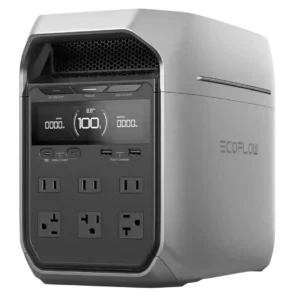
#1 EcoFlow Delta 3 Plus Review
4.6

Best for rapid charging, versatile ports, excellent app control, and portable backup for appliances or electronics. Skip it for unattended low-load use or sustained heavy loads unless fan behavior and...

Pros: overall product satisfaction, solar panel compatibility

Cons: long-term reliability, standby power loss

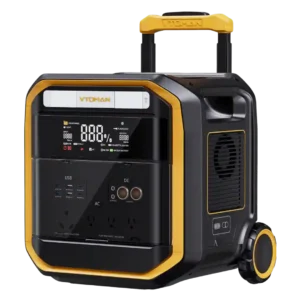
#2 Vtoman FlashSpeed Pro 3600
4.5

Best for fast-charging, high-output backup power that can run major appliances and roll easily between locations. Skip it if you need frequent lifting, a small footprint, or a screen that...

Pros: overall product satisfaction, recharge speed

Cons: weight, lifting ease

#3 Anker Solix C1000
4.5

Best for fast charging, strong portable output, and short outage or camping duty. Skip it for quiet rooms, multi-day whole-home backup, or solar-only use with small panels.

Pros: overall product satisfaction, runtime

Cons: noise level, weight

#4 AFERIY P280
4.5

Choose the P280 for high-output home, RV, or off-grid backup with fast charging, strong usable capacity, UPS protection, and expansion. Skip it if you need lightweight portability, polished app control,...

Pros: overall product satisfaction, battery expandability

Cons: weight, built-in light