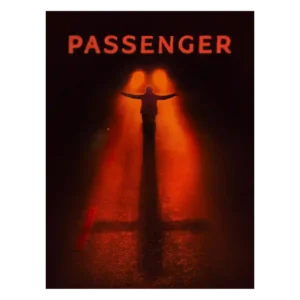
Passenger
Where It Has the Edge
No clear scored advantage over the other product.

Scorata scores summarize analyzed review evidence on a 1–5 scale; they are not laboratory measurements or a simple average of customer star ratings. Feature scores summarize the reviews covering that feature. The overall score averages feature scores within each review, then combines review averages. When both expert and customer evidence are available, those two groups receive equal weight. Products can have different review coverage, so small score gaps do not establish a winner.
Recommendations prioritize important features for the category, with a score of at least 3.5, a gap of at least 0.25 points and at least two supporting reviews per product. Features with widely varying scores or broad connectivity contexts are excluded from recommendations. These safeguards do not establish statistical significance.
Quick verdict
The available evidence supports the recommendation below, but does not establish an overall winner. Check the remaining features against your priorities.
There is not enough comparable review evidence to recommend Passenger over the other product.
Choose Obsession for story quality and theme depth.
No clear scored advantage over the other product.
Scores are out of 5. Missing scores mean missing review evidence, not a missing feature.
The most negative reviewers advise waiting for streaming or skipping it entirely, describing a theatrical ticket as poor value for such familiar material.
One enthusiastic reviewer says the theatrical experience was worth more than the ticket price and would gladly pay to see it again.
Most negative reviewers have little interest in returning to the full film, though a few expect its visual set pieces may gain cult appreciation on streaming.
Rewatch interest is mostly positive, with viewers wanting to revisit the film or buy it, though one second viewing made its repetitive structure more noticeable.
A few striking scares and likable moments make the ride enjoyable for some viewers, but many find the surrounding story forgettable or dull. Enjoyment depends heavily on tolerance for familiar jump-scare horror.
Entertainment value is very high for most reviewers, who call the film a blast, a crowd-pleaser, or a morbid joy even when the experience is deliberately uncomfortable.
The engaged couple has flashes of warmth and support, but the relationship conflict is thin and unevenly integrated. Some viewers buy their chemistry; others never believe the romance.
One review directly praises the film’s treatment of love as curdled, self-centered possession, finding the relationship horror effective precisely because it rejects conventional romance.
The relationship and religious themes remain muddled, and the implied endorsement of settling down and conforming drew strong criticism. The movie never lands a persuasive larger point.
Reviewers praise the film’s message about coercion, objectification, selfish desire, and the difference between love and possession, often noting that the ideas emerge through the horror rather than lectures.
The road-haunting premise has a strong foundation, but most reviewers find the finished narrative generic, underdeveloped, or poorly conceived. Standout scenes rarely combine into a satisfying whole.
The story is usually praised as an efficient, compelling use of a simple premise, though one mixed review regards the overall movie as merely okay rather than transformative.
Ideas about home, commitment, faith, rootlessness, and relationship incompatibility are present but lightly developed. The film gestures toward meaning without building an emotional or thematic engine.
The themes around consent, agency, loneliness, entitlement, and distorted ideas of love are widely viewed as substantial and resonant. Some reviewers wish the film followed those ideas further.
The movie creates immediate fear more successfully than lasting emotion. Thin characterization and undeveloped relationship themes keep the ordeal from carrying much weight.
Reviewers repeatedly describe the film as sad, haunting, upsetting, or emotionally bruising, with the trapped-Nikki material giving the horror unusual emotional weight.
Individual scare timing can be sharp, but the overall rhythm is uneven. Repetitive set pieces, abrupt cuts, and stop-start transitions prevent the film from building sustained momentum.
Editing is praised for economy, sharp rhythm, and knowing when to linger versus strike suddenly. Reviewers credit the cutting with helping the slow burn stay destabilizing.
The road setting offers a modest twist, yet the plot follows a familiar curse-and-exposition formula almost beat for beat. Predictability is one of the most repeated complaints.
The reviewers who directly assess plot originality praise the film for pushing a familiar wish-gone-wrong structure into a fresh, modern extreme.
Tyler and Maddie are widely seen as thinly written, with backstory and relationship conflict arriving too late or too mechanically. Several critics struggled to care about their survival.
Character work earns praise when the friend group and Bear’s flaws feel lived-in and revealing, but some critics find Nikki’s arc too linear or the ensemble underwritten.
Character reactions, decisions, and relationship conversations often feel manufactured for the plot. Several critics found the couple difficult to believe as real people.
Several reviewers value how grounded the characters and relationship dynamics feel despite the supernatural premise. One major dissent argues the characters feel artificial and unrelatable.
The desert-church climax is the most consistent disappointment. Reviewers call it generic, silly, rushed, or inconsistent with the threat established earlier.
Ending reactions lean positive, with several reviewers calling the finale satisfying, brutal, smart, or perfect. Dissenters criticize indecision, rushed denouement, or a failure to fully stick the landing.
The opening, projector scene, and rotating parking-lot sequence earn substantial praise, and several viewers found the film gripping. The heavy reliance on predictable, loud jump scares sharply divides opinion.
Most reviewers find the film genuinely scary, praising its dread, sudden shocks, and unsettling behavior over routine jump-scare mechanics. A minority report that some early scares play as silly or unintentionally funny.
Relationship drama, rock songs, jokes, gore, and supernatural horror often pull in different directions. Several reviewers describe the movie’s identity and rhythm as muddled.
The horror-comedy balance works very well for some reviewers, who admire the jarring shifts and control. Others experience tonal whiplash or need much of the runtime before the humor and horror feel balanced.
Many reviewers find Scipio and Llobell likable, supportive, and believable together, which helps carry the movie. Others see the pairing as bland or unconvincing.
The one direct assessment of character chemistry is negative, criticizing the main group for feeling artificial and showing little chemistry.
The film works best as uncomplicated B-horror with polished craft. Viewers expecting fresh mythology or a major new horror landmark are likely to be disappointed.
Genre satisfaction is extremely strong. Horror-focused reviewers repeatedly call it a standout, favorite, or top-tier modern horror film, especially for its blend of dread, gore, comedy, and psychological discomfort.
The screenplay is the central weakness: generic structure, thin characters, exposition dumps, inconsistent rules, and a weak finale repeatedly undercut the direction.
The screenplay is divisive. Supporters praise tight, memorable writing and thematic intelligence, while detractors flag repetition, missing connective tissue, weak character logic, and incomplete ideas.
The dialogue is frequently criticized as clunky, unnatural, or overloaded with lore. Relationship conversations and explanations often sound more functional than human.
Dialogue reactions are split: one reviewer praises believable natural delivery, while another dismisses the writing as shallow TV-writers’-room cleverness.
Small jokes, campy lines, and accidental silliness provide occasional amusement. For some viewers, its strongest comic value is as a knowingly bad group watch.
Dark comedy generally complements the horror and gives the film a wicked, uncomfortable energy. Some reviewers, however, find certain laughs unintentional or the humor cruel rather than controlled.
Patient camera movement, negative space, darkness, and long takes generate real tension in the strongest scenes. Confusing rules and repetitive payoffs frequently break that momentum.
The film’s slow-building dread and claustrophobic tension are among its most consistently praised qualities. Reviewers often highlight framing, pacing, and sound as working together to keep the pressure rising.
The opening moves with precision, but the middle repeatedly loses steam and the climax arrives without enough buildup. Several reviewers felt the short runtime dragged.
Pacing is one of the clearest tradeoffs. Some praise a deliberate slow burn and tight editing, while others find the second act uneven, the progression insufficiently signposted, or the film somewhat drawn out.
The Passenger’s hollowed, decayed look can be creepy and physically threatening, especially at a distance. The design loses impact when overexposed or paired with weak digital work.
The make-up effects receive emphatic praise for convincing gore that earns the film’s age rating without feeling merely splashy.
Night roads, parking lots, headlights, shadows, and cramped van interiors are photographed with unusual clarity and atmosphere. The visual craft is one of the film’s most consistent strengths.
Cinematography is strongly praised for shadow-heavy compositions, claustrophobic framing, and precise lighting. Even a mixed visual assessment acknowledges clever tricks within the low-budget presentation.
The film includes some effective makeup, gore, and surveillance-image tricks, but the demon’s digital presentation often looks ordinary, derivative, or unconvincing.
Special-effects reactions are mixed: one violent effect looks weak enough to draw criticism, while another review finds the exaggerated effects cartoonish in an enjoyable way.
Christopher Young’s score is repeatedly praised as restrained, fearsome, and effective. It supports the road-at-night atmosphere without overwhelming the strongest scenes.
The synth-heavy score is repeatedly praised as haunting, gorgeous, atmospheric, and crucial to the film’s escalating dread. Reviewers often describe it as one of the production’s standout elements.
André Øvredal’s command of light, timing, camera movement, and spatial tension repeatedly elevates the material. Even negative reviews tend to find his set-piece direction more accomplished than the script.
Barker’s direction is widely praised for confidence, timing, restraint, and command of dread. A sharply dissenting review finds the visual direction banal and aesthetically thin.
The basic pursuit is easy to follow, but the Passenger’s motives, rules, religious weaknesses, and hobo-code mythology remain inconsistent or overexplained in awkward bursts.
Plot clarity is a recurring weakness around timing and supernatural rules. Reviewers cite confusing chronology, overly explained moments, and wish mechanics that are never fully laid out.
The limited bursts of gore are vivid, surprising, and generally well received. Some reviewers wished the movie had committed more consistently to that harsher edge.
The violence is generally praised when it arrives suddenly and earns its shock, but one critic finds a prolonged murder more cartoonish than nauseating. The brutality is a feature for gore-friendly viewers, not a neutral content count.
At roughly 94 minutes, the film is compact on paper but often feels padded. Multiple reviewers argue the premise would have worked better as a short.
The runtime is a recurring weakness in the direct assessments, with critics calling the film overlong and arguing that its tension does not always justify the full length.
Casual viewers seeking a straightforward jump-scare movie may have fun, while seasoned horror fans are much more likely to find it safe, repetitive, and disposable.
Audience appeal is strongest as a communal horror experience: reviewers describe it as a must-see crowd movie that invites discussion, repeat attendance, and watching with friends.
Silence, road noise, horns, and carefully timed impacts make the opening and several set pieces unnerving. Abrupt audio cuts and excessive loud stingers become distracting elsewhere.
Sound design is a major strength, with reviewers describing the audio as masterful, immersive, and precisely timed to make quiet scenes and shocks physically tense.
The customized van and nighttime road environments can feel convincingly lived-in and claustrophobic. Other stops and locations are criticized as drab or underused.
Production design earns positive notices for small, convincing details and a tactile low-budget look that supports the film’s strange, decaying atmosphere.
The hobo code, Saint Christopher imagery, van-life folklore, and demon rules never fully cohere. The antagonist becomes less frightening as the movie explains more while contradicting itself.
The One Wish Willow mythology divides reviewers. Some like its spare, suggestive rules, while others find the supernatural logic underexplained, inconsistent, or frustratingly underdeveloped.
The movie’s strongest identity comes from red lights, deep shadows, projector images, rotating camera moves, and readable nighttime compositions. Even harsh reviews acknowledge striking visual ideas.
The visual approach is usually praised for muted palettes, deep shadows, retro texture, and unnerving compositions. A notable dissent calls the look aesthetically flat and uninteresting.
Melissa Leo brings authority and presence, but her exposition-heavy role is repeatedly described as wasted or underused. Other supporting performances are generally serviceable.
Supporting performances are generally seen as grounding the central nightmare, with particular praise for Megan Lawless and Cooper Tomlinson. A few critics find parts of the ensemble rough or wooden.
The lead performances divide opinion, but the stronger notices praise their grounded reactions, natural charm, and ability to keep a thin story watchable. Harsher takes call the acting flat or unconvincing.
Performances are one of the film’s clearest strengths: most reviewers praise the cast’s commitment and control, though a few find some early or supporting work awkward.
The leads are often praised for naturalism, charm, and grounded fear responses. Lou Llobell receives particular credit for doing strong work with underwritten material.
The central performances draw exceptional praise, especially the volatile, physically expressive work around Nikki and the anxious, compromised portrayal of Bear. Even mixed reviews often single out the leads.
The score and some needle drops are praised, but several song choices feel random or tonally disruptive. The music works best when it stays restrained.
The soundtrack receives a mild criticism: the pop selections are considered less inspired than the film’s much more celebrated original score.
The best action-oriented set pieces use the van, projector, parking lots, and road hazards inventively. The climax and limited number of kills provide much less excitement.
The creature is more effective in shadow than in full view. Its sleek digital rendering is repeatedly described as unconvincing and less frightening up close.
Reviewers value how the film connects its horror to contemporary loneliness, gender anxiety, and modern relationship dynamics, giving the old wish premise a distinctly current social frame.
The relationship drama does not blend smoothly with the horror and rarely becomes emotionally involving. It often interrupts tension instead of deepening it.
Practical effects are praised for being gnarly, committed, and tactile, with gore that makes the film’s bursts of violence feel immediate rather than polished away.
The film generated early breakout expectations, but the completed movie drew sharply divided reactions, with visual craft praised more often than the story.

Choose this inventive, unsettling documentary for fearless questioning, dark humor, and unpredictable storytelling. Skip it if you want a short, straightforward exposé with definitive answers.
Pros: originality, humor

Best for a hypnotic, bookish mystery with tactile visuals and cerebral chills. Skip it if reading-heavy, attention-demanding storytelling sounds more exhausting than exciting.
Pros: Atmosphere, cinematography
Cons: audience appeal

Best for an intimate, searching documentary that rewards focused attention and invites discussion. Skip it when devastating grief, addiction footage, and unresolved family tensions would be too much.
Pros: emotional impact, theme depth

Best for patient suspense, an unforgettable score, and an unsettling masked killer. Skip it for very young children or if you want to avoid intense scares; its restrained kills also...
Pros: directing quality, score quality
Cons: message quality