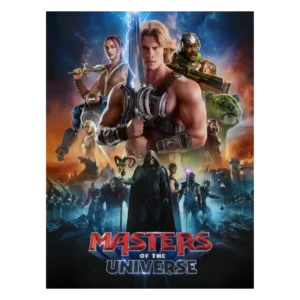
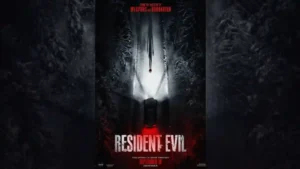
Masters of the Universe
Where It Has the Edge
No clear scored advantage over the other product.

Scorata scores summarize analyzed review evidence on a 1–5 scale; they are not laboratory measurements or a simple average of customer star ratings. Feature scores summarize the reviews covering that feature. The overall score averages feature scores within each review, then combines review averages. When both expert and customer evidence are available, those two groups receive equal weight. Products can have different review coverage, so small score gaps do not establish a winner.
Recommendations prioritize important features for the category, with a score of at least 3.5, a gap of at least 0.25 points and at least two supporting reviews per product. Features with widely varying scores or broad connectivity contexts are excluded from recommendations. These safeguards do not establish statistical significance.
Quick verdict
The available evidence supports the recommendation below, but does not establish an overall winner. Check the remaining features against your priorities.
There is not enough comparable review evidence to recommend Masters of the Universe over the other product.
Choose Resident Evil for runtime and pacing.
No clear scored advantage over the other product.
Scores are out of 5. Missing scores mean missing review evidence, not a missing feature.
The 140-minute-plus length is the most consistent complaint. Even positive reviewers felt the origin story, repeated jokes, and stacked battles needed substantial trimming.
The short runtime is consistently treated as an advantage. Reviewers like that the movie stays lean, avoids bloat, and moves through its escalating nightmare without overstaying its welcome.
The basic quest is easy enough for fans, but compressed lore, unexplained gaps, and dropped threads can make the story confusing for newcomers.
The central A-to-B delivery mission is repeatedly described as simple and easy to follow. Reviewers generally see that stripped-down objective as a strength because it keeps the movie focused on survival obstacles.
Most creature and costume work supports the colorful fantasy, but one reviewer noticed an unconvincing wig that broke the illusion.
Creature makeup and design receive strong praise for letting the infected grow increasingly strange and grotesque while retaining a tactile, handcrafted feel.
The opening and Earth material often take too long to reach the main adventure, and the lengthy final stretch can feel repetitive even when the action remains lively.
Pacing is overwhelmingly praised as lean, breathless, and relentless across a roughly 90-minute ride. A few reviewers notice a mid-film hitch or weaker second act when the movie pauses its forward momentum.
The hero’s journey is familiar and frequently compared with other major fantasy franchises. Its self-aware treatment of He-Man gives the formula some personality but not much novelty.
One reviewer specifically faults the story for lacking the originality expected from Cregger, even while enjoying the execution and franchise-specific details.
The largely bloodless action is still heavier and more frequent than several reviewers expected from a family-oriented toy franchise.
Reviewers who judge the gore rather than merely describe it generally embrace the extreme violence as part of the fun. The blood, exploding bodies, and grotesque carnage are repeatedly called effective, wild, or appropriately excessive.
The script contains a promising empathy-centered idea, but many critics felt overused jokes, contradictory themes, and underdeveloped story logic kept it from cohering.
The screenplay earns praise for its lean structure, clever game-logic beats, and inventive situations, but not everyone is convinced by its coherence. One critic argues the inconsistencies become obvious once the immediate ride is over.
The action stays busy, but a predictable path and obvious outcomes limit tension, especially through the middle of the movie.
Suspense is one of the film’s strongest qualities, built from limited ammunition, dark spaces, uncertain creature behavior, and constant forward pressure. Reviewers repeatedly describe the experience as tense, nerve-shredding, or gripping.
The movie has sincere ideas about empathy and failure, yet some emotional beats land flat because jokes or familiar clichés interrupt them.
Several reviewers find more feeling than the stripped-down premise suggests, especially in Bryan’s fear of parenthood and the way his vulnerability humanizes the ordeal. Others think that emotional thread is underdeveloped or tacked on.
The knowingly campy humor is the movie’s biggest dividing line. Supporters found it much funnier than expected, while detractors felt relentless quips and self-mockery weakened the adventure.
The humor is one of the most praised elements, with Bryan’s panic, muttering, incompetence, and game-logic frustrations generating frequent laughs. Most say it releases tension without ruining the scares, while a smaller group thinks it drains fear from key moments.
The movie constantly balances sincere heroism with parody and self-aware camp. Some found that blend charming, while many thought the jokes repeatedly undercut stakes and emotion.
Most reviewers think the horror-comedy balance works, using laughs to release pressure without destroying dread. A notable minority finds the movie too jokey, especially later, creating tonal disharmony or reducing the horror.
The climax and multiple post-credit teases generally leave enthusiastic viewers wanting a sequel, though the franchise setup will matter less to skeptical viewers.
The ending is the clearest point of disagreement. A few reviewers enjoy its boldness or deliberate cliffhanger quality, but many call it abrupt, incomplete, clunky, underwhelming, or short on emotional resolution.
Duncan’s redemption and Adam’s gentler approach to heroism give the story some satisfying growth. Other supporting characters and relationships receive less development than reviewers wanted.
Character depth is one of the clearest weaknesses. Bryan is engaging as an everyman, but many reviewers find his personal arc thin and the supporting characters too brief to develop meaningfully.
The simple good-versus-evil framework works as uncomplicated adventure for some viewers, but others found the plot sloppy, derivative, or emotionally empty.
The story is intentionally slight, and that tradeoff divides reviewers. Many accept the simple delivery quest as the right framework for an experiential survival movie, while others find the narrative shallow, repetitive, or insufficiently resolved.
The lead pairing has appealing chemistry, and the Teela-Duncan family dynamic adds warmth and friction to the adventure.
The brief pairing between Bryan and Paul Walter Hauser’s character is singled out for such strong chemistry that one reviewer wished the movie had leaned into a full buddy-horror dynamic.
The fights are usually energetic, clearly staged, and colorful, with several standout set pieces. A minority found later battles repetitive or too dependent on weightless digital spectacle.
The action is largely praised as inventive, feverish, and built around memorable survival set pieces. One dissenting view finds the bigger blockbuster-style action less effective than the film’s smaller, tactile horror.
Real sets, physical costumes, and practical creature work give many scenes a welcome sense of texture and help ground the more fantastical imagery.
The practical effects are a standout, from large monster puppets to exploding bodies, blood, and tactile creature work. Reviewers repeatedly celebrate the old-school physicality as a major reason the gore feels vivid and fun.
The glam-rock score is one of the most consistently praised elements, giving the action scale, momentum, and an unmistakable 1980s identity.
The score is praised as eerie, dark, playful, and tension-building, with reviewers noting how it accentuates big moments while keeping unease simmering underneath.
The strongest consensus is that the movie understands and recreates the cartoon’s costumes, characters, silliness, and toy-box spirit with obvious affection.
Reviewers overwhelmingly praise the film for adapting the feel of playing Resident Evil rather than retelling a game plot. Its resource scarcity, locks, weapon progression, dread, and survival structure are seen as spiritually faithful, though some purists may dislike the lack of legacy characters and direct lore.
The digital work is uneven. Skeletor and many fantasy elements impress, but several reviewers noticed rough compositing, weightless environments, and poorly integrated creatures.
CGI is the visual weak spot: reviewers call some later digital spectacle pixel-heavy or imperfect and describe the overall computer work as mixed. The practical creature work is consistently received much better.
The film attempts a thoughtful contrast between brute strength and empathy, but critics disagree on whether it develops that idea or merely gestures toward it.
The movie’s thematic ambitions are modest. Some reviewers find a worthwhile fatherhood thread or human core, but many say those ideas remain thin, undercooked, or secondary to the ride.
Critical enthusiasm is sharply divided, with some embracing the campy throwback and others rejecting it as creatively unsuccessful nostalgia packaging.
Critical reception is portrayed as exceptionally strong, with roundups highlighting near-unanimous enthusiasm and record-setting franchise scores. The movie is repeatedly framed as a major critical step up for Resident Evil on film.
Longtime He-Man fans and nostalgic adults are the clearest audience, though several newcomers also found it accessible and fun. Some critics doubt the property has enough relevance for a broad modern audience.
The movie is repeatedly described as accessible to newcomers as well as longtime players, with its simple survival setup requiring little franchise homework. Series purists may resist the new characters and story, but horror fans are expected to have an easier time buying in.
Fans and viewers who enjoy campy fantasy may revisit it for the characters, music, and Easter eggs, while others see limited novelty after the first viewing.
The few reviewers who address rewatching are enthusiastic, describing plans to see it again with a crowd, show it to others, or revisit it quickly for a second viewing.
Many reviewers found it colorful, energetic, and unexpectedly fun, especially as a popcorn movie. Others found the same approach exhausting, shallow, or too dependent on nostalgia.
Most reviewers describe the movie as a blast: fast, funny, gross, stressful, and highly theatrical. Even several critics who fault its story or depth still say the ride itself is hard not to enjoy.
Bold colors, retro fantasy design, and comic-book energy give the film a distinctive surface. Heavy digital environments sometimes make that world feel glossy and weightless.
The visual style draws strong praise for its snowy palette, darkness, colored practical lighting, game-inspired perspectives, and grotesque creature imagery. Several reviewers call it unusually beautiful for such a nasty horror ride.
The ensemble is widely considered better than expected for a toy-based blockbuster, with several performers bringing charm, comic timing, and emotional weight.
One reviewer broadly calls the acting extraordinary, matching the wider praise for how the cast sells the movie’s panic, comedy, and grotesque situations.
The adventure can work for older children and teens, but reviewers repeatedly warn that some deaths, grotesque imagery, and violence may be too intense for younger kids.
Cinematography is a major strength, especially the snowbound lighting, shadow work, readable night imagery, and game-like first- and third-person framing. Reviewers repeatedly say the camera makes exploration itself feel tense and immersive.
One review strongly criticizes the movie for making little meaningful effort toward inclusion, pointing to a male-dominated story and supporting roles that skew white or receive very little screen time.
The dialogue earns laughs when it embraces the absurdity, but some reviewers wanted sharper lines and fewer repetitive innuendos.
Zach Cregger’s direction is widely praised for control of suspense, visual gags, pacing, creature escalation, and horror-comedy timing. Reviewers often credit his specific voice with rejuvenating a film series they considered tired.
The editing keeps many action scenes moving, but transitions and later battle sequences can feel repetitive, spotty, or visually muddled.
Families with older children can have a lively time, but the PG-13 violence, scary deaths, and adult jokes make it a poor fit for the youngest viewers.
As survival horror, the movie earns strong approval for combining dread, gore, monsters, jump scares, and frantic problem-solving. A minority feels the comedy becomes strong enough to weaken the horror identity later on.
The film’s emphasis on empathy, kindness, and a healthier model of masculinity is often praised. Critics argue that the message becomes muddled when every conflict is ultimately solved through violence.
Bryan’s shaky gun handling, bad decisions, panic, and ordinary reactions are praised as unusually believable for a horror protagonist. That grounded behavior helps the outrageous monsters feel more immediate.
Scares are widely praised for sharp jump scares, uncertainty, creature reveals, and sustained unease rather than cheap repetition. A few reviewers find the later comedy or spectacle less frightening than the stronger opening stretch.
Creature and gore effects are among the most consistently praised elements, with grotesque mutations, practical texture, and convincing VFX giving each new threat its own shock value. Even reviewers with story complaints tend to admire the effects work.
Austin Abrams receives near-unanimous praise for carrying what is often essentially a one-man show. Reviewers highlight his relatability, comic timing, vulnerability, panic, and ability to make an inept everyman worth rooting for.
The marketing is praised for holding back many of the movie’s best creature surprises and avoiding major spoilers, letting the theatrical experience retain its shock value.
The synths, rock songs, Queen references, and guitar-heavy soundtrack give the movie a lively retro personality that complements its colorful camp.
Supporting performers are generally considered solid, funny, or memorable in brief appearances, but reviewers repeatedly note that the movie gives them little room to develop beyond exposition or NPC-like functions.
The bright pulp-fantasy sets and analog sci-fi details bring Eternia to life and closely resemble an elaborate live-action toy world.
Sound is used as a suspense tool, from muffled snowbound impacts to off-screen cues that direct attention into dark spaces. Reviewers find it an important part of the movie’s immersive tension.
One reviewer specifically praises how game logic and escalating set pieces become part of the movie’s world-building, making its rules feel organically tied to the experience.

A deeply human coming-of-age drama carried by remarkable performances and an honest portrayal of grief. Its gentle optimism moves most viewers, though some find the final stretch hurried or overly...
Pros: Grief portrayal, acting performance
Cons: pacing

Billie Jean King’s magnetic first-person storytelling makes this an exhilarating portrait of athletic courage and social change. The filmmaking follows a familiar documentary structure, and her full tennis résumé gets...
Pros: entertainment value, Biographical coverage
Cons: Narrative structure

Choose this inventive, unsettling documentary for fearless questioning, dark humor, and unpredictable storytelling. Skip it if you want a short, straightforward exposé with definitive answers.
Pros: originality, humor

A singular voice, powerful piano playing and intimate film photography make this concert absorbing for receptive listeners. Its uninterrupted, often similar-sounding songs and lack of background context are an acquired...
Pros: directing quality, cinematography
Cons: pacing, Song variety