Scorata scores summarize analyzed review evidence on a 1–5 scale; they are not laboratory measurements or a simple average of customer star ratings. Feature scores summarize the reviews covering that feature. The overall score averages feature scores within each review, then combines review averages. When both expert and customer evidence are available, those two groups receive equal weight. Products can have different review coverage, so small score gaps do not establish a winner.
Recommendations prioritize important features for the category, with a score of at least 3.5, a gap of at least 0.25 points and at least two supporting reviews per product. Features with widely varying scores or broad connectivity contexts are excluded from recommendations. These safeguards do not establish statistical significance.
Quick verdict
What each product is best for
The review evidence points to a tradeoff: screenplay quality and audience appeal versus score quality. Choose according to which strengths matter more to you; the overall score alone does not settle that choice.
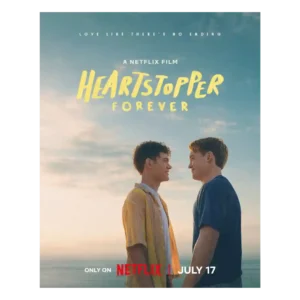
Choose Heartstopper Forever for screenplay quality and audience appeal.
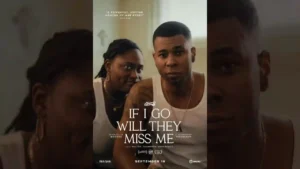
Choose If I Go Will They Miss Me for score quality.
Why these recommendations?
Heartstopper Forever
Where It Has the Edge
screenplay quality is 4.2 vs 2.6. The screenplay is often praised for empathy, mature themes, and confident character writing, though a few scenes feel...
audience appeal is 4.6 vs 3.8. Existing fans and queer viewers are the clear audience, with strong emotional and nostalgic appeal. Newcomers may struggle...
tonal consistency is 4.3 vs 3.5. The movie retains Heartstopper’s compassionate sweetness while adopting a more somber, mature mood. The tonal shift mostly works,...
If I Go Will They Miss Me
Where It Has the Edge
score quality is 4.8 vs 2.8. Malcolm Parson’s soulful, wistful piano writing is praised for binding the film’s disparate images and ideas together without...
Heartstopper Forever4.1 overall score
If I Go Will They Miss Me4.2 overall score
Compare features
Scores are out of 5. Missing scores mean missing review evidence, not a missing feature.
Scored on both products
Other features
Animation quality
Heartstopper Forever
4.5
If I Go Will They Miss Me
1.5
Details and evidence for animation quality
Heartstopper Forever
The familiar hearts, leaves, sparks, and hand-drawn accents remain charming and emotionally expressive without overwhelming the live-action story.
The animated notebook sketches draw one sharp complaint, with the effect described as chintzy and disruptive beside the film’s stronger formal choices.
One strongly negative assessment finds the coming-of-age fable disappointing because familiar beats and over-explanation replace the freshness promised by its premise.
The score generally supports the emotion, but some critics found it overly insistent, twee, or prone to emphasizing feelings the actors already communicate.
Expanding the short gives Lozita and the family more room, but one critic feels the feature loses some of the original’s freer, less narrative-bound quality.
The finale largely offers a polished continuation rather than a reinvention, with familiar tropes, callbacks, and conflicts limiting its sense of novelty.
The film’s mix of Greek myth, flight imagery, surrealism, and neighborhood realism can feel singular and inventive. Several critics, however, see clear debts to earlier lyrical Black cinema, with one calling the creative voice outright derivative.
The screenplay is often praised for empathy, mature themes, and confident character writing, though a few scenes feel overworked or explain emotions too explicitly.
The script is the film’s most divisive craft element: some see strong writerly instincts, while others find it obvious, underwritten, repetitive, or too eager to explain emotion. The feature expansion adds useful family dynamics but can lose subtlety.
The relationship drama is strongest when it lays fear, jealousy, dependence, and vulnerability bare. Repetition makes the conflict exhausting for a minority of critics.
The strongest responses find the family drama moving, graceful, and emotionally substantial, with the coming-of-age material landing as more than a simple father-son conflict.
The imagery is a major highlight: warm neighborhood portraits, expressive compositions, shadow, and indelible tableaux repeatedly carry emotion that the dialogue does not. The visual approach is among the film’s most consistently praised elements.
The feature-length format divided critics: some thought it suited the characters’ maturity, while many felt the story was either rushed or stretched across nearly two hours.
The 90-minute length is criticized for leaving character perspectives and emotional specificity underdeveloped rather than feeling efficiently concise.
The movie retains Heartstopper’s compassionate sweetness while adopting a more somber, mature mood. The tonal shift mostly works, though its sincerity can still feel cloying to skeptics.
The realism-fantasy balance works beautifully for some critics, but others find the Greek, aviation, and surreal motifs insufficiently integrated. The film can feel cohesive emotionally even when its metaphors pull in different directions.
The film often favors dreamy, lyrical logic over literal explanation. That can be absorbing, but it also leaves parts of the story easier to feel than to explain and potentially difficult for viewers seeking a straightforward narrative.
The romance remains tender, convincing, and emotionally rewarding as Nick and Charlie confront distance, codependence, and the work of sustaining love.
Some critics praised the more grounded look at changing relationships and mental health, while others still found the idealized queer world too polished to feel fully real.
The strongest realism comes from the film’s honest, non-condescending view of family and neighborhood life. Even with surreal flourishes, critics often feel the people and environment remain grounded and emotionally credible.
The film thoughtfully explores whether first love can mature, how partners maintain separate identities, and why care must include both devotion and self-preservation.
The film finds rich material in fatherhood, masculinity, imagination, systemic pressure, community, and the desire to be seen. Most critics find these ideas resonant, though the harshest critique says the film sacrifices subtlety for cheapened catharsis.
Charlie’s growing confidence and Nick’s identity crisis give the leads meaningful new dimensions. The compressed format and repeated anxiety cycles weaken some of the supporting development.
The family is often praised for empathy, interiority, and lived-in contradictions, especially around Big Ant and Lozita. A few critics find the central relationships too schematic or insufficiently developed within the feature’s structure.
Lozita is allowed moments of humor alongside her firmness, giving the family portrait a little welcome lightness without turning the film into a comedy.
The plot leans on familiar coming-of-age conflicts and revisits emotional beats the series has already explored, leaving some critics wanting fresher material.
The film earns credit for avoiding a standard three-act structure, yet some of its father-son beats are viewed as predictable, familiar, or close to cookie-cutter Sundance storytelling.
The dialogue can be tender and emotionally clear, but several critics found it overly sweet, platitudinous, or clunky in its most message-heavy scenes.
The main story works best as a heartfelt farewell centered on Nick and Charlie, though several critics found it driftless, repetitive, or too compressed to fully land.
The father-son and family story earns substantial praise for tenderness, grace, and emotional complexity, but not unanimous support. Its looser construction and repetitive beats lead some critics to call it unfocused, schematic, or underwritten.
Most critics found the finale heartfelt, fitting, and satisfying for longtime fans. A small minority felt the standalone movie was unnecessary or too weak to justify the farewell.
The unresolved, hopeful conclusion is mostly admired for refusing a falsely tidy resolution and embracing life’s incompleteness. One critic still feels the ending stumbles slightly and moves away from the film’s strongest element.
Its messages about self-acceptance, agency, care, and LGBTQIA+ solidarity are central strengths, even when the delivery occasionally becomes heavy-handed.
The film’s belief in imagination, dignity, and the worth of people too often flattened by outside narratives lands powerfully for most critics. The dissenting view finds the message too explicitly dictated rather than organically felt.
The farewell is widely described as moving, bittersweet, and emotionally resonant. A few critics found the rushed structure reduced the impact of key moments.
At its best, the film is tender, involving, and capable of tearful emotional peaks. The biggest negative view argues that repetitive, over-explained storytelling weakens the poignancy the material should have.
Pacing is the most consistent drawback: some found the movie rushed and montage-heavy, while others thought the two-hour runtime repeated too few story beats.
The vignette structure can feel nimble and lyrical, but recurring complaints describe the feature as repetitive, amorphous, meandering, or too willing to let its plot drift.
Wash Westmoreland handles the characters’ maturation gently and preserves the series’ familiar visual and emotional language rather than imposing a jarring new style.
Walter Thompson-Hernández’s direction is widely admired for visual confidence, empathy, and community intimacy. The main dissent is that his feature can feel derivative, overly aestheticized, or intermittently distancing.
The film’s queer representation, trans-rights advocacy, and emphasis on joy and community receive near-universal praise, though some message-driven moments feel shoehorned.
Watts is portrayed with warmth, specificity, and dignity rather than as a shorthand for poverty or danger. The film’s affection for Black and multi-racial community life is one of its strongest points of agreement.
Details and evidence for supporting cast performance
Heartstopper Forever
The ensemble remains likable and capable, but most critics wanted much more time with Tao, Elle, Tara, Darcy, Isaac, Imogen, Tori, and the wider friend group.
Myles Bullock is singled out as scene-stealing, while the nonprofessional ensemble is praised for natural screen presence and fully inhabited characters.
The music is praised for a lovely, resonant mix that ranges across styles without losing the film’s wistful mood. Its eclectic choices are attention-grabbing but generally treated as a strength.
The lead work is a major strength, with Joe Locke and especially Kit Connor receiving career-best praise for vulnerable, emotionally grounded performances.
The central performances are repeatedly singled out as exceptional, especially Danielle Brooks and J. Alphonse Nicholson. Their emotional detail often compensates for complaints about exposition or familiar story beats.
The ensemble is one of the film’s clearest strengths, with repeated praise for emotionally present, authentic work. Even the more mixed critiques tend to separate performance quality from their frustrations with the writing.
Existing fans and queer viewers are the clear audience, with strong emotional and nostalgic appeal. Newcomers may struggle without the context of the three prior seasons.
The film’s performances and visual beauty keep many critics engaged and even swept up despite its loose structure. Its appeal comes more from atmosphere, feeling, and imagery than conventional narrative momentum.
Pastel imagery, animated flourishes, deepened colors, and comic-inspired transitions keep the movie visually distinctive while signaling greater maturity.
The poetic visual language is a defining strength, full of striking compositions, surreal flourishes, warm portraits, and memorable community imagery. The main criticism is that repeated motifs and borrowed lyrical techniques sometimes dilute their impact.
The story remains thoughtful and supportive for teen audiences, while its move into sex, alcohol, and heavier relationship conflict clearly targets older teens and adults.
Critical response is strongly positive overall, but not unanimous: most call it heartfelt and satisfying, while a few dismiss it as overlong or unnecessary.
Big Ant’s wardrobe is used thematically, with clothing choices tracking whether he is leaning toward tenderness, darkness, or the visual memory of incarceration.
The recurring aircraft roar is used as more than background noise, turning an oppressive part of the neighborhood soundscape into a sign of possibility through Lil Ant’s perspective.
Nickerson Gardens and the surrounding Watts community feel lived-in, loving, and socially textured rather than merely used as backdrop. The neighborhood itself becomes a vivid emotional environment for Lil Ant’s imagination and family life.
The hopeful representation can be valuable for older teens and families, but the more explicit sex, drinking, and adult themes make it less suitable for younger viewers.
Most critics approved of the more mature intimacy as loving, sensitive, and emotionally purposeful. A few found the sex scenes overly sanitized or coy.
Devoted fans are likely to revisit the finale for its comfort, nostalgia, and affectionate send-off, with several critics expecting it to endure as a comfort watch.