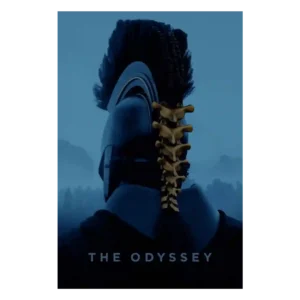
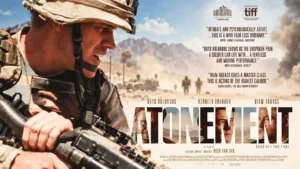
The Odyssey
Where It Has the Edge
- editing quality is 3.6 vs 2.5. The editing handles nested timelines with impressive fluidity for many reviewers, while others find the opening and transitions...

Scorata scores summarize analyzed review evidence on a 1–5 scale; they are not laboratory measurements or a simple average of customer star ratings. Feature scores summarize the reviews covering that feature. The overall score averages feature scores within each review, then combines review averages. When both expert and customer evidence are available, those two groups receive equal weight. Products can have different review coverage, so small score gaps do not establish a winner.
Recommendations prioritize important features for the category, with a score of at least 3.5, a gap of at least 0.25 points and at least two supporting reviews per product. Features with widely varying scores or broad connectivity contexts are excluded from recommendations. These safeguards do not establish statistical significance.
Quick verdict
The review evidence points to a tradeoff: editing quality versus dialogue quality and historical accuracy. Choose according to which strengths matter more to you; the overall score alone does not settle that choice.
Choose The Odyssey for editing quality.
Choose Atonement for dialogue quality and historical accuracy.
Scores are out of 5. Missing scores mean missing review evidence, not a missing feature.
The sound design is thunderous and immersive for many viewers, but some complain that the mix overwhelms dialogue or becomes fatiguing.
The opening firefight uses deafening gunfire to heighten confusion and danger, making sound one of the sequence’s standout craft elements.
The film’s dark, elemental imagery is often called breathtaking, though some critics find the muted palette relentlessly bleak.
The film moves from chaotic, immersive war staging to spare domestic compositions, using faces, rooms, and environmental detail to carry emotion.
Palaces, ships, battlefields, and ancient settlements feel substantial and handcrafted, giving the production unusual physical presence.
Baghdad’s streets and later domestic spaces feel textured and specific, with environmental detail grounding both the combat and the quieter character work.
The tactile islands, palaces, seas, and mythic creatures create a convincing ancient world that feels grounded rather than decorative.
Baghdad and the later California homes feel inhabited and specific, with street textures and domestic details grounding the story in recognizable lived environments.
The adaptation preserves the poem’s core journey and themes while combining, omitting, and reshaping episodes; purists are more divided than general viewers.
The adaptation drops some of the source article’s more probing material about the Iraqi women’s post-attack experience and broader institutional failures, narrowing part of its moral inquiry.
The plainspoken modern dialogue makes the ancient story immediate for some, while words such as “dad” and contemporary profanity feel jarring to others.
The quiet, restrained exchanges avoid tidy speeches and let silence carry meaning, though some conversations feel overly deliberate about the themes.
The film’s plea for hospitality, accountability, peace, and basic human decency resonates strongly, though a few reviewers find the message overstated.
The film asks who bears the cost of war, what forgiveness can mean, and whether absolution can repair irreversible loss. Its refusal of easy answers is a strength, even when the perspective feels too narrow.
The nearly three-hour runtime feels purposeful and absorbing to supporters, but detractors experience it as ponderous or exhausting.
The length is felt most in the middle, where detours around Lou and Michael slow momentum before the final reunion.
As a mythic epic, war film, adventure, and horror-tinged blockbuster, it satisfies many genre expectations while deliberately resisting light fantasy escapism.
As an Iraq War drama, it stands out by focusing on aftermath, guilt, and moral injury instead of sustained combat. Its restraint and performances give familiar genre material unusual weight.
The editing handles nested timelines with impressive fluidity for many reviewers, while others find the opening and transitions too aggressive.
The chaptered middle can feel overextended and less propulsive. A tighter structure and less time on the journalist subplot would sharpen the film.
The IMAX cinematography is one of the strongest points of agreement, praised for vast landscapes, tactile close-ups, and overwhelming scale.
Face-focused framing and progressively stripped-back compositions keep attention on expression and silence, giving both combat and domestic rooms strong emotional presence.
Many reviewers say the film remains surprisingly accessible despite its density, while others struggle with the rapid setup and shifting timelines.
Even during the chaotic firefight, the geography and converging characters remain easy to follow.
The themes of homecoming, guilt, family, and war land powerfully for many viewers, while others feel the characters remain emotionally remote.
The film lands hard through the opening tragedy, accumulated grief, and quiet reunion. Its most powerful moments are wrenching, devastating, and difficult to shake.
The homecoming climax is widely described as rousing and satisfying, even by some reviewers who disliked earlier sections.
The restrained closing image often works because it avoids easy catharsis and lingers afterward. The main reservation is that it can feel too resolved for the pain that precedes it.
The intimate family and political drama gives the spectacle human stakes, though some viewers wanted a stronger emotional center.
The film is a sensitive, moving character drama whose strongest material comes from the difficult reunion rather than battlefield spectacle.
Several monster encounters and sea sequences create strong, sustained tension, especially the Cyclops and Circe passages.
The combat opening builds clear, escalating tension, while the later reunion creates a quieter kind of suspense through anticipation and silence.
The violence is brutal and morally troubling rather than carefree; some appreciate that severity, while others find it excessive or emotionally hollow.
The war violence is intense but deliberately unsensationalized, keeping attention on victims and consequences rather than spectacle.
The battles, sea disasters, and final confrontation are often thrilling and immense, but some reviewers find individual melee scenes messy or overbearing.
The Baghdad firefight is tense, spatially clear, immersive, and emotionally brutal. A few reactions find the setup familiar, but the staging and immediacy remain major strengths.
Real locations, physical sets, practical craft, and rough textures make the myth feel unusually tangible, though historical literalism is not the goal.
The film favors naturalistic performance, grounded environments, and unsensationalized violence. Its strongest scenes feel lived-in rather than theatrically engineered.
Reviewers frequently praise the film’s treatment of war trauma, guilt, hospitality, leadership, and civilization, even when they question its subtlety.
Guilt, grief, responsibility, moral injury, forgiveness, and the unequal costs of war are explored with substantial nuance. The strongest material refuses to turn reconciliation into a simple cure.
Most reviewers find the story sweeping, thoughtful, and emotionally resonant, though detractors call its nonlinear telling cluttered or dull.
The core true-story drama is humane, morally difficult, and emotionally compelling. Its biggest fault line is whose perspective gets priority after the opening.
The inclusive casting and American accents are praised as purposeful modernization by some reviewers and criticized as distracting or inauthentic by others.
The Iraqi-Armenian perspective is unusually central for an American Iraq War drama, especially in the opening. The main fault line is whether the later focus on Lou still sidelines the family too much.
Christopher Nolan’s direction is admired for its ambition, control, and physical scale, but critics of the film see self-seriousness and emotional distance.
Reed Van Dyk’s debut earns broad praise for controlled staging, sensitivity, and performance direction. The main criticism is structural, with the middle and expanded journalist material feeling less focused.
The film moves between horror, war drama, family tragedy, fantasy, and spectacle; some praise the range while others find the shifts uneven.
The restrained, unassuming tone generally keeps melodrama in check and treats violence seriously. The pivot from familiar combat to quieter drama can feel slightly too deliberate.
The screenplay gives the myth modern themes and structure, though some reviewers object to exposition, contemporary phrasing, or over-explained ideas.
The script is strongest when it trusts silence, parallel perspectives, and moral ambiguity. Its main weakness is an overextended journalist strand and occasional tendency to underline themes.
Odysseus is presented as a deeply conflicted leader whose pride, guilt, and growing accountability give the journey meaningful personal development.
Lou, Mariam, and Michael gain layered guilt, grief, and moral ambiguity, though the Iraqi family gets less interior space than some of the material seems to promise.
The fractured chronology and nested storytelling make the familiar myth feel newly constructed, but the approach can initially disorient viewers.
The shift from battlefield action to long-tail guilt and reconciliation feels fresher than standard Iraq War formulas, although the soldier-PTSD storyline can fall back on familiar beats.
The patient pace builds scale and anticipation for some viewers, but others find stretches slow, clunky, or exhausting.
The deliberate rhythm suits the quiet moral drama for some viewers, but the middle can drag, especially around Michael’s subplot and Lou’s extended postwar spiral.
The stylized Bronze Age setting and deliberate anachronisms divide viewers who prioritize atmosphere from those seeking stricter historical authenticity.
The real-world material is recreated with close attention to participants’ subjective experiences and a grounded, lived-in sense of place.
The ensemble is broadly praised for grounding the spectacle, although a few critics find certain performances muted, overplayed, or underused.
The ensemble is a major strength, with Boyd Holbrook and Hiam Abbass drawing the heaviest praise and Kenneth Branagh generally valued for restraint. Even harsher takes on the story still find the performances compelling.
Matt Damon’s weathered, vulnerable Odysseus anchors the film for most reviewers, though a minority find his performance overly subdued.
The central acting is a standout, with Holbrook’s shattered veteran and Abbass’s controlled grief carrying much of the film’s power.
The supporting cast supplies many memorable turns, with Samantha Morton, Robert Pattinson, John Leguizamo, and others frequently singled out.
Hiam Abbass and Kenneth Branagh provide strong support around Holbrook, while Gheed makes a vivid impression despite limited screen time.
The scale, recognizable cast, and accessible core story give the film broad event-movie appeal, though its intensity and length narrow the audience.
The film prompted unusually attentive festival reactions and looks especially suited to viewers seeking serious war-aftermath drama rather than battlefield spectacle.
Critical reaction is largely enthusiastic about the achievement, with substantial disagreement over whether the spectacle reaches emotional greatness.
Early critical and festival attention has been positive around the writing and performances, with Boyd Holbrook in particular drawing notice.
The restrained face-to-face tension between Lou and Mariam makes silences and small gestures feel charged. Their quiet sparring is one of the film’s strongest dramatic elements.
CGI is used sparingly and often integrates well with practical work, though isolated effects are described as unconvincing.
Humor appears sparingly, often through modern phrasing or character behavior; reactions range from welcome relief to tonal distraction.
Modern vocabulary and profanity make the dialogue accessible for some audiences but undermine the ancient setting for others.
Practical effects give the danger weight and authenticity, especially in storms, creatures, collapsing structures, and the Trojan Horse.
Lou’s trauma feels physically and emotionally credible at its best, especially through Holbrook’s jittery, exhausted performance. The arc is effective but not always seen as groundbreaking.
The Cyclops, Circe, Hades, and body-horror imagery deliver unexpectedly effective scares, though not every fantastical threat is equally convincing.
Ludwig Göransson’s score is widely praised as propulsive, ritualistic, and intense, though its volume and electronic textures divide some listeners.
The blend of visual and physical effects is generally seamless, with a few creatures or large-scale attacks drawing criticism.
Costumes and armor are frequently admired for their bold, symbolic look, although a few reviewers find specific designs historically awkward or unattractive.
Most reviewers describe the film as transporting event cinema, while a vocal minority find the scale more punishing than entertaining.

A deeply human coming-of-age drama carried by remarkable performances and an honest portrayal of grief. Its gentle optimism moves most viewers, though some find the final stretch hurried or overly...
Pros: Grief portrayal, acting performance
Cons: pacing

Billie Jean King’s magnetic first-person storytelling makes this an exhilarating portrait of athletic courage and social change. The filmmaking follows a familiar documentary structure, and her full tennis résumé gets...
Pros: entertainment value, Biographical coverage
Cons: Narrative structure

Choose this inventive, unsettling documentary for fearless questioning, dark humor, and unpredictable storytelling. Skip it if you want a short, straightforward exposé with definitive answers.
Pros: originality, humor

A singular voice, powerful piano playing and intimate film photography make this concert absorbing for receptive listeners. Its uninterrupted, often similar-sounding songs and lack of background context are an acquired...
Pros: directing quality, cinematography
Cons: pacing, Song variety