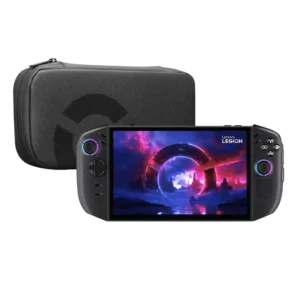
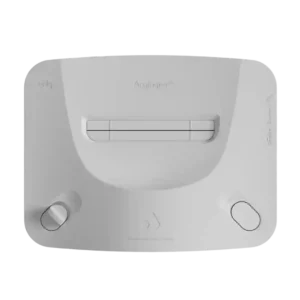
Lenovo Legion Go 2
Where It Has the Edge
No clear scored advantage over the other product.

Scorata scores summarize analyzed review evidence on a 1–5 scale; they are not laboratory measurements or a simple average of customer star ratings. Feature scores summarize the reviews covering that feature. The overall score averages feature scores within each review, then combines review averages. When both expert and customer evidence are available, those two groups receive equal weight. Products can have different review coverage, so small score gaps do not establish a winner.
Recommendations prioritize important features for the category, with a score of at least 3.5, a gap of at least 0.25 points and at least two supporting reviews per product. Features with widely varying scores or broad connectivity contexts are excluded from recommendations. These safeguards do not establish statistical significance.
Quick verdict
The available evidence supports the recommendation below, but does not establish an overall winner. Check the remaining features against your priorities.
There is not enough comparable review evidence to recommend Lenovo Legion Go 2 over the other product.
Choose Analogue 3D for reliability and performance.
No clear scored advantage over the other product.
Scores are out of 5. Missing scores mean missing review evidence, not a missing feature.
Several reviewers encountered sleep, wake, controller-recognition, freezing, or reboot problems. These issues appear software-sensitive, but they undermine the console-like experience.
Reliability is strong across large cartridge and accessory test sets, with many reviewers reporting flawless or near-flawless operation. Isolated rendering glitches, flash-cart issues, overclock quirks, and occasional wireless problems keep it from being completely trouble-free.
Initial setup can take substantial time because of Windows updates, launcher sign-ins, tweaks, and game downloads before the device feels ready.
Most reviewers find the console straightforward to connect and use, especially through HDMI and simple controller pairing. A few encountered setup friction from firmware updates, regional power-adapter issues, or other early-software details.
The screen, versatility, and high-end performance are compelling, but the price is the most consistent complaint. Cheaper handhelds and gaming laptops often deliver better performance-per-dollar.
Value depends heavily on the buyer: enthusiasts with an existing cartridge collection often say the premium price is justified, while casual players see cheaper emulation and competing FPGA options as more sensible. The missing pack-in controller and cost of building a game library also hurt the equation.
The Z2 Extreme configuration handles modern AAA games impressively for a handheld, especially with sensible settings and upscaling. Gains over well-tuned last-generation competitors are real but often modest.
Performance is one of the strongest themes, with reviewers repeatedly praising low latency, accurate FPGA behavior, and overclocking that can make demanding N64 games substantially more playable. The gains are real enough that several call it the best modern way to play the system.
Fan behavior varies widely by mode and software tuning: balanced profiles can be quiet, while performance modes may become clearly audible or overpower the speakers.
Noise received little attention, but the one direct assessment was very positive: the console’s hum was described as barely noticeable once play began.
The speakers are generally loud and clearer than the first generation, but opinions vary on bass, directionality, and how well they compete with fan noise. Headphones remain preferable for demanding games.
Audio received less coverage than video, but the direct assessments are excellent. Reviewers describe fuller, richer sound than Nintendo’s emulated option and praise the console’s audio output outright.
Frame rates are strong at 800p and often smooth at 1200p with tuned settings, while VRR hides smaller dips well. Demanding games may still need upscaling, lower presets, or frame generation.
Overclocking often smooths notorious frame-rate drops and can turn difficult games into much more fluid experiences. Results remain game-specific, and aggressive modes can make some titles run too fast or behave incorrectly.
Games can look notably sharper and more detailed than on lower-powered handhelds, particularly when the hardware is paired with the vivid OLED panel.
Rendering is generally cleaner, sharper, and more detailed while staying faithful to the N64’s original assets. Reviewers also stress that the hardware cannot erase every muddy texture, low-poly model, or other limitation built into the games themselves.
The 8.8-inch OLED is the clear standout, with rich color, deep blacks, sharp detail, and smooth VRR motion. Its glossy surface can reflect light, but reviewers still rank it among the best handheld displays.
4K output and CRT-style Original Display Modes are the product’s clearest consensus strength, with reviewers repeatedly calling the image beautiful, authentic, or best-in-class. Minor concerns include combing, limited calibration controls, and the fact that faithful N64 graphics still look old.
Startup is quick, with the system launching in only a few seconds.
Boot speed drew limited but clear criticism: one reviewer called the roughly 20-second startup annoyingly long. There was not enough broader coverage to know whether this bothers most owners.
Cooling is generally effective, with low GPU temperatures and comfortable grip areas even under load. Better tuning can also reduce unnecessary fan speed.
Cooling drew limited concern rather than strong praise or criticism. One reviewer noted active cooling and advised leaving the console enough open space to breathe.
Hot exhaust is directed away from the controls, keeping the areas held by the player comfortable during demanding sessions.
Heat management has only limited direct coverage. One reviewer said the console gets pretty hot during play, though not badly enough to make it a major issue.
Full Windows access opens a huge library across Steam, GOG, Xbox, and other PC platforms. That breadth is a major advantage for buyers who already own many PC games.
The N64 library remains packed with beloved classics, but reviewers repeatedly note that early 3D games have aged unevenly. The console is far easier to justify for people who already love this library than for newcomers without nostalgia or cartridges.
Wi-Fi, Ethernet, Bluetooth, and connected accessories worked reliably in the tested setups, with no meaningful drops or connection issues reported.
Wireless controller connections were generally dependable, with one reviewer specifically praising the controller for staying connected. Another encountered a minor Bluetooth hiccup with one controller, so pairing reliability may not be flawless.
Original Legion Go controllers and compatible accessories continue to work with the second-generation hardware, easing upgrades for existing owners.
Original N64 cartridges, regions, controllers, and accessories work extremely well in most testing, making compatibility a core strength. Flash carts, some modern controllers, and cartridge-slot fit were less consistent across review periods and firmware versions.
Detachable controllers, deep remapping, a touchpad, rear buttons, and FPS mouse mode make the system unusually versatile. The mouse mode is divisive and controller removal can be fiddly.
Controller features such as Bluetooth pairing, Hall-effect sticks, rumble, and wake controls are well received. Launch-era support for other modern gamepads was narrower than some reviewers expected.
The SSD is replaceable, yet reaching it may require removing the battery, fan, adhesive, or recessed screws. Most users will find upgrades harder than on competing handhelds.
Opening the console for deeper repair work appears difficult. One teardown found motherboard access complicated by the internal clips and shielding, making DIY servicing less straightforward.
Hall-effect sticks, responsive buttons, and the revised D-pad generally feel durable and precise. A few reviewers wanted firmer stick tension or more tactile buttons.
The 8BitDo controller is usually praised for responsiveness, solid inputs, rumble, and modern comfort, while original N64 controllers remain well supported. Some reviewers still prefer the authentic N64 stick and layout, and a few report wireless or precision caveats.
Fast multiplayer matches can run smoothly at high frame rates, with strong performance after software updates.
Couch multiplayer is one of the most consistently joyful parts of the experience. Reviewers describe four-player sessions as lively, nostalgic, and often a major reason to keep returning to the console.
The large display and flexible kickstand are useful, but the two-pound body is among the heaviest handhelds available. Extended handheld play can tire hands and wrists.
Reviewers who discuss size generally welcome the smaller, lighter footprint compared with an original N64. The compact proportions help it blend into a modern entertainment setup.
The dark, vented design has a bold gaming look that feels distinctive and purposeful, though its bulky form is visually imposing.
The refined N64-inspired design is overwhelmingly praised as sleek, sophisticated, and living-room friendly. A minority find it too clinical or miss the playful, toy-like personality of the original hardware.
Rounded grips are more comfortable than the original, but the wide, heavy chassis still favors larger hands. Smaller-handed users and long-session players may need the kickstand and detached controls.
Modern controller ergonomics are a clear win for many reviewers, with the 8BitDo-style shape described as much more comfortable for long sessions. Purists note that the stick and trigger placement can feel different from the original N64 pad.
The sturdy kickstand, secure controller rails, and refined chassis feel premium and thoughtfully constructed. Internal service access is less polished than the exterior.
Build quality earns near-universal praise, with reviewers repeatedly describing the chassis as solid, dense, sturdy, and premium. The physical construction is one of the least disputed strengths.
Legion Space and its quick settings panel are much improved, responsive, and useful for tuning performance and controls. Windows 11 still introduces setup friction, pop-ups, small touch targets, and inconsistent handheld behavior.
3DOS is widely praised for clean navigation, cartridge tracking, and unusually deep per-game display and performance controls. Early reviews also found it sparse in places, with missing features, manual updating, or settings behavior that invited extra tinkering.
The unusually large screen makes small text and dense PC game interfaces easier to read, which can reduce squinting and improve usability.
Availability is a recurring weak spot: several reviewers describe sold-out allocations or simply struggling to buy one. Scarcity is one of the few areas with consistently negative sentiment.
Collectors respond strongly to the premium positioning and the virtual library that lets a physical collection fill out on-screen. Packaging itself is less consistent, with one reviewer finding the out-of-box presentation underwhelming.
The fingerprint reader can speed up Windows login, but its placement and sensitivity occasionally make unlocking or putting the device to sleep frustrating.
Gaming endurance typically falls around two to four hours depending on settings, with much longer runtimes in lighter workloads. Results vary sharply by power mode, brightness, operating system, and game.
PS5 streaming is possible, but using the built-in controls may require a third-party app; otherwise a DualSense controller is needed.
One terabyte fills quickly with modern AAA games and feels stingy at this price, making the larger storage configurations more attractive.
Storage can be expanded, but reviewers note that practical upgrade options are less convenient than they should be.
Cloud gaming worked smoothly in the cited test, with positive control feel and no obvious problems.
Four original controller ports plus wireless options preserve the N64’s local-multiplayer identity extremely well. Reviewers repeatedly highlight successful four-player sessions as a major strength.
The kickstand and large screen make the device useful for streaming shows and other entertainment when it is not being used for games.
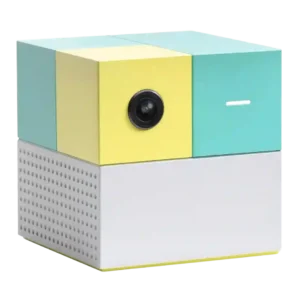
Best for easy, controller-free family play that gets kids moving. Skip it if you want deep games, cutting-edge graphics, or dislike paying for Play Pass.
Pros: game library quality, value for money
Cons: subscription service value, graphical performance
Choose the SteamOS version for a comfortable, console-like handheld with a sharp 120Hz screen and strong performance. Skip it if you prioritize long battery life, quiet fans, or effortless access...
Pros: display quality, user interface
Cons: controller features, battery life
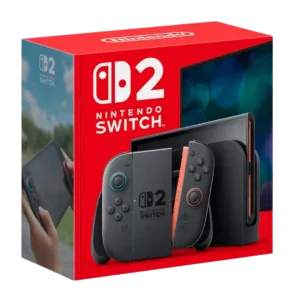
Choose Switch 2 for a sharper, faster, more social Switch with stronger Joy-Cons and broad backward compatibility. Skip it if short battery life, expensive storage, thin launch exclusives, or the...
Pros: value for money, controller features
Cons: power efficiency, user interface
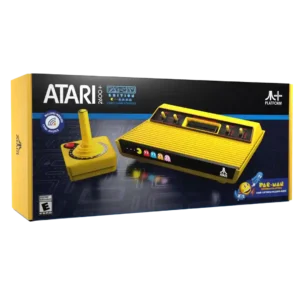
Choose it if you want a display-worthy Pac-Man collectible that plays original Atari cartridges on modern TVs. Skip it if stiff controls, controller reliability, or the $169-ish price matter more...
Pros: performance, collectibility and presentation
Cons: controller quality, controller ergonomics