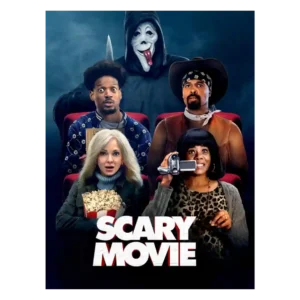

Scary Movie
Where It Has the Edge
- cast chemistry is 4.8 vs 4.5. Cindy and Brenda’s rapport remains one of the movie’s strongest pleasures, and the returning ensemble often clicks when...

Scorata scores summarize analyzed review evidence on a 1–5 scale; they are not laboratory measurements or a simple average of customer star ratings. Feature scores summarize the reviews covering that feature. The overall score averages feature scores within each review, then combines review averages. When both expert and customer evidence are available, those two groups receive equal weight. Products can have different review coverage, so small score gaps do not establish a winner.
Recommendations prioritize important features for the category, with a score of at least 3.5, a gap of at least 0.25 points and at least two supporting reviews per product. Features with widely varying scores or broad connectivity contexts are excluded from recommendations. These safeguards do not establish statistical significance.
Quick verdict
The available evidence supports the recommendation below, but does not establish an overall winner. Check the remaining features against your priorities.
Choose Scary Movie for cast chemistry.
There is not enough comparable review evidence to recommend Super Troopers 3 over the other product.
No clear scored advantage over the other product.
Scores are out of 5. Missing scores mean missing review evidence, not a missing feature.
The film lacks a stable tonal throughline, jumping from nostalgia to gross-out comedy, political provocation, and unrelated parody without smooth transitions.
The film sticks firmly to its established childish tone, even when that consistency is not enough to make the comedy work.
The cinematography accurately recreates recognizable horror imagery and helps the visual parodies read immediately.
The polished photography is criticized for looking more like wedding videography than distinctive cinema.
As a horror spoof, the movie often functions more like a reference reel than a complete comedy. It recognizes many recent films but rarely develops a sharp point of view about them.
The movie supplies the expected juvenile Broken Lizard style, but fulfilling that formula does not guarantee enough laughs. Reactions range from reliable comic comfort to failure at its basic job.
The movement from setup to setup feels bumpy and abrupt, making the film play like loosely assembled sketches rather than a smoothly escalating comedy.
The driving sequences combine practical stunt footage and actor shots effectively. Elsewhere, abrupt cuts can truncate a supporting performer’s comic rhythm.
The final stretch is consistently stronger than the middle, with darker swings, legacy-cast payoffs, and a more focused climax that finally delivers some of the movie’s biggest laughs.
The finale divides viewers between delighted acceptance of its absurdity and frustration with weak crime-story payoffs. Several critics feel the movie loses steam just when its plots come together.
The handling of gender, pronouns, queer identities, and Gen-Z politics is the movie’s most contentious weakness. Several jokes feel dated or cruel, though a minority view the everyone-is-a-target approach as self-aware and inclusive.
The Indian parents can be funny reversals of restrictive stereotypes, especially when the supporting actors take charge. Other critics see easy cultural caricatures rather than fresh characterization.
The script has a few clever concepts but relies too heavily on recognition, repeated bits, and surface-level references. Many setups are stretched past their punchlines or never develop into proper jokes.
The wedding conflict and casual banter offer promising comic situations, but the script often feels forced, predictable, or assembled from competing sketches.
The Scream-inspired family storyline offers a workable spine, but it quickly dissolves into a nonsensical chain of sketches with little investment, continuity, or character consequence.
The unlikely wedding is the most appealing narrative idea, providing a strong source of rivalry and family awkwardness. Thin crime plotting and competing subplots frequently weaken its momentum.
The younger characters receive more setup than expected and can feel better defined than comparable legacy-sequel characters, although many are still reduced to one-note traits.
Farva’s vulnerability and the evolving wedding relationship give some viewers welcome signs of growth. Others see underwritten arcs and characters still stuck in the same routines.
The opening and final act move best, while the middle loses momentum through long, repetitive sketches and abrupt detours. Even the short runtime can feel laborious when jokes fail.
Long scenes and flat jokes commonly make the movie feel slower than its running time suggests. Some viewers find it improves substantially after a sluggish start.
The central story follows the modern Scream template extremely closely, often feeling more like a crude restaging than an inventive parody.
The wedding rivalry gives the familiar troopers a fresh comic setup, but recycled gags and predictable family situations limit the sense of invention.
Michael Tiddes keeps the references visually legible but struggles to impose rhythm, focus, or connective tissue on the overloaded material.
The direction is generally functional and visually plain, with sharper criticism when weak material exposes its limitations. Managing a large ensemble is a more successful aspect.
The 96-minute length is compact and welcome on paper, but weak comic rhythm can still make the movie feel slow despite its short running time.
The roughly 104-minute running time feels too generous when jokes stall and scenes linger beyond their payoff.
The comedy is wildly inconsistent. Inspired sight gags, fourth-wall jokes, and committed delivery earn real laughs, but the rapid-fire barrage contains far more stale, obvious, stretched, or recycled punchlines.
The central rivalry, banter, and a few elaborate disasters still generate big laughs for receptive viewers. Many others find the hit rate low, with forced, dated, or overextended routines.
The movie has little thematic substance beyond nostalgia, franchise self-commentary, and broad complaints about modern culture.
The film’s relentless silliness offers little thematic substance or meaningful engagement with the implications of its police antics.
Cindy and Brenda’s rapport remains one of the movie’s strongest pleasures, and the returning ensemble often clicks when allowed to share scenes. The movie does not give that chemistry enough room.
The cast’s decades of shared comic experience remain the most dependable attraction. Easy banter and visible affection often carry scenes whose jokes do not fully land.
The late action-comedy material gives Cindy a welcome showcase, with energetic fighting and physical gags that improve the final act.
Real driving stunts and a lively action finale provide welcome bursts of energy. The practical car work earns particular praise.
The basic Ghostface setup is easy to grasp, but the movie repeatedly abandons it for disconnected sketches, crowded cameos, and characters who vanish for long stretches.
The crime subplot can become confusing and convoluted as multiple stories compete for attention.
The relentless sexual material is often judged excessive, repetitive, or strangely ineffective rather than genuinely transgressive or funny.
The sexual material is criticized as forced, excessive, and too eager to provoke a reaction.
The movie convincingly imitates the look of its horror targets, with sets, framing, and visual identities that often resemble the source films closely.
A flat, cheaply cinematic look draws criticism, although the Blu-ray’s rich color reproduction gives the wedding scenes visual appeal.
The costumes closely mirror the Scream requel’s character styling, helping the visual parody register immediately.
The elaborate costumes help make the opening wedding dance an unexpectedly colorful spectacle.
The overall experience depends strongly on tolerance for crude, absurd, deliberately lowbrow comedy. Fans can have a relaxed, enjoyable time, while others may find the long stretches between strong jokes exhausting.
This reunion ranges from a warmly enjoyable hangout to a tedious disappointment. How much pleasure its familiar personalities provide largely determines whether the uneven jokes are enough.
The scattered laughs and nostalgic reunion are not enough to make the film an easy theatrical recommendation for most viewers.
A theater ticket is not worthwhile for viewers who find the jokes merely adequate; waiting for streaming is the better value.
The movie is built primarily for viewers who already enjoy the first two entries and early-2000s Wayans humor. Newcomers and younger audiences are less likely to connect with its references, nostalgia, and deliberately dated style.
The familiar goofballs no longer connect with every returning viewer, and the reunion can feel like visiting old friends with little left in common.
The younger ensemble and cameo players are energetic and game, with several charismatic turns helping individual sketches land.
The parents, new captain, and rookie provide many of the brightest moments. The villains are more divisive, and several returning or new players have too little useful material.
The music choices help the parodies resemble their source films and contribute to the movie’s strongest stylistic imitations.
The Blu-ray’s music sounds robust, with layered instrumentation and vocals.
Anna Faris and Regina Hall remain the movie’s strongest leads, repeatedly creating laughs through timing, expression, and total commitment.
Heffernan’s wholehearted Farva and Chandrasekhar’s irritated Thorny give the wedding rivalry much of its appeal. Their contrasting energy frequently carries the uneven material.
The committed cast is the clearest strength, especially the returning leads and Olivia Rose Keegan. Some performers are underused or trapped in tired routines, but they frequently make thin material more watchable.
The troupe’s practiced interplay can make even thin material enjoyable, although several critics find the returning performances tired or disengaged. The central rivalry and a handful of energetic newcomers fare best.
The middle-aged troopers generate relatable jokes about changing bodies, relationships, and technology for some viewers. Others find their refusal to mature stale or sad.
The Blu-ray delivers a sharp, clean image with richly saturated colors that especially flatter the wedding scenes.
The brief bloopers, set tour, and deleted scenes add little worthwhile value to the disc package.
Thorny’s parents are widely praised as inspired casting, while Hannah Simone makes the unlikely central romance work especially well.
Familiar returning faces provide some of the better laughs and reward fans who stay through the closing material.
Some digital moments look clunky, reinforcing the film’s rough, modestly budgeted presentation.
Rabbit and Foster are frequently shortchanged, and Brian Cox has less to do than some viewers would like. Farva’s expanded role is more positively received.
The troupe still has flashes of effortless rhythm, with Farva’s delivery and Steve Lemme’s subtler timing standing out. Clumsy execution elsewhere can flatten otherwise promising jokes.
The colorful opening and elaborate musical numbers are praised for their energy, polish, and willingness to play the spectacle straight.
Speech on the Blu-ray is crisp and easy to understand.
Friendly insults, syndrome debates, and offhand references produce some of the strongest laughs. The ensemble’s verbal exchanges often work better than the elaborate set pieces.
The talking Canadian patrol car delivers inspired payoffs for some viewers. Others find its extended routines unfunny or its climactic rescue far too fanciful.
The wedding brings a surprising dose of sweetness and vulnerability. These warmer moments can make the reunion feel more sincere than its crude jokes suggest.
The mid-credit scene earns enthusiastic praise and is considered worth waiting for.
The outtakes and blooper reel are often funnier than the main feature. Staying through the credits is one of the safer recommendations.
The wedding rivalry gives the two leads strong material but often leaves the other troopers with thin subplots. A few viewers appreciate that everyone still gets something to do.
Thorny’s understandable horror at his sister’s choice of fiancé gives the sabotage comedy a persuasive family conflict.
At least one returning viewer sees another sequel as diminishing the original’s legacy rather than adding worthwhile comedy.
Several viewers welcome the familiar formula and restrained callbacks as a natural continuation. Keeping the troupe’s identity intact can be more appealing than reinventing it.
Good-natured ribbing and a convincing sense of long friendship lend warmth to the vulgarity. The best exchanges feel like joining a conversation already in progress.
The rookie’s TikTok and phone habits amuse some viewers but strike others as weak attempts to make an aging franchise seem current.
Fresh wedding situations and restrained callbacks win praise from some fans. Others hear exhausted punchlines, predictable drug gags, and too many echoes of earlier films.
The Vermont setting remains an enjoyable source of local comic flavor even though the film was shot elsewhere.
The lobster disaster leaves a strong impression, but the new rookie and the overall shortage of quotable lines can feel forgettable.
The satire rarely develops a clear point of view, leaving the social and industry commentary feeling toothless, confused, or needlessly hostile.
The drug-ring and maple-syrup investigation is usually regarded as thin, predictable, or distracting. Occasional cleverness rarely makes it as engaging as the wedding.
Repeated punchlines and familiar drug-case machinery can make the third outing feel stuck on a loop.
Farva’s vulnerability adds enough sincerity to make the wedding feel more meaningful than a convenient excuse for chaos.
The wedding and crime plots frequently compete rather than reinforce one another. Late exposition and abrupt convergence can interrupt the more engaging character comedy.
The lavish opening dance provides an unexpectedly spectacular and energetic welcome back.
Farva’s enthusiastic self-destruction and committed performances can make familiar slapstick work. The same broad antics also strike several critics as grating or past their prime.
The mystery’s turns are generally easy to predict and offer little shock when the culprits emerge.
Critics who look for engagement with modern policing concerns find the film evasive and dated.
The police comedy is criticized for potentially reinforcing familiar authority myths instead of effectively challenging them.
Some critics object to women being reduced to narrow comic functions and simplistic jokes about sexuality. Sarita’s attraction also lacks the explanation needed to deepen her role.
An elaborate practical joke prop earns praise as a visual highlight, and the absurd syrup effects provide some welcome fun.
A few new prank targets amuse, but the reduced emphasis on roadside mischief disappoints fans who wanted more of the series’ signature antics.
The troopers’ minor pranks are praised for keeping genuinely dangerous situations distinct from routine workplace fooling around.
The cultural jokes sharply divide viewers: some find the outrageousness playful and disarming, while others see forced ethnic stereotypes. The parents’ unexpected reactions are among the better-received elements.
The unlikely romance is easy enough for some viewers to accept, but the talking car’s rescue and the officers’ continued employment stretch credibility much further.
Farva and Sarita’s unlikely pairing can be unexpectedly sweet and effective, while Foster’s troubled relationship adds another appealing thread. Skeptics want a clearer reason for the central couple’s attraction.
A bomb-disposal routine works by making the troopers’ technological confusion and personal dynamics the joke rather than dismissing the danger.
Some viewers enjoy the affable delivery of wildly offensive jokes; others find the gross-outs stale or try-hard. The elephant gag and nonstop toilet humor are particular sticking points.
Practical patrol-car driving gives the action a welcome physical quality, supported by careful choreography and effective cutting.
Jokes about electric cars, smartphones, and younger habits make the troopers’ age amusingly visible for receptive viewers.
Efforts to update the jokes with TikTok and contemporary sensibilities often feel weak. Some critics find the larger police-comedy premise poorly adapted to current concerns.
The antagonists are often too bland to provide either a credible threat or strong comic opposition. Their scenes can feel like dispensable reminders of the crime subplot.
The shift toward violence late in the film is criticized for replacing laughs rather than enhancing the comedy.
The DTS-HD Master Audio 5.1 track sounds very good, with clear speech and a full musical presentation, though it is not exceptional.
Farva’s abrasive enthusiasm remains a major draw, and the returning troupe often feels like familiar company. That affection is less reliable for viewers who find the characters’ arrested development tiresome.
Reuniting with the troupe can be comforting, especially when callbacks are brief. Reviewers disagree about whether this installment shows welcome restraint or merely reheats old jokes.
The recreated horror locations are impressively recognizable and often make the parodies funnier before a joke is even delivered.
The film retains a cheap, scrappy presentation that can suit its spirit but does little to justify the big-screen format.
Even viewers who enjoy the reunion see little reason to watch it repeatedly compared with the original.

Choose this inventive, unsettling documentary for fearless questioning, dark humor, and unpredictable storytelling. Skip it if you want a short, straightforward exposé with definitive answers.
Pros: originality, humor

Extraordinary performances and richly observed relationships make this a rewarding, emotionally forceful drama. Its nearly three-hour length and slow opening demand patience and undivided attention.
Pros: class commentary, character development

Best for a hypnotic, bookish mystery with tactile visuals and cerebral chills. Skip it if reading-heavy, attention-demanding storytelling sounds more exhausting than exciting.
Pros: Atmosphere, cinematography
Cons: audience appeal

Best for an intimate, searching documentary that rewards focused attention and invites discussion. Skip it when devastating grief, addiction footage, and unresolved family tensions would be too much.
Pros: emotional impact, theme depth