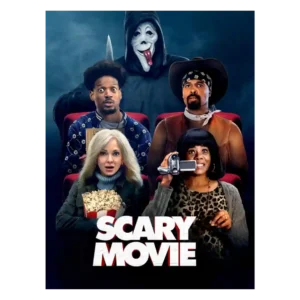
Scary Movie
Where It Has the Edge
No clear scored advantage over the other product.

Scorata scores summarize analyzed review evidence on a 1–5 scale; they are not laboratory measurements or a simple average of customer star ratings. Feature scores summarize the reviews covering that feature. The overall score averages feature scores within each review, then combines review averages. When both expert and customer evidence are available, those two groups receive equal weight. Products can have different review coverage, so small score gaps do not establish a winner.
Recommendations prioritize important features for the category, with a score of at least 3.5, a gap of at least 0.25 points and at least two supporting reviews per product. Features with widely varying scores or broad connectivity contexts are excluded from recommendations. These safeguards do not establish statistical significance.
Quick verdict
The available evidence supports the recommendation below, but does not establish an overall winner. Check the remaining features against your priorities.
There is not enough comparable review evidence to recommend Scary Movie over the other product.
Choose Scream for pacing and directing quality.
No clear scored advantage over the other product.
Scores are out of 5. Missing scores mean missing review evidence, not a missing feature.
As a horror spoof, the movie often functions more like a reference reel than a complete comedy. It recognizes many recent films but rarely develops a sharp point of view about them.
The dominant assessment places Scream among the strongest slashers, with enduring scares, wit and personality. A few regard it as average or as a formulaic experiment that fails its ambitions.
The movie has little thematic substance beyond nostalgia, franchise self-commentary, and broad complaints about modern culture.
Genre commentary is joined by meaningful ideas about trauma, misogyny and a culture saturated with movies. These layers give several viewers more to consider beyond the killer’s identity.
The film lacks a stable tonal throughline, jumping from nostalgia to gross-out comedy, political provocation, and unrelated parody without smooth transitions.
Most find the movement between jokes, suspense and brutality exceptionally controlled, with laughter often making the next scare stronger. A minority experience an uneasy mix that undercuts the danger or makes the violence feel exploitative.
The movement from setup to setup feels bumpy and abrupt, making the film play like loosely assembled sketches rather than a smoothly escalating comedy.
The opening’s economy and the abrupt transition to Sidney draw especially strong praise. More broadly, the cutting helps keep the film brisk and controlled.
The opening and final act move best, while the middle loses momentum through long, repetitive sketches and abrupt detours. Even the short runtime can feel laborious when jokes fail.
Brisk momentum and a tightly controlled opening keep most viewers engaged. A few find the commentary slows proceedings, but the overall rhythm is more often praised.
Michael Tiddes keeps the references visually legible but struggles to impose rhythm, focus, or connective tissue on the overloaded material.
The direction receives broad approval for precise suspense, escalating threat and confident tonal shifts. Skeptics still find strong individual scenes while questioning the film’s larger choices.
The script has a few clever concepts but relies too heavily on recognition, repeated bits, and surface-level references. Many setups are stretched past their punchlines or never develop into proper jokes.
The screenplay is widely admired for wit, subversion and effective misdirection. Its critics see lazy self-reference, dated exchanges and contrived logic behind the clever surface.
The Scream-inspired family storyline offers a workable spine, but it quickly dissolves into a nonsensical chain of sketches with little investment, continuity, or character consequence.
Most find an intelligent, engaging horror story with more going on than a standard body-count plot. Reservations concern familiar structure, disconnected commentary and late logic that feels contrived.
The basic Ghostface setup is easy to grasp, but the movie repeatedly abandons it for disconnected sketches, crowded cameos, and characters who vanish for long stretches.
Subtle visual clues can communicate backstory with little exposition. Some late killings and motivations are less clearly explained, leaving gaps in the narrative logic.
The 96-minute length is compact and welcome on paper, but weak comic rhythm can still make the movie feel slow despite its short running time.
One assessment finds that the nearly two-hour film feels much shorter because its energy and momentum hold throughout.
The central story follows the modern Scream template extremely closely, often feeling more like a crude restaging than an inventive parody.
Many credit the self-aware approach with making familiar slasher material feel fresh. Dissenters see a standard formula that talks about its clichés without truly escaping them.
The satire rarely develops a clear point of view, leaving the social and industry commentary feeling toothless, confused, or needlessly hostile.
The defense of fictional horror is understandable to one reviewer but feels heavy-handed. The argument about whether movies cause violence seems more forceful than necessary.
The relentless sexual material is often judged excessive, repetitive, or strangely ineffective rather than genuinely transgressive or funny.
One assessment finds that the sexual subplot works within the story and effectively parodies the genre’s rules, despite initial discomfort with Sidney’s choice.
The comedy is wildly inconsistent. Inspired sight gags, fourth-wall jokes, and committed delivery earn real laughs, but the rapid-fire barrage contains far more stale, obvious, stretched, or recycled punchlines.
Dark jokes, self-aware exchanges and chaotic performances keep the film lively for most viewers. Critics find the comedy thin, overconfident or increasingly repetitive.
The cinematography accurately recreates recognizable horror imagery and helps the visual parodies read immediately.
Careful angles, fluid takes and suggestive framing turn ordinary spaces into sources of danger. The camera work also plays intelligently with familiar slasher imagery.
The late action-comedy material gives Cindy a welcome showcase, with energetic fighting and physical gags that improve the final act.
The horror set pieces and frantic climax work through tense staging and escalating danger. Their effectiveness often comes from suspense rather than elaborate action spectacle.
Cindy and Brenda’s rapport remains one of the movie’s strongest pleasures, and the returning ensemble often clicks when allowed to share scenes. The movie does not give that chemistry enough room.
Cox and Arquette’s flirtation is repeatedly praised for energizing their subplot. Their pairing adds warmth and brings out more personality in both characters.
The younger characters receive more setup than expected and can feel better defined than comparable legacy-sequel characters, although many are still reduced to one-note traits.
Sidney’s grief and personal relationships give the story emotional substance, while the Dewey-Gale pairing adds dimension for some viewers. Other assessments find the supporting cast one-note or overly stereotyped.
The final stretch is consistently stronger than the middle, with darker swings, legacy-cast payoffs, and a more focused climax that finally delivers some of the movie’s biggest laughs.
Most praise the explosive house climax, clever reversal and definitive defeat of the killers. Reservations focus on disturbing self-stabbing, weak plan logic or an unsatisfying final shot.
The movie is built primarily for viewers who already enjoy the first two entries and early-2000s Wayans humor. Newcomers and younger audiences are less likely to connect with its references, nostalgia, and deliberately dated style.
The film’s recognizable cast and accessible approach help bring slasher horror to a mainstream audience.
The committed cast is the clearest strength, especially the returning leads and Olivia Rose Keegan. Some performers are underused or trapped in tired routines, but they frequently make thin material more watchable.
The ensemble usually receives enthusiastic praise for charisma and commitment. A few assessments find minor performances cartoonish or supporting roles too thin to make much impression.
Anna Faris and Regina Hall remain the movie’s strongest leads, repeatedly creating laughs through timing, expression, and total commitment.
The lead is usually praised for strength, emotional credibility and charisma. Sidney’s portrayal is a major reason viewers invest in the story, though one strongly negative assessment finds her irritating.
The music choices help the parodies resemble their source films and contribute to the movie’s strongest stylistic imitations.
Licensed songs are generally praised for fitting their scenes and reinforcing the mood. Red Right Hand is an especially distinctive, menacing highlight.
The younger ensemble and cameo players are energetic and game, with several charismatic turns helping individual sketches land.
Many enjoy the supporting ensemble’s charisma and memorable turns, including the comic energy around Gale, Dewey and Stu. Less favorable views find the roles or performances thin and exaggerated.
The movie convincingly imitates the look of its horror targets, with sets, framing, and visual identities that often resemble the source films closely.
The film’s polished, heightened look is a strength, while the evaluated HDR grade adds natural detail and highlights without overwhelming the original appearance.
The recreated horror locations are impressively recognizable and often make the parodies funnier before a joke is even delivered.
The small-town look and community atmosphere help give the setting a distinct, appealing sense of place.
The costumes closely mirror the Scream requel’s character styling, helping the visual parody register immediately.
The simple black robe and warped white mask give Ghostface an instantly recognizable silhouette. The look remains an effective, memorable part of the film even for viewers who question the villain’s competence.
The overall experience depends strongly on tolerance for crude, absurd, deliberately lowbrow comedy. Fans can have a relaxed, enjoyable time, while others may find the long stretches between strong jokes exhausting.
The film is widely enjoyed for its energy, humor and suspense, even by some viewers who see substantial flaws. A small minority find irritation outweighs the fun.
The 4K transfer reveals fine facial texture, clothing detail and deep shadows while retaining an organic film appearance. Some softness remains, and HDR adds natural highlights rather than a spectacular color overhaul.
Ordinary homes and a small town become uneasy spaces where nobody seems completely trustworthy. The opening uses darkness, windows and burning popcorn to turn domestic detail into mounting dread.
Using recognizable actors gives the opening a powerful surprise and fills the ensemble with charisma. Some viewers find the adults playing high-school students visibly unconvincing.
The small horror-linked appearances add enjoyable recognition, including the janitor homage and a memorable Linda Blair cameo.
The homages and horror trivia can reward knowledgeable viewers and encourage exploration of older films. Some references feel forced or superficial, and their accessibility depends on familiarity with the genre.
Williamson’s knowing screenplay and Craven’s assured direction are praised as a particularly effective match. Their strengths combine into more than a collection of clever references.
Scream is widely credited with bringing slashers back to prominence and introducing a new generation to older horror films. Its self-aware approach and Ghostface imagery became lasting reference points for the genre.
The handling of gender, pronouns, queer identities, and Gen-Z politics is the movie’s most contentious weakness. Several jokes feel dated or cruel, though a minority view the everyone-is-a-target approach as self-aware and inclusive.
Speech remains consistently clear in the center channel of the evaluated multichannel presentation.
The sharp, quirky exchanges can be a major source of wit. Some romantic movie metaphors and teenage lines feel forced, cringeworthy or distinctly dated.
The opening’s helpless parents and Sidney’s private grief create real empathy. Caring about the people gives the later violence more weight.
One assessment values the film’s recognition of tragedy and refusal to treat murder as a celebration, giving its deaths more human consequence.
One enthusiastic assessment still finds the film’s association with Dimension deeply troubling. That production connection complicates enjoyment of the finished work.
The recurring core and ongoing story are appreciated as coherent foundations for sequels. Some setup also leaves the original’s supporting romance feeling unfinished.
The voice changer draws a positive reaction for the striking consistency of the voice it produces.
The film earns praise for challenging sexist slasher rules and taking women’s experiences seriously. Sidney’s agency and the hostility surrounding her trauma give the commentary substance.
Most assessments find that comedy, mystery and horror strengthen one another. A minority wish the film pushed its comic and frightening sides further.
The ironic jokes do not erase the disemboweling and bloody killings. Viewers who strongly dislike gore receive clear warnings to pass.
Sidney’s grief helps her feel like a messy, skeptical person rather than a hollow survivor archetype. Her resilience is convincing because the loss remains part of her.
One discussion finds a compelling queer-coded layer in Billy and Stu’s closeness. That reading adds a hidden dimension to their relationship and the climax.
The climactic use of light and color is praised for creating images that feel both striking and haunting.
The gruesome practical makeup is appreciated as a strong finishing element of the film’s bloody presentation.
The predatory news coverage adds a pointed layer to the violence and Sidney’s trauma. Gale’s pursuit of a story helps connect the killings with a broader appetite for spectacle.
The opening, characters and villain leave strong impressions, helping the film remain recognizable long after viewing.
The treatment of Sidney’s trauma gives the film more staying power than its jokes alone. Her struggle exposes the harm of dismissive, unsympathetic responses to psychological distress.
The self-awareness usually earns praise for letting audiences share the joke while the film still delivers genuine horror. Critics argue that naming clichés does not excuse repeating them or make the commentary integral to the story.
The whodunit is often praised for sustained suspicion, intriguing clues and an effective reveal. Critics find obvious suspects, mishandled red herrings or motives that do not withstand scrutiny.
Sidney’s humanity makes the danger personal, and the film keeps consequences serious even when it jokes about horror conventions.
The opening is the clearest point of agreement, repeatedly praised for its patient escalation, shocking casting choice and brutal payoff. Even several skeptical assessments call it the film’s best scene.
Ghostface’s trips, falls and ability to be knocked around add enjoyable slapstick. For these viewers, the awkwardness is part of the film’s appeal.
The two-killer reveal and early star death surprise many first-time viewers. Others find the culprits too obvious or the final explanation too implausible to satisfy.
Sidney’s depth and ability to defy restrictive survival rules earn praise. One dissenting view finds the camera’s attention to terrified young women exploitative.
The practical makeup earns enthusiastic approval, while the garage-door death effect is criticized for looking fake. The reception depends heavily on the individual sequence.
Sidney’s trauma is treated as something worth understanding rather than a weakness to dismiss. That perspective strengthens the film’s critique of the community around her.
The human killer and recognizable movie culture make the danger feel plausible to many viewers. Implausible injuries, the garage door and conspicuous daytime stalking undermine that effect for others.
Dewey and Gale’s flirtation adds charm and dimension for several viewers. Others find the romance dopey, unconvincing or disconnected from the immediate story.
The opening and many of the sudden jolts remain genuinely frightening for most reviewers. Some find the humor, predictable plotting or clumsy killer reduces the fear.
The score usually earns praise for building suspense through strings, voices and varied textures. One assessment finds it functional rather than memorable.
The opening deaths and garage-door sequence are memorable for many viewers. Others find the kills basic, insufficiently inventive or implausible, with the garage effect drawing especially divided reactions.
The garage-door death draws criticism for an obviously artificial-looking effect, weakening the impact of that sequence.
Sidney wins strong approval for quick thinking, resistance and the ability to turn the tables. Her active response to danger helps distinguish her from passive slasher victims.
The film repeatedly earns praise for turning familiar situations into escalating danger, with the opening and house climax especially effective. Even some detractors recognize strong pockets of tension.
The film retains relevance through its treatment of trauma, media saturation and danger within familiar relationships. Its teen behavior and social commentary still connect beyond the original release period.
Ghostface’s voice, appearance and human vulnerability create an iconic threat for many viewers. Others find the repeated falls and questionable motives make the killer hapless rather than menacing.
Some approve of the violence’s impact, seriousness or restraint relative to the story. Others find its treatment exploitative or the self-stabbing finale distasteful and deeply upsetting.
Ghostface’s voice shifts persuasively from casual charm to overt menace. That vocal threat is often considered more impressive than the killer’s physical presence.
Sidney and the colorful supporting group give many viewers people to root for rather than disposable victims. Dissenters find the personalities irritating, stereotyped or difficult to care about.
The cast, clothes, music and older technology create a vivid 1990s time capsule. That period flavor adds warmth without being the sole source of enjoyment.
One critical assessment argues that the marketing oversold the film’s clever, self-aware qualities and shaped expectations the finished story could not meet.
The film is repeatedly recognized as polished and carefully crafted, even in assessments that question its tone or treatment of violence.
The energy, jokes and hidden clues often keep the film rewarding after the mystery is solved. One lukewarm assessment finds little reason to revisit it personally.
The scattered laughs and nostalgic reunion are not enough to make the film an easy theatrical recommendation for most viewers.
Telephone rings, offscreen ambience and sharp musical or environmental jolts help sustain uncertainty. The evaluated multichannel mix expands the space convincingly, with restrained dynamics overall.

Choose this inventive, unsettling documentary for fearless questioning, dark humor, and unpredictable storytelling. Skip it if you want a short, straightforward exposé with definitive answers.
Pros: originality, humor

Extraordinary performances and richly observed relationships make this a rewarding, emotionally forceful drama. Its nearly three-hour length and slow opening demand patience and undivided attention.
Pros: class commentary, character development

Best for a hypnotic, bookish mystery with tactile visuals and cerebral chills. Skip it if reading-heavy, attention-demanding storytelling sounds more exhausting than exciting.
Pros: Atmosphere, cinematography
Cons: audience appeal

Best for an intimate, searching documentary that rewards focused attention and invites discussion. Skip it when devastating grief, addiction footage, and unresolved family tensions would be too much.
Pros: emotional impact, theme depth