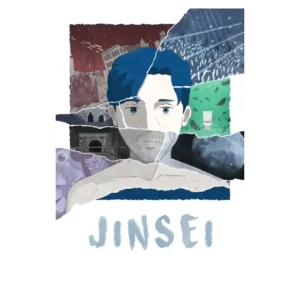

Jinsei
Where It Has the Edge
No clear scored advantage over the other product.

Scorata scores summarize analyzed review evidence on a 1–5 scale; they are not laboratory measurements or a simple average of customer star ratings. Feature scores summarize the reviews covering that feature. The overall score averages feature scores within each review, then combines review averages. When both expert and customer evidence are available, those two groups receive equal weight. Products can have different review coverage, so small score gaps do not establish a winner.
Recommendations prioritize important features for the category, with a score of at least 3.5, a gap of at least 0.25 points and at least two supporting reviews per product. Features with widely varying scores or broad connectivity contexts are excluded from recommendations. These safeguards do not establish statistical significance.
Quick verdict
The available evidence supports the recommendation below, but does not establish an overall winner. Check the remaining features against your priorities.
There is not enough comparable review evidence to recommend Jinsei over the other product.
Choose Best of the Best for plot clarity and cast chemistry.
No clear scored advantage over the other product.
Scores are out of 5. Missing scores mean missing review evidence, not a missing feature.
The basic life chronology remains traceable, yet causal links, character transitions, and thematic connections are frequently cryptic. Many viewers will need to accept ambiguity or revisit the film to piece it together.
The story is generally easy to follow and its many threads come together cleanly, even when the structure is simple.
The later relationship with Sakura is underdeveloped and difficult to understand. It lacks the emotional clarity and warmth found in the friendship with Kin.
The romance is secondary to the friendship. Some reviewers find the love interests useful to the leads’ growth, while others reject one pairing as formulaic or unappealing.
A traumatized boy’s century-long journey through pop stardom, crime, godhood, war, and a cosmic finale is unlike conventional anime storytelling. The audacity of the premise is a major attraction.
Predictability is the most consistent story complaint, with several reviewers saying the film follows familiar college and dance-movie beats almost exactly.
The screenplay is overflowing with bold ideas, but its episodic structure, exposition, and missing transitions prevent all of them from cohering. Strong individual chapters sit beside rushed or underdeveloped sections.
The screenplay earns frequent praise for structure, wit, cultural specificity, and ensemble balance, but critics also point to contrivances, thin supporting characters, and derivative plotting.
Sparse dialogue suits the taciturn protagonist, but later stretches rely on heavy exposition that weakens the film’s mystery. The writing is most effective when images carry the meaning.
The dialogue draws both praise and criticism: one review finds it natural and current without trying too hard, while another says English-language exchanges can feel noticeably removed from real speech.
The shift from grounded family drama to celebrity satire and psychedelic science fiction is daring and unpredictable. That genre-bending energy impresses even when the transitions feel abrupt.
Dance-movie fans are the core audience: many reviewers see it as a welcome, highly enjoyable throwback, while a few feel its familiar formula keeps it from becoming memorable.
The film remains intriguing and emotionally charged, but its later episodes do not always build toward satisfying dramatic payoffs. Its ambition often exceeds its narrative control.
The central friendship conflict often lands emotionally, but one review finds the second-half escalation repetitive and lower-energy.
The opening and closing montages condense time with impressive rhythm, but the middle idol chapters often drag or rush past key connections. The century-long scope makes the pacing intentionally disorienting.
Pacing ranges from top-notch and rhythmically satisfying to noticeably slower once repeated friendship conflict dominates the second half.
The friendship with Kin supplies the story’s warmest and most accessible human connection. Several accounts wanted more time with that bond, while the later romance feels far less convincing.
Maitreyi Ramakrishnan and Priyanka Kedia are consistently praised for making Maya and Anjali feel like longtime friends, with natural banter, warmth, irritation, and emotional history.
Ryuya Suzuki’s direction is bold, personal, and visually assured, especially in montages and composition. The main weakness is his difficulty integrating every chapter and idea into a fully coherent whole.
Lena Khan is repeatedly praised for energetic, clear direction that lets performers and dance routines breathe while keeping the tone buoyant.
The century-spanning story is ambitious, strange, and often rewarding, but its chapter-to-chapter consistency varies widely. Its best moments feel visionary; its weakest feel incomplete or incoherent.
The friendship-centered story is widely seen as warm, relatable, and effective even when simple. The biggest weakness is that several reviewers find the formula too familiar or the later conflict too simplified.
The film can be deeply moving in its images of trauma, loneliness, chance, and identity. Its cool tone and opaque lead create powerful distance for some viewers and frustrating detachment for others.
The friendship story frequently lands with real feeling, from painful arguments to a finale that several reviewers found genuinely moving or uplifting.
The protagonist’s changing names and identities create a compelling study of trauma, fame, and detachment. Reactions split sharply over whether his blankness feels profound or simply prevents emotional connection.
Maya and Anjali are generally viewed as rounded, relatable leads with believable inner conflicts. Several critics say the supporting characters and male arcs are thinner or less reflective.
The cosmic, largely wordless finale is visually audacious and memorable. Some see it as a graceful culmination of the identity theme, while others find its transcendence forced, hollow, or unresolved.
Most reactions to the ending are positive, especially the final dance and reconciliation, though a few critics find the climax abrupt or the resolution too convenient.
The critique of fame, exploitation, social roles, wealth, and fractured identity is often sharp and resonant. The film’s reach for profundity can feel overextended when the narrative threads do not fully connect.
Reviewers respond well to its messages about friendship, self-definition, living fully in the present, and choosing a life on your own terms.
Dry, jarring humor adds momentum and keeps the bleak material from becoming monotonous. Its odd comic flashes generally complement the horror and melancholy rather than undercut them.
The comedy is a major strength for most reviewers, with quick banter and culturally specific jokes landing often. A smaller number note that some jokes fall flat.
Compressing a century into roughly 90 minutes is an impressive feat, but the short runtime also forces too many ideas and life stages into limited space. Narrative bloat and missing connective tissue are recurring drawbacks.
The near-two-hour length divides critics: some are entertained enough to want even more, while another says the second-half conflict noticeably bloats the runtime.
The restrained visual palette and melancholy atmosphere provide a steady foundation across radical genre shifts. Still, the film’s deadpan humor, violence, and abstraction can feel intentionally jarring.
The movie is praised for keeping its satire, emotion, songs, and coming-of-age comedy cohesive rather than letting the music-heavy format overwhelm the story.
Careful framing, symmetry, negative space, and inventive camera movement give the film a striking visual grammar. Its strongest compositions can land with remarkable force.
The photography is praised for warm campus imagery and colorful staging that gives the dance numbers visual lift.
The film draws meaningfully on Japanese idol culture, social pressures, pop imagery, and traditional visual influences. Its critique of celebrity machinery and modern society is direct without becoming simplistic.
Most reviewers celebrate the specific South Asian-American setting, dance traditions, and female friendship at the center. A minority argue that parts of the writing feel out of touch or would benefit from deeper female authorship.
The score is a standout, shifting between dreamlike, minimalist, hysterical, and subdued moods with ease. It provides emotional continuity when the story itself becomes fragmented.
The recurring friendship theme is designed to connect emotional scenes and, according to the composer, gives the score cohesion without competing with the many songs.
Identity, trauma, fame, paternity, chance, loneliness, and mortality give the film substantial philosophical depth. The ideas are powerful even when the narrative cannot fully organize them.
The film gets strong marks for friendship, identity, and sisterhood, but one critic argues that deeper cultural pressures on South Asian women are raised without being fully explored.
The rapid montages and precise visual transitions are among the film’s strongest achievements. Elsewhere, abrupt jump cuts can feel heavy-handed and contribute to the fragmented structure.
Editing gets sharply split reactions. Some praise clean, generous cutting, while another critic says frequent cuts prevent viewers from fully appreciating the choreography.
The voice performances are deliberately restrained, with occasional bursts of energy. That subdued approach suits the film’s alienation but can also make the characters feel emotionally remote.
The cast is widely praised for lively, committed work, especially in the dance-heavy material. The main dissent says some exchanges can feel less natural than intended.
The music is central to the film’s mood and momentum, with a drifting, dreamlike quality that elevates the experience. For some viewers, it is the element that holds the movie together.
The soundtrack is repeatedly praised for strong needle drops, varied Indian music, and crowd-pleasing songs that add momentum to the dance sequences.
This is best suited to adventurous animation fans who enjoy cryptic, formally daring work. Its fragmented storytelling and emotionally distant lead make it a difficult recommendation for mainstream audiences.
The cultural specificity is repeatedly described as a strength rather than a barrier, with reviewers expecting the film to connect beyond South Asian audiences and especially with younger dance fans.
The move from idol culture into bunkers, robots, war, and transhumanist society creates an imaginative future. The world is visually compelling, though some transitions into it feel abrupt.
The campus and South Asian dance community feel specific and lived-in, with tradition and experimentation presented as parts of the same evolving culture.
Muted environments, geometric spaces, and dense background details create a coherent world despite the limited production. The settings gain impact through composition rather than lavish detail.
The UCLA setting is praised for feeling like a real social ecosystem rather than a generic campus backdrop.
Clean lines, muted blues and grays, shifting aspect ratios, negative space, and sudden color accents give the film a distinctive look. The imagery is widely considered more successful than the storytelling.
The best dance set pieces and cinematography are described as colorful, theatrical, and visually striking, though one reviewer says the overall direct-to-streaming look can feel cheap outside the showcase numbers.
Patient viewers may find the film strange, absorbing, and never boring, especially once its visual imagination expands. Others may struggle with the slow, fragmented experience.
Most reviewers find the movie funny, joyous, and easy to watch. Lower scores come from critics who feel the derivative story or slower second half drains too much energy.
A second viewing may reveal implied connections, recurring motifs, and visual clues that are easy to miss at first. Repeat viewing is more likely to reward patient viewers than resolve every ambiguity.
Several reviewers see it as an easy comfort rewatch, helped by the friendship, music, dance routines, and upbeat spirit.
One reviewer calls it a fun family watch and sees little in the content that should worry families.
The handmade animation is the film’s defining strength, using sparse motion, sharp composition, and carefully controlled color to create memorable images. Some viewers may still find the limited movement stiff or inert.
Choreography is the clearest consensus strength: reviewers call the routines electric, inventive, culturally varied, and exciting enough to carry even the most familiar story beats.
The film is described as wholesome and, despite a small amount of mature reference, suitable for a family movie night.
A reviewer notes some mention of sex but still considers the movie a comfortable family watch, indicating approval of the relatively restrained level.
Costumes are singled out as part of the film’s vibrant identity, helping both the campus world and performance sequences feel distinctive.
The sound presentation is a major strength, reinforcing the eerie atmosphere and the film’s sudden tonal shifts. It works closely with the music to make the sparse imagery feel more immersive.
The two leads are one of the strongest points of agreement, with Priyanka Kedia and Maitreyi Ramakrishnan repeatedly praised for charisma, energy, and emotional credibility.
One critic says the movie is less of the raucous comedy promised by its synopsis, especially once the more dramatic second half takes over.
The ensemble is generally seen as lively and memorable, with several comic standouts. One negative review says many supporting players fade into the background because they are underdeveloped.

Choose this inventive, unsettling documentary for fearless questioning, dark humor, and unpredictable storytelling. Skip it if you want a short, straightforward exposé with definitive answers.
Pros: originality, humor

Best for a hypnotic, bookish mystery with tactile visuals and cerebral chills. Skip it if reading-heavy, attention-demanding storytelling sounds more exhausting than exciting.
Pros: Atmosphere, cinematography
Cons: audience appeal

Best for an intimate, searching documentary that rewards focused attention and invites discussion. Skip it when devastating grief, addiction footage, and unresolved family tensions would be too much.
Pros: emotional impact, theme depth

Best for patient suspense, an unforgettable score, and an unsettling masked killer. Skip it for very young children or if you want to avoid intense scares; its restrained kills also...
Pros: directing quality, score quality
Cons: message quality