
Jinsei
Where It Has the Edge
No clear scored advantage over the other product.

Scorata scores summarize analyzed review evidence on a 1–5 scale; they are not laboratory measurements or a simple average of customer star ratings. Feature scores summarize the reviews covering that feature. The overall score averages feature scores within each review, then combines review averages. When both expert and customer evidence are available, those two groups receive equal weight. Products can have different review coverage, so small score gaps do not establish a winner.
Recommendations prioritize important features for the category, with a score of at least 3.5, a gap of at least 0.25 points and at least two supporting reviews per product. Features with widely varying scores or broad connectivity contexts are excluded from recommendations. These safeguards do not establish statistical significance.
Quick verdict
The available evidence supports the recommendation below, but does not establish an overall winner. Check the remaining features against your priorities.
There is not enough comparable review evidence to recommend Jinsei over the other product.
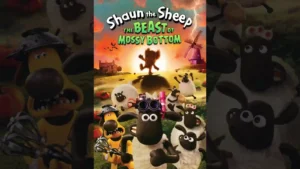
Choose Shaun the Sheep: The Beast of Mossy Bottom for plot clarity and cast chemistry.
No clear scored advantage over the other product.
Scores are out of 5. Missing scores mean missing review evidence, not a missing feature.
Sparse dialogue suits the taciturn protagonist, but later stretches rely on heavy exposition that weakens the film’s mystery. The writing is most effective when images carry the meaning.
The almost dialogue-free storytelling remains remarkably clear, using pantomime, expressions, sounds, and sequencing to communicate plot and emotion across languages.
The later relationship with Sakura is underdeveloped and difficult to understand. It lacks the emotional clarity and warmth found in the friendship with Kin.
The shy Farmer-Vet romance is consistently called sweet and endearing, adding gentle feeling behind the monster-movie plot.
The basic life chronology remains traceable, yet causal links, character transitions, and thematic connections are frequently cryptic. Many viewers will need to accept ambiguity or revisit the film to piece it together.
The simple chain of cause and effect is easy for young viewers to follow even without spoken explanation.
A traumatized boy’s century-long journey through pop stardom, crime, godhood, war, and a cosmic finale is unlike conventional anime storytelling. The audacity of the premise is a major attraction.
The main recurring criticism is that the creature-transformation plot closely echoes earlier Shaun and Wallace & Gromit stories.
The shift from grounded family drama to celebrity satire and psychedelic science fiction is daring and unpredictable. That genre-bending energy impresses even when the transitions feel abrupt.
Its loving monster-movie homages, cozy autumn mood, and spooky-not-scary approach make it a particularly satisfying Halloween gateway film.
The screenplay is overflowing with bold ideas, but its episodic structure, exposition, and missing transitions prevent all of them from cohering. Strong individual chapters sit beside rushed or underdeveloped sections.
The screenplay's escalation, visual construction, and generational jokes earn strong praise, though a few critics view the feature as padded or repetitive.
The cosmic, largely wordless finale is visually audacious and memorable. Some see it as a graceful culmination of the identity theme, while others find its transcendence forced, hollow, or unresolved.
The climax delivers scale and movement, though a few reviewers feel its extended chase loses steam or becomes briefly generic.
The friendship with Kin supplies the story’s warmest and most accessible human connection. Several accounts wanted more time with that bond, while the later romance feels far less convincing.
Affection among Shaun, the flock, Bitzer, and the Farmer comes through clearly in their actions, giving the comic chaos a warm emotional center.
The protagonist’s changing names and identities create a compelling study of trauma, fame, and detachment. Reactions split sharply over whether his blankness feels profound or simply prevents emotional connection.
Most reviewers admire how distinct personalities and relationships emerge without speech, though a few find Shaun's characterization or newer characters thinner than usual.
The rapid montages and precise visual transitions are among the film’s strongest achievements. Elsewhere, abrupt jump cuts can feel heavy-handed and contribute to the fragmented structure.
Crisp editing keeps complicated visual gags readable and builds infectious momentum without rushing past background jokes.
The film can be deeply moving in its images of trauma, loneliness, chance, and identity. Its cool tone and opaque lead create powerful distance for some viewers and frustrating detachment for others.
Tender affection for the Farmer and a few heartfelt moments add warmth, but some critics wish the familiar story had a stronger emotional hook.
Identity, trauma, fame, paternity, chance, loneliness, and mortality give the film substantial philosophical depth. The ideas are powerful even when the narrative cannot fully organize them.
The film lightly explores self-acceptance, appearances, impulsive choices, and fear of the misunderstood without weighing down the comedy.
The opening and closing montages condense time with impressive rhythm, but the middle idol chapters often drag or rush past key connections. The century-long scope makes the pacing intentionally disorienting.
Most find the 80-minute film brisk, but some notice a slow setup, repetitive stretches, or energy that occasionally becomes overwhelming.
The restrained visual palette and melancholy atmosphere provide a steady foundation across radical genre shifts. Still, the film’s deadpan humor, violence, and abstraction can feel intentionally jarring.
Spooky lighting and suspense repeatedly pivot into slapstick, maintaining a controlled balance between Halloween atmosphere and lighthearted charm.
The handmade animation is the film’s defining strength, using sparse motion, sharp composition, and carefully controlled color to create memorable images. Some viewers may still find the limited movement stiff or inert.
The handcrafted stop-motion is the clearest consensus strength: tactile, meticulously detailed, expressive, and technically ambitious, especially in its animated hair and elaborate sets.
Compressing a century into roughly 90 minutes is an impressive feat, but the short runtime also forces too many ideas and life stages into limited space. Narrative bloat and missing connective tissue are recurring drawbacks.
At roughly 80 minutes, the film is usually considered breezy and well-sized, though one critic thinks the slight premise still feels stretched.
Dry, jarring humor adds momentum and keeps the bleak material from becoming monotonous. Its odd comic flashes generally complement the horror and melancholy rather than undercut them.
Visual gags, slapstick, facial reactions, and horror riffs generate a very high laugh rate, although a few critics find some jokes stretched or less sharp than earlier outings.
Careful framing, symmetry, negative space, and inventive camera movement give the film a striking visual grammar. Its strongest compositions can land with remarkable force.
Careful framing, lighting, shadow, and visual invention make the miniature environments feel cinematic and support both suspense and comedy.
The critique of fame, exploitation, social roles, wealth, and fractured identity is often sharp and resonant. The film’s reach for profundity can feel overextended when the narrative threads do not fully connect.
The story's messages about self-acceptance, loyalty, accountability, and avoiding snap judgments are warmly received without becoming heavy-handed.
The century-spanning story is ambitious, strange, and often rewarding, but its chapter-to-chapter consistency varies widely. Its best moments feel visionary; its weakest feel incomplete or incoherent.
The clear, warm story works well as a vehicle for gags, though its simplicity and familiar structure keep it below Aardman's most acclaimed features for some critics.
The film draws meaningfully on Japanese idol culture, social pressures, pop imagery, and traditional visual influences. Its critique of celebrity machinery and modern society is direct without becoming simplistic.
Its casually inclusive portrait of modern British life is praised for feeling cheerful and natural rather than self-conscious.
The score is a standout, shifting between dreamlike, minimalist, hysterical, and subdued moods with ease. It provides emotional continuity when the story itself becomes fragmented.
Natalie Holt's lively, expressive score does crucial emotional and comic work, with horror textures that reinforce the seasonal atmosphere.
Ryuya Suzuki’s direction is bold, personal, and visually assured, especially in montages and composition. The main weakness is his difficulty integrating every chapter and idea into a fully coherent whole.
The feature direction is mostly praised for warmth and clarity, though one critic detects hesitation compared with earlier Aardman films.
The voice performances are deliberately restrained, with occasional bursts of energy. That subdued approach suits the film’s alienation but can also make the characters feel emotionally remote.
The nearly wordless vocal work gives the characters lively personalities through grunts, sighs, bleats, and perfectly timed reactions.
The music is central to the film’s mood and momentum, with a drifting, dreamlike quality that elevates the experience. For some viewers, it is the element that holds the movie together.
Musical selections delight some reviewers, but others find the pop-song needledrops jarring or unnecessary beside the orchestral score.
This is best suited to adventurous animation fans who enjoy cryptic, formally daring work. Its fragmented storytelling and emotionally distant lead make it a difficult recommendation for mainstream audiences.
The film reaches children through slapstick and simple plotting while giving adults horror references and background jokes, although one critic finds it too mild for broad crossover appeal.
Patient viewers may find the film strange, absorbing, and never boring, especially once its visual imagination expands. Others may struggle with the slow, fragmented experience.
The overwhelming verdict is delightful, joyful entertainment, with even cooler reviews still finding it charming and enjoyable.
A second viewing may reveal implied connections, recurring motifs, and visual clues that are easy to miss at first. Repeat viewing is more likely to reward patient viewers than resolve every ambiguity.
Several reviewers expect the film to become an annual Halloween watch that parents will not mind revisiting with children.
Muted environments, geometric spaces, and dense background details create a coherent world despite the limited production. The settings gain impact through composition rather than lavish detail.
Pumpkin patches, windmill laboratories, autumn streets, forests, and docks are packed with tactile detail, strong color, and clever background business.
The move from idol culture into bunkers, robots, war, and transhumanist society creates an imaginative future. The world is visually compelling, though some transitions into it feel abrupt.
Expanded locations beyond the farm make Mossingham feel larger, though one critic finds some of the world-building plodding and underdeveloped.
Clean lines, muted blues and grays, shifting aspect ratios, negative space, and sudden color accents give the film a distinctive look. The imagery is widely considered more successful than the storytelling.
Rich autumn colors, neon laboratory light, expressive shadows, and lovingly built sets give this entry a vibrant Halloween identity.
The sound presentation is a major strength, reinforcing the eerie atmosphere and the film’s sudden tonal shifts. It works closely with the music to make the sparse imagery feel more immersive.
Inventive effects, vocal noises, and precisely timed cues strengthen both atmosphere and punchlines in a film that cannot lean on dialogue.
Chases, escalating mishaps, and the giant-pumpkin climax provide energetic spectacle while preserving clear visual comedy.
The film remains intriguing and emotionally charged, but its later episodes do not always build toward satisfying dramatic payoffs. Its ambition often exceeds its narrative control.
Reviewers repeatedly recommend it as family viewing: the scares stay gentle, children get the slapstick, and adults receive richer genre jokes.
The only coarse language noted is assessed as very mild, supporting the film's broad family suitability.
The scares are deliberately mild: shadows and transformations create brief tension, but silly reveals, cute creature design, and known identities keep young viewers comfortable.
Monster pursuits and home-invasion-style sequences create real excitement and child-safe tension without turning harsh.
Reviewers consistently see this as suitable for young children, though one family guide recommends parental guidance for the mild Halloween imagery.
The film's near-perfect aggregate scores and glowing critical notices show unusually strong critic appeal.
The Farmer's nonverbal performance is singled out as brilliant, turning grunts and physical reactions into a comic lead turn.
One review finds the trailer misleading because the horror emphasis largely fades after the opening act, even though parents may welcome the gentler result.
Nina Sosanya's limited-vocabulary supporting performance stands out for bringing confidence and personality to the Vet.

A deeply human coming-of-age drama carried by remarkable performances and an honest portrayal of grief. Its gentle optimism moves most viewers, though some find the final stretch hurried or overly...
Pros: Grief portrayal, acting performance
Cons: pacing

Billie Jean King’s magnetic first-person storytelling makes this an exhilarating portrait of athletic courage and social change. The filmmaking follows a familiar documentary structure, and her full tennis résumé gets...
Pros: entertainment value, Biographical coverage
Cons: Narrative structure

Choose this inventive, unsettling documentary for fearless questioning, dark humor, and unpredictable storytelling. Skip it if you want a short, straightforward exposé with definitive answers.
Pros: originality, humor

A singular voice, powerful piano playing and intimate film photography make this concert absorbing for receptive listeners. Its uninterrupted, often similar-sounding songs and lack of background context are an acquired...
Pros: directing quality, cinematography
Cons: pacing, Song variety