

Girls Like Girls
Where It Has the Edge
- violence level is 5.0 vs 4.0. The decision to remove the original music video’s homophobic assault is seen as a thoughtful improvement that keeps...

Scorata scores summarize analyzed review evidence on a 1–5 scale; they are not laboratory measurements or a simple average of customer star ratings. Feature scores summarize the reviews covering that feature. The overall score averages feature scores within each review, then combines review averages. When both expert and customer evidence are available, those two groups receive equal weight. Products can have different review coverage, so small score gaps do not establish a winner.
Recommendations prioritize important features for the category, with a score of at least 3.5, a gap of at least 0.25 points and at least two supporting reviews per product. Features with widely varying scores or broad connectivity contexts are excluded from recommendations. These safeguards do not establish statistical significance.
Quick verdict
The review evidence points to a tradeoff: violence level versus score quality. Choose according to which strengths matter more to you; the overall score alone does not settle that choice.
Choose Girls Like Girls for violence level.
Choose The Housemaid for score quality.
Scores are out of 5. Missing scores mean missing review evidence, not a missing feature.
Period needle drops and queer artists give the soundtrack strong nostalgic and emotional appeal. The music feels carefully chosen rather than used as a greatest-hits showcase.
One reviewer finds the music actively bad and tied to tedious, mundane sequences.
The supporting cast has warm individual moments, but thinly written roles limit their impact and leave the film heavily dependent on the leads.
Supporting players add precise menace and comic texture, though several roles feel sharply reduced from the book.
The two leads carry the film with expressive, emotionally grounded work, and even harsher reactions usually separate their performances from the script’s weaknesses. Supporting performances draw more mixed responses.
The ensemble is widely seen as the movie's strongest asset, even as some critics find individual performances clumsy or mismatched.
Maya da Costa gives the film its emotional center with restrained body language, wounded intensity, and a believable progression from guarded grief to self-possession.
The bold central performance brings humor, fear, and sympathy to the film and is repeatedly singled out as a highlight.
The restrained approach to physical intimacy is viewed as appropriate and refreshingly non-exploitative.
The erotic content splits opinion: some find the steam appropriate to the throwback thriller, while others call it ordinary or ludicrous.
The film’s clearest message is that self-acceptance and healthy love begin with believing you are worthy of both. Its queer representation is framed through ordinary human longing rather than spectacle.
One critic argues that the storytelling undercuts the feminist viewpoint it appears to champion.
The wistful, intimate mood remains remarkably steady, avoiding both excessive melodrama and sugary sentimentality.
The mix of serious abuse, satire, horror, and camp is the film's biggest gamble: exhilarating when it clicks and jarring when it does not.
The story is simple and easy to follow, centering Coley’s growth more than the fate of the romance.
The plot is tightly constructed enough for some, yet extended explanations, coincidences, and shaky logic make it feel convoluted to others.
The editing can effectively capture glances, memory, and emotional shifts, but rapid cuts and montage-heavy passages sometimes rush key developments or blur the passage of time.
Editing is a weak spot in the harshest reactions, with choppy assembly and chaotic shot flow disrupting scenes.
AIM exchanges and romantic uncertainty create localized tension, but the larger conflict is often too abstract or underdeveloped to sustain strong suspense.
The movie generates real edge-of-seat tension once it accelerates, though predictable foreshadowing weakens the mystery for experienced thriller fans.
The leads’ chemistry is usually the film’s strongest pull, especially in quiet looks, touches, and private moments. A minority found the spark too muted to justify the relationship’s pain.
Reactions to the central chemistry range from completely unconvincing to strong enough to sell the story's wild turns.
The film meaningfully connects queer self-acceptance, grief, parental wounds, and the need to choose healthier love. Its emotional themes are deeper than its simple plot suggests.
Its ideas about abuse, misogyny, and female solidarity can be forceful, but some reviewers want more complexity and less pulpy simplification.
The story is emotionally sincere and easy to connect with, especially through Coley’s grief and self-worth arc. Its main limitation is a familiar, sometimes underdeveloped narrative framework.
The story is the main dividing line: admirers relish its pulpy escalation, while detractors call it contrived, superficial, or outright incoherent.
The decision to remove the original music video’s homophobic assault is seen as a thoughtful improvement that keeps the focus on emotional growth rather than physical trauma.
The late body-horror turn is welcomed by some for its cathartic punch, while others find the bloodshed excessive or disturbing.
The moody score and era-aware musical cues deepen the film’s wistful tone and emotional beats without overwhelming the story.
The score is praised for carrying emotion and adapting smoothly to comedy, danger, and quieter tension.
The deliberate, slow-burn rhythm works for viewers who enjoy lingering mood and emotional detail. Others find the montages, dead air, and rushed late developments an uneven combination.
Momentum improves sharply after the major turn, but the long setup and two-hour-plus length frequently test patience.
Sunlit exteriors, intimate close-ups, and a hazy summer palette create a dreamy sense of longing. The look is widely admired, though some found the soft-focus style too uniform for heavier scenes.
Clean thriller lighting and gliding camera movement earn praise, although one critic calls the overall sheen dull and televisual.
Playful moments and awkward teenage behavior provide welcome relief from the grief and romantic turmoil.
The movie is consistently funny, but audiences disagree on how much of that laughter is intentional.
The adaptation preserves the music video’s visual DNA, emotional core, and fan callbacks while condensing or changing several book elements. The removal of the original assault is widely welcomed.
Most book-aware reviewers find the adaptation highly faithful, with selective changes that sharpen the cinematic climax; one dissenter feels Hollywood flattened the novel.
The dialogue ranges from natural, awkward teenage speech to lines described as stiff, cringey, or overly YA-styled. The quiet visual storytelling often works better than the spoken exchanges.
The heightened dialogue fits the pulpy tone for some viewers, but awkward lines also draw unintended laughter.
The central romance is tender, volatile, and emotionally recognizable, with strong moments of yearning and intimacy. Some viewers wanted more dialogue, development, or chemistry before the heartbreak intensified.
The steamier romantic material works for some viewers, even as other critics see little believable chemistry.
The core plot is familiar and rarely surprising, but the specific queer perspective, personal history, and mid-2000s setting give it a distinct emotional identity.
The film knowingly recycles domestic-thriller traditions; some appreciate the execution, while others see little beyond familiar genre pieces.
At roughly 95 minutes, the film can paradoxically feel both stretched in its quieter passages and too compressed in its dramatic transitions.
At a little over two hours, the film is widely considered too long, though some viewers feel the busy plot largely earns the time.
The film follows a recognizable summer-romance and coming-of-age structure, with few major surprises or unconventional turns.
The twists delighted viewers who went in cold, but many critics predicted the central reveal well before it arrived.
As a queer coming-of-age romance, it delivers tenderness, yearning, heartbreak, and self-discovery even when it follows familiar genre beats.
It often succeeds as glossy, old-school thriller camp, though tonal uncertainty keeps a minority from fully embracing the genre ride.
Hayley Kiyoko shows a strong eye for intimacy, mood, and emotional detail in her feature debut. Reactions split over whether the music-video sensibility fully sustains a feature-length narrative.
Paul Feig earns praise for managing tension and camp, but harsher critics fault his restraint, visual control, and handling of serious themes.
The screenplay has genuine sensitivity and several strong emotional ideas, but it often relies on familiar structure, thin side characters, and abbreviated development.
The screenplay can feel fast, playful, and sharply constructed, yet exposition, thin psychology, and cheesy dialogue remain recurring complaints.
The final resolution is divisive because the main cut to black can feel abrupt, while the post-credits scene supplies the romantic closure many viewers wanted. Staying through the credits materially improves the payoff.
The violent, campy finish is often praised as satisfying and impactful, although a few critics find it messy or over-explained.
Coley receives a clear grief-and-self-acceptance arc, while Sonya and several side characters often feel less fully explored. The imbalance leaves parts of the relationship emotionally convincing but narratively underwritten.
Several reviewers appreciate the characters' hidden layers, while others find Millie thin and supporting roles underused.
Ambient outdoor sound and intimate sonic detail can be immersive, though one reaction criticized the music mix for becoming too loud.
The restrained sound design sits under the action and makes the film's biggest moments land harder.
AIM windows, Sidekicks, iPods, CDs, bedrooms, and small-town hangouts make 2006 feel lived-in and emotionally specific. The period detail is one of the most consistently praised elements.
The polished mansion and updated interiors create an effective fun-house setting whose beauty also feels oppressive.
Mid-2000s fashion details such as platform flip-flops and period styling reinforce the setting without feeling like costume-party shorthand.
The wardrobe's whites and creams convincingly capture the Winchesters' immaculate quiet-luxury facade.
The warm, colorful, close-up-heavy style creates a strong dreamlike identity. Some viewers find the nostalgic orange haze heavy-handed or insufficiently varied.
The best visual moments turn polished domestic beauty into oppressive unease, though close framing sometimes wastes the mansion's atmosphere.
Its emotional warmth and representation inspired at least one strong desire to watch it again, especially among viewers connected to the original song and video.
Enthusiasts want to revisit performance choices and continue with sequels, while one reviewer sees it as a disposable one-time watch.
Its warm atmosphere, emotional leads, and Pride-season appeal make it an enjoyable watch despite familiar plotting.
Most viewers have fun with the film's deranged camp and crowd-pleasing turns, but the experience ranges from exhilarating to merely watchable.
Age-appropriate casting helps the teenage emotions and awkwardness feel believable rather than overly polished.
The film connects most strongly with queer viewers, nostalgic millennials, and anyone who remembers the intensity of first love. Some viewers outside its core fan base may find the story too thin or inward-looking.
Critical reactions lean positive but not unanimous, with praise for the performances and emotional sincerity balanced by complaints about thin plotting and uneven pacing.
The film treats queer teenage love as ordinary, specific, and worthy of a wide theatrical canvas. Its unapologetically sapphic focus is a major strength for viewers who rarely saw themselves centered in coming-of-age stories.
The film’s strongest moments make first love, grief, rejection, and self-acceptance feel immediate and raw. Even mixed reactions often acknowledge that the central emotions land.
The awkward glances, mixed signals, and queer uncertainty often feel authentic and lived-in. A few stylized or scripted moments undercut that naturalism.
The horror-leaning violence gives mainstream crowds a jolt, while seasoned horror fans may find it relatively mild.
One reviewer sees it as better suited to an entertaining Netflix watch than the cost and commitment of a theater trip.
The small-town spaces, early internet culture, and mid-2000s objects create a convincing social world shaped by isolation, nostalgia, and closeted desire.

Best for pristine archival footage, immersive sound, and a surprisingly tense look at Disneyland’s construction. Skip it if you want a comprehensive, deeply critical history; several reviewers found the 78–79-minute...
Pros: plot clarity, realism
Cons: plot originality, runtime
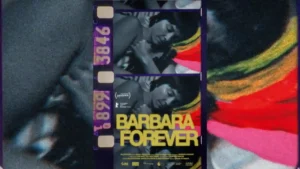
Best for an intimate, inventive archival portrait with strong emotional and cultural impact. Skip it if substantial nudity or an occasionally wandering biographical structure will frustrate you.
Pros: chemistry between characters, emotional impact
Cons: runtime, plot clarity
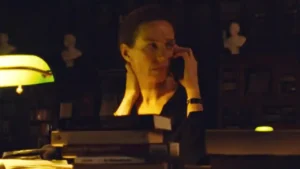
Best for an audacious, text-driven conspiracy thriller with gorgeous 16mm atmosphere and mounting dread. Skip it if long stretches of reading, deliberate repetition, and an intentionally austere narrative sound more...
Pros: story quality, plot clarity
Cons: chemistry between characters, sound design

Best for a profound, formally inventive meditation on grief, memory, and the ethics of filming family. Skip it if intensely personal addiction material, a 114-minute runtime, or occasional repetition will...
Pros: plot originality, ending satisfaction
Cons: runtime, pacing