Scorata scores summarize analyzed review evidence on a 1–5 scale; they are not laboratory measurements or a simple average of customer star ratings. Feature scores summarize the reviews covering that feature. The overall score averages feature scores within each review, then combines review averages. When both expert and customer evidence are available, those two groups receive equal weight. Products can have different review coverage, so small score gaps do not establish a winner.
Recommendations prioritize important features for the category, with a score of at least 3.5, a gap of at least 0.25 points and at least two supporting reviews per product. Features with widely varying scores or broad connectivity contexts are excluded from recommendations. These safeguards do not establish statistical significance.
Quick verdict
What each product is best for
The review evidence points to a tradeoff: audience appeal and rewatch value versus plot clarity and story quality. Choose according to which strengths matter more to you; the overall score alone does not settle that choice.
Choose Rose of Nevada for audience appeal and rewatch value.
Choose Chronovisor for plot clarity and story quality.
Why these recommendations?
Rose of Nevada
Where It Has the Edge
audience appeal is 3.5 vs 3.1. This is Mark Jenkin’s most approachable film for many viewers, thanks to a clearer time-travel premise and recognizable...
rewatch value is 5.0 vs 4.8. The repeated images, causal loops, and unresolved ending invite viewers to revisit the film and form new interpretations....
Chronovisor
Where It Has the Edge
plot clarity is 5.0 vs 3.0. Despite dense material, the clue trail is praised for moving forward cleanly enough to let viewers act as...
story quality is 5.0 vs 4.6. The research rabbit hole is repeatedly described as engrossing, fascinating, and legitimately thrilling. The pleasure comes less from...
acting performance is 4.9 vs 4.5. Anne-Laure Sellier’s academic authenticity, restraint, and intellectual command are repeatedly praised. Her natural fluency with scholarly language helps...
Rose of Nevada4.5 overall score
Chronovisor4.8 overall score
Compare features
Scores are out of 5. Missing scores mean missing review evidence, not a missing feature.
Scored on both products
Other features
Screenplay quality
Rose of Nevada
2.2
Chronovisor
5.0
Details and evidence for screenplay quality
Rose of Nevada
The script provides a stronger narrative spine than Jenkin’s previous experiments while preserving ambiguity and thematic depth. Dissenting viewers found it unfocused, underexplained, or too conventional compared with the bold visual form.
The film’s radical presentation is supported by a sturdily plotted foundation, with setups and later payoffs keeping the information-heavy mystery moving.
The central time-slip is understandable, but its rules, identities, and causal loops remain intentionally unresolved. That ambiguity rewards interpretation for some viewers and creates confusion or frustration for others.
Despite dense material, the clue trail is praised for moving forward cleanly enough to let viewers act as textual detectives. Setups and payoffs give the radical presentation a sturdy narrative spine.
Details and evidence for chemistry between characters
Rose of Nevada
Nick and Liam share a restrained, almost cosmic bond shaped by hard labor and displacement. Their opposing reactions to the past create tension even when they rarely speak openly.
Béatrice’s early academic interactions are deliberately cool and detached rather than warm or connective. The exchange of ideas never develops into much personal chemistry.
The deliberate rhythm can feel hypnotic and more propulsive than Jenkin’s earlier work. The 114-minute running time, repeated voyages, and prolonged observational passages can also make the film drag.
The unusual rhythm can feel hypnotic, expertly controlled, and even surprisingly fast for a film built around reading. Repetition is the main caveat, with some stretches becoming exhausting or patience-demanding.
Rapid inserts, match cuts, flash frames, and repeated images make past and present bleed together with hypnotic force. The same method can feel overextended when the film lingers on fishing routines or withholds a conventional resolution.
The editing turns pages, highlighted passages, recordings, and archival fragments into momentum rather than homework. Its cumulative rush and carefully timed release of information keep the mystery moving.
The open ending is one of the film’s sharpest dividing points. Some found it haunting, poignant, and endlessly suggestive, while others felt the abrupt lack of answers denied the story a needed payoff.
The finale is widely praised as eerie, gripping, creepy, and in some cases excellent or remarkable. A minority found the last act more conventional, expected, or too literal than the journey preceding it.
Dry humor occasionally slips through the dread, especially in Liam’s casual acceptance of impossible circumstances and the captain’s blunt sea lore. These moments lighten the film without breaking its spell.
Dry humor keeps the scholarly obsession from becoming overly solemn, especially Béatrice’s recurring trick of inventing academic awards to get sources on the phone. The tongue-in-cheek tone complements the conspiracy rather than deflating it.
Using an ordinary fishing trawler and the sea itself as a time machine gives the familiar time-travel idea a fresh, grounded form. The paradoxes grow directly from work, family, and community rather than technological spectacle.
The mystery’s genre blend feels unusually fresh, mixing dark academia, science fiction, conspiracy, and cosmic horror. The final destination can feel somewhat expected, but the route there remains distinctive.
Fishing labor is shown as repetitive, dangerous, exhausting, and physically specific. Nets, engines, gutted fish, wet clothing, and communal unloading make the work feel immediate despite the supernatural story.
Academic dialogue, authentic materials, and Sellier’s real-world fluency make much of the film feel unusually credible. At the same time, the filmmakers openly admit that parts of the research life and library behavior are deliberately unrealistic.
The film’s central message about community, sacrifice, labor, and the cost of preserving a way of life is emotionally resonant. It refuses to romanticize the past even while showing what has been lost.
The film’s affection for books and physical archives develops into a broader defense of how knowledge is preserved and interpreted. Its conspiracy also becomes a pointed parable about truth, technology, and control.
The movie feels unlike most contemporary releases, combining handmade 16mm technique with a fishing-boat time loop and a distinctly Cornish social perspective. Its unusual voice remains clear even when the story frustrates.
The film feels singular, unusual, and inventive, with a form that is difficult to compare directly with conventional thrillers. Its key achievement is making written text and research feel cinematic rather than merely illustrative.
The film creates dread through sound, repetition, warnings, disorientation, and the fear of permanent separation rather than jump scares. Its horror is psychological, mournful, and quietly oppressive.
The horror is more uncanny and cerebral than graphic, but the denouement lands hard. The climax feels frightening, spine-tingling, creepy, and deeply unsettling.
The sparse dialogue is recorded after filming and often feels detached from the image, which adds to the uncanny atmosphere. Its blunt, economical exchanges fit the characters, though viewers seeking fuller explanation may find it withholding.
The academic exchanges often sound more credible than genre-movie scholarship usually does. Outside the central research, some conversations feel deliberately deadening and dramatically thin.
The fishing-boat time-slip offers a clear emotional hook while leaving its metaphysics unresolved. The story is compelling and moving at its best, though repetition and underdeveloped ideas weaken it for some audiences.
The research rabbit hole is repeatedly described as engrossing, fascinating, and legitimately thrilling. The pleasure comes less from conventional action than from watching clues, archival fragments, and conspiratorial possibilities accumulate.
Nick’s fear, guilt, and devotion to his family give the film a strong emotional center, while Liam’s willingness to accept a borrowed life creates an effective contrast. Some viewers found Liam and the supporting characters less fully developed.
Béatrice is intentionally less filled-in than a conventional protagonist, functioning partly as an audience conduit into the obsession. Her emotional grounding still keeps her from feeling completely blank.
Warnings carved into the boat, shifting identities, recurring images, and the possibility of permanent entrapment keep tension simmering. The suspense is atmospheric and existential rather than plot-driven.
Books, recordings, and research generate an unusual amount of tension. The slow accumulation of clues builds cerebral dread into a genuinely gripping thriller experience.
Ghost story, time-travel drama, folk tale, social realism, and experimental cinema merge into an eerie experience that resists a single label. The blend feels fresh and emotionally grounded rather than like a standard science-fiction adventure.
The blend of occult mystery, dark academia, science fiction, conspiracy thriller, and cosmic horror is widely praised. Rather than collapsing under its influences, the film uses them to make a cerebral but gripping genre experience.
The hand-cranked 16mm photography is the film’s most celebrated feature, turning rust, seawater, skin, and weathered buildings into tactile, saturated images. Its scratches, light leaks, and tight framing make the movie feel both newly alive and unearthed from another era.
The warm, grainy 16mm photography is a defining strength, with tactile paper textures, amber light, claustrophobic libraries, and a ghostly sense of time displacement.
The film layers grief, memory, identity, labor, community, nostalgia, class decline, sacrifice, and free will into its time-travel premise. Its refusal to settle on one interpretation is a strength for engaged viewers and a barrier for others.
The mystery opens into questions about memory, certainty, historical truth, media, obsession, identity, and the human desire to recover the past. Those ideas give the small-scale film unusually expansive reach.
The film’s restrained effects create credible spectacle while preserving the rough, handmade look. The storm and temporal imagery feel uncanny without becoming polished or generic.
The superimposed translations and graphic text effects do more than clarify information; they become part of the storytelling. Their integration with the 16mm image is praised as expressive and carefully designed.
Nick’s separation from his wife and daughter gives the film a deep current of grief, panic, and longing. Its quietest moments can feel heartbreaking and leave a lasting, quietly devastating impression.
The film can create vertigo, unease, and a strong sense of creeping disorientation. Its late images especially leave a disturbing impression without relying on conventional spectacle.
Mark Jenkin’s control of image, sound, rhythm, and regional detail gives the film a singular identity. The uncompromising vision is a major strength, though the expanded time-travel plot occasionally feels unfocused.
Jack Auen and Kevin Walker earn broad praise for turning reading, research, and archival material into compelling cinema. Their debut is repeatedly called inventive, controlled, thoughtful, or unusually accomplished.
Jenkin’s eerie electronic and organ-like score reinforces the sense of temporal dislocation and grief. It shifts between low menace and mournful abstraction without overwhelming the handmade soundscape.
The Holst-driven score gives quiet research scenes noirish tension and orchestral weight. It feels compelling, entrancing, and dramatically effective without needing a conventional action-heavy setup.
Character drama, eerie dread, dry humor, social realism, and supernatural mystery coexist with unusual control. The tonal mixture remains coherent because every element shares the same handmade, mournful texture.
Analogue nostalgia, scholarly obsession, and low-key dread stay coherent even as humor and multiple genre influences enter the mix. The craft elements reinforce one another instead of pulling the film apart.
The post-produced clanks, engines, gulls, waves, voices, and distorted tones are as important as the images. The mix is masterful and immersive, but it can become physically harsh or uncomfortably loud.
The restaurant mix deliberately buries some dialogue in ambient noise, but that realism can become a usability problem. One interviewer wondered whether the playback volume needed to be raised just to follow the conversation.
The lo-fi analogue look turns libraries, text, VHS material, and night streets into a distinctive dark-academia world. The imagery feels gorgeous, evocative, bewitching, and at times mesmerizing.
The decaying present and busier 1993 village are built through rigorously detailed homes, pubs, docks, tools, and storefronts. The environments feel inhabited and help communicate social change without exposition.
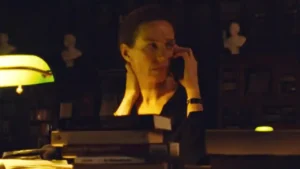
Dark wood, green reading lamps, archives, and scholarly interiors make academia feel unusually seductive and cinematic. The physical spaces strongly reinforce the film’s obsession with books and analogue research.
The film makes the supernatural and the everyday feel inseparable, with the village’s labor, family roles, objects, and rituals forming the rules of its temporal world. The setting feels both concrete and mythic.
Libraries, nocturnal New York, analogue media, and ambiguous technology create a world that feels both magical and forbidding. Even the fantastical premise gains a surprisingly believable environment.
The film can be mesmerizing when its sound, imagery, and mystery take hold, but it offers little conventional momentum or easy pleasure. Patient viewers may find it absorbing; others may simply feel bored or stranded.
Against expectations, a movie dominated by reading is repeatedly called addicting, riveting, spellbinding, and compulsively watchable. Its appeal depends on enjoying research itself as a form of cinematic action.
The repeated images, causal loops, and unresolved ending invite viewers to revisit the film and form new interpretations. Several admirers found that it lingered for weeks or became richer on a second viewing.
The clue density encourages close inspection and another pass. Frames and details feel packed enough that revisiting the film could reveal pieces of the mystery missed the first time.
This is Mark Jenkin’s most approachable film for many viewers, thanks to a clearer time-travel premise and recognizable leads. Its slow rhythm, fractured logic, and abrasive sound still make it best suited to adventurous art-house audiences.
The same formal audacity that makes the film distinctive also limits its audience. Long stretches of reading, sparse characterization, and repetition make it best suited to patient arthouse viewers rather than broad mainstream tastes.
Its tactile craft, emotional ambition, and singular style give it strong art-house critical appeal. The pacing and narrative opacity remain the main reasons for sharp dissent.
The cast embraces the deliberately restrained, post-synced performance style, and the leads make the strange premise emotionally credible. Occasional wooden stiffness feels intentional and often strengthens the uncanny design.
Anne-Laure Sellier’s academic authenticity, restraint, and intellectual command are repeatedly praised. Her natural fluency with scholarly language helps the movie’s unusual premise feel grounded.
The music complements the film’s analog texture and nostalgic unease, with associations that evoke warped memory rather than comforting period nostalgia. It supports the mood more than it functions as a conventional song-driven soundtrack.
Holst, Gregorian chants, and other analogue audio choices give the film grandeur, dread, and an out-of-time mood. The music is repeatedly praised as lush, inspired, dramatic, or crucial to the atmosphere.
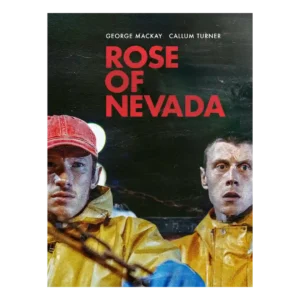
George MacKay and Callum Turner give the film emotional clarity by playing opposite responses to the same impossible event. Their restrained performances keep the high-concept story rooted in recognizable fear, need, and desire.
Sellier gives Béatrice stoic intelligence, tenacity, and subtle signs of mounting fatigue and obsession. The restrained character remains convincing even without conventional emotional expansiveness.
The books, magazines, recordings, and other archival materials feel unusually authentic and convincing. Real sources become an active, thrilling part of the mystery rather than background decoration.
Cornwall is presented as a lived-in working community rather than a scenic backdrop. The film connects fishing traditions, economic decline, local identity, and the erosion of communal life with unusual specificity.
The supernatural premise remains grounded in a family man’s desperation, a drifter’s longing for belonging, and a community’s dependence on dangerous work. That human tension gives the film more emotional force than a conventional puzzle movie.
Mary Woodvine’s aging makeup is convincing enough to make her difficult to recognize at first. The transformation supports the time-slip structure without feeling showy.
Details and evidence for practical effects quality
Rose of Nevada
The modest, lo-fi effects create convincing storms, temporal ruptures, and physical danger without breaking the handmade aesthetic. Their simplicity becomes part of the film’s tactile spectacle.
Two love stories give the time-travel premise much of its heartbreak: one man is torn from the family he loves, while another steps into a family he never had. Their emotional imbalance deepens the film’s moral tension.
At 114 minutes, the film gives its atmosphere and labor routines room to accumulate, but the length is a recurring complaint. Viewers less absorbed by the style may feel that a substantial portion could have been cut.
The clothing helps distinguish the two timelines without calling attention to itself, and the period details are carefully integrated into the village setting. The costumes support the film’s immersive 1990s atmosphere.
The fictional mystery is anchored in an exhaustively researched and sourced real-world story about Ernetti and the Chronovisor legend. That historical scaffolding impressed even viewers who initially assumed the material was fabricated.
Details and evidence for supporting cast performance
Rose of Nevada
The supporting ensemble fits naturally into the heightened Cornish world, balancing grounded behavior with ghost-story strangeness. Francis Magee, Mary Woodvine, Rosalind Eleazar, Edward Rowe, and Yana Penrose are especially effective.