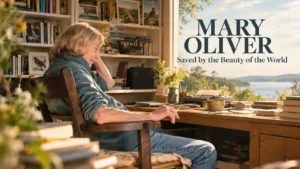

Mary Oliver: Saved by the Beauty of the World
Where It Has the Edge
- entertainment value is 4.5 vs 4.3. Candid material and earnest feeling make the documentary engaging. Its quiet presentation can still be captivating.

Scorata scores summarize analyzed review evidence on a 1–5 scale; they are not laboratory measurements or a simple average of customer star ratings. Feature scores summarize the reviews covering that feature. The overall score averages feature scores within each review, then combines review averages. When both expert and customer evidence are available, those two groups receive equal weight. Products can have different review coverage, so small score gaps do not establish a winner.
Recommendations prioritize important features for the category, with a score of at least 3.5, a gap of at least 0.25 points and at least two supporting reviews per product. Features with widely varying scores or broad connectivity contexts are excluded from recommendations. These safeguards do not establish statistical significance.
Quick verdict
The review evidence points to a tradeoff: entertainment value versus archival footage quality and cinematography. Choose according to which strengths matter more to you; the overall score alone does not settle that choice.
Choose Mary Oliver: Saved by the Beauty of the World for entertainment value.
Choose The Last First: Winter K2 for archival footage quality and cinematography.
Scores are out of 5. Missing scores mean missing review evidence, not a missing feature.
Oliver’s long partnership with Molly Malone Cook emerges as a sustaining source of love, confidence, and creative stability. Several find its inclusion one of the portrait’s most rewarding elements.
The romantic subplot can feel shoehorned into an already crowded narrative.
Some praise a poetic rhythm and effective dramatic momentum. Another finds the consistently relaxed delivery too slow.
The large number of climbers, factions, and side stories can clog the film's pace and make the middle feel over-busy.
The thematic structure can feel scattered rather than linear. Emotional accessibility makes that loose organization work better than a conventional chronological account might suggest.
Despite the many participants, the documentary often explains the chain of mistakes and systemic failures clearly and covers the expedition's major events in detail.
The talking-head and archival structure is familiar rather than formally groundbreaking. Thoughtful assembly and occasional surprises keep that conventional approach worthwhile.
The winter setting is distinctive, but the underlying K2 story of hubris and preventable danger can feel familiar from earlier mountain-disaster documentaries.
The consistently even tone can feel too uniform. One critic links that lack of variation to a slow viewing experience.
The film often balances respect for the dead with clear-eyed analysis, but its true-crime withholding and beautiful imagery occasionally clash with the sober message.
Photographs, notebooks, recordings, and home movies give Oliver a vivid presence despite limited surviving video. Most praise the archival assembly, with one reservation about the shortage of footage of Oliver herself.
The documentary makes strong use of footage captured during the expedition, turning material recorded by climbers and other filmmakers into an immediate account of events.
Nature, animal, and landscape images are praised for their beauty. These passages give the poetry a visually rich setting.
K2 is consistently presented with breathtaking scale and beauty, from stark landscapes to terrifying on-mountain footage. The imagery is one of the film's most widely praised strengths.
Waters and her collaborators turn limited moving-image archives into inventive visual passages. The joint editing also brings disparate historical footage together effectively.
The filmmaking process is described as unusually collaborative, with the director crediting a strong team for shaping the final documentary.
The archival textures and Oliver’s own voice help ground a figure sometimes treated as mystical. The strongest accounts emphasize a real, complicated person rather than an idealized image.
The film strips away the romantic image of high-altitude climbing by emphasizing brutal cold, exhaustion, poor planning, and the mountain's indifference to human ambition.
The life story gives formative experiences and years of struggle space before success arrives. Those early scenes can be fascinating and make perseverance meaningful.
The expedition is generally shaped into a compelling, thought-provoking story with vivid human stakes. The strongest criticism is that too many parallel strands can dilute focus.
The film’s invitation to notice beauty, find community, and live authentically resonates strongly. Its themes of connection and attention give the tribute relevance beyond literary biography.
The critique of ambition, commercialization, social-media pressure, and shared risk is often thought-provoking and forceful. Beautiful mountain imagery and an occasionally diffuse structure can undercut that warning.
Friends and fellow poets bring candid anecdotes, thoughtful analysis, and revealing context. John Waters repeatedly stands out for mixing insight with irreverent humor.
Interviews are woven into the on-mountain material effectively, helping the documentary turn a large collection of firsthand sources into a coherent narrative.
Careful attention to Oliver’s voice and poems gives the film a gentle, purposeful shape. The familiar documentary format earns praise for thoughtful choices and affectionate craftsmanship.
Bar-Lev is widely praised for balancing compassion, accountability, and competing motives without reducing the story to simple heroes and villains. A few structural choices draw criticism, but the overall approach is thoughtful and controlled.
Most praise the fluent assembly of readings, interviews, photographs, and historical footage. One critic wishes the film would linger longer on readers before cutting to nature imagery.
The assembly of firsthand footage, interviews, and social-media material is often praised as clear and seamless. The main counterpoint is that information withholding and too many story strands can make the structure feel manipulative or crowded.
The film explains the deceptive simplicity of Oliver’s poetry and explores attention, belonging, mortality, and artistic persistence. Discussions of form and meaning deepen appreciation beyond familiar quotations.
This is much more than a survival chronicle, digging into ambition, class, nationalism, colonial history, social media, commercialization, and responsibility. Even a more skeptical critic still calls it thought-provoking.
The readings and personal reflections create a deeply moving portrait, with moments of grief, wonder, and joy. Even the restrained presentation carries considerable emotional weight.
The deaths, grieving families, and climbers' personal stakes make the film harrowing and often deeply affecting, though its crowded structure can sometimes blunt that emotional connection.
As a biographical documentary, the portrait earns unusually warm praise. One critic offers the highest compliment of believing Oliver herself would have liked it.
For mountaineering nonfiction fans, the film delivers gripping danger, striking scenery, and a more pointed social perspective than a conventional summit chronicle.
John Waters endorses the film’s account of Oliver’s later partner Anne as accurate. That approval concerns a specific part of the personal biography.
The chronology and causes of the disaster are presented with a strong sense of documentation and clarity, leaving little doubt about many of the key events.
Nature imagery and textured film passages often make the poems feel tangible and beautiful. Some find the stock footage distracting, overly literal, repetitive, or closer to filler.
The film contrasts majestic, almost romantic mountain beauty with claustrophobic and brutal conditions, creating a striking visual tension between allure and danger.
The open-hearted, accessible presentation makes Oliver’s life and work feel welcoming. It favors emotional connection over academic argument.
The film has clear appeal for documentary and mountaineering fans, and its social themes broaden the hook beyond climbing. Its less exhilarating, more analytical approach may limit mainstream thrill-seeker appeal.
Candid material and earnest feeling make the documentary engaging. Its quiet presentation can still be captivating.
The documentary is tense, interesting, and often thrilling, but it is more sobering than exhilarating. Viewers seeking a pure climbing rush may find the experience deliberately less escapist.
The climbing footage is dramatic but does not deliver the immersive, vertigo-heavy rush associated with the most kinetic mountaineering films.
A gentle, intimate atmosphere reflects Oliver’s attentiveness to the natural world. Its warmth is widely appreciated, though the sentimentality occasionally feels a little soft.
The portrait illuminates Oliver’s childhood, working habits, relationships, and slow path to recognition. Opinions differ on its depth: some call it an informative deep dive, while others see only glimpses of her private life.
The portrait usually earns praise for respecting Oliver while acknowledging criticism and painful experiences. Some want more skeptical voices or greater access to the private woman behind the poems.
The mix of poets, friends, and famous admirers generally reflects Oliver’s wide reach without eclipsing her. Celebrity readers initially feel intrusive to one critic, though their genuine attachment helps justify their presence.
The climbers can feel vivid and human when the film focuses on their personalities and motivations, but the crowded structure sometimes weakens investment in individual journeys, especially the Nepali team.
The film adds valuable context around nationalism, colonial history, and indigenous mountaineering, but its treatment of the Nepali team's historic triumph can also feel patronizing and underdeveloped.
The documentary captures the expedition's dark human drama effectively, even when it stops short of the exhilarating heights of the best climbing thrillers.
The closing ideas can feel more like an impasse than a fully resolved conclusion.
The film generally shows restraint around tragedy and deliberately omits some deeply invasive material, but its use of visible frozen bodies can still feel somewhat exploitative.
The documentary feels closely attuned to Oliver’s sensibility and independent spirit. Its affectionate approach is praised for staying true to her.
Poems and images can support worthwhile parent-child engagement during a partial viewing. Later adult subjects limit how broadly that experience can be recommended for families.
A father-and-son strand is described as tender, adding a personal family dimension to the larger competition and tragedy.
The portrait maintains a respectful distance from Oliver’s private life. Friends’ boundaries shape a tribute that values discretion rather than intimate disclosure.
The film preserves Oliver’s recorded voice and offers a valuable record of contemporary poets discussing her work. It makes these literary voices feel present and approachable.
John Waters adds welcome levity through dry, irreverent, sometimes outrageous anecdotes. His humor repeatedly gives the more reflective material a refreshing lift.
Oliver’s queer identity and enduring relationship receive warm, respectful attention. The portrait values her authentic life without treating activism as a requirement for significance.
Withholding some identities risks feeling manipulative, but controlled foreshadowing and tone help the concealment work.
Full readings, reflective commentary, and expressive imagery bring Oliver’s poems to life. The presentation is widely praised, though inconsistent poem identification can make it harder to follow up on individual works.
First-person climbing footage can be genuinely terrifying, using sheer drops and precarious conditions to create fear without conventional horror devices.
Soft, meditative music supports the intimate mood. Its integration with nature imagery is praised for serving the story elegantly.
The film repeatedly generates strong tension from dangerous climbs, known fatalities, and carefully delayed revelations. Its true-crime-like suspense works for many, though some dislike the withholding.
The imagery can make portions of the poetry understandable to a young child. The reported positive response covers only a partial viewing and does not establish that the whole film suits that age.
The title feels fitting for a poet whose life and work are so closely tied to nature. It captures the importance of the world’s beauty to her.
The spoken poems are praised for their beautiful delivery. Hearing them aloud lets their emotional power come through.

A deeply human coming-of-age drama carried by remarkable performances and an honest portrayal of grief. Its gentle optimism moves most viewers, though some find the final stretch hurried or overly...
Pros: Grief portrayal, acting performance
Cons: pacing

Billie Jean King’s magnetic first-person storytelling makes this an exhilarating portrait of athletic courage and social change. The filmmaking follows a familiar documentary structure, and her full tennis résumé gets...
Pros: entertainment value, Biographical coverage
Cons: Narrative structure

Choose this inventive, unsettling documentary for fearless questioning, dark humor, and unpredictable storytelling. Skip it if you want a short, straightforward exposé with definitive answers.
Pros: originality, humor

A singular voice, powerful piano playing and intimate film photography make this concert absorbing for receptive listeners. Its uninterrupted, often similar-sounding songs and lack of background context are an acquired...
Pros: directing quality, cinematography
Cons: pacing, Song variety