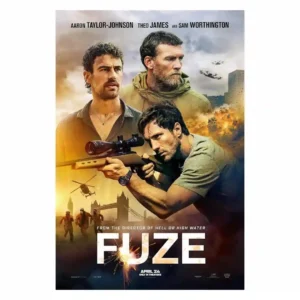

Fuze
Where It Has the Edge
No clear scored advantage over the other product.

Scorata scores summarize analyzed review evidence on a 1–5 scale; they are not laboratory measurements or a simple average of customer star ratings. Feature scores summarize the reviews covering that feature. The overall score averages feature scores within each review, then combines review averages. When both expert and customer evidence are available, those two groups receive equal weight. Products can have different review coverage, so small score gaps do not establish a winner.
Recommendations prioritize important features for the category, with a score of at least 3.5, a gap of at least 0.25 points and at least two supporting reviews per product. Features with widely varying scores or broad connectivity contexts are excluded from recommendations. These safeguards do not establish statistical significance.
Quick verdict
There is not enough consistent, comparable evidence for a clear recommendation. Use the feature details and supporting reviews to weigh the tradeoffs.
There is not enough comparable review evidence to recommend Fuze over the other product.
There is not enough comparable review evidence to recommend Runner over the other product.
No clear scored advantage over the other product.
No clear scored advantage over the other product.
Scores are out of 5. Missing scores mean missing review evidence, not a missing feature.
A handful enjoy the final reveal, but the flashback, additional explanations and sudden comic coda are frequently regarded as unnecessary, anticlimactic or tonally jarring.
The conclusion earns a strong positive note for tying Hank’s personal grief into the mission and landing an emotional payoff.
The elaborate plotting attracts curiosity more reliably than emotional investment. Several viewers finish without caring much about who survives or wins.
For a straightforward action movie, the story lands more heart than many expected, especially around grief, sacrifice, and the child awaiting the organ. A few emotional beats are judged forced or unearned.
A persistent pulse helps sustain urgency for some, while another view is that the score is plodding and fails to lift the action.
The musical score draws a severe complaint for sounding generic and cheaply assembled rather than distinctive or cinematic.
Most characters are defined by jobs, schemes and revelations rather than evolving personalities, leaving some viewers indifferent to their fates. A few welcome the lean approach because it preserves the pace.
Character work is better than the simple premise suggests in several takes, especially Hank’s grief, Ben’s growth, and the villain’s motivation. Others find key subplots thin, undercooked, or too familiar.
The flashback/coda is marred by noticeably dated, cheap-looking CGI.
CGI impressions are split. One take found no obvious cheap CGI or blue-screen work, while another singled out a car-chase moment as distractingly game-like.
The explosions deliver satisfying visual punch and make the occasional big action beat count.
Visual-effects quality is mixed. Some effects are considered good overall, but moving vehicle backgrounds are singled out as needing another pass.
The violence is praised for landing hard without being relentless: sharp gunfights and sudden attacks punctuate the suspense rather than filling every scene.
The brutality is highly divisive. Some action fans enjoy the crunchy, surprisingly hard PG-13 mayhem, while others find it excessive, off-putting, or too intense for younger viewers.
The leads occasionally spark against one another, but the robber crew rarely develops a memorable dynamic or sense of personal history.
Ritchson and Wilson’s odd-couple pairing is one of the most praised elements, with many finding their contrasting styles charming and fun. A few critics see only serviceable chemistry or no spark at all.
Rapid cross-cutting among simultaneous events is one of the film’s clearest technical strengths, though the hyperactive style occasionally feels like a substitute for character depth.
Editing quality is uneven. Precise, readable action earns praise in some places, but choppy cutting and shaky presentation are recurring complaints elsewhere.
Cutting among police, soldiers and thieves usually keeps the scheme understandable, even as it grows. Late twists, withheld motives and backstory dumps sometimes make the narrative feel artificially complicated.
The central mission is simple and easy to follow, which several critics see as a strength. It gives the action a clear engine without requiring a complicated setup.
Explosions, shoot-outs and chases supply bursts of spectacle without overwhelming the heist plot. Their staging divides opinion, with praise for crisp choreography but criticism of lackluster chases.
The fights, chases, crashes, and stunt-heavy mayhem are the movie’s clearest strength for most critics. A minority dislike the shaky presentation or feel the PG-13 staging pulls its punches.
The wartime-bomb discovery doubling as cover for a contemporary heist is a clever fusion of crime-thriller ideas. Its underlying formulas still feel familiar to experienced genre watchers.
The plot is widely considered formulaic, predictable, and built from familiar buddy-action tropes. Better notices still credit a few twists and surprising character choices with keeping it from feeling completely stale.
The ticking bomb, evacuation and hidden robbery generate nerve-jangling suspense for many. Others find the bomb procedures curiously tensionless and the threats too predictable.
The ticking clock and pursuit create strong tension for some viewers, especially once the stakes are established. Others feel the stop-start structure and toothless villains drain urgency.
David Mackenzie earns praise for a controlled, urgent approach that holds several plots together, but his restraint also strikes some as bland and television-like.
Scott Waugh earns strong marks for physical action staging and keeping a modest thriller lively. The main criticism is that some sequences become choppy or the broader structure loses momentum.
The basic evacuation-and-bank-break-in plan has a plausible surface, but mounting coincidences, bomb-handling details and elaborate betrayals push credibility past its limits.
Realism is a weak point overall. Grounded character moments and some convincing action help, but implausible collisions, geography, injuries, and plot logic repeatedly break believability.
The film scratches the itch for an old-school, twisty crime thriller, especially if the elaborate scheme is the main attraction. It is less satisfying for viewers seeking a grittier or more fully realized caper.
As a throwback buddy-action thriller, it generally delivers the chases, fights, banter, and pace fans expect. Its formulaic writing and uneven presentation keep it from winning over everyone.
The clever bomb-as-heist-cover premise gives the script a strong foundation. Thin characterization, escalating coincidences and explanations arriving at the end keep it from convincing everyone.
The script is one of the most divisive areas: some praise smart twists, emotional depth, and surprise, while others call it thin, generic, undercooked, or poorly written.
The playful, criminal swagger earns laughs from some. A sudden burst of end-card and coda comedy feels wildly misplaced to others.
The comedy works best when Wilson’s lighter persona bounces off Ritchson’s seriousness. Reactions range from genuinely funny to forced or underpowered, so the laughs are not equally reliable throughout.
London streets, evacuation shots and sharply photographed action impress some viewers; others see drab color, lifeless compositions and lackluster staging.
The action photography can be immersive and stylish, especially when wide lenses and mobile cameras keep viewers close to the stunts. Shaky camera work also draws complaints when it obscures the choreography.
A smart two-pronged premise drives an often compelling B-movie yarn. Its reliance on sudden betrayals and late backstory makes the overall storytelling less coherent for some.
The simple organ-delivery premise works as a clear action engine, but opinions split on how well the story supports it. Stronger takes enjoy the heart and twists; weaker ones see thin logic and generic construction.
The ticking clock and bursts of violence can heighten stakes, but many struggle to care about characters whose motivations and histories remain underexplored.
The dramatic material divides sharply. Some find genuine sadness and emotional weight, while others see the hospital drama as manufactured and unbelievable.
The roughly 96-minute length makes this a lean watch for most. Some wish it spent longer developing relationships, while others say even its compact duration feels drawn out.
The roughly 90–98 minute runtime is usually considered efficient, brisk, and well judged. One negative take says it feels noticeably longer than its actual length.
The intercut bomb disposal and heist move briskly for most viewers, with minimal downtime. A few find the middle or final stretch sluggish despite the short runtime.
The brisk chase structure and ticking clock keep the movie moving for most viewers, and the roughly 90–100 minute length often helps. Hospital cutaways and extended chatter are the main momentum killers.
The largely grounded procedural mood works until the film veers into cheeky postscript humor and a retrospective flashback. That late switch is a frequent sticking point, though its restraint also has defenders.
Tone is one of the movie’s biggest weaknesses. The mix of brutal action, goofy comedy, melodrama, and sincerity works for some as camp, but often feels uneven or poorly blended.
Functional exposition keeps events moving, but lines are often bland, and the finale explains relationships at an unnecessary length.
Dialogue is a recurring weak spot. It is variously called merely fine, exposition-heavy, not great, or cringey, with banter sometimes becoming too chatty.
Beneath the caper lies a restrained vein of sociopolitical commentary, although it never overpowers the plotting.
Redemption, selflessness, courage, sacrifice, and family give the film more thematic weight than its action setup suggests. One critic finds the redemption arc too bluntly inserted.
The exit music is singled out as a smart closing choice.
Music choices are more often criticized than praised. Covers, soundalikes, out-of-place needle drops, and a Christian-rock closing song all attract complaints of varying severity.
The supporting players are generally capable, with Elham Ehsas singled out as memorable. Many still feel the secondary thieves and police personnel are given negligible material.
The supporting players generally help the movie, with Leila George and Owen Wilson receiving particular praise in different takes. A few critics argue Wilson is underused despite his charm.
The recognizable cast often brings poise and charisma to thin roles, particularly the leads. Complaints focus on uneven accents, stiff delivery and actors left with too little to do.
The cast is usually a strength, with the leads often praised for carrying familiar material through charisma, physicality, and comic timing. Even some negative takes credit the performers more than the script.
Aaron Taylor-Johnson and Theo James frequently impress with intensity and commanding presence. Critics who disagree find their portrayals narrow, showy or undermined by accents and sketchy roles.
Alan Ritchson is widely seen as the movie’s anchor, bringing physical credibility, likability, and dry humor to a familiar action-hero role. Even several mixed reviews say he carries weak material.
Stylized city imagery and a confident opening please some viewers, while others find the daylight London look cheap or lifeless; the CGI-heavy coda is a particular weak spot.
Australia’s sunny coastal locations and action environments are often attractive, with some praise for how the camera uses them. One critic feels the locations could have been showcased far more effectively.
The brisk ride can be enjoyable once, but the thin characterization and heavily reveal-dependent plot make repeat viewing less enticing.
Rewatch interest is limited. Several takes describe it as forgettable, a one-time watch, or something worth revisiting only casually with someone who has not seen it.
An energetic setup and steady supply of reversals make this an enjoyable disposable thriller for many, though several find it flat and forgettable once the initial hook fades.
Most reactions find it fun, watchable, or easy to enjoy despite obvious flaws. The harshest takes call it generic, mildly entertaining, or simply a miss.
Some South African accent work is distracting and uneven, with otherwise solid performances diminished by unconvincing delivery.
The deserted London streets carry eerie quiet that intensifies anticipation of the threatened blast.
The assembled stars are capable of holding attention, but individual roles often seem too slight for the talent; a few choices feel mismatched to the material.
The immigrant family’s encounter with police offers a brief, recognizable depiction of how intimidating official demands can feel.
Some whispered lines and heavy accents are hard to understand without subtitles, making important dialogue frustrating to catch.
The cross-cutting keeps police, military and thieves in play, and some appreciate how peripheral characters become important. Others resent a scattered focus that leaves talented players stranded.
Despite the distributor’s family-friendly reputation, this is not treated as a strong kids’ pick. The violence, deaths, child peril, and language push it toward older teens and adults.
Rather than dictating heroes and villains, the movie lets the characters pursue clashing agendas without overt moralizing.
Using a bomb evacuation as cover for drilling into a bank vault is an imaginative hook, and the logistics are fun to watch. Several viewers question convenient coincidences and convoluted mechanics.
Assessments of the language differ: one calls the film mostly free of foul language, while another warns that foul language runs throughout. Family suitability is therefore treated cautiously.
Themes of kindness, sacrifice, redemption, family, and doing the right thing are usually seen as sincere without becoming overly preachy. One take finds some hospital material sanctimonious.
The hidden links between the bomb, the vault and the players are intriguing and rewarding for viewers who like guessing ahead. Some find the reveals obvious or needlessly tangled.
The pileup of betrayals can be a clever, surprising puzzle or a contrived tangle that feels telegraphed. Those who enjoy successive reversals tend to be much more forgiving of the logic.
The physical stunt work stands out as a major production strength, with one assessment calling it a cut above.
The brief PTSD reference gestures at a potentially interesting personal burden without meaningfully developing it.
The leading men’s shirtless scenes are viewed as relevant to their swagger and restrained rather than exploitative.
This skews older than a typical family action movie. Violence, deaths, child peril, and some language led family-focused assessments to steer younger kids away.
The film is framed as a crowd-pleasing action vehicle, with its brisk runtime, familiar star personas, and absurd mayhem seen as accessible strengths.
The schemers can be charismatic and unpredictably amusing, especially Karalis, but a number of viewers cannot find a sympathetic or memorable person to root for.
Critical reception lands on the positive side overall, with reported Rotten Tomatoes scores in the upper-60s to 70% range. The enthusiasm is real but not unanimous.
The London setting provides scale and a convincing evacuated city for some, but low-budget-looking locations and staging leave others unimpressed.
The evacuated, nearly silent streets make the threat of an explosion feel more pronounced, showing effective restraint rather than continuous noise.
Several critics say the movie is more comfortable as a home or streaming watch than a must-see theatrical event. Its entertainment is solid, but the premium big-screen value is questioned.

A deeply human coming-of-age drama carried by remarkable performances and an honest portrayal of grief. Its gentle optimism moves most viewers, though some find the final stretch hurried or overly...
Pros: Grief portrayal, acting performance
Cons: pacing

Billie Jean King’s magnetic first-person storytelling makes this an exhilarating portrait of athletic courage and social change. The filmmaking follows a familiar documentary structure, and her full tennis résumé gets...
Pros: entertainment value, Biographical coverage
Cons: Narrative structure

Choose this inventive, unsettling documentary for fearless questioning, dark humor, and unpredictable storytelling. Skip it if you want a short, straightforward exposé with definitive answers.
Pros: originality, humor

A singular voice, powerful piano playing and intimate film photography make this concert absorbing for receptive listeners. Its uninterrupted, often similar-sounding songs and lack of background context are an acquired...
Pros: directing quality, cinematography
Cons: pacing, Song variety