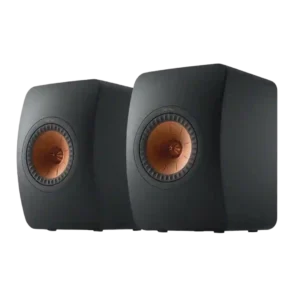
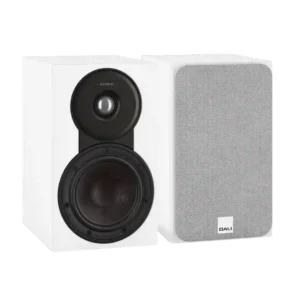
KEF LS50 Meta Passive Bookshelf Speakers
Where It Has the Edge
No clear scored advantage over the other product.

Scorata scores summarize analyzed review evidence on a 1–5 scale; they are not laboratory measurements or a simple average of customer star ratings. Feature scores summarize the reviews covering that feature. The overall score averages feature scores within each review, then combines review averages. When both expert and customer evidence are available, those two groups receive equal weight. Products can have different review coverage, so small score gaps do not establish a winner.
Recommendations prioritize important features for the category, with a score of at least 3.5, a gap of at least 0.25 points and at least two supporting reviews per product. Features with widely varying scores or broad connectivity contexts are excluded from recommendations. These safeguards do not establish statistical significance.
Quick verdict
The available evidence supports the recommendation below, but does not establish an overall winner. Check the remaining features against your priorities.
There is not enough comparable review evidence to recommend KEF LS50 Meta Passive Bookshelf Speakers over the other product.
Choose Dali Sonik 1 for Dynamic headroom and Loudness / maximum volume.
No clear scored advantage over the other product.
Scores are out of 5. Missing scores mean missing review evidence, not a missing feature.
Soundstage height drew one clear limitation, with a reviewer calling height replication unresolved and unremarkable.
The central image can appear slightly above the cabinets, adding believable vertical scale to vocals and instruments.
One measurement-focused review praised off-axis behavior, saying response dropped evenly and smoothly in any direction.
Wide dispersion spreads sound evenly enough that listeners do not need to remain locked into a narrow central seat.
Stereo imaging was one of the strongest consensus areas, with reviewers repeatedly praising precise center focus, spacious staging, and speaker-disappearing placement.
Imaging is a major strength, with sharply located center vocals and convincing three-dimensional placement. The stage can extend beyond the cabinets and remain easy to follow.
Wired connection hardware drew mixed evidence: one reviewer praised the binding posts, while another wanted higher-quality binding posts at the price.
The single-wire binding posts are simple and well made, and most reviewers did not see the lack of bi-wiring as a serious loss. Cable enthusiasts may still prefer a more flexible terminal arrangement.
Dynamic performance was split: some praised scale and dynamics for the size, while others heard limits in drive, loud peaks, or power-range impact.
Fast attacks, crescendos and demanding passages are handled with confidence. The Sonik 1 keeps bass and transients controlled instead of becoming slow or congested.
Reviewers generally found the LS50 Meta capable for moderate listening, but several warned it is not a party-level or deep-output speaker and can be outplayed by larger designs.
Despite their compact cabinets, the Sonik 1 can play with convincing scale and fill small to medium rooms. They stay composed as volume rises rather than sounding strained.
Amplifier matching was a repeated caveat: many amps can drive the LS50 Meta, but reviewers said better, more robust, or carefully matched amplification unlocks its best sound.
The Sonik 1 is less demanding than its sensitivity figures might suggest. Reviewers had excellent results with common 50-60 watt integrated amplifiers and did not find exotic amplification necessary.
High-volume cleanliness was praised, especially compared with the original LS50, though one review still tied stress to very high volume levels.
The Sonik 1 handles loud signals with very little audible distortion, maintaining clarity and control when pushed.
Build and cabinet construction were repeatedly praised as rigid, inert, well-braced, tank-like, and resistant to cabinet resonance.
Construction is generally praised for careful detailing, rigid materials and a premium feel. One first-look reviewer was less impressed by the flat MDF front, squared edges and vinyl treatment.
Detail retrieval was consistently praised, with reviewers hearing microdetails, low-level texture, cleaner midrange/highs, and high-resolution transparency.
Fine details come through clearly, from individual string plucks to dense layers in complex mixes. Reviewers repeatedly hear more articulation than they expect from compact entry-level speakers.
Tonality was mostly described as smooth, neutral, balanced, or refined, but a few reviewers heard recessed mids, metallic character, or revealing behavior with harsh recordings.
The overall balance is rich, natural and full without obvious excess. A mild upper-frequency emphasis keeps it from sounding perfectly neutral in every setup.
Voice reproduction was a major strength across reviews, especially female vocals and midrange clarity, though one technical review criticized some vocal softness from parts choices.
Vocals are consistently singled out for accuracy, presence and emotional immediacy. Voices sound natural, clearly focused and unusually tangible for speakers this size.
Reviewers often described the presentation as coherent, integrated, unboxy, and musically unified, with the cabinet disappearing unusually well.
Even busy recordings remain organized, clear and musically connected. Bass, mids and treble keep pace with one another without the presentation falling apart.
Setup was seen as manageable and flexible, but multiple reviewers advised proper stands, distance from walls, or careful positioning rather than true bookshelf placement.
The Sonik 1 is approachable to connect and works with ordinary passive-speaker systems, but rear-port placement and toe-in can take some experimentation. Once positioned, the sweet spot is easy to enjoy.
Value sentiment leaned strongly positive thanks to performance that competes above its size and price, though some reviewers felt it was merely decent or too expensive.
Performance is widely considered excellent for the money, with detail, bass and refinement that resemble pricier speakers. The main value concern comes from the high US price and strong cheaper alternatives within Dali’s lineup.
The speaker’s design was broadly admired for its enclosure, finish, modern look, and compact visual appeal.
The clean, modern styling blends easily into living rooms and looks premium with the grilles installed. The squared front and exposed design details are more divisive for buyers who prefer a softer, less conspicuous look.
Bass is fast, punchy and far fuller than the cabinet size suggests. Deep-bass listeners should note that ultimate weight is limited and the rear port does much of the low-end work.
One review singled out very low-volume listening as a strength, saying subtle processing and details stayed easy to hear.
Bass was widely considered impressive for the cabinet size, but reviewers repeatedly noted limits in deep bass, movie rumble, and the likely benefit of a subwoofer for full-range use.
Treble is crisp, detailed and spatially revealing, but several reviewers hear a mild forwardness. Amplifier character, toe-in and room placement can make the upper range sound smoother or more prominent.
One reviewer specifically praised the LS50 Meta for capturing fine inflection in actor dialogue, supporting strong dialogue clarity for TV-like use.
One reviewer found the speakers compelling for movies and wanted to revisit them in a 5.1 system, suggesting promising home theater integration with caveats.
Dali includes useful rubber feet for shelf and wall placement, but the package is otherwise sparse and does not include speaker cables.
Small rooms, bedrooms, offices and compact living spaces are ideal matches. The speakers can also fill medium rooms, though desktop near-field use may feel larger than necessary.
Across vinyl, CDs and streaming, the Sonik 1 sounds engaging, versatile and musically expressive. It handles delicate vocals, dense rock and rhythmic material with equal confidence.
Warranty support may vary by market, and one reviewer cautions that genuine repair parts could be harder to obtain locally.
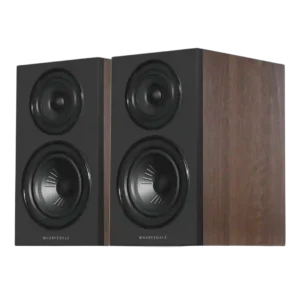
Choose the Diamond 12.1i for balanced, punchy hi-fi sound, strong bass and premium build at a budget price. Skip it if you mostly listen very quietly, need shallow-shelf placement, or...
Pros: Design and aesthetics, Music performance
Cons: Low-volume performance
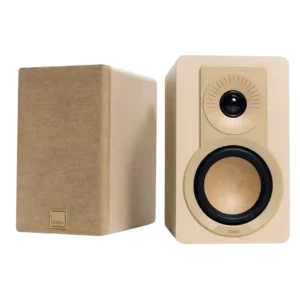
Choose the Kupid for lively, detailed sound in a desk or small-room system where compact size matters. Skip it if you need deep bass, huge-room output, or want to pair...
Pros: Bass performance, Value for money
Cons: Amplifier power requirements, Break-in period

Choose these if you want detailed, room-filling sound, excellent connectivity, and premium styling in a compact powered pair. Skip them if you need effortless remote control, native streaming services, HDMI...
Pros: Overall product quality, Overall sound quality
Cons: Remote control usability, Control button responsiveness

Choose the Coda W if you want big, precise stereo sound, strong bass, HDMI ARC and simple turntable/desktop connectivity without a separates stack. Skip it if built-in Wi-Fi/multi-room streaming, compact...
Pros: Stereo imaging accuracy, Aesthetic design / Finish options
Cons: Smart features, EQ customization