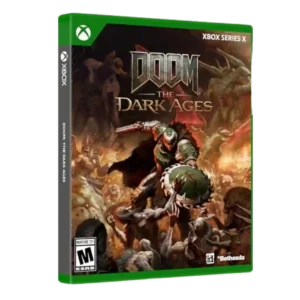
Doom: The Dark Ages
Where It Has the Edge
No clear scored advantage over the other product.

Scorata scores summarize analyzed review evidence on a 1–5 scale; they are not laboratory measurements or a simple average of customer star ratings. Feature scores summarize the reviews covering that feature. The overall score averages feature scores within each review, then combines review averages. When both expert and customer evidence are available, those two groups receive equal weight. Products can have different review coverage, so small score gaps do not establish a winner.
Recommendations prioritize important features for the category, with a score of at least 3.5, a gap of at least 0.25 points and at least two supporting reviews per product. Features with widely varying scores or broad connectivity contexts are excluded from recommendations. These safeguards do not establish statistical significance.
Quick verdict
The available evidence supports the recommendation below, but does not establish an overall winner. Check the remaining features against your priorities.
There is not enough comparable review evidence to recommend Doom: The Dark Ages over the other product.
Choose CONTROL Resonant for writing quality and replay value.
No clear scored advantage over the other product.
Scores are out of 5. Missing scores mean missing review evidence, not a missing feature.
Value for money was criticized in the supporting review for the price and perceived lack of content.
Positive value comments point to the substantial campaign, side content, replay potential, and localized pricing, making the package feel generous to players already invested in its style.
Replay value was mixed, with secrets and challenges helping, but some reviewers doubting long-term appeal or completionist-heavy longevity.
Build experimentation, postgame exploration, missed side content, Resonant cycles, and New Game Plus-style interest give enthusiastic players clear reasons to return after the credits.
Immersion was praised in the supporting review for subtle audio and environmental feedback.
One critic found repeated combat and progression interruptions strong enough to pull attention away from the world and story, reducing immersion despite the striking setting.
Writing quality was mostly criticized for dull cutscenes, cliched dialogue and disjointed storytelling.
The writing is strongest when it balances human vulnerability, bureaucratic absurdity, and strange lore. Some dialogue and thematic beats are less elegant, but the overall character and world writing earns substantial praise.
Side character depth was usually criticized, with reviewers calling supporting characters forgettable, unmemorable or impossible to care about.
Zoe is the standout supporting character, with her radio banter and evolving bond with Dylan giving the journey warmth. Some sources find that relationship rushed or uneven, but the supporting cast is usually viewed positively.
Resource balance was split between praise for easier ammo sustain and criticism that ammo pressure became irrelevant.
Upgrade materials are criticized for being overcomplicated and awkwardly distributed, making some desired upgrades harder to complete than the rest of the progression system suggests they should be.
Facial animations received a positive single assessment as solid.
Facial work is one of the visual weak spots, with some expressions looking stiff or strange compared with the quality of the environments and effects.
Bug frequency was mixed: some saw glitches or falling-through-world problems, while another reported no bugs.
Technical bugs are not portrayed as constant, but the glitches that do appear can be disruptive, including enemies getting stuck, traversal oddities, and occasional postgame or loading issues.
The supporting review found the vehicle controls easy to grasp quickly, reflecting a low-friction learning curve.
The opening can be daunting because movement, builds, enemy pressure, and RPG systems arrive before the combat fully blossoms. Once more tools unlock, the learning curve becomes far more rewarding.
Animation quality had a mixed single assessment, criticizing reduced or less refined glory-kill animations.
Movement and combat animation generally look polished and energetic, with finishers and traversal selling Dylan's speed and force. A few rough character-animation moments keep it from being uniformly pristine.
Environmental detail was strongly praised for vistas, lighting and rich scene composition.
Manhattan is packed with strange signage, abandoned interiors, warped streets, and small physical details that reinforce the setting, though some sewers, warehouses, and city blocks repeat too visibly.
Reviewers found the main loop engaging when the shield, parry and resource flow clicked, but some felt it became simpler or repetitive over time.
The combat-exploration loop can be exciting once a build comes together, but repetition is a persistent concern. Several critics felt the same encounter rhythm and combo patterns wore thin well before the campaign ended.
Narrative quality was highly divided, ranging from Doom’s strongest story to self-serious, confusing, bland or unnecessary storytelling.
The story is broadly praised for Dylan's redemption arc, surreal set pieces, and powerful character moments, but the central plot is less consistently loved. Some critics find the overarching tale, finale, or emotional transitions weaker than its best individual scenes.
Pacing was split: some liked the measured rollout and breathless campaign, while others disliked the ending, reduced momentum or open-map slowdown.
Pacing is a recurring weakness: the opening can be slow, progression sometimes stalls the story, and several late sections drag. Other sources find the game accelerates impressively once it opens up.
Enemy variety was generally positive, with many demons and variants noted, though one reviewer found some repetition.
The roster has memorable supernatural designs and multiple factions, but ordinary encounters can still feel repetitive. Reused archetypes and endless smaller enemies weaken the sense of variety over time.
Art direction was generally praised for techno-medieval style and fresh locations, though one reviewer found the direction less Doom-like.
The warped Manhattan, Patterning effects, impossible architecture, and surreal set pieces are among the game's clearest triumphs. Its visual identity is repeatedly described as bold, gorgeous, and unlike almost anything else in the genre.
Weapon balance was broadly praised for useful, varied weapons, though some reviewers felt guns were simplified or overshadowed by the shield.
Weapon forms offer different rhythms and build possibilities, but critics disagree on how meaningfully those choices change combat. Some forms feel expressive, while others seem like variations on the same basic loop.
Haptic feedback integration had a mixed single assessment, with DualSense features noted but controller-speaker output called obnoxious.
DualSense feedback is used effectively to reinforce powers and supernatural moments, adding tactile texture without being treated as a defining feature.
Polish was praised in the two supporting reviews as polished and technically clean.
The game generally feels polished for its scale, but scattered technical hiccups, stuck enemies, audio cuts, and other small scuffs prevent it from feeling immaculate.
Combat drew the strongest agreement, with most reviewers praising shield-led, melee-heavy gunfights, while a minority felt the defensive shift weakened Doom’s flow.
Combat is responsive, aggressive, and capable of spectacular build-driven highs, but opinion splits sharply on its staying power. The strongest criticism targets repetitive strings, damage-spongy enemies, and a system that can feel shallower over a long campaign.
Content variety was split: multiple play styles and set pieces added variety, but gimmicky diversions hurt some reviewers’ impressions.
Side stories, altered objects, puzzles, bosses, and strange one-off scenarios keep the world varied, though a layer of repeated activities and combat encounters can feel like busywork.
Frame rate stability was often praised on tested platforms, with one review reporting unstable PS5 performance.
Performance is generally smooth on stronger hardware and PS5 Pro, while base-console stress scenes and Steam Deck play can show dips or compromises. The overall picture is solid rather than flawless.
Movement was divisive: several reviewers liked the heavy but mobile feel, while others missed the faster, more acrobatic style of earlier entries.
Traversal is one of the game's most consistently celebrated strengths. Double jumps, air dashes, hovering, grappling, and gravity shifting make moving through Manhattan fast, expressive, and frequently exhilarating.
Upgrade systems were mixed: some liked streamlined and useful upgrades, while others wanted more depth or disliked passive-feeling progression.
Upgrades provide plenty of specialization on paper, but restrictive respecs, material requirements, and number-focused improvements can make the system feel cumbersome or less transformative than expected.
Difficulty balance varied widely by reviewer, with praise for parry generosity and sliders but criticism that the game could feel too easy or unfair.
The default difficulty is one of the most disputed elements, especially in the opening hours and against tanky late bosses. Better builds and extensive Assist Mode settings help, but progression walls can still feel abrupt.
Atmosphere was praised in the supporting review for dark fantasy locations with a Demon’s Souls-like feel.
The sequel keeps Control's uncanny blend of cosmic dread, bureaucratic absurdity, and offbeat humor alive across Manhattan. A minority feel the broader city setting dilutes some of the Oldest House's concentrated unease.
Lore depth was praised where codex material and broader Doom world-building were assessed directly.
Documents, recordings, side stories, and environmental details keep the FBC mythology rich, with the best optional material adding texture to Manhattan and the broader paranatural world.
Innovation was broadly praised for reinventing Doom’s formula, though some reviewers saw the simplification as a tradeoff.
The sequel earns broad credit for refusing to repeat the original: its melee focus, warped open zones, gravity traversal, and structural experimentation feel unusually bold for a major sequel.
Mission variety was praised for wider spaces, linear sections and open objectives that changed pace.
The best missions keep escalating into strange, memorable scenarios, giving the campaign a strong sense of surprise beyond standard combat objectives.
Onboarding was praised for welcoming new players and easing them into the revised systems.
Newcomers get helpful recap material and can follow the core story without exhaustive Remedyverse knowledge, though the early combat and build systems are not always explained as clearly as they could be.
Platforming was judged more limited than earlier modern Doom games in the one review that assessed it.
Precision platforming becomes frustrating when gravity changes, tight trajectories, or awkward geometry demand more exact movement than the traversal system comfortably provides.
The shield saw and revised mechanics were often praised as a major new layer, though a few reviewers found the system one-note or overly dependent on the shield.
The strongest mechanical moments come from combining traversal, gravity shifts, powers, combat, and environmental ideas in ways that feel purpose-built for this world.
Exploration and secrets were commonly praised as rewarding, though some reviewers disliked backtracking or losing the old teleport/backtrack convenience.
Exploration is a major draw thanks to vertical movement, hidden routes, bespoke side stories, and dense environmental storytelling. Confusing entrances and map limitations occasionally turn discovery into circling the same blocks.
Faithfulness to franchise was mixed: some reviewers felt it still felt like Doom, while others called it the least Doom-like modern entry.
Despite changing protagonist, setting, and combat style, the sequel usually retains Control's strange humor, paranormal logic, lore, and visual identity. A smaller group feels the open-world structure leaves too much of the original's magic behind.
Camera behavior was criticized in the supporting review for a baffling dragon-control scheme.
The camera and targeting can struggle when arenas get crowded or fights move vertically. Mis-targeted attacks and awkward framing around large or airborne enemies are recurring frustrations.
Fun factor was strongly positive overall, even in mixed reviews, with reviewers repeatedly calling the campaign fun, rewarding, or charismatic.
Most sources found the game highly enjoyable once its systems open up, especially when traversal, powers, and side quests click together. A few harsher takes found the repetitive combat too intrusive to sustain that fun.
Accessibility options were consistently praised, especially difficulty sliders, color customization and tuning tools, with minor caveats around clarity or audio-cue gaps.
Assist Mode is a major strength, with granular sliders and presets that can soften damage, dodge timing, resource pressure, and other difficulty spikes. It gives story-focused players unusually fine control over the experience.
Graphics quality was consistently strong, with reviewers praising models, crisp visuals and cutting-edge presentation.
The game is widely praised as a visual showcase, especially for lighting, surreal geometry, and dense effects. Lower-end modes can introduce softness, artifacting, or weaker lighting that undercuts that presentation.
Mission design was praised in the supporting review for making the core demon-slaying missions feel exciting.
Routine world events and chore-like objectives can clash with urgent story beats, making some mission structure feel like open-world padding rather than purposeful adventure.
Level design received mixed praise for larger arenas, secrets and vistas, but some reviewers found open spaces flatter, bland or less tightly paced.
Level design is a standout, from folding streets and gravity-shifted city blocks to stranger interior spaces that turn perspective itself into a traversal and puzzle mechanic.
Sound design was generally strong, with praise for heavy feedback and crunchy effects, though one reviewer found effects too soft.
Hits, metal transformations, spatial ambience, and supernatural effects are repeatedly praised for giving combat and exploration weight. The audio mix helps sell both spectacle and unease.
Semi-open design was praised for broader spaces, optional content and player choice in objectives.
The zoned Manhattan is admired for feeling hand-crafted, vertical, and distinctly Remedy rather than like a generic checklist map. Still, some critics see bloat, repeated activities, or a loss of the first game's tighter spatial focus.
Boss design was more negative than positive, with reviewers citing missed opportunities, underwhelming finales and recycled boss ideas despite one positive mention.
Bosses are visually memorable but mechanically divisive. Some fights are inventive spectacles, while many others are criticized for huge health pools, limited move sets, and late-game battles that turn into endurance tests.
Map and navigation design drew complaints about navigation difficulty, excessive map checking, or secrets already revealed on the map.
Navigation is one of the most consistent pain points. The flat map, unclear entrances, multi-level spaces, and gravity-bent geometry can leave players lost even when the world itself is visually compelling.
Puzzle design was lightly covered, with reviewers describing simple exploration puzzles as enjoyable but rarely demanding.
Puzzles can be clever and visually inventive, especially when gravity and perspective are involved, but they also produce some of the game's most confusing or progress-stalling moments.
Menu usability was mixed, with one reviewer criticizing melee switching and another wanting clearer difficulty-slider explanations.
One source specifically criticizes loadout management for making important changes more cumbersome than they need to be during an action-heavy game.
Controls were generally praised for responsive shooting and melee feel, though one reviewer criticized slow weapon switching.
Inputs are consistently praised for immediacy: attacks, dodges, air movement, and cancels respond quickly enough to support the game's fast, aggressive action.
The protagonist’s power fantasy was praised in the supporting review as strongly delivered.
Dylan is deliberately awkward and damaged, and most sources warm to his vulnerability, guilt, and dry personality. A vocal minority strongly dislike his writing, voice, or demeanor and would rather have stayed with Jesse.
Soundtrack quality was divided: several reviewers loved the metal score, while others found it less memorable or a downgrade from earlier entries.
Music and licensed tracks remain strong and often memorable, but some critics miss a single transcendent set piece on the level of Remedy's most iconic musical moments.
Performance optimization was mostly positive, especially on capable hardware, though some reviews noted high requirements or drops.
Technical performance is usually strong, particularly on high-end PC hardware and PS5 Pro, with ambitious effects running smoothly in many accounts. Some platforms and heavy scenes still show frame pacing, image-quality, or optimization compromises.
Enemy behavior draws a sharp complaint for leaning on hectic pressure rather than convincing intelligence, making some fights feel artificially chaotic.
Dylan's growth from damaged FBC test subject to a more self-directed person lands strongly, and his evolving relationships give the story a clear emotional spine.
Documents, recordings, hidden reports, and other collectibles make exploration feel worthwhile by feeding the world's mysteries rather than functioning as empty checklist filler.
Crash stability was mixed across platforms and review periods, from flawless stability to dashboard crashes and freezes.
Dialogue is uneven: the best exchanges give Dylan and Zoe warmth and personality, while snarky banter and some overt thematic writing can feel forced.
Mech/vehicle-style sections were mixed to negative overall: some enjoyed the spectacle and scale, but many found them shallow, repetitive or underpowered.
Dylan's guilt, childhood trauma, bond with Jesse, and search for redemption produce some of the game's most affecting scenes. Several critics describe moments that hit harder emotionally than they expected from a Control sequel.
The postgame gives completion-minded players room to keep exploring, finish side stories, refine builds, and chase remaining discoveries after the main campaign.
Requiring physical fast-travel points can be inconvenient, but it also nudges players to stay in the world and stumble into side content rather than teleporting past it.
Dragon and flying sections were the most repeated weak point, ranging from acceptable spectacle to dull, half-baked or mechanically thin segments.
The roughly 25-to-40-plus-hour scale gives the world room to breathe, but the campaign can outlast the combat system's depth. Late repetition makes the length feel excessive for some players.
One critical take finds progression too dependent on repeating activities and combat to keep pace with enemy scaling, turning advancement into unwanted grind.
The strangest spaces still generate strong cosmic-horror unease, using impossible geometry, isolation, and paranormal imagery to make exploration feel unsettling.
Loot and world rewards can make exploration satisfying, especially when discoveries feed upgrades, but some reward placement and generic material boxes feel less thoughtfully integrated.
Even skeptical critics repeatedly call the game singular. Its collision of character-action combat, non-Euclidean Manhattan, paranormal comedy, and art-house spectacle gives it an identity few other open-world games resemble.
Zone leveling, skill points, powers, and build choices often make exploration feel purposeful and Dylan's growth tangible. Criticism focuses on opaque power-level tracking, restrictive respecs, and progression that can become busywork.
Sandbox freedom was praised for giving players meaningful freedom in larger maps and objective order.
The skill tree supports multiple builds and can be satisfying to optimize, yet several critics find its apparent depth overstated or its upgrades less transformative than the sprawling layout suggests.
Tutorial delivery was criticized in the supporting review for interrupting pacing despite gradual mechanic introduction.
Reality warping, particles, reflections, shadows, and large combat effects create spectacular scenes, though the sheer visual noise can occasionally hurt clarity or expose platform-specific image issues.
Physics, destructible scenery, telekinesis, and gravity manipulation make the environment feel like part of the action rather than a static backdrop.
The Portuguese localization is received positively overall, including the dub, but the reviewed build had enough missing or inconsistent localized lines to keep it from being fully seamless.
PS5 Pro receives especially strong praise for ray-traced reflections, shadows, reconstruction quality, and a cleaner presentation, while Steam Deck support is notably less convincing.
Side quests are a major strength, often delivering the funniest, strangest, and most memorable stories in the game. A smaller layer of repeated tasks and weaker rewards keeps the optional content from being uniformly excellent.
Progress and power-level information can be buried too deeply in menus, making it harder than necessary to understand whether upgrades are meaningfully changing Dylan's strength.
The FBC's bureaucracy, Manhattan's altered neighborhoods, scattered documents, and small survivor stories deepen the setting at nearly every turn. World-building remains one of the sequel's most dependable strengths.
The cast is usually praised for grounding the strange material, especially the supporting performances, but Dylan's delivery is unusually divisive and receives a few pointed complaints.

Best for fluid traversal, rewarding exploration, striking art, and forgiving quality-of-life features. Skip it if you want deep combat, radical genre innovation, or consistently demanding bosses.
Pros: difficulty balance, boss design
Cons: innovation, sandbox freedom

Best for superb combat, inventive builds, and richly voiced characters. Skip it if repeated runs, resource gathering, or visually busy battles outweigh the appeal of steady progress.
Pros: overall quality, combat system
Cons: pacing, grind level

Good if you want a beautiful, demanding survival sandbox built around exploration, building, progression, and memorable co-op. Skip it if long resource runs, harsh death recovery, and deliberate pacing sound...
Pros: town-building system, exploration quality
Cons: grind level, fast travel convenience

Leonida is a breathtakingly alive crime sandbox with memorable protagonists, spectacular heists, and extraordinary detail. The tradeoff is a 30 fps ceiling, occasional control awkwardness, and some progression friction.
Pros: immersion, graphics quality
Cons: grind level, controls responsiveness