If you want better camera behavior
Choose Shinobi: Art of Vengeance. It scores 5.0 vs 1.5 for camera behavior, with a 4.4 overall score.

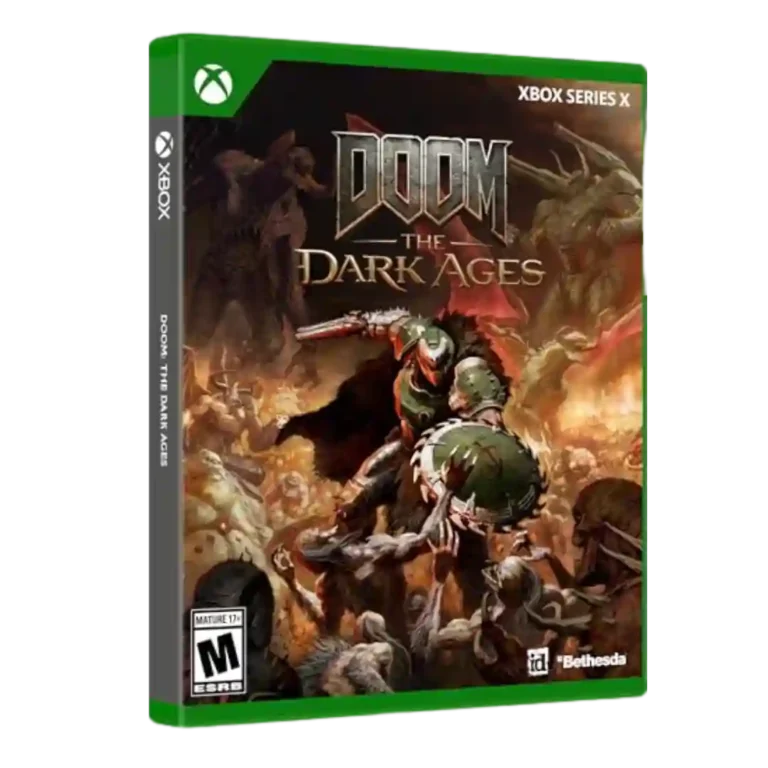
Choose Doom: The Dark Ages if you want a heavier, shield-driven Doom with strong gunplay, secrets, visuals and difficulty options. Skip it if you need Eternal-style mobility, memorable storytelling, or consistently strong mech, dragon and boss sections.
Best for players who want a heavier, more grounded Doom focused on shield parries, melee pressure, big arenas, secrets, and flexible difficulty tuning. It also suits newcomers who found Doom Eternal too demanding.
Not for players who mainly want Doom Eternal’s high-mobility acrobatics, minimal cutscenes, or deep weapon-switching complexity. It is also a weaker fit for anyone sensitive to repetitive vehicle sections or thin story characters.
Doom: The Dark Ages lands as a bold, mostly successful reinvention of modern Doom. Reviewers repeatedly praise the shield saw, parry-heavy combat, crunchy weapons, generous accessibility sliders, secrets, and strong visual presentation. The tradeoff is clear: the heavier, grounded design lowers the mobility and mechanical chaos some Eternal fans loved, while the more cinematic story, open maps, bosses, mech missions, and dragon sections divide opinion. Its best moments make the Slayer feel powerful and tactical, but its weaker diversions can feel shallow or repetitive. Overall, the evidence points to a highly fun shooter with standout combat systems and presentation, held back by uneven pacing and supporting content.
Compared with other Video Games, this product is above average in polish, mission design, weapon balance, near average in fun factor, exploration quality, below average in value for money, writing quality, side character depth.
| Attribute | This product | Category average | Difference |
|---|---|---|---|
| value for money | 1.5 | 3.8 | -2.3 |
| writing quality | 1.8 | 3.6 | -1.8 |
| side character depth | 2.0 | 3.7 | -1.7 |
| flying mechanics | 2.5 | 3.8 | -1.2 |
| polish | 5.0 | 3.5 | +1.5 |
| boss design | 2.3 | 3.7 | -1.4 |
| camera behavior | 1.5 | 2.9 | -1.4 |
| driving mechanics | 2.9 | 3.9 | -1.0 |
Choose Shinobi: Art of Vengeance. It scores 5.0 vs 1.5 for camera behavior, with a 4.4 overall score.
Choose South of Midnight. It scores 4.8 vs 3.3 for crash stability, with a 3.9 overall score.
Choose Marvel’s Wolverine. It scores 5.0 vs 4.6 for accessibility options, with a 3.7 overall score.
Choose Ghost of Yōtei. It scores 4.8 vs 2.4 for map and navigation design, with a 4.4 overall score.
Products reviewers directly compared with this model, grouped into quick takeaways.
Yes. Most reviewers still found the core shooting, shield parries, melee pressure, and demon-slaying loop very fun, even when they missed Eternal’s speed.
The shield saw is the most praised new feature. Reviewers liked its blocking, parrying, throwing, armor-shattering, and mobility uses, though a few felt it dominated the sandbox too much.
They are the most mixed parts of the game. Some reviewers enjoyed the spectacle and pacing break, but many found the dragon and mech mechanics shallow, repetitive, or weaker than normal combat.
The story is more prominent than in some earlier Doom games, but review sentiment is split. A few reviewers liked the stronger cinematic focus, while many found the plot, dialogue, or side characters forgettable.
Reviewers strongly praised the customization suite, including sliders for damage, parry timing, game speed, and colors. A few wanted clearer explanations or more audio accessibility.
Most reviewers praised visuals and performance, especially on strong hardware or consoles, but a few reported crashes, frame drops, glitches, or pre-launch stability concerns.
These are a few of the reviews included in our analysis.

Best for fluid traversal, rewarding exploration, striking art, and forgiving quality-of-life features. Skip it if you want deep combat, radical genre innovation, or consistently demanding bosses.
Pros: difficulty balance, boss design
Cons: innovation, sandbox freedom

Good if you want fast, tactical roguelite combat with huge progression depth, striking art, and standout music. Skip it if repetition, resource micromanagement, or a less emotionally satisfying sequel story...
Pros: combat system, progression system
Cons: originality

Good if you want a beautiful, demanding survival sandbox built around exploration, building, progression, and memorable co-op. Skip it if long resource runs, harsh death recovery, and deliberate pacing sound...
Pros: town-building system, exploration quality
Cons: grind level, fast travel convenience

Best for joyful destruction, dense exploration, and a charming DK-Pauline adventure. Skip it if camera quirks, frame-rate dips, easy bosses, or premium Switch 2 pricing are dealbreakers.
Pros: fun factor, world interactivity
Cons: frame rate stability, boss design