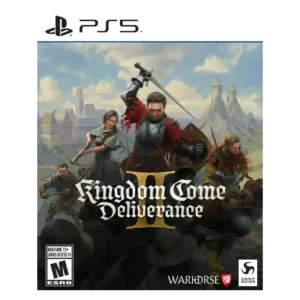
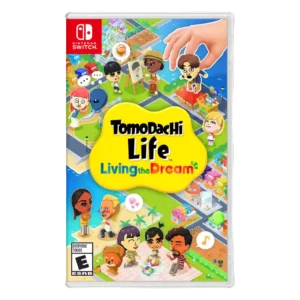
Compare Kingdom Come: Deliverance II vs Tomodachi Life: Living the Dream

Kingdom Come: Deliverance II

Kingdom Come: Deliverance II

Overall score 4.3 / 5

Based on 20 scored reviews

vs
Tomodachi Life: Living the Dream

Tomodachi Life: Living the Dream

Overall score 3.9 / 5

Based on 33 scored reviews

How we score

Scorata scores summarize analyzed review evidence on a 1–5 scale; they are not laboratory measurements or a simple average of customer star ratings. Feature scores summarize the reviews covering that feature. The overall score averages feature scores within each review, then combines review averages. When both expert and customer evidence are available, those two groups receive equal weight. Products can have different review coverage, so small score gaps do not establish a winner.

Recommendations prioritize important features for the category, with a score of at least 3.5, a gap of at least 0.25 points and at least two supporting reviews per product. Features with widely varying scores or broad connectivity contexts are excluded from recommendations. These safeguards do not establish statistical significance.

Quick verdict

What each product is best for

The review evidence points to a tradeoff: gameplay mechanics and content variety versus learning curve and tutorial quality. Choose according to which strengths matter more to you; the overall score alone does not settle that choice.

Choose Kingdom Come: Deliverance II for gameplay mechanics and content variety.

Choose Tomodachi Life: Living the Dream for learning curve and tutorial quality.

Why these recommendations?

Kingdom Come: Deliverance II

Where It Has the Edge

  • gameplay mechanics is 4.7 vs 3.0. Reviewers repeatedly framed the systems-heavy design as a major strength, praising how mechanics connect to role-playing, dialogue, world...
  • content variety is 4.7 vs 3.2. Reviewers praised the breadth of activities, quests, and post-launch additions, with many describing a large and varied set...
  • world interactivity is 4.8 vs 3.5. Reviewers consistently praised the reactive crime, reputation, NPC, and quest systems that made the world feel alive and...

Tomodachi Life: Living the Dream

Where It Has the Edge

  • learning curve is 4.7 vs 2.9. The game is widely framed as easy to pick up, approachable, and accessible in play style rather than...
  • tutorial quality is 3.8 vs 2.9. Tutorial impressions are mostly positive for basic play, though one reviewer felt the creation tools could use more...
Kingdom Come: Deliverance II 4.3 overall score
Tomodachi Life: Living the Dream 3.9 overall score

Compare features

Scores are out of 5. Missing scores mean missing review evidence, not a missing feature.

Scored on both products

Other features

Family friendliness
Kingdom Come: Deliverance II
2.0

Family friendliness was limited by repeated profanity, sexual content, and depictions of women that one reviewer found objectifying.

Tomodachi Life: Living the Dream
4.2

Family friendliness is mostly positive because the game is easy to understand and enjoyable for family watching or younger players, despite caveats around content settings.

Learning curve
Kingdom Come: Deliverance II
2.9

The learning curve was repeatedly described as steep, slow, and friction-heavy, rewarding patience but likely turning some players away.

Tomodachi Life: Living the Dream
4.7

The game is widely framed as easy to pick up, approachable, and accessible in play style rather than demanding or skill-heavy.

Load times
Kingdom Come: Deliverance II
2.8

Load times were criticized by one reviewer as long enough to worsen stealth retries and experimentation.

Tomodachi Life: Living the Dream
4.5

Load times are praised as minimal or nearly absent in the reviews that discuss them.

Gameplay mechanics
Kingdom Come: Deliverance II
4.7

Reviewers repeatedly framed the systems-heavy design as a major strength, praising how mechanics connect to role-playing, dialogue, world simulation, and player expression.

Tomodachi Life: Living the Dream
3.0

Reviewers consistently describe the active play as light, simple, and often passive, with minigames and requests adding texture but not deep mechanical substance.

Content variety
Kingdom Come: Deliverance II
4.7

Reviewers praised the breadth of activities, quests, and post-launch additions, with many describing a large and varied set of things to do.

Tomodachi Life: Living the Dream
3.2

Opinions are mixed: many praise surprising events and plentiful unlocks, but repetition, missing activities, and finite scenarios are common concerns.

Grind level
Kingdom Come: Deliverance II
3.5

The game was not seen as a pure grind, but reviewers still emphasized the effort and repetition needed to gain traction.

Tomodachi Life: Living the Dream
5.0

One reviewer specifically praises the relaxed progression for having no grind.

World interactivity
Kingdom Come: Deliverance II
4.8

Reviewers consistently praised the reactive crime, reputation, NPC, and quest systems that made the world feel alive and responsive.

Tomodachi Life: Living the Dream
3.5

Custom items and island objects can feed into Mii behavior and scenarios, but several reviewers note that some interactions remain shallow or limited.

Facial animations
Kingdom Come: Deliverance II
3.8

Facial animation feedback was mixed: one reviewer noted lifeless dialogue faces, while another praised key character animations.

Tomodachi Life: Living the Dream
2.5

One reviewer criticizes face paint for sometimes blocking traditional facial expressions, limiting expressiveness.

AI behavior
Kingdom Come: Deliverance II
4.7

AI and NPC behavior were praised for believable reactions, routines, crime responses, and increased sophistication over the first game.

Tomodachi Life: Living the Dream
3.4

The Miis' semi-autonomous behavior creates enjoyable unpredictability, though reviewers also identify repeated patterns and limited spontaneity over time.

Faithfulness to franchise
Kingdom Come: Deliverance II
4.7

Reviewers generally agreed the sequel stays true to the original while improving its systems, scope, and accessibility.

Tomodachi Life: Living the Dream
3.6

Several reviewers see it as a fitting sequel or upgrade, though others feel missing features and sharing cuts weaken its connection to earlier entries.

Economy and resource balance
Kingdom Come: Deliverance II
2.8

The early economy was described as restrictive, especially when selling damaged or stolen goods with limited vendor money.

Tomodachi Life: Living the Dream
3.8

Economy impressions are mildly mixed, with one reviewer saying cash was never a problem and another joking about surprisingly high food prices.

Pacing
Kingdom Come: Deliverance II
3.7

Pacing opinions varied: some praised the sustained momentum, while others complained about indulgent cutscenes or late-game pacing issues.

Tomodachi Life: Living the Dream
2.9

Pacing is divisive: the relaxed daily rhythm suits short bursts, but longer sessions can become slow, empty, or repetitive.

Tutorial quality
Kingdom Come: Deliverance II
2.9

Tutorial quality was mixed, with one reviewer calling it decent while others criticized dense text screens and poor explanations.

Tomodachi Life: Living the Dream
3.8

Tutorial impressions are mostly positive for basic play, though one reviewer felt the creation tools could use more guidance after the quick introduction.

Narrative quality
Kingdom Come: Deliverance II
4.7

Narrative quality was a major strength, with reviewers praising the historical saga, main quest, character arcs, and cinematic ambition.

Tomodachi Life: Living the Dream
3.9

The story is mostly emergent and player-authored, producing memorable relationship drama for some while feeling barebones to others.

Core gameplay loop
Kingdom Come: Deliverance II
3.2

One reviewer found the loop rewarding but volatile, with strong highs offset by repeated frustration and setbacks.

Tomodachi Life: Living the Dream
4.0

The loop of checking in, helping Miis, collecting happiness, and unlocking island features is widely seen as relaxed and satisfying, though best in short sessions.

Progression system
Kingdom Come: Deliverance II
4.6

Progression was widely praised for turning early friction into rewarding growth through skills, perks, equipment, and player learning.

Tomodachi Life: Living the Dream
3.9

The Wishing Fountain, island ranks, and Mii levels are often rewarding, but some reviewers found later unlocks generic or less motivating.

Emotional impact
Kingdom Come: Deliverance II
4.9

Reviewers described the story as memorable and emotionally powerful, including scenes that brought strong lasting reactions.

Tomodachi Life: Living the Dream
4.3

Some reviewers grew attached to their islands and Miis, describing the game as smile-inducing, endearing, and easy to return to.

Character roster
Kingdom Come: Deliverance II
4.5

The cast was praised for memorable personalities, humor, and a strong sense of history.

Tomodachi Life: Living the Dream
4.0

The 70-Mii limit is generally treated as sufficient by reviewers who discussed it, with one saying even 20 felt like enough.

Innovation
Kingdom Come: Deliverance II
4.5

One reviewer praised the scale of improvement as something other studios rarely achieve.

Tomodachi Life: Living the Dream
4.0

One review frames the sequel as a bold evolution, expanding the series with a more connected world, deeper systems, and player-created content.

Exploration quality
Kingdom Come: Deliverance II
4.4

Exploration was praised for beautiful spaces, meaningful discoveries, and a strong adventuring feel, though harsh systems made some travel demanding.

Tomodachi Life: Living the Dream
4.0

One review praises the shift from menu screens to a connected island where events unfold more organically as players move through the space.

HUD clarity
Kingdom Come: Deliverance II
4.4

The adaptive HUD was praised for hiding unnecessary elements and improving immersion when information was not relevant.

Tomodachi Life: Living the Dream
4.0

One review highlights the relationship chart as a helpful on-screen aid for understanding nearby Mii connections.

Fun factor
Kingdom Come: Deliverance II
4.9

Several reviewers found the game highly entertaining, addictive, and rewarding once its demanding systems clicked.

Tomodachi Life: Living the Dream
4.5

The strongest agreement is that the game is funny, weird, charming, and often laugh-out-loud enjoyable when its absurd systems click.

Onboarding experience
Kingdom Come: Deliverance II
3.7

Onboarding divided reviewers: returning and new-player recaps helped, but some found the opening overloaded or blunt.

Tomodachi Life: Living the Dream
4.0

One review notes that new features begin unlocking quickly enough to keep the early setup from dragging.

Character development
Kingdom Come: Deliverance II
4.7

Henry and Hans received strong praise for their evolving relationship and character arcs, with Henry’s trauma and growth adding stakes.

Tomodachi Life: Living the Dream
4.4

Reviewers often felt Miis became memorable through quirks, relationships, and player input, although one noted that development can be slow.

Immersion
Kingdom Come: Deliverance II
4.8

Immersion was one of the clearest strengths, with reviewers repeatedly describing the world, systems, and presentation as absorbing.

Tomodachi Life: Living the Dream
4.5

Reviewers who scored immersion felt the island tracks daily life well enough to feel like a living virtual world.

Atmosphere
Kingdom Come: Deliverance II
4.8

Atmosphere was praised alongside world-building, especially in cities, music, and historically grounded locations.

Tomodachi Life: Living the Dream
4.5

Atmosphere is praised where discussed, especially for the bright, silly, offbeat mood created by the presentation and sound.

Environmental detail
Kingdom Come: Deliverance II
4.8

Environmental detail was praised for dense, specific objects, puddles, tools, farms, residences, and believable spaces.

Tomodachi Life: Living the Dream
4.5

One review specifically notes that environments are more detailed than before, supporting the upgraded presentation.

Bug frequency
Kingdom Come: Deliverance II
3.7

Bugs were present but usually minor; reviewers ranged from calling glitches common to saying issues rarely disrupted play.

Tomodachi Life: Living the Dream
4.0

One reviewer reported no major technical issues during Switch 2 play.

Animation quality
Kingdom Come: Deliverance II
4.8

Cutscene direction and mocap were praised for selling relationships and emotional scenes convincingly.

Tomodachi Life: Living the Dream
4.5

Reviewers praise smoother transitions and expressive Mii animation, especially how animation supports personality and absurdity.

Art direction
Kingdom Come: Deliverance II
4.5

The visual style of menus, maps, and medieval presentation received praise for matching the game’s historical tone.

Tomodachi Life: Living the Dream
4.3

The bright, cartoonish, sometimes photorealistic presentation is generally praised for matching the game's strange and playful tone.

Crafting system
Kingdom Come: Deliverance II
3.8

Crafting split reviewers: blacksmithing and alchemy could be charming and rewarding, but several found parts clunky, slow, or repetitive.

Tomodachi Life: Living the Dream
4.0

One reviewer explicitly praises the absence of crafting, framing that omission as a benefit rather than a missing feature.

Graphics quality
Kingdom Come: Deliverance II
4.6

Graphics were broadly praised for impressive landscapes, cutscenes, lighting, and major visual improvements over the first game.

Tomodachi Life: Living the Dream
4.4

Visuals are consistently described as sharp, colorful, clearer than past entries, and good-looking on Switch 2 hardware.

Dialogue quality
Kingdom Come: Deliverance II
4.4

Dialogue was mostly praised for impact, humor, and organic choices, though one reviewer found some repeated dialogue drawn out.

Tomodachi Life: Living the Dream
4.5

Dialogue is often called hilarious and well localized, though a few reviewers noticed repeated conversation templates over time.

Sandbox freedom
Kingdom Come: Deliverance II
4.6

Reviewers admired the freedom to solve problems, exploit systems, and role-play, though the sandbox sometimes clashed with scripted story demands.

Tomodachi Life: Living the Dream
4.5

Creative freedom is one of the strongest points, with reviewers praising island building, custom objects, relationship nudging, and player-authored absurdity.

Originality
Kingdom Come: Deliverance II
4.7

Reviewers repeatedly emphasized how unusual and specific the game feels compared with modern RPGs.

Tomodachi Life: Living the Dream
4.8

Reviewers repeatedly describe the experience as unusually distinctive, hard to compare, and powered by a kind of play few games offer.

Handheld play suitability
Kingdom Come: Deliverance II
4.5

Handheld suitability was supported by one reviewer who described the game as scalable enough for handheld play.

Tomodachi Life: Living the Dream
4.5

Handheld play is praised for sharp 1080p output and a portable, short-session structure that fits the game's rhythm.

Writing quality
Kingdom Come: Deliverance II
4.7

Writing was described as excellent, engaging, humorous, and consistently strong across main and side content.

Tomodachi Life: Living the Dream
4.7

Localized dialogue, absurd phrasing, and player-seeded language are frequently praised as central to the comedy and personality.

Ownership and support

Platform-specific feature support
Kingdom Come: Deliverance II
4.6

The PS5 Pro version was praised as a graphical treat, with platform-specific technical strengths noted.

Tomodachi Life: Living the Dream
2.6

Hardware-specific support is uneven: handheld visuals are praised, but mouse, touch, capture, and local-only sharing limitations frustrate reviewers.

Replay value
Kingdom Come: Deliverance II
4.7

Replay value looked strong thanks to hardcore mode, major content additions, and reviewers wanting to return for more playthroughs.

Tomodachi Life: Living the Dream
3.8

Replay potential depends heavily on player creativity; many reviewers saw long-term daily appeal, while others found repetition and content limits setting in.

Value for money
Kingdom Come: Deliverance II
4.8

Value was praised because the game is both strong and very long, with some reviewers reporting enormous playtime.

Tomodachi Life: Living the Dream
4.2

Value is positive for players who enjoy short-session chaos and creative building, with reviewers citing money's worth and plenty of value.

Controls and connectivity

Menu usability
Kingdom Come: Deliverance II
2.7

Menu usability was mixed to negative, with some praise for navigation but others calling the menu system dire or frustrating.

Tomodachi Life: Living the Dream
4.5

One review specifically praises the lack of bloated menus and the ability to jump directly to characters.

Age appropriateness
Kingdom Come: Deliverance II
2.4

One reviewer warned that excessive profanity and potentially offensive material make the game unsuitable for some audiences.

Tomodachi Life: Living the Dream
3.0

One review notes the relaxed content filter can push the humor beyond the expected family rating, broadening appeal but complicating age fit.

Controls responsiveness
Kingdom Come: Deliverance II
4.6

Controls were described as noticeably smoother than the first game, especially in camera feel, aiming, and sword fighting responsiveness.

Tomodachi Life: Living the Dream
4.2

Controls are generally described as intuitive and responsive, especially for basic island management, though one reviewer wanted stronger touchscreen use.

Voice acting
Kingdom Come: Deliverance II
4.6

Voice acting was broadly praised, especially the main cast, though some reviewers noted repeated or uneven minor NPC voices.

Tomodachi Life: Living the Dream
4.3

The robotic text-to-speech voices are repeatedly praised as funny and charming, even when awkward by design.

Comfort and build

Open-world design
Kingdom Come: Deliverance II
4.8

The open world drew strong praise for its scale, density, historically grounded cities, and lived-in regions across multiple maps.

Tomodachi Life: Living the Dream
3.8

The connected island is viewed as a meaningful upgrade that gives players a visible, customizable world, though building depth is not universally praised.

World-building
Kingdom Come: Deliverance II
4.9

World-building was repeatedly praised as immersive, historically grounded, and central to the game’s appeal.

Tomodachi Life: Living the Dream
4.3

The island can become a personalized little society, with reviewers highlighting its growth from a blank space into a distinct Mii world.

Sound design
Kingdom Come: Deliverance II
4.5

Sound design was praised for supporting immersion and helping players identify attacks or stealth-relevant cues.

Tomodachi Life: Living the Dream
4.3

Sound design supports the quirky atmosphere through playful audio touches and oddball effects that reinforce the game's tone.

User interface design
Kingdom Come: Deliverance II
4.5

UI feedback was positive when reviewers discussed improved, adaptable, or visually polished interface presentation.

Tomodachi Life: Living the Dream
4.6

The interface and building tools are repeatedly praised as clean, intuitive, snappy, and easy to use.

Map and navigation design
Kingdom Come: Deliverance II
4.6

Maps were praised for medieval flair and exquisite town art, supporting the game’s historical presentation.

Tomodachi Life: Living the Dream
4.5

One review praises the ability to use the menu to jump straight to characters instead of searching tediously.

Performance

Soundtrack quality
Kingdom Come: Deliverance II
4.9

The soundtrack was one of the most consistently praised elements, with several reviewers calling it orchestral, phenomenal, or legendary.

Tomodachi Life: Living the Dream
4.1

Music is generally described as whimsical, playful, and catchy, though one review found the selection more dialed back than before.

Performance optimization
Kingdom Come: Deliverance II
4.6

Performance was generally praised across PC and console contexts, with reviewers noting strong optimization and technical improvements.

Tomodachi Life: Living the Dream
4.5

Switch and Switch 2 impressions are positive, with reviewers saying the game runs well and feels snappy.

Evidence available for one product

Other features

Accessibility options
Kingdom Come: Deliverance IINo score yet
Tomodachi Life: Living the Dream
2.0

Only one review directly discusses accessibility options, and it flags the absence of specific settings as a limitation despite general ease of play.

Aiming precision
Kingdom Come: Deliverance II
3.7

Ranged play was viewed as improved by some reviewers, especially archery, but another found ranged combat weightless and weak.

Tomodachi Life: Living the DreamNo score yet
Camera behavior
Kingdom Come: Deliverance II
2.9

Camera behavior was a noted issue for one reviewer, especially through finicky first-person viewpoint problems.

Tomodachi Life: Living the DreamNo score yet
Checkpoint system
Kingdom Come: Deliverance II
2.0

Checkpointing was criticized for causing lost progress when autosaves appeared only at limited quest points.

Tomodachi Life: Living the DreamNo score yet
Combat system
Kingdom Come: Deliverance II
4.1

Combat drew broad attention for its realism, skill focus, and improvements, though several reviewers still found it harsh, clunky, or frustrating early on.

Tomodachi Life: Living the DreamNo score yet
Community features
Kingdom Come: Deliverance IINo score yet
Tomodachi Life: Living the Dream
2.4

Community-facing features are a major weakness, with reviewers frustrated by blocked sharing, capture limits, and reduced online potential.

Companion AI
Kingdom Come: Deliverance II
4.4

The dog companion Mutt was praised as useful and worthwhile, especially for tracking and early side-quest benefits.

Tomodachi Life: Living the DreamNo score yet
Crash stability
Kingdom Come: Deliverance II
4.6

Crash stability was praised by multiple reviewers who reported no crashes, no soft locks, or no hard crashes.

Tomodachi Life: Living the DreamNo score yet
Difficulty balance
Kingdom Come: Deliverance II
3.5

Difficulty was often called demanding and unforgiving; reviewers generally treated this as part of the appeal, though not always an easy one.

Tomodachi Life: Living the DreamNo score yet
Endgame content
Kingdom Come: Deliverance IINo score yet
Tomodachi Life: Living the Dream
4.0

One reviewer says reaching credits does not end the game, treating post-credits play as continued island life rather than a conventional ending.

Fast travel convenience
Kingdom Come: Deliverance II
3.4

Fast travel opinions were mixed: one reviewer praised dynamic events, while another found it cumbersome and interruption-prone.

Tomodachi Life: Living the DreamNo score yet
Frame rate stability
Kingdom Come: Deliverance II
4.4

One reviewer reported a consistent frame rate and treated that as part of the game’s stronger technical state.

Tomodachi Life: Living the DreamNo score yet
Haptic feedback integration
Kingdom Come: Deliverance II
4.7

DualSense haptics and adaptive triggers were praised for reflecting stamina, sword clashes, and sharpening interactions.

Tomodachi Life: Living the DreamNo score yet
Horror tension
Kingdom Come: Deliverance II
2.7

A horror-leaning quest was criticized for being too short for its dread to fully develop.

Tomodachi Life: Living the DreamNo score yet
Loot system
Kingdom Come: Deliverance II
2.9

Loot was criticized for early encumbrance pressure and the difficulty of carrying everything a player might want.

Tomodachi Life: Living the DreamNo score yet
Lore depth
Kingdom Come: Deliverance II
4.8

The historical codex and contextual detail were praised for offering extensive background on people, events, and society.

Tomodachi Life: Living the DreamNo score yet
Mission variety
Kingdom Come: Deliverance II
4.9

Mission variety was strongly praised, especially for quests that went beyond simple errands or bandit-clearing objectives.

Tomodachi Life: Living the DreamNo score yet
Movement feel
Kingdom Come: Deliverance II
2.5

One reviewer felt early traversal was unnecessarily taxing, especially before stronger equipment and better mobility options eased the burden.

Tomodachi Life: Living the DreamNo score yet
Polish
Kingdom Come: Deliverance II
4.7

Reviewers saw the sequel as much more polished than the first game, with rough edges reduced and systems better realized.

Tomodachi Life: Living the DreamNo score yet
Side character depth
Kingdom Come: Deliverance II
4.1

The sequel was credited with giving supporting women and other groups somewhat more agency than before.

Tomodachi Life: Living the DreamNo score yet
Skill tree depth
Kingdom Come: Deliverance II
4.7

Reviewers liked the depth and usefulness of perks, weapon techniques, and skill trees, especially when they enabled meaningful playstyle specialization.

Tomodachi Life: Living the DreamNo score yet
Social features
Kingdom Come: Deliverance IINo score yet
Tomodachi Life: Living the Dream
1.9

The lack of online sharing, QR-style exchange, and broader social tools is one of the most repeated complaints.

Stealth mechanics
Kingdom Come: Deliverance II
3.1

Stealth was useful and sometimes satisfying, yet reviewers also called it finicky, weak, or frustrating in specific forced sections.

Tomodachi Life: Living the DreamNo score yet
Upgrade system
Kingdom Come: Deliverance II
4.6

The revised perk and upgrade system was praised for offering meaningful upside-focused choices rather than weak side-grades.

Tomodachi Life: Living the DreamNo score yet
Visual effects quality
Kingdom Come: Deliverance II
4.4

Visual set pieces and in-engine scenes were praised for creating striking emotional moments.

Tomodachi Life: Living the DreamNo score yet
Weapon balance
Kingdom Come: Deliverance II
3.4

Weapon balance was mixed: one reviewer liked weapon choice, while another found some ranged options hard to use effectively.

Tomodachi Life: Living the DreamNo score yet

Controls and connectivity

Character customization
Kingdom Come: Deliverance IINo score yet
Tomodachi Life: Living the Dream
4.6

Customization is the most consistently praised feature, from upgraded Mii creation and relationship settings to deep custom items and island design.

Protagonist appeal
Kingdom Come: Deliverance II
2.6

One reviewer strongly disliked Hans as a long-term companion presence, creating strain on their desire to continue.

Tomodachi Life: Living the DreamNo score yet

Ownership and support

DLC value
Kingdom Come: Deliverance II
4.5

The post-launch expansions were credited with adding a large amount of extra content to the package.

Tomodachi Life: Living the DreamNo score yet
Live-service support
Kingdom Come: Deliverance II
4.3

Post-launch support was described positively through free updates, fixes, and eagerly awaited features.

Tomodachi Life: Living the DreamNo score yet
Save system reliability
Kingdom Come: Deliverance II
2.8

The save system was one of the most divisive topics, praised by one reviewer but criticized by many as stingy or punishing.

Tomodachi Life: Living the DreamNo score yet

Comfort and build

Level design
Kingdom Come: Deliverance II
4.5

One reviewer praised the way locations were recontextualized into memorable set-pieces that rewarded planning and awareness.

Tomodachi Life: Living the DreamNo score yet
Mission design
Kingdom Come: Deliverance II
3.5

Main mission design was mixed: reviewers praised varied scenarios, but one criticized a required sequence for lacking an alternate path.

Tomodachi Life: Living the DreamNo score yet
Quest design
Kingdom Come: Deliverance II
4.6

Quest design was one of the strongest points, with reviewers praising memorable side stories, branching approaches, and strong writing, despite a few disappointing payoffs.

Tomodachi Life: Living the DreamNo score yet

Other Top Video Games to Consider

#1 Well Dweller
4.7

Best for fluid traversal, rewarding exploration, striking art, and forgiving quality-of-life features. Skip it if you want deep combat, radical genre innovation, or consistently demanding bosses.

Pros: difficulty balance, boss design

Cons: innovation, sandbox freedom

#2 Hades II
4.5

Best for superb combat, inventive builds, and richly voiced characters. Skip it if repeated runs, resource gathering, or visually busy battles outweigh the appeal of steady progress.

Pros: overall quality, combat system

Cons: pacing, grind level

#3 Valheim
4.5

Good if you want a beautiful, demanding survival sandbox built around exploration, building, progression, and memorable co-op. Skip it if long resource runs, harsh death recovery, and deliberate pacing sound...

Pros: town-building system, exploration quality

Cons: grind level, fast travel convenience

#4 Grand Theft Auto VI
4.5

Leonida is a breathtakingly alive crime sandbox with memorable protagonists, spectacular heists, and extraordinary detail. The tradeoff is a 30 fps ceiling, occasional control awkwardness, and some progression friction.

Pros: immersion, graphics quality

Cons: grind level, controls responsiveness