If you want better faithfulness to franchise
Choose Pokemon LeafGreen and FireRed Versions. It scores 4.9 vs 3.6 for faithfulness to franchise, with a 3.9 overall score.

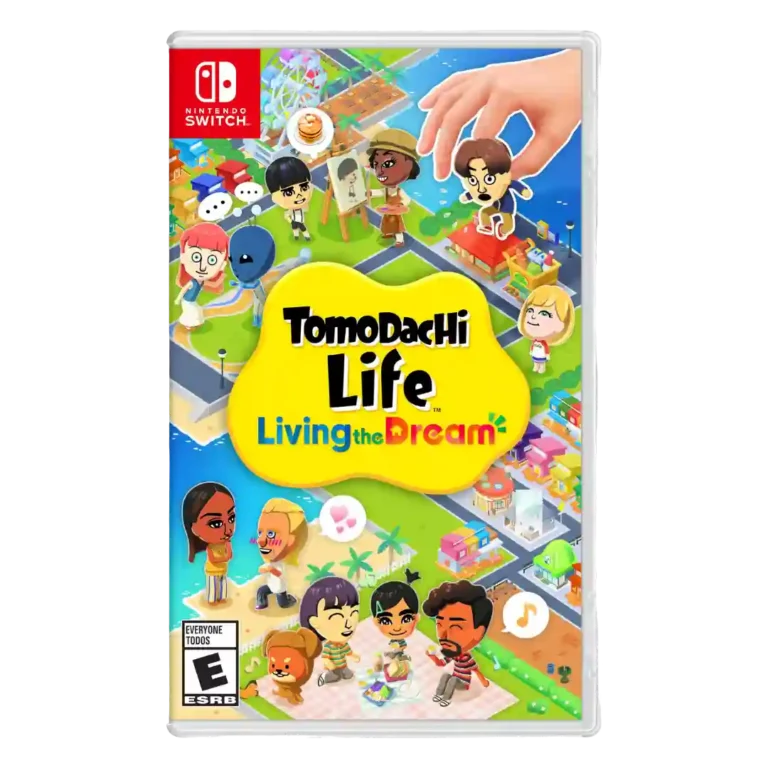
Choose Tomodachi Life: Living the Dream if you want absurd, cozy Mii stories and deep customization. Skip it if you need structured goals, long sessions, robust online sharing, or gameplay that stays fresh without your creativity.
Best for players who enjoy cozy daily check-ins, player-made absurdity, Mii creation, and social-sandbox storytelling. It especially rewards people who like designing characters, objects, homes, and island spaces.
Not for players who want deep management systems, strong goals, online sharing, or long sessions full of fresh activities. It can feel thin or repetitive if you do not bring your own creativity.
Tomodachi Life: Living the Dream works best as a personal comedy sandbox, not a deep management sim. Across the reviews, its biggest strengths are absurd Mii interactions, upgraded character creation, broad island customization, funny text-to-speech, and a low-pressure daily loop. The tradeoff is that much of the magic depends on what the player creates: less imaginative or longer-session play can expose repeated scenes, light mechanics, missing activities, and thin structure. Sharing restrictions are the clearest recurring frustration, especially because the game’s funniest moments seem built to be shown to others. Still, for players who enjoy checking in, tinkering, and letting strange social stories unfold, the evidence points to a charming and unusually personal sequel.
Compared with other Video Games, this product is above average in grind level, menu usability, user interface design, near average in sandbox freedom, fun factor, below average in social features, community features, accessibility options.
| Attribute | This product | Category average | Difference |
|---|---|---|---|
| social features | 1.9 | 3.8 | -1.9 |
| grind level | 5.0 | 2.9 | +2.1 |
| community features | 2.4 | 4.2 | -1.8 |
| accessibility options | 2.0 | 3.8 | -1.8 |
| menu usability | 4.5 | 3.0 | +1.5 |
| user interface design | 4.6 | 3.3 | +1.3 |
| gameplay mechanics | 3.0 | 4.1 | -1.1 |
| dialogue quality | 4.5 | 3.3 | +1.2 |
Choose Pokemon LeafGreen and FireRed Versions. It scores 4.9 vs 3.6 for faithfulness to franchise, with a 3.9 overall score.
Choose Cabernet. It scores 5.0 vs 2.0 for accessibility options, with a 4.0 overall score.
Choose Forza Horizon 6. It scores 4.9 vs 3.8 for replay value, with a 4.2 overall score.
Choose Zero Parades: For Dead Spies. It scores 5.0 vs 3.2 for content variety, with a 4.1 overall score.
Products reviewers directly compared with this model, grouped into quick takeaways.
No. Reviewers describe it as more of a light, passive social sandbox or life spectator than a deep management sim.
The strongest praise goes to upgraded Mii customization, strange social scenarios, funny dialogue, robotic voices, and the freedom to make the island feel personal.
Yes. Many reviewers say repetition appears over time, especially in longer sessions, repeated interactions, and minigames.
Yes. Several reviewers say the game works best as a relaxed daily check-in rather than something to binge for hours.
No. Reviews repeatedly criticize the lack of easy online Mii, item, screenshot, or creation sharing.
Reviewers generally find it easy enough for families and younger players, but some note the relaxed content filter can allow humor outside the usual family-rating expectations.
These are a few of the reviews included in our analysis.

Best for fluid traversal, rewarding exploration, striking art, and forgiving quality-of-life features. Skip it if you want deep combat, radical genre innovation, or consistently demanding bosses.
Pros: difficulty balance, boss design
Cons: innovation, sandbox freedom

Good if you want fast, tactical roguelite combat with huge progression depth, striking art, and standout music. Skip it if repetition, resource micromanagement, or a less emotionally satisfying sequel story...
Pros: combat system, progression system
Cons: originality

Good if you want a beautiful, demanding survival sandbox built around exploration, building, progression, and memorable co-op. Skip it if long resource runs, harsh death recovery, and deliberate pacing sound...
Pros: town-building system, exploration quality
Cons: grind level, fast travel convenience

Best for joyful destruction, dense exploration, and a charming DK-Pauline adventure. Skip it if camera quirks, frame-rate dips, easy bosses, or premium Switch 2 pricing are dealbreakers.
Pros: fun factor, world interactivity
Cons: frame rate stability, boss design