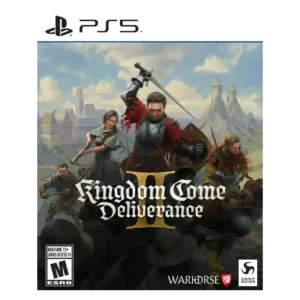
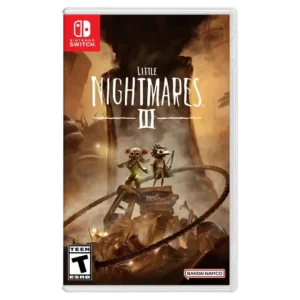
Compare Kingdom Come: Deliverance II vs Little Nightmares III

Kingdom Come: Deliverance II

Kingdom Come: Deliverance II

Overall score 4.3 / 5

Based on 20 scored reviews

vs
Little Nightmares III

Little Nightmares III

Overall score 2.8 / 5

Based on 32 scored reviews

How we score

Scorata scores summarize analyzed review evidence on a 1–5 scale; they are not laboratory measurements or a simple average of customer star ratings. Feature scores summarize the reviews covering that feature. The overall score averages feature scores within each review, then combines review averages. When both expert and customer evidence are available, those two groups receive equal weight. Products can have different review coverage, so small score gaps do not establish a winner.

Recommendations prioritize important features for the category, with a score of at least 3.5, a gap of at least 0.25 points and at least two supporting reviews per product. Features with widely varying scores or broad connectivity contexts are excluded from recommendations. These safeguards do not establish statistical significance.

Quick verdict

What each product is best for

The available evidence supports the recommendation below, but does not establish an overall winner. Check the remaining features against your priorities.

Choose Kingdom Come: Deliverance II for soundtrack quality and character development.

There is not enough comparable review evidence to recommend Little Nightmares III over the other product.

Why these recommendations?

Kingdom Come: Deliverance II

Where It Has the Edge

  • soundtrack quality is 4.9 vs 1.5. The soundtrack was one of the most consistently praised elements, with several reviewers calling it orchestral, phenomenal, or...
  • character development is 4.7 vs 2.0. Henry and Hans received strong praise for their evolving relationship and character arcs, with Henry’s trauma and growth...
  • originality is 4.7 vs 2.1. Reviewers repeatedly emphasized how unusual and specific the game feels compared with modern RPGs.

Little Nightmares III

Where It Has the Edge

No clear scored advantage over the other product.

Kingdom Come: Deliverance II 4.3 overall score
Little Nightmares III 2.8 overall score

Compare features

Scores are out of 5. Missing scores mean missing review evidence, not a missing feature.

Scored on both products

Performance

Soundtrack quality
Kingdom Come: Deliverance II
4.9

The soundtrack was one of the most consistently praised elements, with several reviewers calling it orchestral, phenomenal, or legendary.

Little Nightmares III
1.5

Soundtrack quality was criticized by negative reviewers who found the music forgettable or lacking identity.

Performance optimization
Kingdom Come: Deliverance II
4.6

Performance was generally praised across PC and console contexts, with reviewers noting strong optimization and technical improvements.

Little Nightmares III
4.2

Performance optimization was generally positive, with multiple reviewers reporting smooth or consistent performance and no major issues.

Other features

World interactivity
Kingdom Come: Deliverance II
4.8

Reviewers consistently praised the reactive crime, reputation, NPC, and quest systems that made the world feel alive and responsive.

Little Nightmares III
1.5

World interactivity was criticized for unclear visual rules around what could be climbed, smashed, or used.

Lore depth
Kingdom Come: Deliverance II
4.8

The historical codex and contextual detail were praised for offering extensive background on people, events, and society.

Little Nightmares III
2.0

Lore depth drew negative evidence from a reviewer who felt understanding the story depended too much on outside material.

Character development
Kingdom Come: Deliverance II
4.7

Henry and Hans received strong praise for their evolving relationship and character arcs, with Henry’s trauma and growth adding stakes.

Little Nightmares III
2.0

Character development was criticized for giving Low and Alone too little personality or relationship development.

Originality
Kingdom Come: Deliverance II
4.7

Reviewers repeatedly emphasized how unusual and specific the game feels compared with modern RPGs.

Little Nightmares III
2.1

Originality leaned negative, with many reviewers calling it formulaic, familiar, or a retread rather than a fresh sequel.

AI behavior
Kingdom Come: Deliverance II
4.7

AI and NPC behavior were praised for believable reactions, routines, crime responses, and increased sophistication over the first game.

Little Nightmares III
2.1

AI behavior leaned negative due to glitches, slow combat responses, and partner mistakes, though a few reviews described only mild clunkiness.

Gameplay mechanics
Kingdom Come: Deliverance II
4.7

Reviewers repeatedly framed the systems-heavy design as a major strength, praising how mechanics connect to role-playing, dialogue, world simulation, and player expression.

Little Nightmares III
2.3

Reviews frequently criticized the mechanics as safe, shallow, or underused, though a few found the simple loop acceptable for the mood-driven design.

Emotional impact
Kingdom Come: Deliverance II
4.9

Reviewers described the story as memorable and emotionally powerful, including scenes that brought strong lasting reactions.

Little Nightmares III
2.5

Emotional impact was mixed to negative: companionship could be touching, but several reviewers felt the game lacked emotional depth or resonance.

Innovation
Kingdom Come: Deliverance II
4.5

One reviewer praised the scale of improvement as something other studios rarely achieve.

Little Nightmares III
2.2

Innovation leaned negative overall: reviewers noted a few smart ideas but repeatedly said the sequel played too safe or lacked new mechanics.

Bug frequency
Kingdom Come: Deliverance II
3.7

Bugs were present but usually minor; reviewers ranged from calling glitches common to saying issues rarely disrupted play.

Little Nightmares III
1.5

Bug frequency was criticized, especially around AI, broken sequences, and game-breaking or reload-forcing issues.

Aiming precision
Kingdom Come: Deliverance II
3.7

Ranged play was viewed as improved by some reviewers, especially archery, but another found ranged combat weightless and weak.

Little Nightmares III
1.5

Aiming precision was criticized because bow and melee interactions felt automatic, unclear, or hard to line up rather than skillful.

Load times
Kingdom Come: Deliverance II
2.8

Load times were criticized by one reviewer as long enough to worsen stealth retries and experimentation.

Little Nightmares III
5.0

Load times received limited but strong praise from one reviewer who reported virtually none.

Narrative quality
Kingdom Come: Deliverance II
4.7

Narrative quality was a major strength, with reviewers praising the historical saga, main quest, character arcs, and cinematic ambition.

Little Nightmares III
2.5

Narrative quality was mixed to negative overall, with recurring complaints about slight, disjointed, ambiguous, or abrupt storytelling despite a few positive reads.

Family friendliness
Kingdom Come: Deliverance II
2.0

Family friendliness was limited by repeated profanity, sexual content, and depictions of women that one reviewer found objectifying.

Little Nightmares III
4.0

Family friendliness received similar limited evidence, tempered by the game’s disturbing but stylized imagery.

Fun factor
Kingdom Come: Deliverance II
4.9

Several reviewers found the game highly entertaining, addictive, and rewarding once its demanding systems clicked.

Little Nightmares III
3.2

Fun factor was highly mixed, ranging from good fun and worthwhile playthroughs to chore-like or frustrating experiences.

Polish
Kingdom Come: Deliverance II
4.7

Reviewers saw the sequel as much more polished than the first game, with rough edges reduced and systems better realized.

Little Nightmares III
2.9

Polish was mixed: some reviews called it well built or visually polished, while others cited buggy, inconsistent, or clumsy execution.

Onboarding experience
Kingdom Come: Deliverance II
3.7

Onboarding divided reviewers: returning and new-player recaps helped, but some found the opening overloaded or blunt.

Little Nightmares III
2.0

Onboarding evidence was negative, with one reviewer saying newcomers are thrown in without enough guidance.

Content variety
Kingdom Come: Deliverance II
4.7

Reviewers praised the breadth of activities, quests, and post-launch additions, with many describing a large and varied set of things to do.

Little Nightmares III
3.2

Content variety was mixed, with some praise for visual/thematic variety but complaints that enemies or chapter beats became wearyingly familiar.

Handheld play suitability
Kingdom Come: Deliverance II
4.5

Handheld suitability was supported by one reviewer who described the game as scalable enough for handheld play.

Little Nightmares III
3.0

Handheld play suitability was mixed, with Switch 2 handheld play described as rougher due to blur and swallowed shadow detail.

Writing quality
Kingdom Come: Deliverance II
4.7

Writing was described as excellent, engaging, humorous, and consistently strong across main and side content.

Little Nightmares III
3.2

Writing quality was mixed, with praise for wordless environmental storytelling but criticism that some story construction felt hollow or unsatisfying.

Companion AI
Kingdom Come: Deliverance II
4.4

The dog companion Mutt was praised as useful and worthwhile, especially for tracking and early side-quest benefits.

Little Nightmares III
2.9

Companion AI was one of the most divided areas: some reviewers found it competent or responsive, while others said it caused deaths, waiting, or frustration.

Frame rate stability
Kingdom Come: Deliverance II
4.4

One reviewer reported a consistent frame rate and treated that as part of the game’s stronger technical state.

Little Nightmares III
3.0

Frame rate stability was mixed: several reviews found it steady or acceptable, while others reported drops or severe Beauty-mode chugging.

Core gameplay loop
Kingdom Come: Deliverance II
3.2

One reviewer found the loop rewarding but volatile, with strong highs offset by repeated frustration and setbacks.

Little Nightmares III
2.0

Core loop evidence was negative, with one reviewer saying the repeated motions made the short journey feel mindless.

Visual effects quality
Kingdom Come: Deliverance II
4.4

Visual set pieces and in-engine scenes were praised for creating striking emotional moments.

Little Nightmares III
3.3

Visual effects quality was mixed, with praise for depth of field but criticism that darkness made details hard to read.

Tutorial quality
Kingdom Come: Deliverance II
2.9

Tutorial quality was mixed, with one reviewer calling it decent while others criticized dense text screens and poor explanations.

Little Nightmares III
1.8

Tutorial quality was criticized by reviewers who felt the game barely explained itself and left players lost early.

Atmosphere
Kingdom Come: Deliverance II
4.8

Atmosphere was praised alongside world-building, especially in cities, music, and historically grounded locations.

Little Nightmares III
3.8

Atmosphere was widely praised for menace, mood, and tension, though a few reviews felt co-op or frustration weakened it.

Graphics quality
Kingdom Come: Deliverance II
4.6

Graphics were broadly praised for impressive landscapes, cutscenes, lighting, and major visual improvements over the first game.

Little Nightmares III
3.6

Graphics quality was mixed but often positive: reviewers praised the visuals and set pieces while some criticized darkness and clarity problems.

Faithfulness to franchise
Kingdom Come: Deliverance II
4.7

Reviewers generally agreed the sequel stays true to the original while improving its systems, scope, and accessibility.

Little Nightmares III
3.7

Faithfulness to franchise was mixed but often positive: reviewers agreed it looks and feels like Little Nightmares, while some felt it fell short of prior entries.

Pacing
Kingdom Come: Deliverance II
3.7

Pacing opinions varied: some praised the sustained momentum, while others complained about indulgent cutscenes or late-game pacing issues.

Little Nightmares III
2.8

Pacing was divisive: some reviewers liked the tight or smoother flow, but many cited repetition, a weak first half, abrupt ending, or hollow stretches.

Difficulty balance
Kingdom Come: Deliverance II
3.5

Difficulty was often called demanding and unforgiving; reviewers generally treated this as part of the appeal, though not always an easy one.

Little Nightmares III
2.6

Difficulty balance was mostly criticized for trial-and-error deaths and co-op compounding mistakes, though one reviewer found the game approachable.

Camera behavior
Kingdom Come: Deliverance II
2.9

Camera behavior was a noted issue for one reviewer, especially through finicky first-person viewpoint problems.

Little Nightmares III
2.0

Camera behavior was criticized for depth perception and camera angles that interfered with jumps and survival.

Learning curve
Kingdom Come: Deliverance II
2.9

The learning curve was repeatedly described as steep, slow, and friction-heavy, rewarding patience but likely turning some players away.

Little Nightmares III
2.0

Learning curve evidence was negative because unclear direction and minimal tutorialization made the game easy to feel lost in.

Environmental detail
Kingdom Come: Deliverance II
4.8

Environmental detail was praised for dense, specific objects, puddles, tools, farms, residences, and believable spaces.

Little Nightmares III
4.1

Environmental detail was generally praised for rich, vivid, or meticulously realized spaces, though one reviewer found some rooms empty or uninteresting.

Checkpoint system
Kingdom Come: Deliverance II
2.0

Checkpointing was criticized for causing lost progress when autosaves appeared only at limited quest points.

Little Nightmares III
2.7

Checkpoint system was mixed: some found checkpointing generous, but others said reloads wasted time or sent them too far back.

Animation quality
Kingdom Come: Deliverance II
4.8

Cutscene direction and mocap were praised for selling relationships and emotional scenes convincingly.

Little Nightmares III
4.2

Animation quality received positive evidence for selling fragility, tenderness, and wordless character detail.

Exploration quality
Kingdom Come: Deliverance II
4.4

Exploration was praised for beautiful spaces, meaningful discoveries, and a strong adventuring feel, though harsh systems made some travel demanding.

Little Nightmares III
4.0

Exploration was praised in selected areas, especially Carnavale and less railroaded spaces, but evidence was limited.

Horror tension
Kingdom Come: Deliverance II
2.7

A horror-leaning quest was criticized for being too short for its dread to fully develop.

Little Nightmares III
3.1

Horror tension was mixed: many praised chills and chase intensity, but several reviewers found it less scary than past games.

Dialogue quality
Kingdom Come: Deliverance II
4.4

Dialogue was mostly praised for impact, humor, and organic choices, though one reviewer found some repeated dialogue drawn out.

Little Nightmares III
4.0

Dialogue quality received limited positive evidence because the absence of dialogue was viewed as appropriate to the game’s storytelling style.

Immersion
Kingdom Come: Deliverance II
4.8

Immersion was one of the clearest strengths, with reviewers repeatedly describing the world, systems, and presentation as absorbing.

Little Nightmares III
4.5

Immersion was praised by one reviewer who found the world atmospheric, transportive, and imaginative.

Haptic feedback integration
Kingdom Come: Deliverance II
4.7

DualSense haptics and adaptive triggers were praised for reflecting stamina, sword clashes, and sharpening interactions.

Little Nightmares III
5.0

Haptic feedback integration was praised strongly for making a monster’s presence felt through the DualSense.

Art direction
Kingdom Come: Deliverance II
4.5

The visual style of menus, maps, and medieval presentation received praise for matching the game’s historical tone.

Little Nightmares III
4.7

Art direction was one of the strongest areas, repeatedly praised as fantastic, phenomenal, breathtaking, or visually distinctive.

Movement feel
Kingdom Come: Deliverance II
2.5

One reviewer felt early traversal was unnecessarily taxing, especially before stronger equipment and better mobility options eased the burden.

Little Nightmares III
2.7

Movement feel was mixed to negative: the umbrella added a small wrinkle, but mechanical clunkiness and sluggish movement remained common caveats.

Combat system
Kingdom Come: Deliverance II
4.1

Combat drew broad attention for its realism, skill focus, and improvements, though several reviewers still found it harsh, clunky, or frustrating early on.

Little Nightmares III
4.0

Combat drew limited but positive notice when Carnavale forced the pair into tense teamwork against doll enemies.

Stealth mechanics
Kingdom Come: Deliverance II
3.1

Stealth was useful and sometimes satisfying, yet reviewers also called it finicky, weak, or frustrating in specific forced sections.

Little Nightmares III
3.0

Stealth received split reactions: some reviewers enjoyed the scares and thrills, while others found trial-and-error stealth tiring.

Ownership and support

DLC value
Kingdom Come: Deliverance II
4.5

The post-launch expansions were credited with adding a large amount of extra content to the package.

Little Nightmares III
2.0

DLC value drew negative evidence where the base game’s abruptness made paid extra chapters feel like more game held back.

Replay value
Kingdom Come: Deliverance II
4.7

Replay value looked strong thanks to hardcore mode, major content additions, and reviewers wanting to return for more playthroughs.

Little Nightmares III
2.2

Replay value leaned weak: a few saw some reason to replay roles, but most cited low replay value, similar characters, or uninteresting secrets.

Value for money
Kingdom Come: Deliverance II
4.8

Value was praised because the game is both strong and very long, with some reviewers reporting enormous playtime.

Little Nightmares III
2.8

Value for money was mixed to negative, balancing Friend Pass and lower price praise against short length, paid extras, and sale recommendations.

Save system reliability
Kingdom Come: Deliverance II
2.8

The save system was one of the most divisive topics, praised by one reviewer but criticized by many as stingy or punishing.

Little Nightmares III
1.0

Save system reliability received strong negative evidence from a bug that forced replaying an entire chapter.

Platform-specific feature support
Kingdom Come: Deliverance II
4.6

The PS5 Pro version was praised as a graphical treat, with platform-specific technical strengths noted.

Little Nightmares III
5.0

Platform-specific feature support received strong evidence from the same DualSense implementation praise.

Controls and connectivity

Controls responsiveness
Kingdom Come: Deliverance II
4.6

Controls were described as noticeably smoother than the first game, especially in camera feel, aiming, and sword fighting responsiveness.

Little Nightmares III
2.3

Controls were a recurring complaint, with several reviewers calling them clunky, woolly, or intermittently unresponsive, though one found them acceptable.

Protagonist appeal
Kingdom Come: Deliverance II
2.6

One reviewer strongly disliked Hans as a long-term companion presence, creating strain on their desire to continue.

Little Nightmares III
4.3

Protagonist appeal was positive where mentioned, with reviewers liking the designs and fragile duo.

Age appropriateness
Kingdom Come: Deliverance II
2.4

One reviewer warned that excessive profanity and potentially offensive material make the game unsuitable for some audiences.

Little Nightmares III
4.0

Age appropriateness received limited positive evidence suggesting the violent imagery is unlikely to be excessive for younger teens.

Comfort and build

Map and navigation design
Kingdom Come: Deliverance II
4.6

Maps were praised for medieval flair and exquisite town art, supporting the game’s historical presentation.

Little Nightmares III
2.3

Map and navigation design leaned negative, with reviewers citing unclear paths, poor visibility, and missed exits.

World-building
Kingdom Come: Deliverance II
4.9

World-building was repeatedly praised as immersive, historically grounded, and central to the game’s appeal.

Little Nightmares III
3.4

World-building was mixed, with praise for a compelling or aesthetically told world but criticism that it lacked context or misunderstood the series’ mystery.

Level design
Kingdom Come: Deliverance II
4.5

One reviewer praised the way locations were recontextualized into memorable set-pieces that rewarded planning and awareness.

Little Nightmares III
3.4

Level design was mixed, with praise for standout locations and fair layouts offset by criticism that some design felt lacking or overly linear.

Sound design
Kingdom Come: Deliverance II
4.5

Sound design was praised for supporting immersion and helping players identify attacks or stealth-relevant cues.

Little Nightmares III
4.7

Sound design was strongly praised for syncing with art, building tension, and enhancing atmosphere.

Evidence available for one product

Other features

Accessibility options
Kingdom Come: Deliverance IINo score yet
Little Nightmares III
4.3

Accessibility options were praised, especially broad aids, full accessibility claims, object outlines, and brightness/font support.

Character roster
Kingdom Come: Deliverance II
4.5

The cast was praised for memorable personalities, humor, and a strong sense of history.

Little Nightmares IIINo score yet
Co-op experience
Kingdom Come: Deliverance IINo score yet
Little Nightmares III
3.1

Co-op experience was heavily discussed and mixed: several reviewers enjoyed shared puzzle tension, but many felt co-op was underused, burdensome, or tension-draining.

Couch co-op quality
Kingdom Come: Deliverance IINo score yet
Little Nightmares III
1.5

Couch co-op quality was consistently criticized because reviewers repeatedly called the lack of local/couch co-op a missed or baffling opportunity.

Crafting system
Kingdom Come: Deliverance II
3.8

Crafting split reviewers: blacksmithing and alchemy could be charming and rewarding, but several found parts clunky, slow, or repetitive.

Little Nightmares IIINo score yet
Crash stability
Kingdom Come: Deliverance II
4.6

Crash stability was praised by multiple reviewers who reported no crashes, no soft locks, or no hard crashes.

Little Nightmares IIINo score yet
Economy and resource balance
Kingdom Come: Deliverance II
2.8

The early economy was described as restrictive, especially when selling damaged or stolen goods with limited vendor money.

Little Nightmares IIINo score yet
Enemy variety
Kingdom Come: Deliverance IINo score yet
Little Nightmares III
4.0

Enemy variety received limited positive evidence, with one reviewer simply finding the monsters scary.

Facial animations
Kingdom Come: Deliverance II
3.8

Facial animation feedback was mixed: one reviewer noted lifeless dialogue faces, while another praised key character animations.

Little Nightmares IIINo score yet
Fast travel convenience
Kingdom Come: Deliverance II
3.4

Fast travel opinions were mixed: one reviewer praised dynamic events, while another found it cumbersome and interruption-prone.

Little Nightmares IIINo score yet
Grind level
Kingdom Come: Deliverance II
3.5

The game was not seen as a pure grind, but reviewers still emphasized the effort and repetition needed to gain traction.

Little Nightmares IIINo score yet
HUD clarity
Kingdom Come: Deliverance II
4.4

The adaptive HUD was praised for hiding unnecessary elements and improving immersion when information was not relevant.

Little Nightmares IIINo score yet
Loot system
Kingdom Come: Deliverance II
2.9

Loot was criticized for early encumbrance pressure and the difficulty of carrying everything a player might want.

Little Nightmares IIINo score yet
Mission variety
Kingdom Come: Deliverance II
4.9

Mission variety was strongly praised, especially for quests that went beyond simple errands or bandit-clearing objectives.

Little Nightmares IIINo score yet
Platforming precision
Kingdom Come: Deliverance IINo score yet
Little Nightmares III
1.9

Platforming precision was one of the more consistent frustrations, with depth perception, camera angle, and visibility causing repeated deaths.

Progression system
Kingdom Come: Deliverance II
4.6

Progression was widely praised for turning early friction into rewarding growth through skills, perks, equipment, and player learning.

Little Nightmares IIINo score yet
Sandbox freedom
Kingdom Come: Deliverance II
4.6

Reviewers admired the freedom to solve problems, exploit systems, and role-play, though the sandbox sometimes clashed with scripted story demands.

Little Nightmares IIINo score yet
Side character depth
Kingdom Come: Deliverance II
4.1

The sequel was credited with giving supporting women and other groups somewhat more agency than before.

Little Nightmares IIINo score yet
Skill tree depth
Kingdom Come: Deliverance II
4.7

Reviewers liked the depth and usefulness of perks, weapon techniques, and skill trees, especially when they enabled meaningful playstyle specialization.

Little Nightmares IIINo score yet
Split-screen quality
Kingdom Come: Deliverance IINo score yet
Little Nightmares III
1.5

Split-screen quality received negative evidence because the lack of single-screen co-op was described as an oversight.

Upgrade system
Kingdom Come: Deliverance II
4.6

The revised perk and upgrade system was praised for offering meaningful upside-focused choices rather than weak side-grades.

Little Nightmares IIINo score yet
Weapon balance
Kingdom Come: Deliverance II
3.4

Weapon balance was mixed: one reviewer liked weapon choice, while another found some ranged options hard to use effectively.

Little Nightmares IIINo score yet

Comfort and build

Boss design
Kingdom Come: Deliverance IINo score yet
Little Nightmares III
3.2

Boss design was polarized, ranging from praise for standout monsters and highlight fights to criticism that bosses were straightforward or disappointing.

Mission design
Kingdom Come: Deliverance II
3.5

Main mission design was mixed: reviewers praised varied scenarios, but one criticized a required sequence for lacking an alternate path.

Little Nightmares IIINo score yet
Multiplayer design
Kingdom Come: Deliverance IINo score yet
Little Nightmares III
1.8

Multiplayer design was criticized for online-only limits, no drop-in switching, and difficult co-op setup despite the feature’s prominence.

Open-world design
Kingdom Come: Deliverance II
4.8

The open world drew strong praise for its scale, density, historically grounded cities, and lived-in regions across multiple maps.

Little Nightmares IIINo score yet
Puzzle design
Kingdom Come: Deliverance IINo score yet
Little Nightmares III
2.5

Puzzle design split reviewers sharply but leaned negative overall: some praised clarity or co-op richness, while many found puzzles obvious, repetitive, or overly simple.

Quest design
Kingdom Come: Deliverance II
4.6

Quest design was one of the strongest points, with reviewers praising memorable side stories, branching approaches, and strong writing, despite a few disappointing payoffs.

Little Nightmares IIINo score yet
User interface design
Kingdom Come: Deliverance II
4.5

UI feedback was positive when reviewers discussed improved, adaptable, or visually polished interface presentation.

Little Nightmares IIINo score yet

Ownership and support

Cross-play support
Kingdom Come: Deliverance IINo score yet
Little Nightmares III
1.5

Cross-play support was criticized in review-thread evidence as part of the multiplayer feature omissions.

Live-service support
Kingdom Come: Deliverance II
4.3

Post-launch support was described positively through free updates, fixes, and eagerly awaited features.

Little Nightmares IIINo score yet

Controls and connectivity

Menu usability
Kingdom Come: Deliverance II
2.7

Menu usability was mixed to negative, with some praise for navigation but others calling the menu system dire or frustrating.

Little Nightmares IIINo score yet
Voice acting
Kingdom Come: Deliverance II
4.6

Voice acting was broadly praised, especially the main cast, though some reviewers noted repeated or uneven minor NPC voices.

Little Nightmares IIINo score yet

Other Top Video Games to Consider

#1 Well Dweller
4.7

Best for fluid traversal, rewarding exploration, striking art, and forgiving quality-of-life features. Skip it if you want deep combat, radical genre innovation, or consistently demanding bosses.

Pros: difficulty balance, boss design

Cons: innovation, sandbox freedom

#2 Hades II
4.5

Best for superb combat, inventive builds, and richly voiced characters. Skip it if repeated runs, resource gathering, or visually busy battles outweigh the appeal of steady progress.

Pros: overall quality, combat system

Cons: pacing, grind level

#3 Valheim
4.5

Good if you want a beautiful, demanding survival sandbox built around exploration, building, progression, and memorable co-op. Skip it if long resource runs, harsh death recovery, and deliberate pacing sound...

Pros: town-building system, exploration quality

Cons: grind level, fast travel convenience

#4 Grand Theft Auto VI
4.5

Leonida is a breathtakingly alive crime sandbox with memorable protagonists, spectacular heists, and extraordinary detail. The tradeoff is a 30 fps ceiling, occasional control awkwardness, and some progression friction.

Pros: immersion, graphics quality

Cons: grind level, controls responsiveness