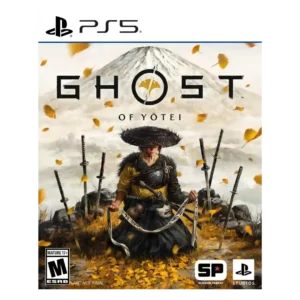
Compare Ghost of Yōtei vs Slitterhead

Ghost of Yōtei

Ghost of Yōtei

Overall score 4.4 / 5

Based on 30 scored reviews

vs
Slitterhead

Slitterhead

Overall score 2.9 / 5

Based on 54 scored reviews

How we score

Scorata scores summarize analyzed review evidence on a 1–5 scale; they are not laboratory measurements or a simple average of customer star ratings. Feature scores summarize the reviews covering that feature. The overall score averages feature scores within each review, then combines review averages. When both expert and customer evidence are available, those two groups receive equal weight. Products can have different review coverage, so small score gaps do not establish a winner.

Recommendations prioritize important features for the category, with a score of at least 3.5, a gap of at least 0.25 points and at least two supporting reviews per product. Features with widely varying scores or broad connectivity contexts are excluded from recommendations. These safeguards do not establish statistical significance.

Quick verdict

What each product is best for

The review evidence points to a tradeoff: facial animations and map and navigation design versus innovation and world-building. Choose according to which strengths matter more to you; the overall score alone does not settle that choice.

Choose Ghost of Yōtei for facial animations and map and navigation design.

Choose Slitterhead for innovation and world-building.

Why these recommendations?

Ghost of Yōtei

Where It Has the Edge

  • facial animations is 4.5 vs 1.3. Facial animation is praised in cutscenes and Atsu’s expressions, with reviewers noting visible emotion and strong performance capture.
  • map and navigation design is 4.8 vs 1.8. Navigation is strongly praised for wind guidance, readable maps, organic discovery, spyglass/map ideas, and low UI clutter.
  • voice acting is 4.9 vs 1.9. Voice acting receives strong praise, especially Erika Ishii’s performance and the English/Japanese voice casts.

Slitterhead

Where It Has the Edge

  • innovation is 4.8 vs 3.2. Possession creates inventive tactical and traversal possibilities, even if the surrounding action does not always fulfill their promise.
  • world-building is 4.4 vs 3.8. The dense Kowloon-inspired city and supernatural premise create an appealing world, though thin interaction and uneven storytelling limit...
Ghost of Yōtei 4.4 overall score
Slitterhead 2.9 overall score

Compare features

Scores are out of 5. Missing scores mean missing review evidence, not a missing feature.

Scored on both products

Other features

AI behavior
Ghost of Yōtei
4.5

Enemy perception receives positive attention where stealth is described as sound-driven, with enemies reacting to audio as well as sight.

Slitterhead
1.2

Enemies and civilians can behave mechanically, weakening both encounters and the illusion of a living city.

Facial animations
Ghost of Yōtei
4.5

Facial animation is praised in cutscenes and Atsu’s expressions, with reviewers noting visible emotion and strong performance capture.

Slitterhead
1.3

Stiff, limited facial expression makes dialogue and emotional scenes feel dated.

Core gameplay loop
Ghost of Yōtei
4.8

The core loop is repeatedly described as compelling, hard to put down, and more fruitful than Tsushima for some reviewers.

Slitterhead
1.9

The hunt, chase, and fight cycle is engaging when possession clicks. Frequent recycling makes the same structure feel tedious to less invested players.

Graphics quality
Ghost of Yōtei
4.9

Visuals receive near-universal praise, from stunning fidelity and landscapes to screenshot-worthy environments and color.

Slitterhead
2.1

Stylized monsters and lighting have admirers, but dated human models and uneven detail attract frequent criticism.

Polish
Ghost of Yōtei
4.8

Polish is a recurring strength, with reviewers calling the release premium, cinematic, and impressively crafted despite a few bugs or animation rough edges.

Slitterhead
2.0

Rough animation, uneven interfaces, and awkward systems give the game an unfinished feel despite its strong creative identity.

Enemy variety
Ghost of Yōtei
4.3

Enemy variety is positively noted through more weapon matchups, multiple factions, and a better range of enemies than before.

Slitterhead
1.5

The grotesque enemies look memorable, yet too many encounters recycle similar creatures and behaviors.

HUD clarity
Ghost of Yōtei
4.8

HUD and marker restraint are praised for keeping the view clear and helping exploration feel less like a checklist.

Slitterhead
2.0

Crowded button prompts, subtle healing feedback, and small grapple indicators can make important information hard to read.

Movement feel
Ghost of Yōtei
5.0

Movement is praised for fluidity, especially in combat flow and traversal compared with the predecessor.

Slitterhead
2.3

Body hopping makes traversal quick and enjoyable, while conventional movement and some rooftop maneuvers can feel stiff.

Progression system
Ghost of Yōtei
4.4

Progression is praised for tying upgrades to exploration and skill shrines, though some reviewers want more depth or nuance.

Slitterhead
1.7

Finding Rarities and building their abilities can make progression rewarding. Mandatory searches and repeat missions can also interrupt that sense of growth.

Onboarding experience
Ghost of Yōtei
4.0

Onboarding is initially intimidating for some, but reviewers say the discovery and indicator systems become enjoyable once learned.

Slitterhead
1.7

The opening takes time to reach its best ideas, with lengthy instruction and early confusion testing patience.

Tutorial quality
Ghost of Yōtei
4.0

Tutorial/onboarding evidence is modestly positive, praising learn-by-doing design and seamless early teaching.

Slitterhead
1.8

Tutorials can explain the basics, yet their length and delivery sometimes slow the opening without making the complicated systems comfortable.

Mission variety
Ghost of Yōtei
4.0

Mission variety is lightly positive, with praise for varied missions in different places and diverse objectives.

Slitterhead
1.9

A few different activities break up the fighting, but the repeated chase-and-battle formula is a major complaint.

Sandbox freedom
Ghost of Yōtei
3.8

Freedom is moderate: reviewers appreciate loose target order and player-directed wandering, but note that some freedom is an illusion.

Slitterhead
1.7

Switching among available bodies enables flexible approaches, though scripted investigations and small areas limit that freedom.

Checkpoint system
Ghost of Yōtei
4.0

Checkpoint evidence is limited but positive for convenience, with one reviewer noting instant respawns and mid-fight boss checkpoints that reduce punishment.

Slitterhead
2.0

Some checkpoints sit far enough back to make failed encounters unnecessarily tiresome to replay.

Companion AI
Ghost of Yōtei
4.0

The wolf companion is generally appreciated as a useful and flavorful aid, but some reviewers expected it to be more impactful or frequent.

Slitterhead
2.0

Partners can provide useful distractions, but passive or unreliable behavior often leaves too much work to the controlled character.

Learning curve
Ghost of Yōtei
4.0

Learning curve evidence is positive but modest, emphasizing learn-by-doing design that mirrors Atsu’s practice and attention rather than heavy explanation.

Slitterhead
2.0

Learning the abilities and directional parry system can take an irritating amount of adjustment.

Load times
Ghost of Yōtei
5.0

Load times are one of the clearest technical wins, with reviewers calling travel and boot-to-game transitions near-instant.

Slitterhead
3.0

Loading times are considered ordinary rather than a notable strength or problem.

Stealth mechanics
Ghost of Yōtei
3.9

Stealth is enjoyable and viable, especially with chain assassinations and tools, but several reviewers call it basic or largely unchanged.

Slitterhead
2.0

Possession can make infiltration intriguing, but simplistic encounters and underdeveloped stealth rules often squander the idea.

Grind level
Ghost of Yōtei
2.8

Grind sentiment is mixed-to-negative where repeated side activities, collectibles, or checklist tasks create fatigue over time.

Slitterhead
1.0

Repeated fights can turn progression into a tiresome grind rather than a satisfying buildup.

Pacing
Ghost of Yōtei
3.6

Pacing is divisive: Game Informer praises it as a triumph, while several reviewers cite predictability, prolonged beats, or odd act structure.

Slitterhead
1.8

Long chases, slow dialogue, and repeated missions interrupt the momentum, even when the central mystery remains interesting.

Writing quality
Ghost of Yōtei
4.3

Writing is praised for creative freshness and emotional ambition, but one dissenting review calls it conventional blockbuster material.

Slitterhead
2.5

The writing has intriguing concepts and occasional emotional payoffs, but awkward dialogue, confusing exposition, and uneven resolution divide players.

Weapon balance
Ghost of Yōtei
4.1

Weapon balance is praised for distinct tools and effective counters, but mixed overall because several reviewers find weapons too situational or favorite weapons underpowered outside matchups.

Slitterhead
2.3

Blood weapons give the cast distinct styles, but weak ranged options and limited combinations make some choices less satisfying.

Character development
Ghost of Yōtei
4.8

Atsu’s arc is praised for emotional clarity, redemption, growth, and a more intimate character focus than the predecessor.

Slitterhead
3.1

Some players grow attached to the cast, but others find character development thin or disconnected from the central mystery.

Side character depth
Ghost of Yōtei
3.7

Side character depth is mixed, with praise for strong companions and villains but criticism that many allies or supporting figures lack involvement.

Slitterhead
1.9

Rarities can have appealing personalities, but limited interactions and underused cast members leave several relationships shallow.

Camera behavior
Ghost of Yōtei
3.3

Camera feedback is mixed: one reviewer says it is improved, while others cite visibility problems or off-screen/camera-management friction.

Slitterhead
1.6

Camera positioning and targeting frequently interfere with hectic fights, especially in cramped spaces.

Fun factor
Ghost of Yōtei
4.7

Reviewers repeatedly describe the game as enjoyable, addictive, and fun from start to finish, even when noting formulaic elements.

Slitterhead
3.1

Its eccentric ideas and body-swapping fights can be highly entertaining, but repetitive action and awkward execution drain the fun for many.

Emotional impact
Ghost of Yōtei
4.9

Reviewers frequently describe the story as moving, affecting, and emotionally rich, including moments that brought tears or strong sympathy.

Slitterhead
3.3

Tragic situations and bonds with the Rarities can land emotionally, but thin presentation keeps some players at a distance.

Innovation
Ghost of Yōtei
3.2

Innovation scores trend moderate because reviewers describe Yōtei as refinement rather than reinvention, with familiar systems made better.

Slitterhead
4.8

Possession creates inventive tactical and traversal possibilities, even if the surrounding action does not always fulfill their promise.

Originality
Ghost of Yōtei
3.0

Originality is moderate: reviewers repeatedly say Yōtei does not revolutionize the formula, but many accept that as focused refinement.

Slitterhead
4.6

Its spirit-possession premise and eccentric genre mixture stand out, even among players who dislike the execution.

Combat system
Ghost of Yōtei
4.7

Combat is the most broadly praised system, with fluid parries, weapon-swapping, violent impact, and strong duels; criticisms focus on rigidity or fatigue in the rock-paper-scissors weapon setup.

Slitterhead
3.1

Body switching and complementary abilities produce exciting fights for some players. Others find the attacks weightless, parrying awkward, and repeated encounters exhausting.

Difficulty balance
Ghost of Yōtei
4.0

Difficulty is mostly praised for rewarding patience and offering customization, though critics cite easy challenge, high damage, or artificial duel constraints.

Slitterhead
2.5

Some enjoy the demanding timing and tactical pressure; others find the challenge frustrating or uneven rather than rewarding.

Animation quality
Ghost of Yōtei
4.0

Combat animation is often praised for brutality and style, but several reviewers note repetition or less-polished NPC/casual dialogue animation.

Slitterhead
2.5

Creature transformations can look striking, while stiff human movement and uneven combat animation expose the modest production values.

Platforming precision
Ghost of Yōtei
3.7

Platforming and climbing are mixed: one review says climbing is improved, while others call it awkward or overly gamified.

Slitterhead
2.3

Possession-based rooftop routes can be exhilarating, but imprecise traversal and awkward positioning sometimes frustrate platforming challenges.

Bug frequency
Ghost of Yōtei
4.2

Most reviewers report few or no serious bugs, though some mention an odd freeze, minor technical issues, or rare late-game disruptions.

Slitterhead
2.8

Several players encounter glitches, though others report relatively clean runs. Small technical problems add to the uneven finish.

Exploration quality
Ghost of Yōtei
4.7

Exploration is one of the strongest areas, often called rewarding, organic, and meaningful, though one dissenting review finds it over-guided.

Slitterhead
3.4

Possession makes rooftop exploration and hidden discoveries enjoyable for some. Others find the small, recycled areas and unclear navigation tiring.

Narrative quality
Ghost of Yōtei
4.4

The narrative is generally praised as emotional, well-executed, and compelling, but some reviewers criticize predictability, structure, or linear revenge beats.

Slitterhead
3.1

The nonlinear mystery attracts players who enjoy piecing together strange events. Others find its delivery confusing, slow, or insufficiently resolved.

Content variety
Ghost of Yōtei
4.3

Reviewers praise the amount of meaningful activities and handcrafted diversions, while a few note that repeated open-world tasks can become chores.

Slitterhead
3.0

A mixture of fighting, investigation, and exploration supplies occasional variety, but it does not consistently overcome repetition.

Frame rate stability
Ghost of Yōtei
5.0

Frame-rate evidence is very positive, including stable pacing, smooth transitions, and rock-solid 60 FPS in PS5 Pro modes.

Slitterhead
3.8

Some report steady performance, while others notice frame drops or uneven animation, particularly on less powerful hardware.

Skill tree depth
Ghost of Yōtei
4.5

Skill depth is praised where charms, loadouts, weapon skills, and spirit attacks allow specialized builds and granular tuning.

Slitterhead
3.3

Character-specific growth and shared passives have useful tactical value, though the trees do not provide the depth some players want.

Upgrade system
Ghost of Yōtei
4.5

Upgrades are praised for being tied to exploration, weapons, armor, charms, and mastery activities rather than pure XP grinding.

Slitterhead
3.3

Upgrading different Rarities supports useful builds and stronger combinations, although the system is generally more conventional than the possession mechanic.

Immersion
Ghost of Yōtei
3.8

Immersion is a major strength through world navigation, sound, and minimal HUD, though occasional technical or duel design issues can break it.

Slitterhead
2.7

The city and unusual perspective can draw players in, while unreactive citizens and sparse presentation sometimes break the spell.

Lore depth
Ghost of Yōtei
4.5

Lore depth receives positive but limited support through mythic tales and storytelling sequences that expand the world’s legends.

Slitterhead
3.4

The mystery offers intriguing supernatural ideas and background details, although their explanation can feel muddled.

Accessibility options
Ghost of Yōtei
3.0

Accessibility evidence is limited and mixed: TechRadar notes helpful subtitles, visibility, control simplification, and combat assists, but says the suite is lighter than some PS5 peers and lacks colorblind options.

Slitterhead
2.0

Button rebinding helps, but the accessibility options leave room for improvement.

Economy and resource balance
Ghost of Yōtei
4.5

Resource balance is praised where simplified material categories and less strict upgrade paths encourage more engagement.

Slitterhead
3.5

Using blood, healing pools, and disposable bodies creates useful tactical choices, though managing them during chaotic battles can become cumbersome.

Family friendliness
Ghost of Yōtei
2.0

The family-friendliness score is low because the only explicit family guidance warns against younger gamers due to violence and mature content.

Slitterhead
1.0

Graphic body horror and adult situations make this a poor fit for family play or playing around children.

Environmental detail
Ghost of Yōtei
5.0

Environmental detail earns strong praise for realistic items, dense foliage, weather, light, and painstakingly crafted spaces.

Slitterhead
4.3

Cramped streets, signs, shops, and rooftop spaces help sell the Hong Kong-inspired setting. Reused locations and simpler assets can weaken that impression.

Dialogue quality
Ghost of Yōtei
2.8

Dialogue and delivery are mixed: some conversations carry emotion well, but several reviewers call line delivery stilted or conversations dated.

Slitterhead
2.3

Conversations occasionally build intrigue, but weak lines, awkward exchanges, and extensive text can make story delivery drag.

Art direction
Ghost of Yōtei
4.9

Reviewers strongly praise the painterly visual identity, lighting, color, and intentional environmental effects, with only mild familiarity concerns.

Slitterhead
4.5

The neon city and grotesque monsters give the game a distinctive identity. Appreciation for its strange style often survives complaints about dated presentation.

Atmosphere
Ghost of Yōtei
5.0

The atmosphere is consistently framed as a major strength, emphasizing contemplative tone, environmental mood, and cinematic immersion.

Slitterhead
4.7

Dense nighttime streets and an unusual, unsettling tone are frequent highlights, although some find the mood less effective than the premise suggests.

Character roster
Ghost of Yōtei
4.5

The supporting ensemble is viewed positively in several reviews, though some reviewers find side figures underused or shallow.

Slitterhead
4.2

Rarities bring distinct weapons and abilities that encourage experimentation. Their differences help freshen combat even when the underlying moves remain limited.

Gameplay mechanics
Ghost of Yōtei
4.3

General mechanics are praised as refined and improved, though some reviewers call them reused rather than evolutionary.

Slitterhead
4.4

Possession is the standout mechanic, letting players change bodies for traversal, investigation, and fighting. Its imaginative uses are more convincing than some of the systems built around it.

Fast travel convenience
Ghost of Yōtei
5.0

Fast travel is strongly praised as instantaneous or highly respectful of the player’s time.

Slitterhead
5.0

Hopping between nearby bodies makes crossing streets much faster than walking.

Visual effects quality
Ghost of Yōtei
4.0

Visual-effects evidence is positive but limited, with reviewers appreciating enhanced particles, blood, mud, wind, and cinematic environmental effects.

Slitterhead
4.0

Human-to-monster transformation scenes provide especially impressive visual spectacle.

Comfort and build

Map and navigation design
Ghost of Yōtei
4.8

Navigation is strongly praised for wind guidance, readable maps, organic discovery, spyglass/map ideas, and low UI clutter.

Slitterhead
1.8

The absence of a useful map or consistent waypoints makes unfamiliar streets and hidden objectives frustrating to navigate.

Puzzle design
Ghost of Yōtei
1.5

Puzzle design receives a low score from a reviewer who calls several puzzles overly simple and almost pointless.

Slitterhead
3.6

Possession puzzles offer clever diversions for some, while straightforward tracking and weakly developed challenges disappoint others.

Mission design
Ghost of Yōtei
4.3

Mission design is generally positive for diverse objectives and strong campaign structure, though some side mission design is criticized elsewhere.

Slitterhead
2.3

Investigation, stealth, and combat occasionally produce memorable missions. Repeated routes, long pursuits, and mandatory revisits often weaken their execution.

Boss design
Ghost of Yōtei
4.1

Duels and boss-style encounters are usually exciting and memorable, though one reviewer criticizes duel advantages as artificial.

Slitterhead
2.3

Boss encounters can reward coordinated possession and parrying, but repeated fights and frustrating chase sequences divide players.

Sound design
Ghost of Yōtei
4.9

Sound design is consistently praised for environmental audio, combat effects, and the way it supports immersion.

Slitterhead
3.3

City chatter and strong sound work help the atmosphere, while sparse ambience and weak impact sounds disappoint others.

User interface design
Ghost of Yōtei
3.5

UI evidence is mixed: restrained maps and menus are praised, but one reviewer reports low-contrast text and hard-to-see map elements.

Slitterhead
4.3

Stylish interface design has admirers, but clutter, sluggish elements, and awkward presentation reduce usability for others.

World-building
Ghost of Yōtei
3.8

World-building is mixed-to-positive: Ezo’s culture and social context are compelling, but some reviewers wanted broader supporting context.

Slitterhead
4.4

The dense Kowloon-inspired city and supernatural premise create an appealing world, though thin interaction and uneven storytelling limit its depth.

Level design
Ghost of Yōtei
2.5

The only scored level-design evidence is critical, describing certain mission spaces as single-route and overly linear.

Slitterhead
2.1

Vertical routes and compact districts make possession useful, but familiar layouts and constrained spaces can feel repetitive.

Controls and connectivity

Voice acting
Ghost of Yōtei
4.9

Voice acting receives strong praise, especially Erika Ishii’s performance and the English/Japanese voice casts.

Slitterhead
1.9

The limited voice work can sound good when present, but largely unvoiced dialogue weakens presentation and character connection.

Controls responsiveness
Ghost of Yōtei
4.3

Parrying, quick selection, and combat inputs are praised, but one review flags the overall control system as demanding.

Slitterhead
2.3

Responsiveness varies with the action: quick possession changes can feel effective, while attacks, parries, and other inputs sometimes feel awkward.

Age appropriateness
Ghost of Yōtei
2.0

The only explicit age-appropriateness judgment warns against younger players because of bloody violence, mature themes, language, drug use, frightening scenes, and slight nudity.

Slitterhead
1.0

The disturbing imagery and mature subject matter make this unsuitable for young children.

Protagonist appeal
Ghost of Yōtei
4.8

Atsu is widely praised as a compelling, complex, fiery, and memorable lead who gives the sequel a stronger identity.

Slitterhead
4.0

Night Owl’s evolving outlook and morally contradictory use of human hosts provide an engaging perspective on the story.

Menu usability
Ghost of Yōtei
2.5

Menu usability has a specific criticism around a hard-to-see reticule and low-contrast text.

Slitterhead
3.3

Some find the menus stylish and easy to navigate; others encounter enough input lag to make routine selection irritating.

Ownership and support

Value for money
Ghost of Yōtei
4.8

Value sentiment is positive where reviewers call the game worth buying or a must-play, supported by long playtime and substantial content.

Slitterhead
2.1

The asking price feels reasonable to players drawn to its individuality, while others recommend a discount because of repetition and limited polish.

Replay value
Ghost of Yōtei
4.5

Replay value is supported by a large map, many activities, and difficulty-based return reasons, but lack of new game plus limits the endgame.

Slitterhead
3.3

New characters and discoveries can make revisits worthwhile. Replaying familiar missions is much less appealing when it becomes compulsory.

Platform-specific feature support
Ghost of Yōtei
4.2

PS5-specific features are mostly praised, especially PS5 Pro modes and DualSense use, though some touchpad/motion gimmicks are considered distracting.

Slitterhead
4.5

HDR presentation is praised for making the neon visuals pop, including on a handheld screen.

Performance

Performance optimization
Ghost of Yōtei
4.9

Performance feedback is very positive overall, with strong PS5/PS5 Pro stability, polished execution, and few performance complaints.

Slitterhead
3.6

Modest graphics can help the game run smoothly on some systems, but optimization and technical consistency are uneven across reported experiences.

Soundtrack quality
Ghost of Yōtei
4.8

The soundtrack receives strong praise for atmospheric Japanese instrumentation, shamisen motifs, memorable songs, and cinematic tension.

Slitterhead
4.6

The soundtrack is one of the most consistently praised strengths, blending eerie textures, energetic battle music, and stylish menu tracks. A few listeners find it subdued or unappealing.

Evidence available for one product

Other features

Achievement list quality
Ghost of YōteiNo score yet
Slitterhead
4.0

Achievement cleanup is considered manageable, with persistent discoveries making full completion less demanding.

Aiming precision
Ghost of Yōtei
2.5

The only scored aiming-related evidence is negative, with one reviewer saying auto-targeting hindered them and contributed to deaths.

SlitterheadNo score yet
Casting choices
Ghost of YōteiNo score yet
Slitterhead
4.0

Casting actors of Asian descent is appreciated as a thoughtful choice for this setting.

Character diversity
Ghost of YōteiNo score yet
Slitterhead
3.8

An unconventional mix of everyday people gives the cast personality beyond a standard action-game lineup.

Choice impact
Ghost of YōteiNo score yet
Slitterhead
4.0

Returning to earlier conversations with new answers creates a clever payoff for the time-travel mystery.

Class balance
Ghost of YōteiNo score yet
Slitterhead
2.3

Different combat roles encourage combinations, but certain Rarities feel much stronger or more versatile than others.

Collectibles
Ghost of YōteiNo score yet
Slitterhead
4.0

Memories, upgrades, and cosmetic rewards can make searching satisfying. Hidden pickups also frustrate players who dislike combing familiar maps without useful hints.

Combat readability
Ghost of YōteiNo score yet
Slitterhead
1.7

Busy encounters, uncertain targeting, and hard-to-read attack cues can obscure an otherwise promising combat system.

Content completeness
Ghost of YōteiNo score yet
Slitterhead
2.0

The ending can leave an unfinished impression rather than a fully satisfying resolution.

Crafting system
Ghost of Yōtei
4.0

Crafting/resource gathering is lightly but positively scored because materials are more generalized, making upgrades easier to engage with.

SlitterheadNo score yet
Crash stability
Ghost of Yōtei
3.0

Crash evidence is limited to one reviewer reporting two late-game crashes, while most other technical impressions lean stable.

SlitterheadNo score yet
Cutscene skippability
Ghost of YōteiNo score yet
Slitterhead
5.0

Being able to skip drawn-out dialogue scenes is a welcome convenience.

Endgame content
Ghost of Yōtei
3.3

Endgame evidence is mixed: there are post-story tasks and challenge reasons to return, but one review notes no new game plus and another says late content can feel samey.

SlitterheadNo score yet
Faithfulness to franchise
Ghost of Yōtei
4.7

Yōtei is viewed as a worthy successor that preserves Ghost of Tsushima’s best ideas while refining them around Atsu.

SlitterheadNo score yet
Flying mechanics
Ghost of YōteiNo score yet
Slitterhead
4.5

Moving as a spirit between hosts turns vertical travel into an enjoyable way to reach rooftops and explore.

Game length
Ghost of YōteiNo score yet
Slitterhead
1.6

The relatively compact adventure suits players who want a focused game, although forced revisits make it feel stretched to others.

Generative AI concerns
Ghost of YōteiNo score yet
Slitterhead
2.0

Awkward dialogue raises an uncertain suspicion of AI writing or poor translation for one discussion; AI use is not established.

Handheld play suitability
Ghost of YōteiNo score yet
Slitterhead
3.7

Steam Deck experiences range from very playable to noticeably compromised. Players sensitive to performance dips may find the handheld version less comfortable.

Haptic feedback integration
Ghost of Yōtei
5.0

DualSense haptics and touchpad integrations are widely praised, especially wind, riding, rain, music, and activity feedback.

SlitterheadNo score yet
Hint system
Ghost of YōteiNo score yet
Slitterhead
1.9

Hints can help with hidden Rarities and progression, but vague guidance leaves some players searching or consulting outside help.

Horror tension
Ghost of YōteiNo score yet
Slitterhead
1.9

The disturbing premise creates unease for some, but many find little sustained fear in its action-heavy encounters.

Humor
Ghost of YōteiNo score yet
Slitterhead
3.7

Absurd story turns and limb-loss moments can be amusing, adding an eccentric streak to the grim presentation.

Loot system
Ghost of Yōtei
4.5

Loot evidence is positive where quests and conflicts reward Atsu with valuable loot, information, and clues that feed exploration.

SlitterheadNo score yet
Microtransaction impact
Ghost of YōteiNo score yet
Slitterhead
5.0

Earning costumes through play is appreciated because these rewards do not require spending real money.

Monetization fairness
Ghost of YōteiNo score yet
Slitterhead
5.0

Unlocking cosmetic rewards without paying extra feels fair and satisfying.

Overall quality
Ghost of YōteiNo score yet
Slitterhead
3.1

A distinctive, divisive debut with strong ideas and uneven delivery. Enthusiasts value its personality, while detractors struggle with repetition, combat, and rough presentation.

Physical release format
Ghost of YōteiNo score yet
Slitterhead
2.0

Limited physical availability in Europe can delay access for buyers who want a boxed copy.

Recruitment system
Ghost of YōteiNo score yet
Slitterhead
1.5

Recruiting Rarities unlocks appealing abilities, but hiding essential recruits in earlier missions creates frustrating searches and progression barriers.

Violence level
Ghost of YōteiNo score yet
Slitterhead
3.1

Grotesque transformations and dismemberment can enrich the creature spectacle, but their appeal depends on tolerance for graphic imagery. Some also find the action less viscerally impactful than expected.

World interactivity
Ghost of YōteiNo score yet
Slitterhead
1.7

Citizens barely reacting to possession and a lack of meaningful city interaction make the setting feel less alive.

Controls and connectivity

Character customization
Ghost of YōteiNo score yet
Slitterhead
2.4

Unlockable outfits and masks offer an appealing reason to revisit missions and personalize the cast.

Collector appeal
Ghost of YōteiNo score yet
Slitterhead
4.5

The distinctive game and the American Day One edition appeal to physical collectors.

Ownership and support

Localization support
Ghost of YōteiNo score yet
Slitterhead
2.0

Awkward translation, typos, and grammatical problems undermine the dialogue presentation.

Save system reliability
Ghost of YōteiNo score yet
Slitterhead
4.5

Keeping discoveries after leaving a mission makes cleanup and repeated exploration considerably more convenient.

Performance

Marketing accuracy
Ghost of YōteiNo score yet
Slitterhead
2.7

The action-focused game disappoints some trailer-driven horror expectations, while another account appreciates that its different direction was communicated early.

Comfort and build

Open-world design
Ghost of Yōtei
4.4

The open world is widely praised for beauty, density, organic discovery, and restraint, with dissenting notes about repetition, over-guidance, or familiar structure.

SlitterheadNo score yet
QTE design
Ghost of YōteiNo score yet
Slitterhead
3.7

Recovering a severed arm can be an entertaining combat flourish, although one player finds the extra prompt unnecessary.

Quest design
Ghost of Yōtei
4.5

Quest design is a major strength in many reviews thanks to memorable tales, bounties, organic side stories, and worthwhile rewards, though Eurogamer sharply dislikes the formulaic sidequests.

SlitterheadNo score yet

Other Top Video Games to Consider

#1 Well Dweller
4.7

Best for fluid traversal, rewarding exploration, striking art, and forgiving quality-of-life features. Skip it if you want deep combat, radical genre innovation, or consistently demanding bosses.

Pros: difficulty balance, boss design

Cons: innovation, sandbox freedom

#2 Hades II
4.5

Best for superb combat, inventive builds, and richly voiced characters. Skip it if repeated runs, resource gathering, or visually busy battles outweigh the appeal of steady progress.

Pros: overall quality, combat system

Cons: pacing, grind level

#3 Valheim
4.5

Good if you want a beautiful, demanding survival sandbox built around exploration, building, progression, and memorable co-op. Skip it if long resource runs, harsh death recovery, and deliberate pacing sound...

Pros: town-building system, exploration quality

Cons: grind level, fast travel convenience

#4 Grand Theft Auto VI
4.5

Leonida is a breathtakingly alive crime sandbox with memorable protagonists, spectacular heists, and extraordinary detail. The tradeoff is a 30 fps ceiling, occasional control awkwardness, and some progression friction.

Pros: immersion, graphics quality

Cons: grind level, controls responsiveness