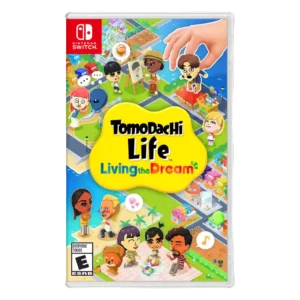
Compare Ghost of Yōtei vs Tomodachi Life: Living the Dream

Ghost of Yōtei

Ghost of Yōtei

Overall score 4.4 / 5

Based on 30 scored reviews

vs
Tomodachi Life: Living the Dream

Tomodachi Life: Living the Dream

Overall score 3.9 / 5

Based on 33 scored reviews

How we score

Scorata scores summarize analyzed review evidence on a 1–5 scale; they are not laboratory measurements or a simple average of customer star ratings. Feature scores summarize the reviews covering that feature. The overall score averages feature scores within each review, then combines review averages. When both expert and customer evidence are available, those two groups receive equal weight. Products can have different review coverage, so small score gaps do not establish a winner.

Recommendations prioritize important features for the category, with a score of at least 3.5, a gap of at least 0.25 points and at least two supporting reviews per product. Features with widely varying scores or broad connectivity contexts are excluded from recommendations. These safeguards do not establish statistical significance.

Quick verdict

What each product is best for

The review evidence points to a tradeoff: gameplay mechanics and content variety versus dialogue quality and sandbox freedom. Choose according to which strengths matter more to you; the overall score alone does not settle that choice.

Choose Ghost of Yōtei for gameplay mechanics and content variety.

Choose Tomodachi Life: Living the Dream for dialogue quality and sandbox freedom.

Why these recommendations?

Ghost of Yōtei

Where It Has the Edge

  • gameplay mechanics is 4.3 vs 3.0. General mechanics are praised as refined and improved, though some reviewers call them reused rather than evolutionary.
  • content variety is 4.3 vs 3.2. Reviewers praise the amount of meaningful activities and handcrafted diversions, while a few note that repeated open-world tasks...
  • faithfulness to franchise is 4.7 vs 3.6. Yōtei is viewed as a worthy successor that preserves Ghost of Tsushima’s best ideas while refining them around...

Tomodachi Life: Living the Dream

Where It Has the Edge

  • dialogue quality is 4.5 vs 2.8. Dialogue is often called hilarious and well localized, though a few reviewers noticed repeated conversation templates over time.
  • sandbox freedom is 4.5 vs 3.8. Creative freedom is one of the strongest points, with reviewers praising island building, custom objects, relationship nudging, and...
  • immersion is 4.5 vs 3.8. Reviewers who scored immersion felt the island tracks daily life well enough to feel like a living virtual...
Ghost of Yōtei 4.4 overall score
Tomodachi Life: Living the Dream 3.9 overall score

Compare features

Scores are out of 5. Missing scores mean missing review evidence, not a missing feature.

Scored on both products

Other features

Family friendliness
Ghost of Yōtei
2.0

The family-friendliness score is low because the only explicit family guidance warns against younger gamers due to violence and mature content.

Tomodachi Life: Living the Dream
4.2

Family friendliness is mostly positive because the game is easy to understand and enjoyable for family watching or younger players, despite caveats around content settings.

Grind level
Ghost of Yōtei
2.8

Grind sentiment is mixed-to-negative where repeated side activities, collectibles, or checklist tasks create fatigue over time.

Tomodachi Life: Living the Dream
5.0

One reviewer specifically praises the relaxed progression for having no grind.

Facial animations
Ghost of Yōtei
4.5

Facial animation is praised in cutscenes and Atsu’s expressions, with reviewers noting visible emotion and strong performance capture.

Tomodachi Life: Living the Dream
2.5

One reviewer criticizes face paint for sometimes blocking traditional facial expressions, limiting expressiveness.

Originality
Ghost of Yōtei
3.0

Originality is moderate: reviewers repeatedly say Yōtei does not revolutionize the formula, but many accept that as focused refinement.

Tomodachi Life: Living the Dream
4.8

Reviewers repeatedly describe the experience as unusually distinctive, hard to compare, and powered by a kind of play few games offer.

Dialogue quality
Ghost of Yōtei
2.8

Dialogue and delivery are mixed: some conversations carry emotion well, but several reviewers call line delivery stilted or conversations dated.

Tomodachi Life: Living the Dream
4.5

Dialogue is often called hilarious and well localized, though a few reviewers noticed repeated conversation templates over time.

Gameplay mechanics
Ghost of Yōtei
4.3

General mechanics are praised as refined and improved, though some reviewers call them reused rather than evolutionary.

Tomodachi Life: Living the Dream
3.0

Reviewers consistently describe the active play as light, simple, and often passive, with minigames and requests adding texture but not deep mechanical substance.

AI behavior
Ghost of Yōtei
4.5

Enemy perception receives positive attention where stealth is described as sound-driven, with enemies reacting to audio as well as sight.

Tomodachi Life: Living the Dream
3.4

The Miis' semi-autonomous behavior creates enjoyable unpredictability, though reviewers also identify repeated patterns and limited spontaneity over time.

Content variety
Ghost of Yōtei
4.3

Reviewers praise the amount of meaningful activities and handcrafted diversions, while a few note that repeated open-world tasks can become chores.

Tomodachi Life: Living the Dream
3.2

Opinions are mixed: many praise surprising events and plentiful unlocks, but repetition, missing activities, and finite scenarios are common concerns.

Faithfulness to franchise
Ghost of Yōtei
4.7

Yōtei is viewed as a worthy successor that preserves Ghost of Tsushima’s best ideas while refining them around Atsu.

Tomodachi Life: Living the Dream
3.6

Several reviewers see it as a fitting sequel or upgrade, though others feel missing features and sharing cuts weaken its connection to earlier entries.

Accessibility options
Ghost of Yōtei
3.0

Accessibility evidence is limited and mixed: TechRadar notes helpful subtitles, visibility, control simplification, and combat assists, but says the suite is lighter than some PS5 peers and lacks colorblind options.

Tomodachi Life: Living the Dream
2.0

Only one review directly discusses accessibility options, and it flags the absence of specific settings as a limitation despite general ease of play.

Innovation
Ghost of Yōtei
3.2

Innovation scores trend moderate because reviewers describe Yōtei as refinement rather than reinvention, with familiar systems made better.

Tomodachi Life: Living the Dream
4.0

One review frames the sequel as a bold evolution, expanding the series with a more connected world, deeper systems, and player-created content.

Core gameplay loop
Ghost of Yōtei
4.8

The core loop is repeatedly described as compelling, hard to put down, and more fruitful than Tsushima for some reviewers.

Tomodachi Life: Living the Dream
4.0

The loop of checking in, helping Miis, collecting happiness, and unlocking island features is widely seen as relaxed and satisfying, though best in short sessions.

Pacing
Ghost of Yōtei
3.6

Pacing is divisive: Game Informer praises it as a triumph, while several reviewers cite predictability, prolonged beats, or odd act structure.

Tomodachi Life: Living the Dream
2.9

Pacing is divisive: the relaxed daily rhythm suits short bursts, but longer sessions can become slow, empty, or repetitive.

Economy and resource balance
Ghost of Yōtei
4.5

Resource balance is praised where simplified material categories and less strict upgrade paths encourage more engagement.

Tomodachi Life: Living the Dream
3.8

Economy impressions are mildly mixed, with one reviewer saying cash was never a problem and another joking about surprisingly high food prices.

Endgame content
Ghost of Yōtei
3.3

Endgame evidence is mixed: there are post-story tasks and challenge reasons to return, but one review notes no new game plus and another says late content can feel samey.

Tomodachi Life: Living the Dream
4.0

One reviewer says reaching credits does not end the game, treating post-credits play as continued island life rather than a conventional ending.

HUD clarity
Ghost of Yōtei
4.8

HUD and marker restraint are praised for keeping the view clear and helping exploration feel less like a checklist.

Tomodachi Life: Living the Dream
4.0

One review highlights the relationship chart as a helpful on-screen aid for understanding nearby Mii connections.

Sandbox freedom
Ghost of Yōtei
3.8

Freedom is moderate: reviewers appreciate loose target order and player-directed wandering, but note that some freedom is an illusion.

Tomodachi Life: Living the Dream
4.5

Creative freedom is one of the strongest points, with reviewers praising island building, custom objects, relationship nudging, and player-authored absurdity.

Exploration quality
Ghost of Yōtei
4.7

Exploration is one of the strongest areas, often called rewarding, organic, and meaningful, though one dissenting review finds it over-guided.

Tomodachi Life: Living the Dream
4.0

One review praises the shift from menu screens to a connected island where events unfold more organically as players move through the space.

Immersion
Ghost of Yōtei
3.8

Immersion is a major strength through world navigation, sound, and minimal HUD, though occasional technical or duel design issues can break it.

Tomodachi Life: Living the Dream
4.5

Reviewers who scored immersion felt the island tracks daily life well enough to feel like a living virtual world.

Learning curve
Ghost of Yōtei
4.0

Learning curve evidence is positive but modest, emphasizing learn-by-doing design that mirrors Atsu’s practice and attention rather than heavy explanation.

Tomodachi Life: Living the Dream
4.7

The game is widely framed as easy to pick up, approachable, and accessible in play style rather than demanding or skill-heavy.

Art direction
Ghost of Yōtei
4.9

Reviewers strongly praise the painterly visual identity, lighting, color, and intentional environmental effects, with only mild familiarity concerns.

Tomodachi Life: Living the Dream
4.3

The bright, cartoonish, sometimes photorealistic presentation is generally praised for matching the game's strange and playful tone.

Emotional impact
Ghost of Yōtei
4.9

Reviewers frequently describe the story as moving, affecting, and emotionally rich, including moments that brought tears or strong sympathy.

Tomodachi Life: Living the Dream
4.3

Some reviewers grew attached to their islands and Miis, describing the game as smile-inducing, endearing, and easy to return to.

Animation quality
Ghost of Yōtei
4.0

Combat animation is often praised for brutality and style, but several reviewers note repetition or less-polished NPC/casual dialogue animation.

Tomodachi Life: Living the Dream
4.5

Reviewers praise smoother transitions and expressive Mii animation, especially how animation supports personality and absurdity.

Atmosphere
Ghost of Yōtei
5.0

The atmosphere is consistently framed as a major strength, emphasizing contemplative tone, environmental mood, and cinematic immersion.

Tomodachi Life: Living the Dream
4.5

Atmosphere is praised where discussed, especially for the bright, silly, offbeat mood created by the presentation and sound.

Character roster
Ghost of Yōtei
4.5

The supporting ensemble is viewed positively in several reviews, though some reviewers find side figures underused or shallow.

Tomodachi Life: Living the Dream
4.0

The 70-Mii limit is generally treated as sufficient by reviewers who discussed it, with one saying even 20 felt like enough.

Environmental detail
Ghost of Yōtei
5.0

Environmental detail earns strong praise for realistic items, dense foliage, weather, light, and painstakingly crafted spaces.

Tomodachi Life: Living the Dream
4.5

One review specifically notes that environments are more detailed than before, supporting the upgraded presentation.

Graphics quality
Ghost of Yōtei
4.9

Visuals receive near-universal praise, from stunning fidelity and landscapes to screenshot-worthy environments and color.

Tomodachi Life: Living the Dream
4.4

Visuals are consistently described as sharp, colorful, clearer than past entries, and good-looking on Switch 2 hardware.

Load times
Ghost of Yōtei
5.0

Load times are one of the clearest technical wins, with reviewers calling travel and boot-to-game transitions near-instant.

Tomodachi Life: Living the Dream
4.5

Load times are praised as minimal or nearly absent in the reviews that discuss them.

Character development
Ghost of Yōtei
4.8

Atsu’s arc is praised for emotional clarity, redemption, growth, and a more intimate character focus than the predecessor.

Tomodachi Life: Living the Dream
4.4

Reviewers often felt Miis became memorable through quirks, relationships, and player input, although one noted that development can be slow.

Writing quality
Ghost of Yōtei
4.3

Writing is praised for creative freshness and emotional ambition, but one dissenting review calls it conventional blockbuster material.

Tomodachi Life: Living the Dream
4.7

Localized dialogue, absurd phrasing, and player-seeded language are frequently praised as central to the comedy and personality.

Narrative quality
Ghost of Yōtei
4.4

The narrative is generally praised as emotional, well-executed, and compelling, but some reviewers criticize predictability, structure, or linear revenge beats.

Tomodachi Life: Living the Dream
3.9

The story is mostly emergent and player-authored, producing memorable relationship drama for some while feeling barebones to others.

Progression system
Ghost of Yōtei
4.4

Progression is praised for tying upgrades to exploration and skill shrines, though some reviewers want more depth or nuance.

Tomodachi Life: Living the Dream
3.9

The Wishing Fountain, island ranks, and Mii levels are often rewarding, but some reviewers found later unlocks generic or less motivating.

Tutorial quality
Ghost of Yōtei
4.0

Tutorial/onboarding evidence is modestly positive, praising learn-by-doing design and seamless early teaching.

Tomodachi Life: Living the Dream
3.8

Tutorial impressions are mostly positive for basic play, though one reviewer felt the creation tools could use more guidance after the quick introduction.

Fun factor
Ghost of Yōtei
4.7

Reviewers repeatedly describe the game as enjoyable, addictive, and fun from start to finish, even when noting formulaic elements.

Tomodachi Life: Living the Dream
4.5

The strongest agreement is that the game is funny, weird, charming, and often laugh-out-loud enjoyable when its absurd systems click.

Bug frequency
Ghost of Yōtei
4.2

Most reviewers report few or no serious bugs, though some mention an odd freeze, minor technical issues, or rare late-game disruptions.

Tomodachi Life: Living the Dream
4.0

One reviewer reported no major technical issues during Switch 2 play.

Crafting system
Ghost of Yōtei
4.0

Crafting/resource gathering is lightly but positively scored because materials are more generalized, making upgrades easier to engage with.

Tomodachi Life: Living the Dream
4.0

One reviewer explicitly praises the absence of crafting, framing that omission as a benefit rather than a missing feature.

Onboarding experience
Ghost of Yōtei
4.0

Onboarding is initially intimidating for some, but reviewers say the discovery and indicator systems become enjoyable once learned.

Tomodachi Life: Living the Dream
4.0

One review notes that new features begin unlocking quickly enough to keep the early setup from dragging.

Controls and connectivity

Menu usability
Ghost of Yōtei
2.5

Menu usability has a specific criticism around a hard-to-see reticule and low-contrast text.

Tomodachi Life: Living the Dream
4.5

One review specifically praises the lack of bloated menus and the ability to jump directly to characters.

Age appropriateness
Ghost of Yōtei
2.0

The only explicit age-appropriateness judgment warns against younger players because of bloody violence, mature themes, language, drug use, frightening scenes, and slight nudity.

Tomodachi Life: Living the Dream
3.0

One review notes the relaxed content filter can push the humor beyond the expected family rating, broadening appeal but complicating age fit.

Voice acting
Ghost of Yōtei
4.9

Voice acting receives strong praise, especially Erika Ishii’s performance and the English/Japanese voice casts.

Tomodachi Life: Living the Dream
4.3

The robotic text-to-speech voices are repeatedly praised as funny and charming, even when awkward by design.

Controls responsiveness
Ghost of Yōtei
4.3

Parrying, quick selection, and combat inputs are praised, but one review flags the overall control system as demanding.

Tomodachi Life: Living the Dream
4.2

Controls are generally described as intuitive and responsive, especially for basic island management, though one reviewer wanted stronger touchscreen use.

Ownership and support

Platform-specific feature support
Ghost of Yōtei
4.2

PS5-specific features are mostly praised, especially PS5 Pro modes and DualSense use, though some touchpad/motion gimmicks are considered distracting.

Tomodachi Life: Living the Dream
2.6

Hardware-specific support is uneven: handheld visuals are praised, but mouse, touch, capture, and local-only sharing limitations frustrate reviewers.

Replay value
Ghost of Yōtei
4.5

Replay value is supported by a large map, many activities, and difficulty-based return reasons, but lack of new game plus limits the endgame.

Tomodachi Life: Living the Dream
3.8

Replay potential depends heavily on player creativity; many reviewers saw long-term daily appeal, while others found repetition and content limits setting in.

Value for money
Ghost of Yōtei
4.8

Value sentiment is positive where reviewers call the game worth buying or a must-play, supported by long playtime and substantial content.

Tomodachi Life: Living the Dream
4.2

Value is positive for players who enjoy short-session chaos and creative building, with reviewers citing money's worth and plenty of value.

Comfort and build

User interface design
Ghost of Yōtei
3.5

UI evidence is mixed: restrained maps and menus are praised, but one reviewer reports low-contrast text and hard-to-see map elements.

Tomodachi Life: Living the Dream
4.6

The interface and building tools are repeatedly praised as clean, intuitive, snappy, and easy to use.

Sound design
Ghost of Yōtei
4.9

Sound design is consistently praised for environmental audio, combat effects, and the way it supports immersion.

Tomodachi Life: Living the Dream
4.3

Sound design supports the quirky atmosphere through playful audio touches and oddball effects that reinforce the game's tone.

World-building
Ghost of Yōtei
3.8

World-building is mixed-to-positive: Ezo’s culture and social context are compelling, but some reviewers wanted broader supporting context.

Tomodachi Life: Living the Dream
4.3

The island can become a personalized little society, with reviewers highlighting its growth from a blank space into a distinct Mii world.

Open-world design
Ghost of Yōtei
4.4

The open world is widely praised for beauty, density, organic discovery, and restraint, with dissenting notes about repetition, over-guidance, or familiar structure.

Tomodachi Life: Living the Dream
3.8

The connected island is viewed as a meaningful upgrade that gives players a visible, customizable world, though building depth is not universally praised.

Map and navigation design
Ghost of Yōtei
4.8

Navigation is strongly praised for wind guidance, readable maps, organic discovery, spyglass/map ideas, and low UI clutter.

Tomodachi Life: Living the Dream
4.5

One review praises the ability to use the menu to jump straight to characters instead of searching tediously.

Performance

Soundtrack quality
Ghost of Yōtei
4.8

The soundtrack receives strong praise for atmospheric Japanese instrumentation, shamisen motifs, memorable songs, and cinematic tension.

Tomodachi Life: Living the Dream
4.1

Music is generally described as whimsical, playful, and catchy, though one review found the selection more dialed back than before.

Performance optimization
Ghost of Yōtei
4.9

Performance feedback is very positive overall, with strong PS5/PS5 Pro stability, polished execution, and few performance complaints.

Tomodachi Life: Living the Dream
4.5

Switch and Switch 2 impressions are positive, with reviewers saying the game runs well and feels snappy.

Evidence available for one product

Other features

Aiming precision
Ghost of Yōtei
2.5

The only scored aiming-related evidence is negative, with one reviewer saying auto-targeting hindered them and contributed to deaths.

Tomodachi Life: Living the DreamNo score yet
Camera behavior
Ghost of Yōtei
3.3

Camera feedback is mixed: one reviewer says it is improved, while others cite visibility problems or off-screen/camera-management friction.

Tomodachi Life: Living the DreamNo score yet
Checkpoint system
Ghost of Yōtei
4.0

Checkpoint evidence is limited but positive for convenience, with one reviewer noting instant respawns and mid-fight boss checkpoints that reduce punishment.

Tomodachi Life: Living the DreamNo score yet
Combat system
Ghost of Yōtei
4.7

Combat is the most broadly praised system, with fluid parries, weapon-swapping, violent impact, and strong duels; criticisms focus on rigidity or fatigue in the rock-paper-scissors weapon setup.

Tomodachi Life: Living the DreamNo score yet
Community features
Ghost of YōteiNo score yet
Tomodachi Life: Living the Dream
2.4

Community-facing features are a major weakness, with reviewers frustrated by blocked sharing, capture limits, and reduced online potential.

Companion AI
Ghost of Yōtei
4.0

The wolf companion is generally appreciated as a useful and flavorful aid, but some reviewers expected it to be more impactful or frequent.

Tomodachi Life: Living the DreamNo score yet
Crash stability
Ghost of Yōtei
3.0

Crash evidence is limited to one reviewer reporting two late-game crashes, while most other technical impressions lean stable.

Tomodachi Life: Living the DreamNo score yet
Difficulty balance
Ghost of Yōtei
4.0

Difficulty is mostly praised for rewarding patience and offering customization, though critics cite easy challenge, high damage, or artificial duel constraints.

Tomodachi Life: Living the DreamNo score yet
Enemy variety
Ghost of Yōtei
4.3

Enemy variety is positively noted through more weapon matchups, multiple factions, and a better range of enemies than before.

Tomodachi Life: Living the DreamNo score yet
Fast travel convenience
Ghost of Yōtei
5.0

Fast travel is strongly praised as instantaneous or highly respectful of the player’s time.

Tomodachi Life: Living the DreamNo score yet
Frame rate stability
Ghost of Yōtei
5.0

Frame-rate evidence is very positive, including stable pacing, smooth transitions, and rock-solid 60 FPS in PS5 Pro modes.

Tomodachi Life: Living the DreamNo score yet
Handheld play suitability
Ghost of YōteiNo score yet
Tomodachi Life: Living the Dream
4.5

Handheld play is praised for sharp 1080p output and a portable, short-session structure that fits the game's rhythm.

Haptic feedback integration
Ghost of Yōtei
5.0

DualSense haptics and touchpad integrations are widely praised, especially wind, riding, rain, music, and activity feedback.

Tomodachi Life: Living the DreamNo score yet
Loot system
Ghost of Yōtei
4.5

Loot evidence is positive where quests and conflicts reward Atsu with valuable loot, information, and clues that feed exploration.

Tomodachi Life: Living the DreamNo score yet
Lore depth
Ghost of Yōtei
4.5

Lore depth receives positive but limited support through mythic tales and storytelling sequences that expand the world’s legends.

Tomodachi Life: Living the DreamNo score yet
Mission variety
Ghost of Yōtei
4.0

Mission variety is lightly positive, with praise for varied missions in different places and diverse objectives.

Tomodachi Life: Living the DreamNo score yet
Movement feel
Ghost of Yōtei
5.0

Movement is praised for fluidity, especially in combat flow and traversal compared with the predecessor.

Tomodachi Life: Living the DreamNo score yet
Platforming precision
Ghost of Yōtei
3.7

Platforming and climbing are mixed: one review says climbing is improved, while others call it awkward or overly gamified.

Tomodachi Life: Living the DreamNo score yet
Polish
Ghost of Yōtei
4.8

Polish is a recurring strength, with reviewers calling the release premium, cinematic, and impressively crafted despite a few bugs or animation rough edges.

Tomodachi Life: Living the DreamNo score yet
Side character depth
Ghost of Yōtei
3.7

Side character depth is mixed, with praise for strong companions and villains but criticism that many allies or supporting figures lack involvement.

Tomodachi Life: Living the DreamNo score yet
Skill tree depth
Ghost of Yōtei
4.5

Skill depth is praised where charms, loadouts, weapon skills, and spirit attacks allow specialized builds and granular tuning.

Tomodachi Life: Living the DreamNo score yet
Social features
Ghost of YōteiNo score yet
Tomodachi Life: Living the Dream
1.9

The lack of online sharing, QR-style exchange, and broader social tools is one of the most repeated complaints.

Stealth mechanics
Ghost of Yōtei
3.9

Stealth is enjoyable and viable, especially with chain assassinations and tools, but several reviewers call it basic or largely unchanged.

Tomodachi Life: Living the DreamNo score yet
Upgrade system
Ghost of Yōtei
4.5

Upgrades are praised for being tied to exploration, weapons, armor, charms, and mastery activities rather than pure XP grinding.

Tomodachi Life: Living the DreamNo score yet
Visual effects quality
Ghost of Yōtei
4.0

Visual-effects evidence is positive but limited, with reviewers appreciating enhanced particles, blood, mud, wind, and cinematic environmental effects.

Tomodachi Life: Living the DreamNo score yet
Weapon balance
Ghost of Yōtei
4.1

Weapon balance is praised for distinct tools and effective counters, but mixed overall because several reviewers find weapons too situational or favorite weapons underpowered outside matchups.

Tomodachi Life: Living the DreamNo score yet
World interactivity
Ghost of YōteiNo score yet
Tomodachi Life: Living the Dream
3.5

Custom items and island objects can feed into Mii behavior and scenarios, but several reviewers note that some interactions remain shallow or limited.

Comfort and build

Boss design
Ghost of Yōtei
4.1

Duels and boss-style encounters are usually exciting and memorable, though one reviewer criticizes duel advantages as artificial.

Tomodachi Life: Living the DreamNo score yet
Level design
Ghost of Yōtei
2.5

The only scored level-design evidence is critical, describing certain mission spaces as single-route and overly linear.

Tomodachi Life: Living the DreamNo score yet
Mission design
Ghost of Yōtei
4.3

Mission design is generally positive for diverse objectives and strong campaign structure, though some side mission design is criticized elsewhere.

Tomodachi Life: Living the DreamNo score yet
Puzzle design
Ghost of Yōtei
1.5

Puzzle design receives a low score from a reviewer who calls several puzzles overly simple and almost pointless.

Tomodachi Life: Living the DreamNo score yet
Quest design
Ghost of Yōtei
4.5

Quest design is a major strength in many reviews thanks to memorable tales, bounties, organic side stories, and worthwhile rewards, though Eurogamer sharply dislikes the formulaic sidequests.

Tomodachi Life: Living the DreamNo score yet

Controls and connectivity

Character customization
Ghost of YōteiNo score yet
Tomodachi Life: Living the Dream
4.6

Customization is the most consistently praised feature, from upgraded Mii creation and relationship settings to deep custom items and island design.

Protagonist appeal
Ghost of Yōtei
4.8

Atsu is widely praised as a compelling, complex, fiery, and memorable lead who gives the sequel a stronger identity.

Tomodachi Life: Living the DreamNo score yet

Other Top Video Games to Consider

#1 Well Dweller
4.7

Best for fluid traversal, rewarding exploration, striking art, and forgiving quality-of-life features. Skip it if you want deep combat, radical genre innovation, or consistently demanding bosses.

Pros: difficulty balance, boss design

Cons: innovation, sandbox freedom

#2 Hades II
4.5

Best for superb combat, inventive builds, and richly voiced characters. Skip it if repeated runs, resource gathering, or visually busy battles outweigh the appeal of steady progress.

Pros: overall quality, combat system

Cons: pacing, grind level

#3 Valheim
4.5

Good if you want a beautiful, demanding survival sandbox built around exploration, building, progression, and memorable co-op. Skip it if long resource runs, harsh death recovery, and deliberate pacing sound...

Pros: town-building system, exploration quality

Cons: grind level, fast travel convenience

#4 Grand Theft Auto VI
4.5

Leonida is a breathtakingly alive crime sandbox with memorable protagonists, spectacular heists, and extraordinary detail. The tradeoff is a 30 fps ceiling, occasional control awkwardness, and some progression friction.

Pros: immersion, graphics quality

Cons: grind level, controls responsiveness