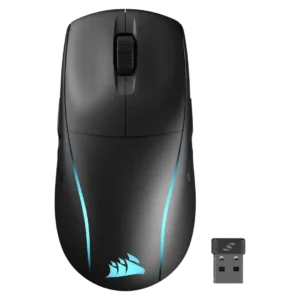
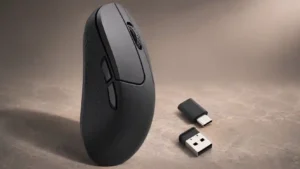
Corsair M75 Wireless
Where It Has the Edge
- glide smoothness is 4.2 vs 3.9. Glide smoothness was broadly praised due to PTFE feet, though some reviewers felt weight or skate slipperiness held...

Scorata scores summarize analyzed review evidence on a 1–5 scale; they are not laboratory measurements or a simple average of customer star ratings. Feature scores summarize the reviews covering that feature. The overall score averages feature scores within each review, then combines review averages. When both expert and customer evidence are available, those two groups receive equal weight. Products can have different review coverage, so small score gaps do not establish a winner.
Recommendations prioritize important features for the category, with a score of at least 3.5, a gap of at least 0.25 points and at least two supporting reviews per product. Features with widely varying scores or broad connectivity contexts are excluded from recommendations. These safeguards do not establish statistical significance.
Quick verdict
The review evidence points to a tradeoff: glide smoothness versus fingertip grip comfort and programmable buttons. Choose according to which strengths matter more to you; the overall score alone does not settle that choice.
Choose Corsair M75 Wireless for glide smoothness.
Choose Keychron M3 Mini for fingertip grip comfort and programmable buttons.
Scores are out of 5. Missing scores mean missing review evidence, not a missing feature.
Battery life was one of the strongest consensus positives, with many reviewers reporting impressive or accurate endurance.
Battery life is generally good, particularly on the 4K model with its more efficient electronics. Some units have shorter runtimes or misleading charge readings.
Charging convenience was positive thanks to fast recharge and easy USB-C top-ups.
The mouse remains usable while charging by cable, but an owner experienced an early charging failure.
Fingertip grip comfort was weak, with reviewers describing the mouse as unwieldy or stiff in fingertip use.
Fingertip grip is a good fit for the light, compact body, although rearward balance may matter to some users.
Durability over time had limited but positive short-term evidence from one reviewer saying it still looked new after days of use.
Some mice hold up well over months of daily use, while others develop charging, connection or button failures within months.
Ergonomic design was praised for comfort, control, and avoiding awkward wrist or hand angles.
Comfort varies significantly with hand shape and grip; the curved symmetrical shell is not universally ergonomic.
Long-session comfort was positive, with reviewers citing low fatigue and extended-session comfort.
Extended use is comfortable for some owners, but others report finger fatigue or discomfort from the compact shape.
Palm grip support was mostly strong thanks to the high back and hand-filling body, with one reviewer finding it less natural than claw grip.
Palm grip can work for smaller hands, while larger hands may find the body too short.
Materials quality was mixed, with plastic feeling sturdy in one review but RGB-frame gaps and dust concerns in another.
Opinions of the ABS plastic vary from pleasantly tactile to hard and inexpensive-feeling.
Build quality leaned positive for solidity and finish, but several reviewers noted looseness, cheap feel, or disappointment.
The solid shell often feels sturdy for its weight, although some units flex and some owners find the construction cheap.
Shape comfort was generally positive for palm/claw and larger hands, but a few reviewers found the shape generic, uncomfortable, or not ideal.
The small symmetrical shape feels comfortable to many, but others find its curve awkward or the shell too small.
Claw grip comfort was praised by reviewers who found the hump and control well-suited to that grip.
The compact hourglass shape works particularly well for claw grip, including some aggressive claw grips.
Firmware reliability received a positive mention for seamless firmware updates.
Receiver firmware problems have required reflashing on some units, occasionally without resolving dropouts.
Value for money was sharply split, with praise at discounted prices or for lefties but criticism at full premium pricing.
Performance and connectivity are unusually strong for the price, although cheap-feeling materials or premature failures make the cost harder to justify for some owners.
Reviewers found the programmable button count limiting for a gaming mouse, especially at the price.
Reassignable buttons offer useful shortcuts without requiring a complicated setup.
Button customization was consistently praised for flexible remapping and personalized layouts.
Button functions can be tailored to personal workflows, including keyboard and multimedia shortcuts.
Software usability was generally positive for iCUE customization and layout, though Bluetooth limitations and learning curve were noted.
Configuration is straightforward, and most adjustments can be saved once without keeping the program running.
Bluetooth support was useful for battery life and device switching, but it was also described as slower than 2.4GHz.
Bluetooth is convenient for laptops and travel, although it feels less smooth than the receiver and some owners experience disconnects.
Side button quality was the most divided area: some praised easy swapping and placement, while many criticized looseness, low profiles, and fiddly use.
Side buttons can feel tactile and responsive, but excess travel, cheap feel and an isolated early failure detract from their quality.
Button responsiveness was a strength, with reviewers reporting responsive switches, solid performance, and no missed clicks.
The main buttons generally respond crisply, although a large thumb can occasionally obstruct actuation.
Connection stability was mostly reliable, but one review reported update-time spikes that undercut confidence.
Many connections are stable, but intermittent dropouts and defective receivers have caused substantial frustration for some owners.
Weight was polarizing, with some calling it lightweight enough and others finding it chunky, sluggish, or too heavy for FPS-first play.
The roughly mid-50-gram design is easy to move and carry. A minority prefer a heavier, more substantial feel.
Weight distribution was a concern for some reviewers, especially imbalance toward the front or back, though one liked the added control for sniping.
Balance is generally good, although the rear can feel slightly heavy when fingertip gripping.
Cable flexibility was mixed: one reviewer liked the braided cable, while another reported cable drag during charging.
The cable is flexible and not overly rigid, which is useful when using the mouse plugged in.
Onboard memory was appreciated because settings could be saved and iCUE avoided after setup, though only one profile was noted.
Settings and profiles remain stored on the mouse, so the configuration app need not stay open.
Handedness options were a core strength, with reviewers repeatedly praising true ambidextrous support and left-handed usefulness.
The symmetrical body accommodates either hand, although the extra buttons are on the left side only.
Profile and DPI switching drew mixed reactions: one reviewer liked on-device tuning, but several disliked the underside DPI control or missing automatic profile switching.
Switching between stored profiles still requires opening the software on the 4K version.
The DPI ceiling was considered strong for most players, though one reviewer noted it is not the highest available.
The adjustable sensitivity spans a wide range, up to 26,000 DPI.
Portability was helped by the dongle storage slot, which one reviewer called a nice touch.
A light, compact body slips easily into a laptop bag or briefcase.
Click latency was usually praised as essentially instant, although one reviewer felt longer travel slightly slowed actuation.
Very low click latency makes rapid inputs feel immediate.
Main click quality was mostly praised for tactile feedback and responsiveness, though one reviewer found the feel cheap or off.
Primary clicks feel precise and pleasant, but shell flex and post-travel can detract from their feel.
Wireless latency was praised where tested, especially the sub-millisecond 2.4GHz response.
The receiver connection can feel effectively lag-free during play.
Motion consistency was praised for responding naturally to hand movement and keeping up with both micro-movements and frantic play.
Tracking remains consistent during quick movements, with no notable tracking problems in several tests.
Polling rate was viewed as adequate for most gamers, but several reviewers criticized it for lagging behind 4,000Hz and 8,000Hz rivals.
The 1K version is already responsive; the 4K option adds headroom, although the difference is not obvious in every game or setup.
Glide smoothness was broadly praised due to PTFE feet, though some reviewers felt weight or skate slipperiness held it back.
The stock feet glide adequately on ordinary pads, but premium alternatives are smoother and certain pads feel less controlled.
Premium feel was divided between an elegant, measured design and complaints that the mouse felt cheap.
Some find the mouse surprisingly premium for its price, while others dislike the hard, insubstantial plastic feel.
Surface compatibility was mostly positive across varied surfaces, but one reviewer noticed hitching on imperfect surfaces.
The feet work well across many tested surfaces, including smooth desks, but their control varies with the pad.
Switch feel was praised for tactile, premium, crisp, and fast feedback.
Huano switches have a tactile, snappy feel that many enjoy, with a click weight that depends on personal preference.
Grip texture was mixed: the coating handled marks well, but the smooth sides caused grip problems or finger discomfort for some.
Textured sides improve purchase for some hands, but the rough plastic irritates others enough to warrant grip tape or sanding.
2.4GHz connectivity was praised for speed, responsiveness, and practical wireless switching.
The receiver connection is typically quick and responsive; isolated firmware and receiver problems can interrupt it.
Scroll wheel quality was mixed, ranging from tactile and pleasant to too stiff, sluggish, or loud.
The tactile scroll wheel works well for basic scrolling, though occasional interruptions and its lack of fast scrolling disappoint some users.
Click noise was a drawback in multiple reviews, with louder or noisier clicks than expected.
Clicks are generally pleasantly tactile and relatively quiet, particularly compared with some competing switches.
The Marksman sensor was broadly described as reliable, responsive, and precise, with only isolated surface-related reservations.
The PixArt sensor delivers excellent tracking in games and everyday work, even during rapid movements.
Wireless performance was usually praised as responsive and dependable, though one reviewer found Corsair's connection less flawless than Razer's.
Wireless operation is fast and responsive, with especially strong performance when using the receiver.
Reviewers repeatedly praised accurate tracking and precise aiming, including smooth shot lining and strong control over 2.4GHz and Bluetooth.
Fast movements track accurately and smoothly, making precise pointer placement a consistent strength.
Simple operation and easy configuration make the mouse approachable for everyday users.
Acceleration handling was judged more than sufficient, with reviewers saying rapid movements were tracked accurately.
The included cable can be useful and flexible, though tight packaging has kinked some 1K cables.
Clicks are generally dependable, but uneven travel and a wobbly left button on some units reduce consistency of feel.
The shell texture improves grip for one tester, while the 4K version's bare plastic feels slippery to another assessment.
Sensitivity adjustment and smooth tracking allow quick, precise cursor movements.
The underside DPI switch makes sensitivity changes possible without a software visit.
Separate USB-A and USB-C receivers simplify moving between computers, although manually disconnecting a receiver may be necessary.
Ecosystem integration was supported by Corsair lighting-link syncing across multiple Corsair devices.
The stock feet are usable but not as refined as premium skates; aftermarket replacements can improve control.
Firmware updates are more cumbersome than necessary because the configuration software does not directly handle them.
FPS gaming suitability was mixed: casual and general FPS play worked well, but pure competitive or solo FPS users may prefer lighter/faster mice.
The 1K version includes USB-A and USB-C receivers plus adapters and a cable; the 4K model uses a different receiver arrangement.
Early units have exhibited minor shell imperfections and occasional receiver quality-control problems.
Lift-off behavior received positive remarks, with reviewers noting strong lift and a nice low-distance feel.
MacBook owners frequently praise the smooth response and easy compatibility, particularly with USB-C receivers, though receiver failures are possible.
MMO gaming suitability was limited by button count, despite one reviewer saying it could work across varied titles.
MOBA gaming suitability was positive in one review, which found it delightful and responsive for League of Legends.
The Mini name can be misleading because the body is only slightly smaller than the original M3.
Some early 1K packaging kinked the cable; softer packaging on the 4K version improves the unboxing experience.
The 4K version's more efficient controller substantially improves battery performance over the 1K version.
Five stored profiles allow detailed configuration for different preferences and tasks.
Receiver failures have affected some units, including a defective 4K dongle and a nonfunctional USB-C receiver.
The shell is relatively easy to open for maintenance and replacement of the battery or side-button board.
Fast, smooth pointer response is a standout in games and desktop work, particularly through the USB receiver.
RGB features were highly mixed: customization and desktop style were praised, but hidden zones, weak underglow, and battery drain drew criticism.
The wheel has a tactile, somewhat firm feel that some enjoy and others find too resistant.
The inexpensive Huano switches perform well, even though one tester preferred the higher-end switches in the larger model.
A dedicated USB-C receiver is particularly convenient for modern laptops on the 1K model, although isolated receiver failures occur.
There is no convenient onboard storage for the small receivers, making them easier to misplace.
Wired gaming works well alongside the wireless receiver mode.
Many owners experience trouble-free daily operation, but intermittent disconnections and early failures are genuine risks.
Support is a weak point for some owners, including long waits for replacement receivers and unhelpful email responses.
Bluetooth offers a convenient way to use the mouse without plugging in a receiver.
The raised curve can fill the palm nicely, though it does not follow every hand naturally.
Macro support was viewed positively where mentioned, with iCUE allowing shortcuts, media controls, app launches, and macros.
The updated software can manage multiple compatible devices conveniently.
Several owners report that it works immediately without fiddly configuration.
The unusual skate outline limits the choice of exact-fit aftermarket feet.
Initial pairing is often quick, but defective receivers and repeated Bluetooth pairing failures can make setup frustrating.
The lighter design improves on the original M3, and the 4K version's better battery life and polling options can justify the premium.
Side-button placement helps prevent accidental presses for some grips.
The simple layout provides useful side buttons without a redundant top-mounted DPI control.
The side buttons are generally accessible, but their flush placement and the rear button can make them harder to reach for certain grips.
Some owners enjoy the responsive buttons while others find them mushy or cheap-feeling.
Onboard controls and persistent settings let users avoid keeping companion software running.
Debounce timing can be adjusted to suit gaming, though changing the factory setting is recommended by one tester.
Sensitivity can be customized for different preferences, although the desktop utility's 100-DPI steps are not as fine as some alternatives.
Dedicated underside controls are convenient, although the small switches can be stiff to operate.
Polling rate can be changed directly on the mouse, without opening the configuration program.
The configuration software offers plentiful settings and has improved over time; owners also appreciate the web configurator.
The lightweight configuration program does not need to run continuously in the background.
Software stability had one clear negative report: iCUE reset Windows mouse settings when launched.
Tilt gesture controls were a weakness because one reviewer specifically expressed disappointment that tilt controls were absent.
The clean, understated styling appeals to many buyers, even if the design is not especially distinctive.
Many users find the shape and textured sides secure and comfortable to hold.
Small and medium hands often fit well; larger hands can use claw or fingertip grip, depending on their proportions.
It is compact and portable, but only modestly smaller than the original M3 and too small for some hands.
Skate durability received one positive mention for resisting dust and fluff on mouse mats.
The charge indicator is handy when working correctly, but its tiny LED is difficult to see and one unit gave premature low-battery warnings.
A full charge takes around two hours in one test, which is acceptable rather than especially quick.
The internal rechargeable battery can be replaced with some disassembly.
Light weight, quick clicks and excellent tracking deliver strong gaming performance, although shell and feet limitations keep it from being an ideal enthusiast mouse.
It works well for ordinary office tasks, but the basic wheel and click feel are less suitable for some productivity workflows.
The 4K scroll wheel operates relatively quietly.
Measured weights can run a few grams above the advertised figure, and the 1K packaging and documentation did not consistently agree.
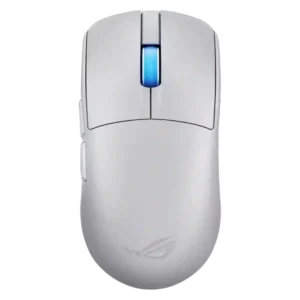
Choose the ROG Harpe II Ace for ultralight FPS play, precise tracking, smooth glide, and web-based tuning. Skip it if you need palm-grip support, MMO buttons, onboard profiles, or long...
Pros: glide smoothness, weight
Cons: handedness options
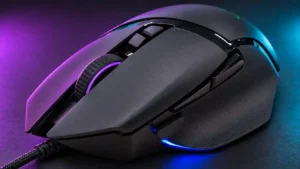
Excellent tracking, comfortable right-handed ergonomics and a versatile scroll wheel make the Basilisk V3 a strong gaming and productivity mouse. Its substantial weight, fixed cable and sometimes over-sensitive automatic scrolling...
Pros: scroll wheel quality, RGB features
Cons: weight, handedness options
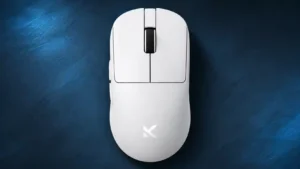
The L7 Pro delivers remarkably light handling, precise aiming and a grippy shell at a budget price. Stock skates are less impressive, and conflicting click-latency measurements warrant caution for latency-sensitive...
Pros: value for money, weight
Cons: wired connectivity
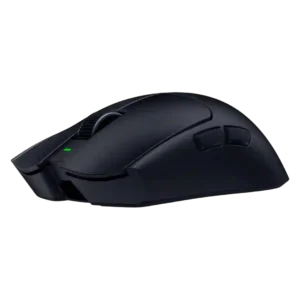
Best for ultra-light, competition-focused speed, precise tracking, stable wireless, and long battery life. Skip it if you need quieter clicks, left-handed support, Bluetooth, more buttons, or better value for casual...
Pros: value for money, weight
Cons: click noise, RGB features