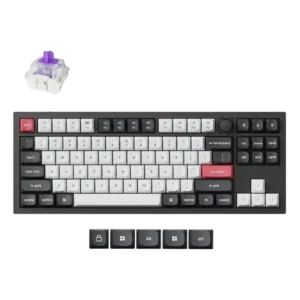
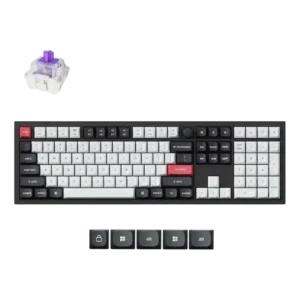
Scorata scores summarize analyzed review evidence on a 1–5 scale; they are not laboratory measurements or a simple average of customer star ratings. Feature scores summarize the reviews covering that feature. The overall score averages feature scores within each review, then combines review averages. When both expert and customer evidence are available, those two groups receive equal weight. Products can have different review coverage, so small score gaps do not establish a winner.
Recommendations prioritize important features for the category, with a score of at least 3.5, a gap of at least 0.25 points and at least two supporting reviews per product. Features with widely varying scores or broad connectivity contexts are excluded from recommendations. These safeguards do not establish statistical significance.
Quick verdict
What each product is best for
The review evidence points to a tradeoff: legend visibility and frame rigidity versus ergonomics and switch options. Choose according to which strengths matter more to you; the overall score alone does not settle that choice.
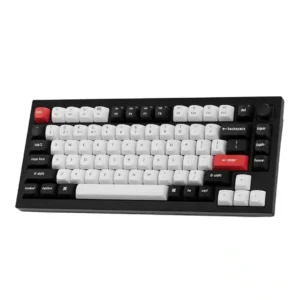
Choose Keychron Q1 HE for legend visibility and frame rigidity.
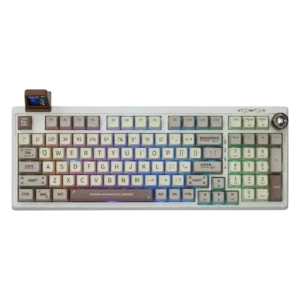
Choose Epomaker RT100 for ergonomics and switch options.
Why these recommendations?
Keychron Q1 HE
Where It Has the Edge
legend visibility is 3.9 vs 2.5. Legend feedback is mixed: one reviewer praised clear legends, while another found subtle typesetting and process issues.
frame rigidity is 5.0 vs 3.7. Frame rigidity is unanimously praised in the scored evidence, with reviewers noting no flex, no shifting, and strong...
materials quality is 4.8 vs 3.7. Materials quality is strongly praised, especially the aluminum body, robust construction, PBT caps, and premium finishes, with only...
Epomaker RT100
Where It Has the Edge
ergonomics is 4.4 vs 3.3. Ergonomics are generally positive due to soft mounting, comfortable key profiles, typing angle choices, and carpal-tunnel-friendly spacing in...
switch options is 4.4 vs 2.3. Switch choice is a recurring strength: reviewers praised the range of stock options and the ability to choose...
hot-swappable switches is 4.6 vs 3.3. Hot-swappable switch support is a clear strength, repeatedly praised for repairability, flexibility, and broad 3-/5-pin compatibility.
Keychron Q1 HE4.2 overall score
Epomaker RT1004.1 overall score
Compare features
Scores are out of 5. Missing scores mean missing review evidence, not a missing feature.
Scored on both products
Comfort and build
Ergonomics
Keychron Q1 HE
3.3
Ergonomic feedback is mixed: typing angle and comfort often worked well, but many reviewers disliked the lack of adjustable feet or found the profile too tall.
Epomaker RT100
4.4
Ergonomics are generally positive due to soft mounting, comfortable key profiles, typing angle choices, and carpal-tunnel-friendly spacing in one review.
Materials quality
Keychron Q1 HE
4.8
Materials quality is strongly praised, especially the aluminum body, robust construction, PBT caps, and premium finishes, with only the copper variant's finish drawing a caveat.
Epomaker RT100
3.7
Materials quality is generally solid for the price, especially PBT keycaps and thicker plastic, but the plastic volume knob drew criticism.
Durability
Keychron Q1 HE
4.3
Durability evidence is mostly positive due to the sturdy metal construction, though one teardown-focused review warned against opening the board because a connector was easy to damage.
Epomaker RT100
3.5
Durability evidence is mostly positive for keycaps, but one reviewer worried the protruding mini screen could be vulnerable to impact.
Build quality
Keychron Q1 HE
4.9
Build quality is one of the strongest points, with reviewers repeatedly praising the solid metal body, premium feel, rigidity, and high-quality construction.
Epomaker RT100
4.3
Build quality is mostly praised as sturdy, well constructed, and high quality for plastic, with a few caveats about knob or screen details.
Typing comfort
Keychron Q1 HE
4.7
Typing comfort is very strong, with reviewers praising long-session comfort, reduced fatigue, and comfortable typing feel.
Epomaker RT100
4.3
Typing comfort is highly praised when users like the switch profile, but tall MDA caps and light switches are uncomfortable for some reviewers.
Design aesthetics
Keychron Q1 HE
4.9
Reviewers strongly liked the Q1 HE's clean, premium, understated look, with praise for both the colorways and professional styling.
Epomaker RT100
4.6
Design aesthetics are a major consensus strength: reviewers liked the retro-futuristic styling, colorways, and distinctive mini-TV personality.
Size and form factor
Keychron Q1 HE
4.5
The scored evidence praises the 75% form factor for staying compact while retaining essential productivity and gaming keys.
Epomaker RT100
4.4
Size and form factor are widely liked because the RT100 keeps a numpad while remaining more compact than a traditional full-size board.
Battery and charging
Battery life
Keychron Q1 HE
3.5
Battery life is acceptable but not a standout; reviewers ranged from calling it weak or only a few days with RGB to saying it was enough for regular use.
Epomaker RT100
3.8
Battery life is mixed: some reviewers saw only a couple days with RGB or screen use, while others reported a week or more with lighter settings.
Ownership and support
Reliability
Keychron Q1 HE
2.0
The only reliability score is negative, based on PCWorld's recurring wake-from-sleep problems in wireless mode.
Epomaker RT100
2.8
Reliability is mixed, with strong connections in some reviews but repeated concerns about screen setup, app crashes, missing readings, and unstable mini-TV behavior.
Rapid trigger support
Keychron Q1 HE
4.9
Rapid trigger support is one of the strongest gaming features, with reviewers repeatedly saying it works well, feels solid, and improves fast inputs.
Epomaker RT100
2.0
Rapid-trigger style play was a weak point in one review because the Sea Salt switches made fast, precise FPS inputs harder.
Value for money
Keychron Q1 HE
3.9
Value is split: many reviewers felt the premium price was justified by build and features, while others called it steep, overkill, or hard to justify in specific variants.
Epomaker RT100
4.6
Value for money is one of the clearest strengths, with reviewers repeatedly calling the RT100 feature-rich, reasonably priced, or hard to beat near $100-$120.
Ease of switch replacement
Keychron Q1 HE
4.8
The only direct hands-on switch-removal evidence was positive, with the reviewer finding the process easy.
Epomaker RT100
4.4
Switch replacement is usually easy, though one internal-access review found pulling and installing switches harder because of plate flexibility.
Other features
Key stability
Keychron Q1 HE
5.0
The only direct evidence is very positive, with one reviewer finding minimal lateral movement or stem wobble.
Epomaker RT100
2.5
A spacebar rebound issue in one review hurt perceived key stability by creating accidental double spaces.
Profile management
Keychron Q1 HE
2.0
Profile management is a weak point in the scored evidence because PCWorld criticized the lack of automatic per-game profiles.
Epomaker RT100
4.5
Profile management was directly praised in one review as intuitive inside the Epomaker driver workflow.
Actuation consistency
Keychron Q1 HE
4.9
The limited direct evidence is very positive, with reviewers saying actuation felt natural across adjustment points and that tracking was very accurate.
Epomaker RT100
2.5
One reviewer raised a possible consistency concern, describing actuation as inconsistent across the keyboard despite otherwise liking the board.
Switch options
Keychron Q1 HE
2.3
Switch options are the clearest repeated weakness, with reviewers consistently noting the narrow magnetic-only, linear-only ecosystem.
Epomaker RT100
4.4
Switch choice is a recurring strength: reviewers praised the range of stock options and the ability to choose quieter, tactile, or more conventional linear switches.
Frame rigidity
Keychron Q1 HE
5.0
Frame rigidity is unanimously praised in the scored evidence, with reviewers noting no flex, no shifting, and strong aluminum construction.
Epomaker RT100
3.7
Frame rigidity is mixed: some reviewers found the chassis firm with no flex, while others noted flex or a gasket system that did not behave as expected.
Portability
Keychron Q1 HE
2.3
Portability is a weakness: reviewers repeatedly liked the layout but found the heavy metal body poor for travel or tournaments.
Epomaker RT100
3.3
Portability is mixed: the plastic build and moderate weight help, but the protruding screen and near-full layout make travel less friendly.
Key responsiveness
Keychron Q1 HE
4.9
Responsiveness is rated very highly, with reviewers citing fast reaction, low actuation advantages, and little difference from top Hall Effect competitors.
Epomaker RT100
3.9
Key responsiveness is generally strong, especially on wireless and lighter gaming, though some silent-switch users reported false inputs or double spaces.
Cable quality
Keychron Q1 HE
3.8
Only one reviewer evaluated the cable directly, calling the included braided USB-C cable decent.
Epomaker RT100
4.6
Cable quality is a surprisingly consistent strength, with reviewers praising the thick, themed, premium-feeling included cable.
Per-key lighting control
Keychron Q1 HE
3.2
Per-key lighting control is limited; one reviewer noted that effects exist, but individual key RGB customization was not available through the app.
Epomaker RT100
4.0
Per-key lighting control appears as a modern feature reviewers valued, though it is limited by opaque keycaps.
Volume control
Keychron Q1 HE
4.6
The rotary knob is generally well liked for volume and mute control, with praise for feel, usefulness, and tactile operation.
Epomaker RT100
3.8
Volume control is useful and often tactile, but the knob’s plasticky look and out-of-place design are repeated complaints.
Layout options
Keychron Q1 HE
4.8
Layout evidence is highly positive, especially among reviewers who preferred the Q1 HE's 75% layout over smaller gaming boards.
Epomaker RT100
4.0
Layout options are praised mainly through the compact full-size/number-pad layout, which suits office work and number-heavy use.
Key spacing
Keychron Q1 HE
5.0
The only explicit spacing judgment is very positive, with one reviewer calling the key spacing just right.
Epomaker RT100
4.3
Key spacing is praised as roomy enough to avoid crowding while still compact enough to navigate efficiently.
Switch feel
Keychron Q1 HE
4.9
Switch feel is one of the most consistently praised attributes, with reviewers describing the magnetic switches as smooth, soft, quiet, premium, and satisfying.
Epomaker RT100
4.4
Reviewers broadly liked the switch feel, especially Wisteria, Flamingo, and Sea Salt options, but silent Sea Salts divided users who disliked their mushy or overly soft bottom-out.
Typing feel
Keychron Q1 HE
4.8
Typing feel is one of the product's biggest strengths, with reviewers calling it excellent, satisfying, smooth, cloud-like, and premium.
Epomaker RT100
4.3
Typing feel is one of the strongest themes: most reviewers found the RT100 smooth, soft, satisfying, and enjoyable, with only switch-profile caveats.
Connectivity
Keychron Q1 HE
4.7
Connectivity is broadly strong thanks to wired, Bluetooth, and 2.4GHz options, although one reviewer found the mode switch fiddly.
Epomaker RT100
4.2
Connectivity is a consistent strength across wired, Bluetooth, and 2.4GHz, although one reviewer had cable-specific wired finickiness.
Keycap quality
Keychron Q1 HE
4.7
Keycaps received strong praise for PBT material, comfort, shape, durability, and overall feel, with only minor legend or profile caveats elsewhere.
Epomaker RT100
4.3
Keycap quality is widely praised for thick PBT construction, feel, texture, and styling, though a few reviewers disliked the height or printing choices.
Compatibility
Keychron Q1 HE
4.9
Compatibility is highly praised, especially for users moving between Windows and macOS, with several reviewers valuing the platform switch and included alternate keycaps.
Epomaker RT100
4.5
Compatibility is positive where discussed, especially dual OS support and broad wired/Bluetooth/2.4GHz device support.
Acoustics
Keychron Q1 HE
4.4
Reviewers usually liked the Q1 HE's sound, describing it as nice, deep, thocky, semi-silent, or excellent, though a few said rivals sounded better or that it could be improved.
Epomaker RT100
4.8
Acoustics are a major strength, with reviewers praising deep thock, muted office-friendly sound, and strong stock sound profiles.
Stabilizer quality
Keychron Q1 HE
3.8
Stabilizer feedback is mixed, ranging from noticeable rattle to great-feeling stabilizers.
Epomaker RT100
4.2
Stabilizers are mostly good out of the box, with multiple reviewers hearing little rattle, though one noted ticks needing light tuning.
Extra gaming features
Keychron Q1 HE
4.3
Gaming extras are generally strong, especially rapid trigger, snap/priority-style functions, and multi-action commands, though one review missed some pro-focused features.
Epomaker RT100
4.0
Extra gaming features have limited evidence, but NKRO was appreciated as useful for macros and gamers.
RGB lighting quality
Keychron Q1 HE
3.9
Lighting quality is mixed-positive: reviewers often found it bright, smooth, vivid, or attractive, but some said it looked muted or got lost under the keycaps.
Epomaker RT100
4.0
RGB lighting quality is generally liked for visible, vibrant effects, although some reviewers noted subdued underglow or non-shine-through keycaps limiting usefulness.
Latency
Keychron Q1 HE
4.8
Latency evidence is very strong in wired and 2.4GHz modes, with reviewers finding wireless close to wired or solid in testing.
Epomaker RT100
4.7
Latency evidence is mostly positive, with several reviewers reporting no discernible lag over 2.4GHz and acceptable wireless responsiveness.
Desk space efficiency
Keychron Q1 HE
4.5
The 75% layout was praised for balancing compactness with usability and fitting smaller desks while keeping essential controls.
Epomaker RT100
4.5
Desk space efficiency is a strong point for users who want numpad functionality without a sprawling full-size footprint.
Performance
Legend visibility
Keychron Q1 HE
3.9
Legend feedback is mixed: one reviewer praised clear legends, while another found subtle typesetting and process issues.
Epomaker RT100
2.5
Legend visibility is mixed: large legends are easy to see, but cluttered number-row legends and non-shine-through caps hurt usability in some contexts.
Gaming performance
Keychron Q1 HE
4.6
Gaming performance is a major strength; most reviewers found the Q1 HE responsive and effective for competitive play, though one PCWorld review found it less compelling than gaming-focused rivals.
Epomaker RT100
4.0
Gaming performance is good for casual and light competitive play, but intense FPS use can suffer with the soft Sea Salt switches.
Noise level
Keychron Q1 HE
4.4
Most reviewers found the Q1 HE quiet or quieter than typical mechanical boards, though PCWorld considered it noisy compared with quieter expectations.
Epomaker RT100
4.8
Noise level is a consistent strength for the Sea Salt Silent version, which reviewers found extremely quiet and office-friendly.
Sound dampening
Keychron Q1 HE
4.9
Sound dampening is a standout, with reviewers repeatedly praising foam, gaskets, acoustic pads, and reduced ping or noise.
Epomaker RT100
4.6
Sound dampening is widely praised; foam, gasket-style structure, and case design reduce hollowness, pinging, and harshness.
Wireless performance
Keychron Q1 HE
4.2
Wireless performance is mostly strong in 2.4GHz mode, with low latency and solid consistency, though setup or wake issues hurt a couple of reviews.
Epomaker RT100
4.4
Wireless performance is generally strong, especially over 2.4GHz, with reviewers reporting no obvious lag and easy device switching.
Backlight brightness
Keychron Q1 HE
3.0
Brightness feedback is mixed: one video found the LEDs pretty bright, while written reviews complained the Caps Lock indicator was hard to see and RGB looked tame.
Epomaker RT100
3.0
Backlight brightness received limited direct opinion, with one reviewer finding it not especially strong.
Controls and connectivity
Hot-swappable switches
Keychron Q1 HE
3.3
Hot-swap support is useful but constrained because compatible switches are limited to specific magnetic options rather than standard MX-style choices.
Epomaker RT100
4.6
Hot-swappable switch support is a clear strength, repeatedly praised for repairability, flexibility, and broad 3-/5-pin compatibility.
RGB customization
Keychron Q1 HE
3.1
RGB customization is mixed, with several reviewers liking presets or hue controls but others criticizing limited per-key and advanced lighting control.
Epomaker RT100
4.3
RGB customization is considered useful and reasonably flexible through the driver, with both per-key control and effect customization mentioned positively.
Customization options
Keychron Q1 HE
4.6
Customization is widely praised for actuation, keymaps, macros, layers, HE features, and browser-based controls, though one dissenting review argued its practical appeal is narrow.
Epomaker RT100
3.7
Customization is a central appeal, especially with screen images, RGB, keys, and switches, but the mini TV layout and metrics are not customizable enough for several reviewers.
Software quality
Keychron Q1 HE
4.1
Software quality is mixed-positive: many praised Keychron Launcher as powerful, easy, and lightweight, while others reported messiness, confusing setup, or wired-only limitations.
Epomaker RT100
3.4
Software quality is mixed: some reviewers found it stable or straightforward, while others found it clunky, finicky, slow, or unreliable for screen features.
Media controls
Keychron Q1 HE
4.5
The programmable knob was praised as useful for volume and more complex functions, especially for editing workflows.
Epomaker RT100
3.9
Media controls are useful overall, though the knob design and feel range from excellent tactile feedback to cheap-looking plastic.
Macro customization
Keychron Q1 HE
4.0
Macro and multi-command support is useful and powerful, but the interface or one-key-multiple-command design was confusing or imperfect for some reviewers.
Epomaker RT100
3.8
Macro customization is useful but split: reviewers acknowledged macro support, while software friction made it less intuitive in some cases.
Evidence available for one product
Ownership and support
Analog input support
Keychron Q1 HE
3.7
Analog and gamepad-style input drew mixed reactions: several reviewers saw real potential or useful racing/gamepad possibilities, while others found gamepad functions quirky or unable to work natively as expected.
Epomaker RT100No score yet
Other features
Onboard memory
Keychron Q1 HE
4.5
The only scored evidence is positive, with one reviewer valuing that configurations can be stored on the keyboard.
Epomaker RT100No score yet
Polling rate
Keychron Q1 HE
3.8
The 1,000Hz polling rate is generally adequate and responsive, but one review penalized it for lacking 8,000Hz support.
Good if you want a premium 96% Hall Effect keyboard for work and gaming with excellent build, sound, and customization. Skip it if you need cheaper esports-first speed, 8,000Hz polling,...
Choose it if competitive gaming speed, Rapid Trigger, and deep per-key customization matter more than extras. Skip it if you need wireless, dedicated arrows/media keys, adjustable height, or a lower-cost...
Good if you want a premium, quiet TKL Hall Effect keyboard for typing and gaming. Skip it if price, portability, 8,000Hz polling, or broad switch choice matters most.
Good if you want a premium full-size Hall Effect keyboard with smooth switches, quiet sound, and deep customization. Skip it if you need a portable, budget-friendly board or broad switch...