Scorata scores summarize analyzed review evidence on a 1–5 scale; they are not laboratory measurements or a simple average of customer star ratings. Feature scores summarize the reviews covering that feature. The overall score averages feature scores within each review, then combines review averages. When both expert and customer evidence are available, those two groups receive equal weight. Products can have different review coverage, so small score gaps do not establish a winner.
Recommendations prioritize important features for the category, with a score of at least 3.5, a gap of at least 0.25 points and at least two supporting reviews per product. Features with widely varying scores or broad connectivity contexts are excluded from recommendations. These safeguards do not establish statistical significance.
Quick verdict
What each product is best for
The review evidence points to a tradeoff: ergonomics and battery life versus noise level and value for money. Choose according to which strengths matter more to you; the overall score alone does not settle that choice.
Choose ASUS ROG Azoth X for ergonomics and battery life.
Choose Corsair K65 Plus for noise level and value for money.
Why these recommendations?
ASUS ROG Azoth X
Where It Has the Edge
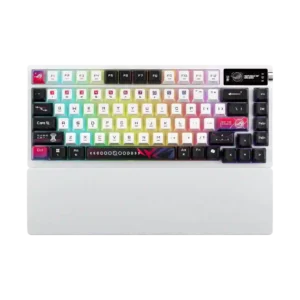
ergonomics is 4.8 vs 3.6. Ergonomics were positive where covered, mainly due to the wrist rest and FR4/typing changes that improved comfort.
battery life is 4.9 vs 4.4. Battery life drew near-universal praise, with many reviewers calling it impressive even when RGB or OLED reduced rated...
legend visibility is 4.4 vs 2.3. Legend visibility was mostly praised thanks to clear labeling, visible lettering, and sharper printing, though small display icons...
Corsair K65 Plus
Where It Has the Edge
noise level is 4.6 vs 3.2. Noise was widely praised as quiet, calm, and non-disruptive, making the board suitable for shared or quieter spaces.
value for money is 4.1 vs 2.7. Value sentiment was mostly positive at the launch price, especially versus pricier gaming boards, but some reviewers felt...
materials quality is 3.6 vs 3.2. Materials drew mixed reactions: reviewers liked the premium feel from the plate and PBT caps but often wished...
ASUS ROG Azoth X4.1 overall score
Corsair K65 Plus4.2 overall score
Compare features
Scores are out of 5. Missing scores mean missing review evidence, not a missing feature.
Scored on both products
Comfort and build
Ergonomics
ASUS ROG Azoth X
4.8
Ergonomics were positive where covered, mainly due to the wrist rest and FR4/typing changes that improved comfort.
Corsair K65 Plus
3.6
Ergonomic feedback was mixed: adjustable feet helped some reviewers, but sharper edges and the missing wrist rest hurt long-session comfort for others.
Durability
ASUS ROG Azoth X
4.1
Durability evidence was positive but limited, mainly tied to durable dye-sub legends and premium construction.
Corsair K65 Plus
4.8
Durability evidence was limited, but one reviewer strongly expected the sturdy build to last a long time.
Materials quality
ASUS ROG Azoth X
3.2
Materials quality was mixed: PBT caps and metal elements helped, while plastic construction and finish complaints hurt the premium impression.
Corsair K65 Plus
3.6
Materials drew mixed reactions: reviewers liked the premium feel from the plate and PBT caps but often wished for more metal or less plastic at the price.
Build quality
ASUS ROG Azoth X
4.3
Build quality was generally sturdy and solid, but the plastic base, premium-price expectations, and scratch-prone finish produced mixed marks.
Corsair K65 Plus
4.5
Build quality was a consistent strength, with reviewers calling the board sturdy, solid, hefty, and well-built despite its plastic-heavy shell.
Size and form factor
ASUS ROG Azoth X
4.8
The 75% size was praised as practical, with reviewers calling it a useful and near-perfect form factor for gaming desks.
Corsair K65 Plus
4.6
The 75% form factor was a major strength, balancing compactness with arrows, function keys, and everyday usability.
Design aesthetics
ASUS ROG Azoth X
4.3
Design aesthetics were divisive but mostly positive: reviewers often liked the bold sci-fi white theme, while acknowledging it will not suit every desk setup.
Corsair K65 Plus
4.4
Most reviewers liked the understated two-tone look and cleaner non-gamery styling, though one disliked the keycap color mix.
Typing comfort
ASUS ROG Azoth X
4.6
Typing comfort was strong, with reviewers describing long sessions as comfortable, pleasant, and easy.
Corsair K65 Plus
4.5
Typing comfort was mostly praised over long sessions, but some reviewers found the edge angle or lack of wrist rest uncomfortable.
Battery and charging
Battery life
ASUS ROG Azoth X
4.9
Battery life drew near-universal praise, with many reviewers calling it impressive even when RGB or OLED reduced rated endurance.
Corsair K65 Plus
4.4
Battery life was widely praised, especially with RGB off; reviewers with RGB on reported shorter but still usable runtimes ranging from days to around a week.
Ownership and support
Reliability
ASUS ROG Azoth X
4.4
Reliability was mixed: wireless operation was stable, but software instability and finish scratching hurt confidence.
Corsair K65 Plus
4.4
Reliability evidence was limited but positive, with one reviewer saying the board stayed dependable in hectic gameplay.
Value for money
ASUS ROG Azoth X
2.7
Value for money was the most common concern, with many reviewers calling the high price hard to justify despite the strong typing and wireless experience.
Corsair K65 Plus
4.1
Value sentiment was mostly positive at the launch price, especially versus pricier gaming boards, but some reviewers felt cheaper competitors outclass it.
Rapid trigger support
ASUS ROG Azoth X
2.0
Rapid trigger support was a repeated weakness because reviewers noted the Azoth X lacks true rapid trigger or relies on Speed Tap instead.
Corsair K65 Plus
2.4
Rapid trigger support was viewed as a missing or unnecessary advanced feature depending on the reviewer’s gaming needs.
Ease of switch replacement
ASUS ROG Azoth X
4.7
Switch replacement was praised as straightforward, with reviewers describing access or removal as quick and easy.
Corsair K65 Plus
4.4
Reviewers generally found switch replacement and disassembly approachable, though one noted some switches required extra force.
Performance
Legend visibility
ASUS ROG Azoth X
4.4
Legend visibility was mostly praised thanks to clear labeling, visible lettering, and sharper printing, though small display icons and stylized legends had caveats.
Corsair K65 Plus
2.3
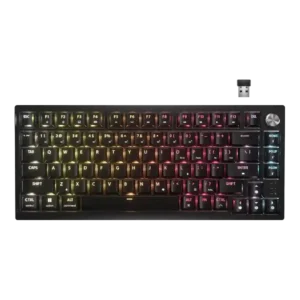
Legend visibility was a consistent weakness because the opaque keycaps do not shine through, making dark-room typing harder.
Noise level
ASUS ROG Azoth X
3.2
Noise level was mixed: dampening helped keep the board acceptable, but several reviewers complained about a loud or thunky spacebar and higher overall volume.
Corsair K65 Plus
4.6
Noise was widely praised as quiet, calm, and non-disruptive, making the board suitable for shared or quieter spaces.
Gaming performance
ASUS ROG Azoth X
4.2
Gaming performance was positive for casual and mainstream play, but reviewers noted it is less compelling for players seeking Hall-effect or esports-focused features.
Corsair K65 Plus
4.5
Gaming performance was mostly praised for smooth, responsive, reliable play, though one reviewer found it merely average and not exceptional.
Wireless performance
ASUS ROG Azoth X
5.0
Wireless performance was one of the strongest areas, with reviewers repeatedly reporting stable, drop-free, low-latency operation.
Corsair K65 Plus
4.7
Wireless performance was repeatedly praised as stable, lag-free, and reliable over 2.4GHz or Bluetooth in normal use.
Sound dampening
ASUS ROG Azoth X
4.4
Sound dampening was a clear strength, with reviewers crediting the foam stack and damping layers for reducing ping and improving sound.
Corsair K65 Plus
4.6
Sound dampening was strongly praised, with reviewers crediting the foam and silicone layers for quieter, smoother, less hollow sound.
Backlight brightness
ASUS ROG Azoth X
4.3
Backlight brightness split reviewers: several found it exceptional or very bright, while one reviewer felt the lighting was underwhelming.
Corsair K65 Plus
4.4
Reviewers generally found the lighting bright or visible around the caps, helped by the reflective plate, even though it does not shine through legends.
Other features
Wrist rest quality
ASUS ROG Azoth X
4.3
The wrist rest was broadly welcomed as comfortable and useful, though some disliked the lack of magnets or found it harder than alternatives.
Corsair K65 Plus
2.6
Wrist-rest feedback was negative because the keyboard lacks one, which several reviewers felt mattered at the price or for comfort.
Key spacing
ASUS ROG Azoth X
3.5
Key spacing had limited mixed evidence, with one first-impression review noting the smaller-feeling keys may require adjustment.
Corsair K65 Plus
4.8
Key spacing evidence was limited but very positive, with one reviewer saying the keys felt naturally placed and reduced mis-hits.
Switch options
ASUS ROG Azoth X
4.0
Switch choice received limited but positive coverage, with reviewers noting the option between tactile/clicky and smooth linear ROG NX V2 switches.
Corsair K65 Plus
3.1
Switch options were a recurring weakness because the base board ships only with linear MLX Reds, even though hot-swap mitigates that limitation.
Portability
ASUS ROG Azoth X
4.5
Portability had limited positive support, mainly from long battery life making the board better for LAN parties or mobile work.
Corsair K65 Plus
3.7
Portability was mixed: the compact form and dongle storage help travel, but multiple reviewers noted the board is heavier than expected.
Profile management
ASUS ROG Azoth X
4.5
Profile management had limited positive evidence, with one reviewer saying profile switching was quick and easy.
Corsair K65 Plus
3.7
Profile management was useful for switching setups, but opinions were mixed because onboard limits and preset behavior constrain software-free use.
Extra gaming features
ASUS ROG Azoth X
3.7
Extra gaming features were mixed: Speed Tap and the OLED were useful or fun, but reviewers questioned the OLED’s value and noted missing Hall-effect features.
Corsair K65 Plus
3.2
Gaming extras were mixed: reviewers liked Fn functions and anti-ghosting, but several felt the board lacked standout gaming features such as advanced switches or macro keys.
Layout options
ASUS ROG Azoth X
4.5
Layout evidence was limited but positive, with one reviewer saying the layout made sense and was clearly labeled.
Corsair K65 Plus
4.0
The 75% layout was praised as a productivity-and-gaming compromise, but reviewers also noted missing or awkwardly relocated keys and limited regional layouts.
Key stability
ASUS ROG Azoth X
4.8
Key stability was praised through minimal stem wobble, stable keypresses, and no wobble or echo in typing tests.
Corsair K65 Plus
4.4
Key stability evidence was limited but positive, with reviewers noting little wobble and consistent key behavior.
Cable quality
ASUS ROG Azoth X
4.0
Cable quality had limited positive evidence: reviewers liked the sleeved/braided cable, though one noted its gray color did not match the white board.
Corsair K65 Plus
4.4
The included cable received light but positive comments, with reviewers appreciating that it is braided, good-sized, and long enough for charging.
Typing feel
ASUS ROG Azoth X
4.4
Typing feel was the product’s strongest attribute: most reviewers found it smooth, satisfying, comfortable, and close to custom-keyboard quality, though one found it clunkier.
Corsair K65 Plus
4.8
Typing feel was one of the strongest themes, with many reviewers calling it smooth, satisfying, premium, or the best Corsair typing experience.
Key responsiveness
ASUS ROG Azoth X
4.6
Key response was consistently praised as snappy, fast, and responsive across typing and gaming, especially with the light linear switches.
Corsair K65 Plus
4.3
Most reviewers found response strong or fast, especially for gaming, but a few described responsiveness as average or noted accidental presses.
Acoustics
ASUS ROG Azoth X
4.2
Acoustics were usually praised as crisp, deep, creamy, or fantastic, although the spacebar inconsistency kept this from being universally excellent.
Corsair K65 Plus
4.4
Most reviewers liked the quieter, fuller sound profile, often crediting the K65 Plus with enthusiast-like acoustics; a few noted average sound or a plasticky spacebar.
Latency
ASUS ROG Azoth X
5.0
Latency evidence was strongly positive, with reviewers reporting delay-free input and no wireless latency problems in testing.
Corsair K65 Plus
4.8
Wireless latency feedback was very positive, with reviewers reporting no noticeable lag or dropout issues in gaming.
Volume control
ASUS ROG Azoth X
4.0
Volume control was useful for most reviewers, though the toggle implementation was less satisfying to some than a dedicated knob or roller.
Corsair K65 Plus
4.2
Volume control through the dial was liked and convenient, although reviewers noted mode limits and minor dial tolerance issues.
Polling rate
ASUS ROG Azoth X
3.7
Most reviewers found the 1,000Hz polling rate adequate, but several treated the paid 8,000Hz booster requirement as a caveat.
Corsair K65 Plus
3.6
The 1,000Hz polling rate was usually considered fine for casual or average gamers, but reviewers noted it trails high-end competitive boards.
Compatibility
ASUS ROG Azoth X
4.6
Compatibility was strong thanks to Mac support, PC/Mac switching, MX-style switch compatibility, and south-facing PCB keycap compatibility.
Corsair K65 Plus
4.7
Reviewers liked the broad platform support, including Windows, Mac, mobile devices, consoles, and multiple-device use cases.
RGB lighting quality
ASUS ROG Azoth X
4.3
RGB lighting quality was widely praised for its soft glow, strong brightness, and distinctive translucent-side effect, despite a few muted-lighting complaints.
Corsair K65 Plus
4.4
RGB quality was usually praised as vibrant, tasteful, bright, or stylish despite its mostly aesthetic underglow role.
Frame rigidity
ASUS ROG Azoth X
4.6
Frame rigidity was a strength, with reviewers repeatedly noting no deck flex, no rattle, and a stable body.
Corsair K65 Plus
4.5
The frame was usually described as rigid and flex-resistant thanks to internal plates and solid construction, with one reviewer noting some chassis flex.
Actuation consistency
ASUS ROG Azoth X
4.5
Actuation consistency was praised where discussed, with reviewers noting consistent switch feel and minimal friction across keypresses.
Corsair K65 Plus
4.4
Evidence was limited but positive: reviewers described stable, consistent key travel and simultaneous presses registering as expected.
Connectivity
ASUS ROG Azoth X
4.8
Connectivity was highly praised: reviewers liked tri-mode support, dongle convenience, and smooth switching between wireless modes or devices.
Corsair K65 Plus
4.7
Connectivity was a major positive: wired, 2.4GHz, and Bluetooth modes were repeatedly described as versatile, smooth, and easy to use.
Desk space efficiency
ASUS ROG Azoth X
4.5
Desk space efficiency was praised because the keyboard stayed compact without feeling cramped and saved space versus larger layouts.
Corsair K65 Plus
4.6
Reviewers consistently said the 75% layout frees up desk and mouse space while preserving useful keys.
Switch feel
ASUS ROG Azoth X
4.6
Reviewers generally liked the ROG NX Snow V2 switches, describing them as smooth, consistent, and pleasant, with a few noting they still lack Hall-effect gaming behavior.
Corsair K65 Plus
4.5
Switch feel was widely praised for smooth, soft, factory-lubed MLX Reds, though a few reviewers wanted tactile alternatives or found them average.
Stabilizer quality
ASUS ROG Azoth X
4.5
Stabilizers were consistently praised, with reviewers noting no rattle, tuned large keys, and clatter-free stability.
Corsair K65 Plus
4.4
Stabilizers were generally strong, especially the spacebar, though a few reviewers found uneven lube or minor rattle/wobble.
Keycap quality
ASUS ROG Azoth X
3.9
Keycap quality was mixed-positive: many liked the texture, printing, durability, and RGB diffusion, while some disliked the smooth or tacky feel.
Corsair K65 Plus
3.9
Keycap quality was mixed: reviewers liked PBT durability and feel, but several criticized legend alignment, no shine-through, or keycaps holding back the premium impression.
Controls and connectivity
RGB customization
ASUS ROG Azoth X
4.5
RGB customization had limited but positive support, with one reviewer highlighting bold color behavior and preset variety.
Corsair K65 Plus
4.1
RGB customization was often praised through iCUE and onboard presets, but reviewers disliked reduced wireless customization and non-shine-through caps.
Hot-swappable switches
ASUS ROG Azoth X
4.2
Hot-swappable switches were seen as a meaningful enthusiast-friendly advantage, especially for users who want to experiment or replace switches.
Corsair K65 Plus
4.6
Hot-swappable switches were one of the strongest points, repeatedly praised for making the keyboard easy to tailor after purchase.
Software quality
ASUS ROG Azoth X
3.9
Software quality was sharply mixed: Gear Link was praised as lightweight and easy, while Armoury Crate drew complaints about bloat, crashes, and setup friction.
Corsair K65 Plus
4.2
Software feedback was mostly positive for iCUE’s options and ease, but reviewers also cited limited dial control, hardware-profile limits, and occasional dependence on software.
Macro customization
ASUS ROG Azoth X
4.5
Macro customization was positive where discussed, with reviewers noting easy macro creation and broad remapping support.
Corsair K65 Plus
4.3
Macro support was positively reviewed through iCUE and hardware workflows, though one reviewer needed time to rebuild old macros on fewer keys.
Customization options
ASUS ROG Azoth X
4.6
Customization options were a major strength, covering disassembly, OLED settings, RGB, macros, web tools, and component tinkering.
Corsair K65 Plus
4.4
Customization was strongly praised, especially hot-swap support, onboard shortcuts, iCUE controls, remapping, lighting control, and hardware-level adjustments.
Media controls
ASUS ROG Azoth X
4.1
Media controls were generally useful through the OLED and knob, but some reviewers wanted a more conventional or more satisfying control.
Corsair K65 Plus
4.2
The control dial was generally liked for volume, scroll, zoom, and brightness, but several reviewers wanted deeper remapping or noted slight wobble.
Evidence available for one product
Ownership and support
Analog input support
ASUS ROG Azoth X
2.1
Analog input support was consistently marked down because reviewers repeatedly called out the absence of Hall-effect or analog switch features.
Corsair K65 PlusNo score yet
Other features
Onboard memory
ASUS ROG Azoth XNo score yet
Corsair K65 Plus
3.7
Onboard profile evidence was mixed: some reviewers liked saved profiles, while others criticized the lack of true hardware-profile behavior.
Per-key lighting control
ASUS ROG Azoth XNo score yet
Corsair K65 Plus
3.5
Per-key lighting control was mixed because wired/iCUE use unlocks stronger customization, while wireless mode limits patterns and layers.
Good if you want a premium 96% Hall Effect keyboard for work and gaming with excellent build, sound, and customization. Skip it if you need cheaper esports-first speed, 8,000Hz polling,...
Choose it if competitive gaming speed, Rapid Trigger, and deep per-key customization matter more than extras. Skip it if you need wireless, dedicated arrows/media keys, adjustable height, or a lower-cost...
Good if you want a premium, quiet TKL Hall Effect keyboard for typing and gaming. Skip it if price, portability, 8,000Hz polling, or broad switch choice matters most.
Good if you want a premium full-size Hall Effect keyboard with smooth switches, quiet sound, and deep customization. Skip it if you need a portable, budget-friendly board or broad switch...