Scorata scores summarize analyzed review evidence on a 1–5 scale; they are not laboratory measurements or a simple average of customer star ratings. Feature scores summarize the reviews covering that feature. The overall score averages feature scores within each review, then combines review averages. When both expert and customer evidence are available, those two groups receive equal weight. Products can have different review coverage, so small score gaps do not establish a winner.
Recommendations prioritize important features for the category, with a score of at least 3.5, a gap of at least 0.25 points and at least two supporting reviews per product. Features with widely varying scores or broad connectivity contexts are excluded from recommendations. These safeguards do not establish statistical significance.
Quick verdict
What each product is best for
The review evidence points to a tradeoff: ergonomics and ease of switch replacement versus reliability and media controls. Choose according to which strengths matter more to you; the overall score alone does not settle that choice.
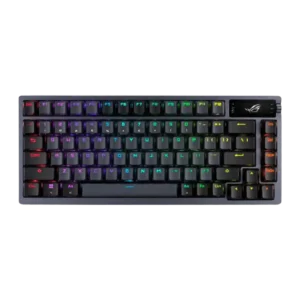
Choose ASUS ROG Azoth for ergonomics and ease of switch replacement.
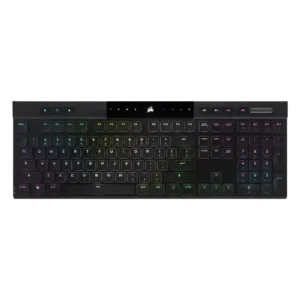
Choose Corsair K100 AIR for reliability and media controls.
Why these recommendations?
ASUS ROG Azoth
Where It Has the Edge
ergonomics is 4.0 vs 2.8. Ergonomics were mixed: adjustable feet and stable placement helped comfort, but the high-profile, heavy design could become tiring...
ease of switch replacement is 4.7 vs 1.9. Switch replacement was repeatedly described as easy or low-effort, helped by hot-swap sockets and included pullers and tools.
hot-swappable switches is 4.7 vs 2.0. Hot-swappable switches were treated as a key enthusiast-friendly strength, making switch experiments and modifications much easier.
Corsair K100 AIR
Where It Has the Edge
reliability is 4.2 vs 3.0. Reliability evidence was positive overall, especially in long-term use, though one reviewer expressed concern about future switch longevity.
media controls is 4.1 vs 2.6. Dedicated media controls were well received as handy, convenient, and welcome.
legend visibility is 3.7 vs 2.3. Main legends were generally visible and evenly lit, while secondary legends lacking backlight hurt the score.
ASUS ROG Azoth4.2 overall score
Corsair K100 AIR4.0 overall score
Compare features
Scores are out of 5. Missing scores mean missing review evidence, not a missing feature.
Scored on both products
Comfort and build
Ergonomics
ASUS ROG Azoth
4.0
Ergonomics were mixed: adjustable feet and stable placement helped comfort, but the high-profile, heavy design could become tiring without support.
Corsair K100 AIR
2.8
Ergonomic feedback was mixed: concave caps and low height helped comfort, but sharp edges, kickstand issues, and rough frame edges drew criticism.
Materials quality
ASUS ROG Azoth
4.8
Materials quality was praised for premium-feeling metal, plastics, PBT keycaps, and high-quality components, even with a plastic bottom for wireless performance.
Corsair K100 AIR
3.9
Materials drew mixed-to-positive reactions: aluminum felt premium, but some reviewers wanted a more complete metal chassis.
Build quality
ASUS ROG Azoth
4.9
Build quality was one of the strongest themes, with reviewers repeatedly describing the Azoth as solid, premium, tank-like, exceptionally built, and durable in long-term use.
Corsair K100 AIR
4.4
Build quality was widely praised for solidity and premium feel, though a few reviewers noted flex, average supporting parts, or plastic elements.
Typing comfort
ASUS ROG Azoth
3.8
Typing comfort was mostly positive, especially for quiet office/home use and pleasant daily typing, but one reviewer struggled with typos.
Corsair K100 AIR
4.1
Typing comfort was usually strong, with many reviewers saying it was comfortable for long sessions, though some needed adjustment or felt fatigue initially.
Size and form factor
ASUS ROG Azoth
4.4
The form factor was praised for being compact without sacrificing as much function as 60% designs.
Corsair K100 AIR
4.7
The ultra-thin form factor was one of the most admired traits, repeatedly described as shockingly thin or remarkable.
Design aesthetics
ASUS ROG Azoth
4.7
Design aesthetics were generally praised for looking refined, handsome, premium, or striking while still keeping a gaming identity.
Corsair K100 AIR
4.5
Reviewers overwhelmingly liked the slim, premium, modern look, often describing the keyboard as sleek, stylish, gorgeous, or stunning.
Durability
ASUS ROG Azoth
5.0
Durability evidence was strong in long-term use, with reviewers saying the board aged well, felt built to last, and could withstand heavy daily use.
Corsair K100 AIR
4.8
Durability evidence was strong, including drop-test survival, sturdy aluminum construction, and long-term reports of no degradation.
Battery and charging
Battery life
ASUS ROG Azoth
4.6
Battery life drew broad praise, from week-plus real-world use to long-term confidence, though reviewers noted the advertised maximum requires turning off RGB and OLED extras.
Corsair K100 AIR
4.4
Battery life was one of the clearest strengths, with many reviewers reporting days, a week, or longer between charges and generally validating the 50-hour RGB claim.
Ownership and support
Reliability
ASUS ROG Azoth
3.0
Reliability was mostly good in short-term use but mixed long-term, with one reviewer reporting occasional repeating letters after years and others reporting firmware issues.
Corsair K100 AIR
4.2
Reliability evidence was positive overall, especially in long-term use, though one reviewer expressed concern about future switch longevity.
Ease of switch replacement
ASUS ROG Azoth
4.7
Switch replacement was repeatedly described as easy or low-effort, helped by hot-swap sockets and included pullers and tools.
Corsair K100 AIR
1.9
Repairability was a repeated weakness: reviewers warned that keycap removal could damage switches and wanted easier user serviceability.
Value for money
ASUS ROG Azoth
3.5
Value for money was mixed: many reviewers felt the premium build and features could justify the price, while others considered $250 hard to recommend.
Corsair K100 AIR
3.0
Value was the most divided area: some reviewers said it was worth the premium, while many said the price was hard to justify.
Performance
Sound dampening
ASUS ROG Azoth
4.7
Sound dampening was a major strength, with reviewers praising the layered foam, silicone, and gaskets for reducing ping, hollowness, and harshness.
Corsair K100 AIR
1.5
Sound dampening scored poorly because one reviewer said there was no way to tame the switches or stabilizers.
Noise level
ASUS ROG Azoth
4.7
Noise level was praised as quiet or controlled, especially with red/silent-style switches and layered internal dampening.
Corsair K100 AIR
3.2
Noise was polarizing: some found it relatively quiet, while others called it louder than expected.
Legend visibility
ASUS ROG Azoth
2.3
Legend visibility was a repeated weak spot because legends were hard to see when the backlight was off or dimmed.
Corsair K100 AIR
3.7
Main legends were generally visible and evenly lit, while secondary legends lacking backlight hurt the score.
Gaming performance
ASUS ROG Azoth
4.8
Gaming performance received very strong praise, with reviewers calling it responsive, reliable, brilliant, and among the best gaming keyboards they had used.
Corsair K100 AIR
4.1
Gaming performance was generally praised for responsiveness and speed, but some reviewers felt the shallow switches or laptop-style feel were not ideal for serious gaming.
Backlight brightness
ASUS ROG Azoth
4.5
Backlighting was treated as useful and bright enough for dim conditions, with one reviewer praising illumination and another finding it helpful during load-shedding.
Corsair K100 AIR
5.0
The two direct brightness judgments were strongly positive, with reviewers calling the RGB bright or much brighter than expected.
Wireless performance
ASUS ROG Azoth
4.9
Wireless performance was strongly praised, with reviewers reporting no lag, no dropouts, fast SpeedNova behavior, and long-term wireless reliability.
Corsair K100 AIR
4.6
Wireless performance was strongly praised for Slipstream reliability, low latency, and lack of noticeable lag.
Controls and connectivity
Hot-swappable switches
ASUS ROG Azoth
4.7
Hot-swappable switches were treated as a key enthusiast-friendly strength, making switch experiments and modifications much easier.
Corsair K100 AIR
2.0
Hot-swap capability was scored poorly because reviewers explicitly noted the switches or keycaps are not meant to be swapped.
Software quality
ASUS ROG Azoth
2.4
Software quality was the clearest weakness: Armoury Crate was repeatedly called slow, buggy, bloated, unintuitive, or harmful to otherwise strong hardware.
Corsair K100 AIR
4.1
iCUE was usually praised for power and depth, but a few reviewers found it complex, resource-heavy, or not ideal.
Media controls
ASUS ROG Azoth
2.6
Media controls were mixed: reviewers liked having control options but criticized the screen/knob system as awkward or overly sensitive.
Corsair K100 AIR
4.1
Dedicated media controls were well received as handy, convenient, and welcome.
Macro customization
ASUS ROG Azoth
2.4
Macro customization was one of the weaker functional areas because reviewers criticized the lack of function-layer assignment and limited macro placement.
Corsair K100 AIR
3.7
Macro support was useful and programmable, but several reviewers disliked the less-accessible placement above the numpad.
Customization options
ASUS ROG Azoth
4.4
Customization was a major strength thanks to hot-swap support, included DIY tools, RGB/OLED options, and mod-friendly design, though software execution limited the experience.
Corsair K100 AIR
3.7
Software and lighting customization were strong, but physical customization was a major limitation because the thin design restricts keycap and switch changes.
RGB customization
ASUS ROG Azoth
4.6
RGB customization was praised for per-key control, presets, custom effects, and broad adjustment options.
Corsair K100 AIR
4.3
RGB customization was praised for layered effects, deep controls, and playful flexibility.
Other features
Stabilizer quality
ASUS ROG Azoth
4.2
Stabilizers were generally praised for smoothness and spacebar quality, though one long-term/modding review criticized stems that detached easily.
Corsair K100 AIR
1.7
Stabilizer quality was a repeated complaint, especially rattly or loose stabilizers and a poor-sounding spacebar.
Acoustics
ASUS ROG Azoth
4.8
Reviewers consistently praised the Azoth for a refined, enthusiast-like sound, with multiple reviews calling its acoustics excellent, unique, or better than typical gaming keyboards.
Corsair K100 AIR
2.4
Sound impressions were mixed to negative: one reviewer liked the regular switch sound but called out the spacebar, while another criticized a loud, rattly clank.
Onboard memory
ASUS ROG Azoth
2.2
Onboard memory was criticized because some settings did not behave as expected across connection modes despite the keyboard supposedly having onboard storage.
Corsair K100 AIR
4.3
Onboard memory was praised for storing many profiles and allowing settings to travel without relying on iCUE.
Switch options
ASUS ROG Azoth
4.6
Switch options were supported by reviewer praise for a wide range of compatible switch choices and multiple NX switch variants.
Corsair K100 AIR
2.5
Switch options scored low because a long-term reviewer wanted a linear version and felt limited to the tactile switches.
Layout options
ASUS ROG Azoth
4.5
Layout options were praised for balancing compact size with retained function-row, arrow, and navigation utility.
Corsair K100 AIR
3.0
Reviewers liked aspects of the full-size layout, but several wanted smaller TKL or compact versions.
Volume control
ASUS ROG Azoth
3.1
Volume control was mixed, with reviewers appreciating easy volume access but criticizing the rocker/knob as imprecise, finicky, or cumbersome.
Corsair K100 AIR
4.5
The volume roller/knob was consistently praised as smooth, convenient, satisfying, or even flawless.
Keycap quality
ASUS ROG Azoth
4.4
Keycap quality was broadly positive thanks to PBT texture, durability, and resistance to shine, though one reviewer found them slightly slippery.
Corsair K100 AIR
3.4
Keycap quality was mixed: some liked the shape and long-term appearance, while others criticized ABS material, texture, wear risk, and limited thickness.
Compatibility
ASUS ROG Azoth
3.3
Compatibility was mixed: basic Windows and Mac use worked, but customization and firmware support were notably more limited outside Windows.
Corsair K100 AIR
4.2
Compatibility evidence was positive overall, with reviewers noting successful use across PCs, consoles, Mac, and mobile devices, though one Mac layout caveat remained.
Profile management
ASUS ROG Azoth
3.1
Profile management was split between easy profile swapping in one review and serious profile-reset problems tied to Armoury Crate in another.
Corsair K100 AIR
4.0
One reviewer praised profile management because settings could travel between systems without being reset.
Polling rate
ASUS ROG Azoth
4.2
Polling rate was considered sufficient for high-end wireless use, though later reviewers framed it as no longer cutting edge for elite competitive players.
Corsair K100 AIR
3.4
High polling was appreciated as advanced tech, but several reviewers said it was overkill or hard to notice.
Per-key lighting control
ASUS ROG Azoth
4.7
Per-key lighting control was positively supported by the ability to adjust the RGB backlight key by key.
Corsair K100 AIR
4.0
The one direct per-key lighting judgment was positive, with the reviewer appreciating configurable per-key RGB.
Latency
ASUS ROG Azoth
4.8
Latency was considered excellent for wireless gaming, with multiple reviewers reporting there was no noticeable lag between me pressing a key or very low-latency behavior.
Corsair K100 AIR
4.1
Latency was generally strong for wired and Slipstream use, though Bluetooth drew a lower judgment in one review.
Desk space efficiency
ASUS ROG Azoth
4.5
The 75% layout was praised for saving desk space and giving the mouse hand more room without becoming as restrictive as smaller compact layouts.
Corsair K100 AIR
3.9
The ultra-thin body helped desk fit, but the full-size layout still took noticeable room for some reviewers.
Portability
ASUS ROG Azoth
3.5
Portability was mixed: one reviewer liked the idea of traveling with it, while another found the heft made it less portable.
Corsair K100 AIR
4.0
Thinness helped portability, but the full-size length made transport less practical for some reviewers.
Typing feel
ASUS ROG Azoth
4.7
Typing feel was one of the strongest attributes, with reviewers calling it next-level, fantastic, superb, energetic, or dreamlike, despite a few stock-feel reservations.
Corsair K100 AIR
4.3
Typing feel was a major strength for many reviewers, especially those who liked chiclet or low-profile boards, but not universally loved.
Connectivity
ASUS ROG Azoth
4.7
Connectivity was praised across wired, Bluetooth, and 2.4GHz use, with reviewers reporting easy setup, reliable pairing, and no trouble in normal testing.
Corsair K100 AIR
4.4
Connectivity was consistently praised for quick switching, Bluetooth and Slipstream flexibility, easy pairing, and stable multi-device use.
Frame rigidity
ASUS ROG Azoth
3.9
Frame rigidity was mostly strong, with almost no flex, though some reviewers felt the gasket mount was firmer and less flexible than expected.
Corsair K100 AIR
4.3
Most reviewers found the frame impressively rigid for its thinness, though a few detected minor flex.
Key spacing
ASUS ROG Azoth
3.7
Key spacing opinions were split: some liked the 75% spacing and avoided 60% compromises, while others found the crammed F-row harder to hit accurately.
Corsair K100 AIR
4.0
Only one review directly judged spacing, positively noting that extra space between keys helped finger positioning.
Key stability
ASUS ROG Azoth
4.8
Key stability was praised mainly through the stable spacebar and measured keystrokes, with little wobble noted in broader switch feedback.
Corsair K100 AIR
4.5
Key stability was praised where discussed, with reviewers citing balanced keys and very little wobble.
Switch feel
ASUS ROG Azoth
4.4
Switch feel was usually praised as smooth, tactile, satisfying, or excellent, though some reviewers found specific stock switch variants too light or merely average.
Corsair K100 AIR
4.2
Switch feel was generally liked for tactile, fast, and satisfying feedback, but a minority found the shallow switches uncomfortable or gaming-limited.
Extra gaming features
ASUS ROG Azoth
4.5
Extra gaming features were viewed positively overall, especially the OLED display, on-the-fly features, performance monitoring, and full gaming-keyboard feature set.
Corsair K100 AIR
4.3
Reviewers liked the rich gaming feature set, including Stream Deck-style extras and gamer-focused controls.
RGB lighting quality
ASUS ROG Azoth
4.1
RGB lighting quality was generally pleasant and attractive, though one review noted an imperfect reddish hue in white lighting.
Corsair K100 AIR
4.0
RGB quality was mostly positive, with bright and rich lighting praised, though some reviewers found it less vibrant, tame, or uneven.
Actuation consistency
ASUS ROG Azoth
4.8
Actuation consistency was supported by direct praise for consistent, measured keystrokes, especially after switch swapping and with the board’s tuned internals.
Corsair K100 AIR
4.8
Reviewers who discussed input registration were very positive, citing correct multi-key registration, N-key rollover, and no ghosting.
Key responsiveness
ASUS ROG Azoth
4.7
Key responsiveness was praised in both typing and gaming, with reviewers noting snappy response, fast feel, and I had no missed keypresses.
Corsair K100 AIR
4.7
Key responsiveness was a standout positive, with reviewers describing immediate, accurate, or highly responsive inputs.
Passthrough features
ASUS ROG Azoth
2.0
Passthrough features were a weakness, with reviewers criticizing the lack of extra USB ports or audio jack.
Corsair K100 AIR
2.0
The only opinionated passthrough-related evidence was negative, with one reviewer calling the lack of extra ports a shame.
Evidence available for one product
Other features
Cable quality
ASUS ROG AzothNo score yet
Corsair K100 AIR
4.5
Only one reviewer evaluated the included cable, calling the supplied cable and dongle great.
Good if you want a premium 96% Hall Effect keyboard for work and gaming with excellent build, sound, and customization. Skip it if you need cheaper esports-first speed, 8,000Hz polling,...
Choose it if competitive gaming speed, Rapid Trigger, and deep per-key customization matter more than extras. Skip it if you need wireless, dedicated arrows/media keys, adjustable height, or a lower-cost...
Good if you want a premium, quiet TKL Hall Effect keyboard for typing and gaming. Skip it if price, portability, 8,000Hz polling, or broad switch choice matters most.
Good if you want a premium full-size Hall Effect keyboard with smooth switches, quiet sound, and deep customization. Skip it if you need a portable, budget-friendly board or broad switch...