Scorata scores summarize analyzed review evidence on a 1–5 scale; they are not laboratory measurements or a simple average of customer star ratings. Feature scores summarize the reviews covering that feature. The overall score averages feature scores within each review, then combines review averages. When both expert and customer evidence are available, those two groups receive equal weight. Products can have different review coverage, so small score gaps do not establish a winner.
Recommendations prioritize important features for the category, with a score of at least 3.5, a gap of at least 0.25 points and at least two supporting reviews per product. Features with widely varying scores or broad connectivity contexts are excluded from recommendations. These safeguards do not establish statistical significance.
Quick verdict
What each product is best for
The review evidence points to a tradeoff: ergonomics and battery life versus macro customization and frame rigidity. Choose according to which strengths matter more to you; the overall score alone does not settle that choice.
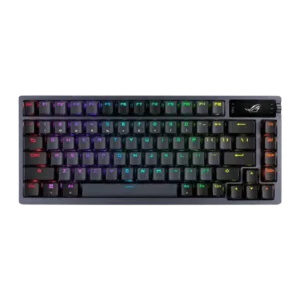
Choose ASUS ROG Azoth for ergonomics and battery life.
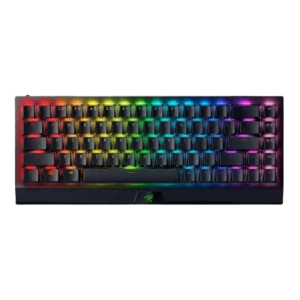
Choose Razer BlackWidow V3 Mini HyperSpeed for macro customization and frame rigidity.
Why these recommendations?
ASUS ROG Azoth
Where It Has the Edge
ergonomics is 4.0 vs 3.3. Ergonomics were mixed: adjustable feet and stable placement helped comfort, but the high-profile, heavy design could become tiring...
battery life is 4.6 vs 3.4. Battery life drew broad praise, from week-plus real-world use to long-term confidence, though reviewers noted the advertised maximum...
stabilizer quality is 4.2 vs 2.0. Stabilizers were generally praised for smoothness and spacebar quality, though one long-term/modding review criticized stems that detached easily.
Razer BlackWidow V3 Mini HyperSpeed
Where It Has the Edge
macro customization is 3.7 vs 2.4. Macro customization was useful for the right-side keys and software recording, but some reviewers found Synapse requirements or...
frame rigidity is 4.5 vs 3.9. Frame rigidity scored well where discussed, with reviewers describing the keyboard as planted, rigid, free of flex, and...
RGB lighting quality is 4.5 vs 4.1. RGB lighting quality was praised as bright, vivid, even, and visually appealing across multiple reviews.
ASUS ROG Azoth4.2 overall score
Razer BlackWidow V3 Mini HyperSpeed4.1 overall score
Compare features
Scores are out of 5. Missing scores mean missing review evidence, not a missing feature.
Scored on both products
Comfort and build
Ergonomics
ASUS ROG Azoth
4.0
Ergonomics were mixed: adjustable feet and stable placement helped comfort, but the high-profile, heavy design could become tiring without support.
Razer BlackWidow V3 Mini HyperSpeed
3.3
Ergonomics were mixed: the small layout and feet could help posture, but height, wrist angle, and lack of palm rest caused discomfort for some.
Materials quality
ASUS ROG Azoth
4.8
Materials quality was praised for premium-feeling metal, plastics, PBT keycaps, and high-quality components, even with a plastic bottom for wireless performance.
Razer BlackWidow V3 Mini HyperSpeed
4.1
Materials were generally praised for aluminum, textured plastic, and component quality, but one review criticized fingerprint-prone surfaces.
Design aesthetics
ASUS ROG Azoth
4.7
Design aesthetics were generally praised for looking refined, handsome, premium, or striking while still keeping a gaming identity.
Razer BlackWidow V3 Mini HyperSpeed
4.2
Design aesthetics were mostly positive, with reviewers liking the sleek Razer styling, RGB look, and compact desk presence, though some found it plain or fingerprint-prone.
Typing comfort
ASUS ROG Azoth
3.8
Typing comfort was mostly positive, especially for quiet office/home use and pleasant daily typing, but one reviewer struggled with typos.
Razer BlackWidow V3 Mini HyperSpeed
4.1
Typing comfort was mostly positive once users adjusted, but prolonged work, cramped keys, and wrist fatigue produced mixed evidence.
Durability
ASUS ROG Azoth
5.0
Durability evidence was strong in long-term use, with reviewers saying the board aged well, felt built to last, and could withstand heavy daily use.
Razer BlackWidow V3 Mini HyperSpeed
4.7
Durability evidence was strong, including confidence against scratches, surviving drops, child use, and expectations of long service life.
Build quality
ASUS ROG Azoth
4.9
Build quality was one of the strongest themes, with reviewers repeatedly describing the Azoth as solid, premium, tank-like, exceptionally built, and durable in long-term use.
Razer BlackWidow V3 Mini HyperSpeed
4.7
Build quality was one of the strongest consensus areas, with reviews calling it excellent, sturdy, robust, substantial, and well built.
Size and form factor
ASUS ROG Azoth
4.4
The form factor was praised for being compact without sacrificing as much function as 60% designs.
Razer BlackWidow V3 Mini HyperSpeed
4.6
The compact 65% form factor was one of the strongest positives, repeatedly described as useful, functional, and well suited to gaming or travel.
Battery and charging
Battery life
ASUS ROG Azoth
4.6
Battery life drew broad praise, from week-plus real-world use to long-term confidence, though reviewers noted the advertised maximum requires turning off RGB and OLED extras.
Razer BlackWidow V3 Mini HyperSpeed
3.4
Battery life was the most mixed major attribute: reviewers praised long life with lighting off or low, but full RGB drained the battery quickly.
Ownership and support
Reliability
ASUS ROG Azoth
3.0
Reliability was mostly good in short-term use but mixed long-term, with one reviewer reporting occasional repeating letters after years and others reporting firmware issues.
Razer BlackWidow V3 Mini HyperSpeed
3.2
Reliability had limited mixed evidence, with one review reporting missed keystrokes over Bluetooth.
Value for money
ASUS ROG Azoth
3.5
Value for money was mixed: many reviewers felt the premium build and features could justify the price, while others considered $250 hard to recommend.
Razer BlackWidow V3 Mini HyperSpeed
3.0
Value was divisive and often critical: the keyboard’s feature set impressed some reviewers, but most repeatedly called the price high, premium, or hard to justify.
Ease of switch replacement
ASUS ROG Azoth
4.7
Switch replacement was repeatedly described as easy or low-effort, helped by hot-swap sockets and included pullers and tools.
Razer BlackWidow V3 Mini HyperSpeed
4.5
One review gave positive opinionated evidence that swapping between the two sets of keys or switches was easy.
Other features
Stabilizer quality
ASUS ROG Azoth
4.2
Stabilizers were generally praised for smoothness and spacebar quality, though one long-term/modding review criticized stems that detached easily.
Razer BlackWidow V3 Mini HyperSpeed
2.0
Stabilizer quality was the clearest repeated weakness, with reviews citing rattly stabilizers, loud larger keys, a catching shift key, and poor sound on stabilized keys.
Onboard memory
ASUS ROG Azoth
2.2
Onboard memory was criticized because some settings did not behave as expected across connection modes despite the keyboard supposedly having onboard storage.
Razer BlackWidow V3 Mini HyperSpeed
4.0
Onboard memory was useful for saved profiles and basic settings, but reviewers noted limitations such as RGB settings not carrying over.
Compatibility
ASUS ROG Azoth
3.3
Compatibility was mixed: basic Windows and Mac use worked, but customization and firmware support were notably more limited outside Windows.
Razer BlackWidow V3 Mini HyperSpeed
2.0
Compatibility scored low from one review because the keyboard could not connect to the reviewer’s PlayStation 5.
Portability
ASUS ROG Azoth
3.5
Portability was mixed: one reviewer liked the idea of traveling with it, while another found the heft made it less portable.
Razer BlackWidow V3 Mini HyperSpeed
4.6
Portability was consistently strong because reviewers liked the compact size, wireless use, travel friendliness, and easy movement around the home.
Acoustics
ASUS ROG Azoth
4.8
Reviewers consistently praised the Azoth for a refined, enthusiast-like sound, with multiple reviews calling its acoustics excellent, unique, or better than typical gaming keyboards.
Razer BlackWidow V3 Mini HyperSpeed
3.7
Acoustics were mixed: several reviewers liked the soft clack or subtle tap, while others heard pinging, rattle, or an irritating clack.
Profile management
ASUS ROG Azoth
3.1
Profile management was split between easy profile swapping in one review and serious profile-reset problems tied to Armoury Crate in another.
Razer BlackWidow V3 Mini HyperSpeed
4.0
Profile management was helpful thanks to onboard/local profiles, though one review found toggling profiles unintuitive and onboard behavior limited.
Typing feel
ASUS ROG Azoth
4.7
Typing feel was one of the strongest attributes, with reviewers calling it next-level, fantastic, superb, energetic, or dreamlike, despite a few stock-feel reservations.
Razer BlackWidow V3 Mini HyperSpeed
3.9
Typing feel was generally smooth and satisfying, but compact-layout adjustment, sensitive switches, and accidental inputs made it mixed for heavier typists.
Key spacing
ASUS ROG Azoth
3.7
Key spacing opinions were split: some liked the 75% spacing and avoided 60% compromises, while others found the crammed F-row harder to hit accurately.
Razer BlackWidow V3 Mini HyperSpeed
4.3
Key spacing was mostly praised for making inputs easier and avoiding distractions, with one review finding the keys slightly cramped.
Frame rigidity
ASUS ROG Azoth
3.9
Frame rigidity was mostly strong, with almost no flex, though some reviewers felt the gasket mount was firmer and less flexible than expected.
Razer BlackWidow V3 Mini HyperSpeed
4.5
Frame rigidity scored well where discussed, with reviewers describing the keyboard as planted, rigid, free of flex, and unlikely to budge.
Volume control
ASUS ROG Azoth
3.1
Volume control was mixed, with reviewers appreciating easy volume access but criticizing the rocker/knob as imprecise, finicky, or cumbersome.
Razer BlackWidow V3 Mini HyperSpeed
2.5
Volume control had limited negative evidence from one reviewer who specifically wanted a volume scroll wheel.
Connectivity
ASUS ROG Azoth
4.7
Connectivity was praised across wired, Bluetooth, and 2.4GHz use, with reviewers reporting easy setup, reliable pairing, and no trouble in normal testing.
Razer BlackWidow V3 Mini HyperSpeed
4.2
Connectivity was broadly strong thanks to USB-C, Bluetooth, HyperSpeed, and multi-device support, but a few reviews noted buggy pairing or inconvenient mode switching.
Passthrough features
ASUS ROG Azoth
2.0
Passthrough features were a weakness, with reviewers criticizing the lack of extra USB ports or audio jack.
Razer BlackWidow V3 Mini HyperSpeed
1.5
Passthrough features scored poorly because a review explicitly criticized the lack of USB passthrough.
RGB lighting quality
ASUS ROG Azoth
4.1
RGB lighting quality was generally pleasant and attractive, though one review noted an imperfect reddish hue in white lighting.
Razer BlackWidow V3 Mini HyperSpeed
4.5
RGB lighting quality was praised as bright, vivid, even, and visually appealing across multiple reviews.
Latency
ASUS ROG Azoth
4.8
Latency was considered excellent for wireless gaming, with multiple reviewers reporting there was no noticeable lag between me pressing a key or very low-latency behavior.
Razer BlackWidow V3 Mini HyperSpeed
4.5
Latency feedback was mostly strong for wired and HyperSpeed use, with reviewers seeing little or no delay; lag mainly appeared with Bluetooth, low battery, or unified dongle issues.
Switch options
ASUS ROG Azoth
4.6
Switch options were supported by reviewer praise for a wide range of compatible switch choices and multiple NX switch variants.
Razer BlackWidow V3 Mini HyperSpeed
4.3
The Green and Yellow switch choices were viewed positively because they suit different typing and gaming preferences, though reviewers did not describe a wider switch ecosystem.
Actuation consistency
ASUS ROG Azoth
4.8
Actuation consistency was supported by direct praise for consistent, measured keystrokes, especially after switch swapping and with the board’s tuned internals.
Razer BlackWidow V3 Mini HyperSpeed
4.6
One review gave clear positive evidence that key registration was consistent, saying every key registered as expected during typing and gaming.
Switch feel
ASUS ROG Azoth
4.4
Switch feel was usually praised as smooth, tactile, satisfying, or excellent, though some reviewers found specific stock switch variants too light or merely average.
Razer BlackWidow V3 Mini HyperSpeed
4.6
Reviewers broadly liked the switch feel, especially the smooth Yellow switches and tactile Green option; the main caveat was that the light actuation could feel sensitive for some typists.
Key stability
ASUS ROG Azoth
4.8
Key stability was praised mainly through the stable spacebar and measured keystrokes, with little wobble noted in broader switch feedback.
Razer BlackWidow V3 Mini HyperSpeed
4.7
Key stability evidence was mostly positive where scored, with reviewers noting no wobble or very minimal wobble on the keys they tested.
Keycap quality
ASUS ROG Azoth
4.4
Keycap quality was broadly positive thanks to PBT texture, durability, and resistance to shine, though one reviewer found them slightly slippery.
Razer BlackWidow V3 Mini HyperSpeed
4.3
Keycap quality drew praise for doubleshot ABS construction, clean legends, and durability, but reviewers still noted ABS tradeoffs such as slipperiness, shine, or clamminess.
Key responsiveness
ASUS ROG Azoth
4.7
Key responsiveness was praised in both typing and gaming, with reviewers noting snappy response, fast feel, and I had no missed keypresses.
Razer BlackWidow V3 Mini HyperSpeed
4.6
Key responsiveness was a major strength, with reviewers repeatedly saying inputs felt fast, precise, and able to keep up during games and typing.
Per-key lighting control
ASUS ROG Azoth
4.7
Per-key lighting control was positively supported by the ability to adjust the RGB backlight key by key.
Razer BlackWidow V3 Mini HyperSpeed
4.8
One review specifically praised per-key RGB control through Synapse, supporting a strong score for granular lighting control.
Desk space efficiency
ASUS ROG Azoth
4.5
The 75% layout was praised for saving desk space and giving the mouse hand more room without becoming as restrictive as smaller compact layouts.
Razer BlackWidow V3 Mini HyperSpeed
4.6
Desk space efficiency was highly praised, with reviewers valuing the extra mouse room, reduced footprint, and less clutter.
Extra gaming features
ASUS ROG Azoth
4.5
Extra gaming features were viewed positively overall, especially the OLED display, on-the-fly features, performance monitoring, and full gaming-keyboard feature set.
Razer BlackWidow V3 Mini HyperSpeed
4.5
Extra gaming features were praised for strong 65% gaming functionality, macro-ready keys, and dongle-related gaming features.
Layout options
ASUS ROG Azoth
4.5
Layout options were praised for balancing compact size with retained function-row, arrow, and navigation utility.
Razer BlackWidow V3 Mini HyperSpeed
4.5
The 65% layout with arrows was widely praised as a useful middle ground, although some reviewers noted a learning curve and missing full-size keys.
Performance
Legend visibility
ASUS ROG Azoth
2.3
Legend visibility was a repeated weak spot because legends were hard to see when the backlight was off or dimmed.
Razer BlackWidow V3 Mini HyperSpeed
4.0
Legend visibility was usually good, especially side legends and clean lettering, but a few reviewers criticized dark keys or non-backlit secondary legends.
Noise level
ASUS ROG Azoth
4.7
Noise level was praised as quiet or controlled, especially with red/silent-style switches and layered internal dampening.
Razer BlackWidow V3 Mini HyperSpeed
3.8
Noise level was context-dependent: many found the Yellow switches relatively quiet, but reviewers stressed the board was not silent and could still bother people nearby.
Wireless performance
ASUS ROG Azoth
4.9
Wireless performance was strongly praised, with reviewers reporting no lag, no dropouts, fast SpeedNova behavior, and long-term wireless reliability.
Razer BlackWidow V3 Mini HyperSpeed
4.2
Wireless performance was usually excellent on HyperSpeed, but the unified dongle, Bluetooth, or interference produced notable negative cases in some reviews.
Gaming performance
ASUS ROG Azoth
4.8
Gaming performance received very strong praise, with reviewers calling it responsive, reliable, brilliant, and among the best gaming keyboards they had used.
Razer BlackWidow V3 Mini HyperSpeed
4.5
Gaming performance was a consistent highlight thanks to the compact footprint, quick switches, and responsive wireless, though one review reported a shift-key catch while gaming.
Backlight brightness
ASUS ROG Azoth
4.5
Backlighting was treated as useful and bright enough for dim conditions, with one reviewer praising illumination and another finding it helpful during load-shedding.
Razer BlackWidow V3 Mini HyperSpeed
4.7
One review gave explicit positive evidence for brightness, describing the RGB as nice, bright, and vivid.
Sound dampening
ASUS ROG Azoth
4.7
Sound dampening was a major strength, with reviewers praising the layered foam, silicone, and gaskets for reducing ping, hollowness, and harshness.
Razer BlackWidow V3 Mini HyperSpeed
4.5
Sound dampening was praised in the Yellow-switch versions, with reviewers saying the dampeners made the board quieter and worked well.
Controls and connectivity
Software quality
ASUS ROG Azoth
2.4
Software quality was the clearest weakness: Armoury Crate was repeatedly called slow, buggy, bloated, unintuitive, or harmful to otherwise strong hardware.
Razer BlackWidow V3 Mini HyperSpeed
4.0
Software quality was generally good because Synapse is powerful and improved, but reviewers disliked dependence on it, navigation friction, and occasional bugs.
Macro customization
ASUS ROG Azoth
2.4
Macro customization was one of the weaker functional areas because reviewers criticized the lack of function-layer assignment and limited macro placement.
Razer BlackWidow V3 Mini HyperSpeed
3.7
Macro customization was useful for the right-side keys and software recording, but some reviewers found Synapse requirements or limited dedicated buttons restrictive.
Media controls
ASUS ROG Azoth
2.6
Media controls were mixed: reviewers liked having control options but criticized the screen/knob system as awkward or overly sensitive.
Razer BlackWidow V3 Mini HyperSpeed
2.4
Media controls were a drawback for reviewers who wanted dedicated keys and missed full-size media/function controls.
Customization options
ASUS ROG Azoth
4.4
Customization was a major strength thanks to hot-swap support, included DIY tools, RGB/OLED options, and mod-friendly design, though software execution limited the experience.
Razer BlackWidow V3 Mini HyperSpeed
4.6
Customization options were a major strength, with reviewers praising key remaps, macros, RGB, power settings, and broad Synapse controls.
RGB customization
ASUS ROG Azoth
4.6
RGB customization was praised for per-key control, presets, custom effects, and broad adjustment options.
Razer BlackWidow V3 Mini HyperSpeed
4.6
RGB customization was a clear strength, with reviewers noting broad Chroma color options, effects, sync, and onboard or software-based control.
Evidence available for one product
Other features
Cable quality
ASUS ROG AzothNo score yet
Razer BlackWidow V3 Mini HyperSpeed
4.4
Cable quality was praised when mentioned, with reviewers liking the long, braided, thick cable and practical wired charging use.
Polling rate
ASUS ROG Azoth
4.2
Polling rate was considered sufficient for high-end wireless use, though later reviewers framed it as no longer cutting edge for elite competitive players.
Razer BlackWidow V3 Mini HyperSpeedNo score yet
Wrist rest quality
ASUS ROG AzothNo score yet
Razer BlackWidow V3 Mini HyperSpeed
2.2
Wrist rest feedback was negative because reviewers felt the tall board needed a compact wrist rest and none was included.
Controls and connectivity
Hot-swappable switches
ASUS ROG Azoth
4.7
Hot-swappable switches were treated as a key enthusiast-friendly strength, making switch experiments and modifications much easier.
Good if you want a premium 96% Hall Effect keyboard for work and gaming with excellent build, sound, and customization. Skip it if you need cheaper esports-first speed, 8,000Hz polling,...
Choose it if competitive gaming speed, Rapid Trigger, and deep per-key customization matter more than extras. Skip it if you need wireless, dedicated arrows/media keys, adjustable height, or a lower-cost...
Good if you want a premium, quiet TKL Hall Effect keyboard for typing and gaming. Skip it if price, portability, 8,000Hz polling, or broad switch choice matters most.
Good if you want a premium full-size Hall Effect keyboard with smooth switches, quiet sound, and deep customization. Skip it if you need a portable, budget-friendly board or broad switch...