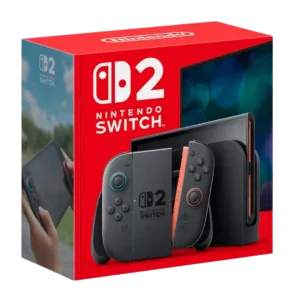
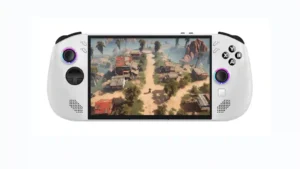
Nintendo Switch 2
Where It Has the Edge
- game library quality is 3.9 vs 3.0. The library is strong because of backward compatibility and early ports, but reviewers also note the native Switch...

Scorata scores summarize analyzed review evidence on a 1–5 scale; they are not laboratory measurements or a simple average of customer star ratings. Feature scores summarize the reviews covering that feature. The overall score averages feature scores within each review, then combines review averages. When both expert and customer evidence are available, those two groups receive equal weight. Products can have different review coverage, so small score gaps do not establish a winner.
Recommendations prioritize important features for the category, with a score of at least 3.5, a gap of at least 0.25 points and at least two supporting reviews per product. Features with widely varying scores or broad connectivity contexts are excluded from recommendations. These safeguards do not establish statistical significance.
Quick verdict
The review evidence points to a tradeoff: game library quality versus storage expandability and heat management. Choose according to which strengths matter more to you; the overall score alone does not settle that choice.
Choose Nintendo Switch 2 for game library quality.
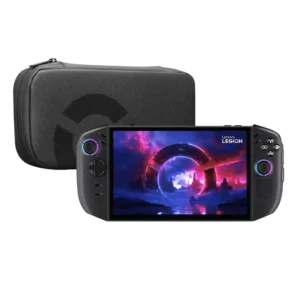
Choose Lenovo Legion Go S for storage expandability and heat management.
Scores are out of 5. Missing scores mean missing review evidence, not a missing feature.
Reliability concerns focus mainly on controller drift and lack of Hall effect sticks, leaving reviewers cautious despite otherwise improved hardware.
SteamOS is repeatedly credited with fewer crashes, smoother resume behavior, and better day-to-day dependability than Windows. The harshest reliability criticism comes from the Windows-focused review.
Value is highly mixed: reviewers admire the upgrade and long-term appeal, but repeatedly flag console price, game costs, accessories, and storage as painful.
Value depends heavily on configuration and price. SteamOS models, discounts, and used units often earn strong praise, while full-price Windows or high-end configurations face tougher comparisons with rival handhelds.
Setup and transfer are praised as straightforward or painless, especially for moving user accounts and save data from an older Switch.
SteamOS is repeatedly praised for quick sign-in, simple game installation, and controller-first setup. Windows-based units are the opposite, often requiring substantial tweaking and desktop-style navigation.
Reviewers consistently describe Switch 2 as a major power upgrade, with smoother gameplay and enough headroom for larger ports, though not a full PS5-class leap.
Performance varies sharply by configuration and operating system. SteamOS and Z1 Extreme combinations earn strong praise, while Z2 Go and Windows reviews are more likely to report inconsistent or insufficient results.
Noise is generally handled well, with reviewers saying fans were not distracting, although one noted a small high-pitched whine in quiet moments.
Fan noise is one of the most repeated complaints. Several reviewers describe it as loud even during light tasks, though quieter profiles and at least one test kept it unobtrusive.
Visual performance is widely praised for sharper handheld output, stronger third-party ports, and richer detail, with some caveats against high-end consoles or OLED contrast.
The Go S can make modern games look good, especially on Z1 Extreme, but demanding titles often need medium or low settings, upscaling, or reduced resolution. Visual compromises are much more noticeable on weaker configurations.
Frame rate performance is one of the clearest wins, with several reviewers citing 60fps improvements, fewer hiccups, and smoother motion.
Frame-rate results depend heavily on chip, game, resolution, and power mode. Z1 Extreme models can be very fast, while Z2 Go units often target 30-60fps and can struggle at native resolution in demanding titles.
Network stability is uneven, with positive wired/download comments in one review but serious complaints about disconnects, slow downloads, and weaker Wi-Fi comparisons elsewhere.
Long-term testing reports fast Wi-Fi 6E performance that comfortably supports online gaming.
Storage expansion is useful but criticized because microSD Express cards are more expensive, harder to find, or limited compared with older formats.
microSD expansion is consistently treated as a useful and easy way to offset limited internal storage.
Heat management is mixed: reviewers expect the fan to help, but some report substantial dock heat or noticeable warmth after docked play.
Reviewers consistently say the handheld stays comfortable in the hands and avoids problematic surface heat, even during extended or high-power play.
Power efficiency is the biggest recurring drawback, with most reviewers criticizing battery life despite one or two more forgiving impressions.
SteamOS generally helps efficiency, sleep behavior is excellent, and matched-power testing can deliver more performance for similar endurance. Some profiles still draw unnecessary power unless manually tuned.
Controller features receive strong praise for mouse mode, HD Rumble 2, improved haptics, and expanded control options, even when support is still emerging.
Hall Effect sticks, adjustable triggers, rear paddles, and Steam-focused buttons are well liked, but the tiny trackpad draws repeated criticism and some reviewers miss detachable controls or dual pads.
The library is strong because of backward compatibility and early ports, but reviewers also note the native Switch 2 lineup is still relatively thin.
Steam provides a broad library, but compatibility is not universal. Game Pass, anti-cheat titles, and some newer games can require workarounds or fail to run, which keeps the library experience mixed.
Cooling efficiency has limited but positive evidence, with the dock’s fan not seeming strained during the reviewer’s testing.
The cooling system is effective at keeping the chassis comfortable even at higher power, and ventilation is considered solid. Its main tradeoff is the fan noise required to achieve that.
Backward compatibility is a major strength, with reviewers praising broad Switch 1 support, improved older games, and easier access to existing libraries.
The Go S is praised as a strong emulation machine, with one reviewer saying older systems through later console eras run very well.
Load times are viewed positively where discussed, with reviewers noting faster loads and snappier response from the upgraded storage and hardware.
One Z1 Extreme review reports little-to-no load time in recent games, pairing fast loading with smooth, stutter-free play.
Internal storage gets mixed marks: 256GB is better than before, but reviewers repeatedly say it fills quickly with larger Switch 2 games.
Higher-capacity configurations are considered well equipped, while the 512GB base model can fill quickly with a handful of large modern games.
The eShop and digital experience are noticeably faster and cleaner than Switch 1, though reviewers still criticize missing cart and download-management features.
Steam access is simple and the library is huge, but non-Steam launchers and stores require extra effort. Steam-first users benefit most from the streamlined storefront experience.
Controller quality is a standout improvement, especially the magnetic Joy-Con connection, stronger feel, haptics, and reduced wobble.
Controls are generally sturdy, precise, responsive, and resistant to stick drift. D-pad feel is more mixed, but the joysticks, triggers, and main buttons receive consistent praise.
The UI is familiar, simple, and faster, but some reviewers dislike its blandness, lack of folders, and limited customization.
SteamOS is the product's biggest usability win, delivering a fast, console-like, controller-first experience. Windows reviews describe the opposite: clunky layouts, poor touch behavior, and too much desktop friction.
Controller ergonomics are better overall because of larger Joy-Cons, but long sessions and mouse mode still create comfort complaints for some reviewers.
Ergonomics are a major strength: rounded grips and a controller-like shape make long sessions comfortable for many reviewers. A few note extra weight, hand repositioning, or joystick-layout preferences.
Design and aesthetics are praised as more mature, premium, and refined, even if some miss the more playful original Switch look.
The darker SteamOS colorway and rounded redesign are widely praised, with several reviewers calling the Go S attractive or Lenovo's best handheld design yet.
Build quality is mostly praised as premium, sturdy, and improved, with isolated concerns about the kickstand feeling flimsy.
Most reviewers describe the Go S as sturdy, solid, or premium, but not everyone agrees: one Windows-model review calls it plasticky and another dislikes the increasingly abrasive grip texture.
Portability remains strong despite the larger body, with reviewers saying it is comfortable, slim, or ergonomically improved for handheld use.
The Go S is easier to hold than the original Legion Go and remains practical for travel, but several reviewers still find it heavier or chunkier than the Steam Deck and other rivals.
Gaming endurance is the clearest recurring weakness, commonly landing around 1.5-2.5 hours under demanding use. Lower-power settings can stretch runtime, but reviewers repeatedly recommend keeping a charger nearby.
Accessibility improves with settings such as text, contrast, mono audio, text-to-speech, and button mapping, but the evidence still calls it limited.
One reviewer had difficulty finding the premium model in stock locally or on Amazon, suggesting availability could be spotty at the time of testing.
Packaging is described as minimal but premium, with the included charger and foldable stand covering the essentials even though a carrying case is not standard.
Exclusive-game sentiment is mixed: Mario Kart World and future Nintendo releases create excitement, but several reviewers wanted more major exclusives at launch.
Multiplayer impressions are positive around GameChat, screen sharing, and 24-player Mario Kart, though execution is sometimes chaotic or uneven.
Online service quality is promising but mixed: GameChat is often praised, while limitations, Discord comparisons, and Nintendo-style restrictions remain concerns.
Remote play-style GameShare is seen as useful and functional, but reviewers also call it limited by supported games and streaming overlays.
Repairability receives limited negative evidence, with one reviewer describing the console as rugged but difficult to repair.
Speaker impressions are mostly positive: several reviewers praise clear, full sound, while one calls the front speakers muffled and another finds them merely adequate. Headphones are often suggested when fan noise rises.
The 8-inch 120Hz display is widely praised for size, sharpness, color, and smoothness. Its IPS panel still trails the Steam Deck OLED in contrast, brightness, and reflectivity for reviewers comparing them directly.
Cloud and streamed gaming are viewed very positively where tested. GeForce Now can feel close to local play on a strong connection, and general game streaming is described as working well.
Local multiplayer support is praised in limited evidence, especially for couch play and convenient detachable Joy-Con use.
Subscription value is generally positive in the limited evidence, with reviewers calling Nintendo Switch Online reasonably priced for online play and classic libraries.
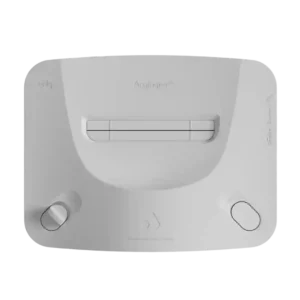
Choose it if you own N64 cartridges and want the most polished, low-lag way to play them on a 4K TV. Skip it if you want cheap emulation, broad flash-cart/controller...
Pros: display quality, performance
Cons: availability

Best for easy, controller-free family play that gets kids moving. Skip it if you want deep games, cutting-edge graphics, or dislike paying for Play Pass.
Pros: game library quality, value for money
Cons: subscription service value, graphical performance
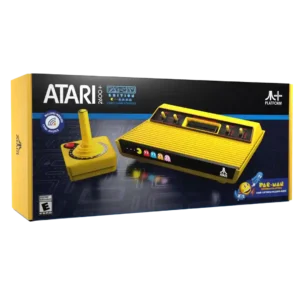
Choose it if you want a display-worthy Pac-Man collectible that plays original Atari cartridges on modern TVs. Skip it if stiff controls, controller reliability, or the $169-ish price matter more...
Pros: performance, collectibility and presentation
Cons: controller quality, controller ergonomics
Best for the best-in-class OLED, versatile controls, and strong AAA performance. Skip it if value, low weight, quiet operation, or a polished console-like experience matters more than premium hardware.
Pros: display quality, performance
Cons: value for money, power efficiency