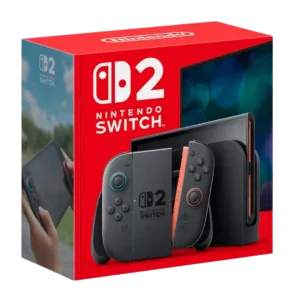
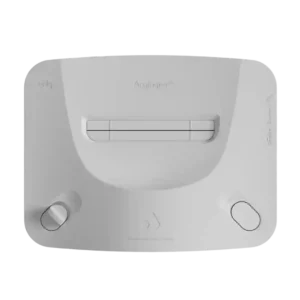
Nintendo Switch 2
Where It Has the Edge
No clear scored advantage over the other product.

Scorata scores summarize analyzed review evidence on a 1–5 scale; they are not laboratory measurements or a simple average of customer star ratings. Feature scores summarize the reviews covering that feature. The overall score averages feature scores within each review, then combines review averages. When both expert and customer evidence are available, those two groups receive equal weight. Products can have different review coverage, so small score gaps do not establish a winner.
Recommendations prioritize important features for the category, with a score of at least 3.5, a gap of at least 0.25 points and at least two supporting reviews per product. Features with widely varying scores or broad connectivity contexts are excluded from recommendations. These safeguards do not establish statistical significance.
Quick verdict
The available evidence supports the recommendation below, but does not establish an overall winner. Check the remaining features against your priorities.
There is not enough comparable review evidence to recommend Nintendo Switch 2 over the other product.
Choose Analogue 3D for reliability and performance.
No clear scored advantage over the other product.
Scores are out of 5. Missing scores mean missing review evidence, not a missing feature.
Reliability concerns focus mainly on controller drift and lack of Hall effect sticks, leaving reviewers cautious despite otherwise improved hardware.
Reliability is strong across large cartridge and accessory test sets, with many reviewers reporting flawless or near-flawless operation. Isolated rendering glitches, flash-cart issues, overclock quirks, and occasional wireless problems keep it from being completely trouble-free.
Setup and transfer are praised as straightforward or painless, especially for moving user accounts and save data from an older Switch.
Most reviewers find the console straightforward to connect and use, especially through HDMI and simple controller pairing. A few encountered setup friction from firmware updates, regional power-adapter issues, or other early-software details.
Local multiplayer support is praised in limited evidence, especially for couch play and convenient detachable Joy-Con use.
Four original controller ports plus wireless options preserve the N64’s local-multiplayer identity extremely well. Reviewers repeatedly highlight successful four-player sessions as a major strength.
Value is highly mixed: reviewers admire the upgrade and long-term appeal, but repeatedly flag console price, game costs, accessories, and storage as painful.
Value depends heavily on the buyer: enthusiasts with an existing cartridge collection often say the premium price is justified, while casual players see cheaper emulation and competing FPGA options as more sensible. The missing pack-in controller and cost of building a game library also hurt the equation.
Reviewers consistently describe Switch 2 as a major power upgrade, with smoother gameplay and enough headroom for larger ports, though not a full PS5-class leap.
Performance is one of the strongest themes, with reviewers repeatedly praising low latency, accurate FPGA behavior, and overclocking that can make demanding N64 games substantially more playable. The gains are real enough that several call it the best modern way to play the system.
Noise is generally handled well, with reviewers saying fans were not distracting, although one noted a small high-pitched whine in quiet moments.
Noise received little attention, but the one direct assessment was very positive: the console’s hum was described as barely noticeable once play began.
Visual performance is widely praised for sharper handheld output, stronger third-party ports, and richer detail, with some caveats against high-end consoles or OLED contrast.
Rendering is generally cleaner, sharper, and more detailed while staying faithful to the N64’s original assets. Reviewers also stress that the hardware cannot erase every muddy texture, low-poly model, or other limitation built into the games themselves.
Frame rate performance is one of the clearest wins, with several reviewers citing 60fps improvements, fewer hiccups, and smoother motion.
Overclocking often smooths notorious frame-rate drops and can turn difficult games into much more fluid experiences. Results remain game-specific, and aggressive modes can make some titles run too fast or behave incorrectly.
Load times are viewed positively where discussed, with reviewers noting faster loads and snappier response from the upgraded storage and hardware.
Boot speed drew limited but clear criticism: one reviewer called the roughly 20-second startup annoyingly long. There was not enough broader coverage to know whether this bothers most owners.
Network stability is uneven, with positive wired/download comments in one review but serious complaints about disconnects, slow downloads, and weaker Wi-Fi comparisons elsewhere.
Wireless controller connections were generally dependable, with one reviewer specifically praising the controller for staying connected. Another encountered a minor Bluetooth hiccup with one controller, so pairing reliability may not be flawless.
Multiplayer impressions are positive around GameChat, screen sharing, and 24-player Mario Kart, though execution is sometimes chaotic or uneven.
Couch multiplayer is one of the most consistently joyful parts of the experience. Reviewers describe four-player sessions as lively, nostalgic, and often a major reason to keep returning to the console.
Cooling efficiency has limited but positive evidence, with the dock’s fan not seeming strained during the reviewer’s testing.
Cooling drew limited concern rather than strong praise or criticism. One reviewer noted active cooling and advised leaving the console enough open space to breathe.
Repairability receives limited negative evidence, with one reviewer describing the console as rugged but difficult to repair.
Opening the console for deeper repair work appears difficult. One teardown found motherboard access complicated by the internal clips and shielding, making DIY servicing less straightforward.
The library is strong because of backward compatibility and early ports, but reviewers also note the native Switch 2 lineup is still relatively thin.
The N64 library remains packed with beloved classics, but reviewers repeatedly note that early 3D games have aged unevenly. The console is far easier to justify for people who already love this library than for newcomers without nostalgia or cartridges.
Controller features receive strong praise for mouse mode, HD Rumble 2, improved haptics, and expanded control options, even when support is still emerging.
Controller features such as Bluetooth pairing, Hall-effect sticks, rumble, and wake controls are well received. Launch-era support for other modern gamepads was narrower than some reviewers expected.
Backward compatibility is a major strength, with reviewers praising broad Switch 1 support, improved older games, and easier access to existing libraries.
Original N64 cartridges, regions, controllers, and accessories work extremely well in most testing, making compatibility a core strength. Flash carts, some modern controllers, and cartridge-slot fit were less consistent across review periods and firmware versions.
Controller quality is a standout improvement, especially the magnetic Joy-Con connection, stronger feel, haptics, and reduced wobble.
The 8BitDo controller is usually praised for responsiveness, solid inputs, rumble, and modern comfort, while original N64 controllers remain well supported. Some reviewers still prefer the authentic N64 stick and layout, and a few report wireless or precision caveats.
Heat management is mixed: reviewers expect the fan to help, but some report substantial dock heat or noticeable warmth after docked play.
Heat management has only limited direct coverage. One reviewer said the console gets pretty hot during play, though not badly enough to make it a major issue.
Controller ergonomics are better overall because of larger Joy-Cons, but long sessions and mouse mode still create comfort complaints for some reviewers.
Modern controller ergonomics are a clear win for many reviewers, with the 8BitDo-style shape described as much more comfortable for long sessions. Purists note that the stick and trigger placement can feel different from the original N64 pad.
Build quality is mostly praised as premium, sturdy, and improved, with isolated concerns about the kickstand feeling flimsy.
Build quality earns near-universal praise, with reviewers repeatedly describing the chassis as solid, dense, sturdy, and premium. The physical construction is one of the least disputed strengths.
Design and aesthetics are praised as more mature, premium, and refined, even if some miss the more playful original Switch look.
The refined N64-inspired design is overwhelmingly praised as sleek, sophisticated, and living-room friendly. A minority find it too clinical or miss the playful, toy-like personality of the original hardware.
Portability remains strong despite the larger body, with reviewers saying it is comfortable, slim, or ergonomically improved for handheld use.
Reviewers who discuss size generally welcome the smaller, lighter footprint compared with an original N64. The compact proportions help it blend into a modern entertainment setup.
The UI is familiar, simple, and faster, but some reviewers dislike its blandness, lack of folders, and limited customization.
3DOS is widely praised for clean navigation, cartridge tracking, and unusually deep per-game display and performance controls. Early reviews also found it sparse in places, with missing features, manual updating, or settings behavior that invited extra tinkering.
Accessibility improves with settings such as text, contrast, mono audio, text-to-speech, and button mapping, but the evidence still calls it limited.
Availability is a recurring weak spot: several reviewers describe sold-out allocations or simply struggling to buy one. Scarcity is one of the few areas with consistently negative sentiment.
Collectors respond strongly to the premium positioning and the virtual library that lets a physical collection fill out on-screen. Packaging itself is less consistent, with one reviewer finding the out-of-box presentation underwhelming.
The eShop and digital experience are noticeably faster and cleaner than Switch 1, though reviewers still criticize missing cart and download-management features.
Exclusive-game sentiment is mixed: Mario Kart World and future Nintendo releases create excitement, but several reviewers wanted more major exclusives at launch.
Online service quality is promising but mixed: GameChat is often praised, while limitations, Discord comparisons, and Nintendo-style restrictions remain concerns.
Power efficiency is the biggest recurring drawback, with most reviewers criticizing battery life despite one or two more forgiving impressions.
Remote play-style GameShare is seen as useful and functional, but reviewers also call it limited by supported games and streaming overlays.
Internal storage gets mixed marks: 256GB is better than before, but reviewers repeatedly say it fills quickly with larger Switch 2 games.
Storage expansion is useful but criticized because microSD Express cards are more expensive, harder to find, or limited compared with older formats.
Audio received less coverage than video, but the direct assessments are excellent. Reviewers describe fuller, richer sound than Nintendo’s emulated option and praise the console’s audio output outright.
4K output and CRT-style Original Display Modes are the product’s clearest consensus strength, with reviewers repeatedly calling the image beautiful, authentic, or best-in-class. Minor concerns include combing, limited calibration controls, and the fact that faithful N64 graphics still look old.
Subscription value is generally positive in the limited evidence, with reviewers calling Nintendo Switch Online reasonably priced for online play and classic libraries.
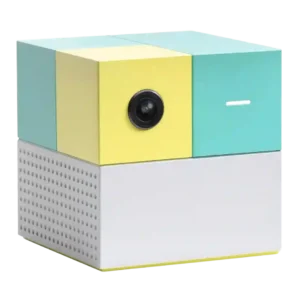
Best for easy, controller-free family play that gets kids moving. Skip it if you want deep games, cutting-edge graphics, or dislike paying for Play Pass.
Pros: game library quality, value for money
Cons: subscription service value, graphical performance
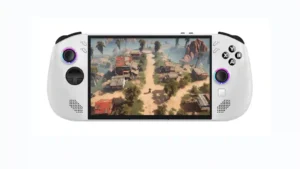
Choose the SteamOS version for a comfortable, console-like handheld with a sharp 120Hz screen and strong performance. Skip it if you prioritize long battery life, quiet fans, or effortless access...
Pros: display quality, user interface
Cons: controller features, battery life
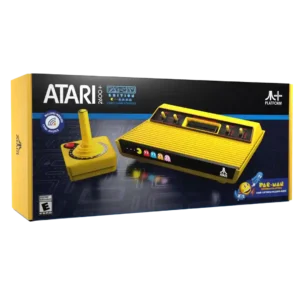
Choose it if you want a display-worthy Pac-Man collectible that plays original Atari cartridges on modern TVs. Skip it if stiff controls, controller reliability, or the $169-ish price matter more...
Pros: performance, collectibility and presentation
Cons: controller quality, controller ergonomics
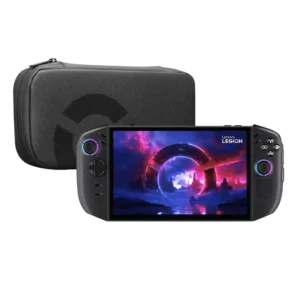
Best for the best-in-class OLED, versatile controls, and strong AAA performance. Skip it if value, low weight, quiet operation, or a polished console-like experience matters more than premium hardware.
Pros: display quality, performance
Cons: value for money, power efficiency