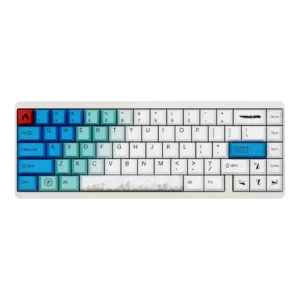
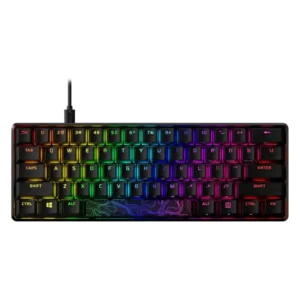
Varmilo Muse65 HE Magnetic Keyboard
Where It Has the Edge
- durability is 4.8 vs 4.5. Durability evidence was positive, with reviewers tying the aluminum build and tank-like construction to a premium, durable feel.

Scorata scores summarize analyzed review evidence on a 1–5 scale; they are not laboratory measurements or a simple average of customer star ratings. Feature scores summarize the reviews covering that feature. The overall score averages feature scores within each review, then combines review averages. When both expert and customer evidence are available, those two groups receive equal weight. Products can have different review coverage, so small score gaps do not establish a winner.
Recommendations prioritize important features for the category, with a score of at least 3.5, a gap of at least 0.25 points and at least two supporting reviews per product. Features with widely varying scores or broad connectivity contexts are excluded from recommendations. These safeguards do not establish statistical significance.
Quick verdict
The review evidence points to a tradeoff: durability versus RGB customization and size and form factor. Choose according to which strengths matter more to you; the overall score alone does not settle that choice.
Choose Varmilo Muse65 HE Magnetic Keyboard for durability.
Choose HyperX Alloy Origins for RGB customization and size and form factor.
Scores are out of 5. Missing scores mean missing review evidence, not a missing feature.
Ergonomics had limited positive evidence because light switches reduced fatigue during longer use.
Ergonomics are mixed: adjustable feet and smaller layouts help comfort, but wrist fatigue and the need for a wrist rest appear in several reviews.
Size and form factor were mixed: one reviewer preferred TKL, while another liked the 65% layout for arrow-key access.
Size and form factor are praised for compactness and no-nonsense gaming use, though the smallest models involve compromises.
Typing comfort was praised in limited evidence, especially for long typing sessions.
Typing comfort is mixed but generally favorable, with several reviewers enjoying daily typing while others note sensitivity or wrist comfort issues.
Materials quality was praised for the aluminum case and premium-feeling construction.
Materials quality is strongly positive, especially the aircraft-grade aluminum construction and high-quality case feel.
Durability evidence was positive, with reviewers tying the aluminum build and tank-like construction to a premium, durable feel.
Durability evidence is positive but limited, including expected longevity and a long-term report of continued use.
Reviewers repeatedly praised the Muse65 HE's appearance, calling it striking, good looking, beautiful, and nice across all five reviews.
Design aesthetics are mostly praised as sleek, simple, attractive, or understated, though one reviewer found the design too slippery and plain.
Build quality was a consistent highlight, with reviewers describing the keyboard as premium, solid, metal, and tank-like.
Build quality is the standout consensus strength, with reviewers repeatedly praising the aluminum body, weight, sturdiness, and premium feel.
Reliability was hurt by software crashes and finicky setup behavior in the negative reviews.
Reliability has limited negative evidence from one reviewer who reported severe lighting/profile glitches after restarts or unplugging.
Value for money was split: some reviewers liked the $155 price, while another felt better value was available elsewhere.
Value is generally strong, with many reviewers calling the price fair, competitive, or excellent; one reviewer felt the MSRP was too high.
Extra gaming features were criticized because the Muse65 HE lacks premium features like Snap Tap and quad-actuation.
Extra gaming features are strong, with NKRO, anti-ghosting, and game mode earning positive evidence for avoiding missed or accidental inputs.
Compatibility was criticized in limited evidence because software setup required a Windows laptop.
Compatibility evidence is generally favorable for consoles and major platforms, though one review notes no macOS or Linux support for that model.
Actuation behavior was mostly strong, though one reviewer noted accidental deactivation at a zero bottom dead zone.
One reviewer explicitly praised the speed and consistency of the keyboard and switch combination.
Per-key lighting control was criticized in one review because custom lighting changes did not appear to sync to the keyboard.
Per-key lighting control is supported, but one reviewer found the layered workflow slow and awkward for detailed per-key setups.
Keycap quality was praised for soft-touch PBT feel and generally nice surface quality.
Keycap quality is mixed: PBT-equipped compact versions are praised, while ABS caps on other versions draw shine, oil, rattle, and durability complaints.
RGB lighting quality had limited but positive evidence, with one reviewer saying the RGB looked pretty nice.
RGB lighting quality is consistently praised for brightness, saturation, vividness, and attractive shine-through effects, with one color-mixing caveat.
Stabilizer quality was mixed to weak because one reviewer specifically criticized the spacebar sound.
Stabilizer quality is mixed: some reviewers found little rattle, while others reported squeaking, looseness, or insufficient factory tuning.
Frame rigidity and heft were praised because the heavy board felt stable, solid, and hard to knock around.
Frame rigidity is excellent in the review evidence, with repeated comments about minimal flex, no give, and stable placement.
Connectivity had a small caveat because one reviewer found the USB-C opening too narrow for a coiled cable.
Connectivity is mixed: detachable USB-C is appreciated, but reviewers noted software detection issues and no multi-device use.
Latency was praised in testing, with no input lag noticed during gameplay.
Latency evidence is strongly positive: reviewers measured tight or very low latency and reported no detectable lag in use.
Layout options had limited positive evidence from a reviewer who liked the 65% layout because it includes arrow keys.
Layout options are useful for gamers who want smaller boards, but the 60% layout creates productivity tradeoffs for some users.
Profile management was criticized because one reviewer could not find a way to set different profiles.
Profile management is useful in theory, but evidence includes sync failures, unresponsive presets, and a three-profile limitation.
Responsiveness was a major strength, with reviewers describing the switches and in-game input response as highly responsive or flawless.
Responsiveness is a clear strength, with reviewers citing quick, precise inputs, reduced accidental presses, and skill activation that kept up with games.
High polling support was viewed positively, with reviewers calling it fast or smooth for competitive-style play.
Polling rate evidence is positive but limited, with reviewers calling the 1000 Hz-class polling or scan behavior suitable for gaming.
Typing feel was positive overall, with reviewers calling the typing experience good and the regular keys pleasant.
Typing feel is mostly favorable, with reviewers calling it solid, satisfying, fluid, and easy to type on, though 60% sensitivity caused problems for some.
Switch choice was divisive: one review criticized the limited options, while another felt the available Gateron choices were strong.
Switch choice is appreciated across the lineup, but smaller variants receive criticism when they ship with only linear switches or delayed tactile/clicky options.
Switch feel was consistently positive, with reviewers liking the light force, smoothness, and Gateron dual-rail feel.
Reviewers generally describe the HyperX switches as smooth, familiar, satisfying, and good for gaming, though a few prefer Cherry-style or tactile alternatives for typing.
Acoustics were generally positive but not perfect, with several reviewers liking the sound while one wanted better spacebar sound.
Acoustics are mixed, ranging from satisfying thock and pleasant sound to loud, clacky, or stabilizer-rattly impressions.
Customization options were mixed: the board offers layers and actuation control, but reviewers criticized the software workflow and sliders.
Customization options are strong where reviewers discuss remapping and key assignment, especially on the Core model.
RGB customization was criticized because reviewers had trouble making lighting changes apply to the board.
RGB customization is capable and often easy, but reviewers also criticized limited presets/effects and occasional setup friction.
Macro customization had limited positive evidence, with one reviewer calling macro setup very customizable.
Macro customization is available and useful, but reviewers also found it less intuitive or less capable than dedicated macro-focused alternatives.
Software quality was the clearest weakness, ranging from merely early and improvable to janky, confusing, crashing, and very frustrating.
Software quality is the most uneven area, with some reviewers finding it easy and others reporting confusing workflows, bugs, limits, or install problems.
Hot-swappable switch support was scored low from one review because switch choice and hot-swap ability were described as limited.
Hot-swappable switch support is a weakness because reviewers specifically wanted hot-swap capability and noted its absence.
Noise level had limited positive evidence, with one reviewer describing it as not too loud for a rapid-trigger keyboard.
Noise level depends on switch and reviewer tolerance; some found it quieter or inoffensive, while others called it noisy or annoying.
Sound dampening was viewed positively in limited evidence, with one reviewer saying the construction made the keyboard sound more premium.
Sound dampening evidence is limited and mildly negative, with one review noting the lack of foam lets sound travel more freely.
Gaming performance was one of the strongest areas, with reviewers reporting snappy movement, indistinguishable Hall-effect performance, and flawless play.
Gaming performance is one of the strongest areas, repeatedly praised as responsive, accurate, low-lag, and well suited to fast games.
Backlight brightness is a major strength, with reviewers repeatedly describing the lighting as extremely bright or easy to adjust.
Legend visibility has positive evidence from the 60% model, where side-printed secondary functions were easy to recognize.
Cable quality is polarized, with praise for detachable braided USB-C cables but criticism of stiffness, kinks, and recessed-port compatibility.
Desk space efficiency is strongly supported, especially for TKL, 60%, and 65% variants that leave more mouse room.
Key spacing is context-dependent: the 60% model can feel tightly packed, while other layouts are described as standard or not cramped.
Key stability is generally positive, with reviewers noting no wobble or only minor wobble that was not distracting.
Onboard memory is helpful for saving profiles across systems, but several reviewers considered the three-profile limit modest.
Passthrough features are a clear weakness where discussed, because losing the prior USB passthrough/charging port disappointed reviewers.
Portability is a strength for the compact versions and detachable-cable design, especially for travel and LAN-style use.
Volume control is split: full-size reviewers wanted a dial or wheel, while one long-term Core user praised the volume shortcut placement.
Ease of switch replacement is poor where discussed, because changing switches requires desoldering both LED and switch components.
Rapid Trigger was well received, with reviewers saying it felt nice, worked as intended, and helped with fast resets.
Media controls are adequate through function layers, but reviewers repeatedly wished for separate or dedicated media keys.
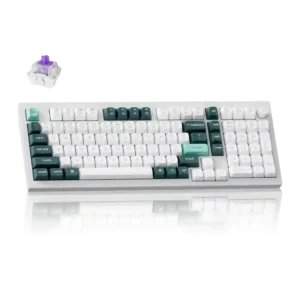
Good if you want a premium 96% Hall Effect keyboard for work and gaming with excellent build, sound, and customization. Skip it if you need cheaper esports-first speed, 8,000Hz polling,...
Pros: size and form factor, typing feel
Cons: switch options, portability
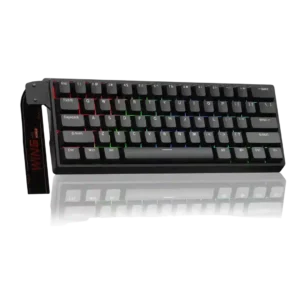
Choose it if competitive gaming speed, Rapid Trigger, and deep per-key customization matter more than extras. Skip it if you need wireless, dedicated arrows/media keys, adjustable height, or a lower-cost...
Pros: overall satisfaction, customization options
Cons: value for money, switch options
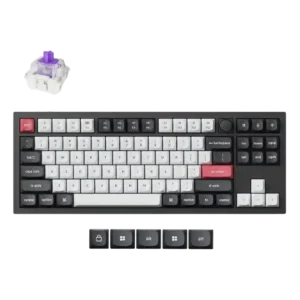
Good if you want a premium, quiet TKL Hall Effect keyboard for typing and gaming. Skip it if price, portability, 8,000Hz polling, or broad switch choice matters most.
Pros: build quality, switch feel
Cons: switch options
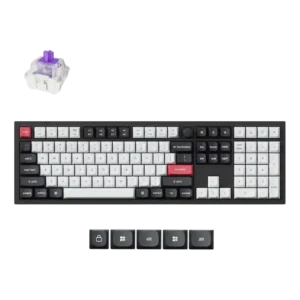
Good if you want a premium full-size Hall Effect keyboard with smooth switches, quiet sound, and deep customization. Skip it if you need a portable, budget-friendly board or broad switch...
Pros: build quality, keycap quality
Cons: switch options, portability