
Clashing Through the Snow
Where It Has the Edge
- directing quality is 3.7 vs 2.1. The direction is competent and at its best when allowing the leads to trade barbs, but the formula...

Scorata scores summarize analyzed review evidence on a 1–5 scale; they are not laboratory measurements or a simple average of customer star ratings. Feature scores summarize the reviews covering that feature. The overall score averages feature scores within each review, then combines review averages. When both expert and customer evidence are available, those two groups receive equal weight. Products can have different review coverage, so small score gaps do not establish a winner.
Recommendations prioritize important features for the category, with a score of at least 3.5, a gap of at least 0.25 points and at least two supporting reviews per product. Features with widely varying scores or broad connectivity contexts are excluded from recommendations. These safeguards do not establish statistical significance.
Quick verdict
The available evidence supports the recommendation below, but does not establish an overall winner. Check the remaining features against your priorities.
Choose Clashing Through the Snow for directing quality.
There is not enough comparable review evidence to recommend Hershey over the other product.
No clear scored advantage over the other product.
Scores are out of 5. Missing scores mean missing review evidence, not a missing feature.
Frequent profanity, suggestive humor and drinking make this a poor choice for viewers seeking a clean family holiday movie.
Its gentle tone, restrained language and positive moral values make it particularly appealing for families.
Frequent profanity is a notable concern for viewers who prefer cleaner holiday entertainment.
Language is notably restrained, with only a brief mild obscenity described.
The threat of losing a job gives the rivalry a concrete motivation and adds tension to the characters' decisions.
Financial setbacks and personal hardships seldom create sustained uncertainty because solutions arrive so readily.
A mix of cozy romance and dark sabotage or murder jokes can be jarring, although some enjoy the strange roadside humor.
The generally pleasant tone suits its intended feel-good experience.
The repeated drinking and occasional excess are concerns for viewers sensitive to substance-related content.
Alcohol appears briefly without excessive drinking, fitting the otherwise restrained family-oriented approach.
Snappy insults, literary zingers and lively back-and-forth give the film personality, although not every joke lands.
Some lines sound forced and overly earnest, although the restraint of the dialogue and use of visual storytelling also earn praise.
The direction is competent and at its best when allowing the leads to trade barbs, but the formula is rarely elevated beyond its familiar beats.
The direction is gentle and accessible but often lacks energy, moving through milestones without giving the drama room to breathe.
The festive locations provide charm for some, but the cross-country scenery feels indistinct to others.
The historical sets and locations give the period setting a convincing sense of place.
The lead's unusually pale complexion and shifting lip colors are distracting.
The inconsistent aging treatment is distracting: Milton visibly ages while Kitty appears largely unchanged.
The film's messages about forgiveness and keeping work in perspective are appreciated by some, but its treatment of wrongdoing is disputed.
The emphasis on kindness, perseverance and sharing success resonates strongly with favorable viewers. Critics find the moral message overly simplistic or ineffective.
The central pair's playful clashes and romantic chemistry are the most widely praised elements, even among critics who dislike the story.
The leads' chemistry divides opinion: some find the marriage genuine and warm, while others feel little romantic spark.
The career rivalry provides believable stakes, but some find the publishing world underexplored or the leads unconvincing as editors.
The business plot includes loans, orders and product development but gives too little attention to how Hershey innovated.
Some accept the contrived travel setup as plausible; others object to rental-car logistics and behavior that strain credibility.
The sanitized characters and convenient resolutions make the story feel artificial rather than authentically human.
The brisk editing helps the jokes keep moving.
The opening transitions show some creativity, but the film misses opportunities to sustain that inventiveness.
The opening publishing-house pitch meeting offers an amusing introduction to the characters' professional world.
The opening match cut and creative transitions are appealing, but comparable visual invention is scarce afterward.
The forgiveness and confession themes resonate with Christian moral teaching without eliminating concerns about the characters' behavior.
The film emphasizes Christian values with little overt religious dialogue; favorable viewers appreciate this restraint, while some critics find its moral framing reductive.
Repeated brand mentions and shopping-oriented references are intrusive enough to make the film feel like advertising to some critics.
The chocolate company's involvement is conspicuous, and many find the film more like corporate promotion than an independent biography.
The shift from professional rivalry to affection works for many, but some find Ryan inconsistent and the emotional growth too convenient or thin.
Milton’s family background and persistence are evident, but the film rarely explores his deeper motivations or moral complexity.
Some viewers laugh at the bickering and roadside mishaps; others find the comedy grating, tedious or uneven.
There are a handful of laughs, although some come from the film’s unintentionally absurd earnestness.
The film can be mildly enjoyable but lacks the distinction to stay memorable for some viewers.
Despite the agreeable tone, the conventional storytelling leaves little lasting impression for some viewers.
The repeated detour-and-bickering pattern feels mechanically repetitive to some critics.
Financial setbacks recur in a repetitive pattern of money shortages followed by easy solutions.
Physical romance is mostly limited to kissing, which some appreciate; suggestive jokes and references are a drawback for others.
The marital flirtation is relatively tame, though it includes mildly suggestive moments.
Warmth and heartfelt exchanges work alongside the humor for many, but the darker conflicts can undermine emotional investment.
Kitty’s illness, romance and the school’s legacy provide moving moments for sympathetic viewers, though many find the emotional treatment too shallow.
The workplace-rival premise and road-trip detours have potential, but opinions vary sharply on whether the predictable story and late complications deliver.
An uplifting rise from hardship to generosity appeals to some viewers, while others find the story too sanitized, predictable and thin.
The repeated roadside obstacles and late plot contrivances weaken the narrative structure for some, while others enjoy the focused central relationship.
The linear chronology is easy to follow but often feels like a checklist rather than a cohesive emotional journey.
The romance and first two acts can move comfortably, but some find the trip slow, the growth rushed or the detours repetitive.
Some appreciate how efficiently the film covers decades, but many find the first half slow or important setbacks too quickly resolved.
The gradual rivals-to-lovers relationship is sweet and convincing to many, but the darker sabotage and uneven character writing can break the romantic spell.
Milton and Kitty’s partnership provides welcome warmth, but the romance is sometimes cheesy, unconvincing or pushed aside by the business plot.
The screenplay has witty exchanges and clever callbacks, but its familiar construction, uneven jokes and forced late developments frustrate critics.
The script covers major milestones clearly, but much of its dialogue, characterization and conflict feel formulaic or overly earnest.
The brief blooper reel during the credits is an appreciated bonus.
The real-life photographs and images of children helped by the couple’s work give the final credits emotional meaning.
A callback-based ending delights some and feels like a natural payoff to others, but the third act and predictable resolution disappoint several critics.
The school’s founding offers a touching emotional payoff for some, although the concluding historical montage is predictable.
The film follows a very familiar Christmas romance template, with a few amusing variations and little genuine reinvention.
The familiar biopic formula and reluctance to take creative risks limit originality, despite a few inventive visual touches.
The final twist is clever and satisfying for some, although its borrowing and contrived late plotting can distract.
Unexpected details about the candy-making business and the couple’s life give the familiar biography some welcome surprises.
Adult themes and language make the film less suitable for children and younger viewers, despite its festive setting.
Its non-graphic content is broadly accessible, although illness, grief and complicated business history are better suited to older children.
The leads can be charming and easy to root for, but Ryan's vindictive behavior and the pair's selfishness alienate some viewers.
Kitty’s independent spirit and warmth make her especially appealing, while Milton’s likability sometimes comes at the cost of complexity.
Bright, warm imagery and the romantic split-screen presentation offer visual appeal, though the road scenery can feel generic.
The period imagery has a nostalgic warmth for some viewers; others find the chocolate-brown palette drab or the lighting artificial.
The polished, relatively substantial production is a welcome change from cheaper seasonal romances for some viewers.
The sets and locations earn praise for their immersive quality, but one reviewer finds the overall filmmaking cheap-looking.
Enjoyment ranges from lighthearted fun to frustration or boredom; the central pairing is usually the strongest draw.
The film can be pleasant, comforting entertainment, but many find its low-conflict storytelling bland and unengaging.
The eccentric supporting performers add comic energy, though some are underwritten or distracting and individual performances divide opinion.
The supporting ensemble is frequently praised for its warmth and period character, although some performances feel stiff or merely adequate.
The cast generally brings energy and commitment, although one critic found both leads flat and unable to overcome the script.
The leads often bring warmth and charm, particularly to the marriage, but stiff staging and thin writing limit their range.
The two leads usually lift the material with warmth and charm, though their characters and performances do not convince everyone.
Finn Wittrock’s optimism and Alexandra Daddario’s warmth help enliven the story, even when the script gives them little dramatic depth.
Historical photographs in the closing credits create a meaningful connection between the dramatization and the real couple.
Snowy small towns and festive Manhattan supply cozy holiday atmosphere, although the murder-themed lodging and generic scenery are less appealing to some.
The film covers a broad span of Hershey’s life, from childhood to philanthropy. Compressing so many milestones leaves some important experiences underdeveloped.
The broad life story provides useful introductory facts but often glosses over hardship, motivation and historical complications.
The portrait of Hershey is sympathetic to a fault, with critics objecting to the omission of uncomfortable historical details and moral complexity.
The leads are generally seen as appealing choices, but Hannah's bookish persona and Ryan's meaner side occasionally feel mismatched.
Celebrity appearances provide comic novelty for some, while others find them distracting, strange or poorly integrated.
The opening CGI chocolate shot is criticized for looking suspiciously artificial rather than appetizing.
The rivals' motives can be understandable, but reckless decisions and extreme sabotage undermine their credibility and likability.
The photography ranges from beautiful period scenery and appealing candy close-ups to gray or overly bright imagery.
The leads' sharp delivery and timing help the banter feel lively.
Familiar romantic-comedy beats are comforting to genre fans but feel mechanically predictable to more demanding viewers.
The handling of sabotage and the romantic relationship's ethical implications is contentious: some see red flags, while others appreciate confession and forgiveness.
The knowingly cheesy, occasionally awkward comedy is part of the appeal for some, while other viewers find it grating.
Its charitable themes and romance can be touching, but conveniently resolved setbacks make the drama feel lightweight.
The post-film Pay It Forward ticket appeal is criticized as intrusive and annoying.
The rivalry-to-romance formula works especially well when the pair’s banter and growing friendship feel natural, although some find their reconciliation too convenient or ethically troubling.
The central couple stays at the heart of the story while the eccentric supporting characters briefly add flavor.
The couple’s celebratory reaction to avoiding the Titanic strikes several reviewers as insensitive given the tragedy.
The strained relationship between Milton and his father receives little meaningful exploration, with much of the estrangement occurring offscreen.
The characters' recognition of wrongdoing and forgiveness appeal to viewers who value reconciliation, although others find the consequences inadequately explored.
The gradual friendship between the rivals makes their romance feel more earned for several viewers.
Some find it a satisfying Christmas rom-com, while others see a mediocre or failed example of the genre.
The grief following Kitty’s death is compressed into a few brief moments rather than fully explored.
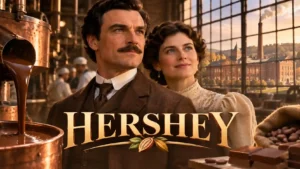
The lead’s period-appropriate moustache is an effective historical detail.
The origins of Hershey’s caramel and chocolate businesses offer interesting history, but the film leaves significant social and labor issues unexplored.
The shopping-oriented approach to holiday entertainment is criticized for overshadowing the romance.
The opening chocolate close-up is praised for its attractive lighting.
Literary jokes, recognizable books and carefully placed background titles are a highlight, particularly for readers who enjoy spotting references.
The eccentric murder-themed inn supplies a memorable comic detour for some viewers, but others find its atmosphere and creepy-owner gag unwelcome.
The couple’s generosity and school provide a moving centerpiece for many viewers. Critics argue that the charitable legacy is presented too reverentially and omits uncomfortable history.
The narrative follows familiar milestones and resolves difficulties so readily that the story rarely surprises or challenges viewers.
Kitty is seen by some as an inspiring, active partner and by others as a character too narrowly defined by her husband’s goals.
The 110-minute running time feels overly long to viewers who find the story underwhelming.
The jaunty period score enchants some viewers but grates on others who find it excessively sugary.
Its unabashed sweetness is comforting for some and cloying for others, especially when tragedy or conflict is softened.
The familiar outcome and quickly resolved obstacles leave little dramatic tension.
The film celebrates generosity and perseverance, but its simple treatment rarely explores their underlying motivations or contradictions.
The stranded-traveler setup and absurd detours produce plenty of comic mileage for fans, although others find the journey dull or grating.
The familiar romance tropes are openly acknowledged, but self-awareness does not always make the predictable formula feel fresher.
Business rivals rarely pose a convincing threat, and the principal competitor is too absent to create sustained conflict.
Repeated murder references feel out of place in a Christmas comedy to some viewers, even though the physical violence is relatively minor.
The costumes recreate the changing historical eras attractively and help establish the nostalgic atmosphere.
The period sets and locations help bring nineteenth- and early twentieth-century Pennsylvania to life.
The candy imagery often makes viewers crave chocolate, even when they are less enthusiastic about the film itself.
The unexpected musical number briefly restores the romantic appeal for one otherwise skeptical viewer.
The mid-2000s romantic-comedy feel and familiar snowy Christmas setting evoke affectionate nostalgia.
Critics object to the omission of the school’s early racial restrictions and later labor disputes, which limits the historical portrait.
The charming soundtrack complements the period setting and sentimental story.

A deeply human coming-of-age drama carried by remarkable performances and an honest portrayal of grief. Its gentle optimism moves most viewers, though some find the final stretch hurried or overly...
Pros: Grief portrayal, acting performance
Cons: pacing

Billie Jean King’s magnetic first-person storytelling makes this an exhilarating portrait of athletic courage and social change. The filmmaking follows a familiar documentary structure, and her full tennis résumé gets...
Pros: entertainment value, Biographical coverage
Cons: Narrative structure

Choose this inventive, unsettling documentary for fearless questioning, dark humor, and unpredictable storytelling. Skip it if you want a short, straightforward exposé with definitive answers.
Pros: originality, humor

A singular voice, powerful piano playing and intimate film photography make this concert absorbing for receptive listeners. Its uninterrupted, often similar-sounding songs and lack of background context are an acquired...
Pros: directing quality, cinematography
Cons: pacing, Song variety