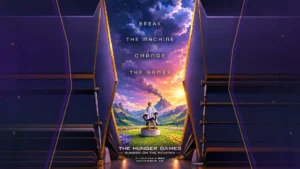

The Hunger Games: Sunrise on the Reaping
Where It Has the Edge
- production value is 5.0 vs 4.5. Lavish sets, locations and intricate world details give this prequel an expansive theatrical feel, even where its arena...

Scorata scores summarize analyzed review evidence on a 1–5 scale; they are not laboratory measurements or a simple average of customer star ratings. Feature scores summarize the reviews covering that feature. The overall score averages feature scores within each review, then combines review averages. When both expert and customer evidence are available, those two groups receive equal weight. Products can have different review coverage, so small score gaps do not establish a winner.
Recommendations prioritize important features for the category, with a score of at least 3.5, a gap of at least 0.25 points and at least two supporting reviews per product. Features with widely varying scores or broad connectivity contexts are excluded from recommendations. These safeguards do not establish statistical significance.
Quick verdict
The review evidence points to a tradeoff: production value versus character appeal. Choose according to which strengths matter more to you; the overall score alone does not settle that choice.
Choose The Hunger Games: Sunrise on the Reaping for production value.
Choose The Hunger Games for character appeal.
Scores are out of 5. Missing scores mean missing review evidence, not a missing feature.
The colorful Capitol officials provide memorable eccentricity, although their theatrical exaggeration strikes some viewers as unconvincing.
Katniss is widely admired for her resourcefulness, self-sacrifice, and determination, making her easy to root for even in a bleak world.
The teen-oriented rating allows a broader audience, but some critics think restraining the violence weakens the premise’s horror.
Age appropriateness is a weak spot: uneven execution keeps this aspect from matching the story’s ambitions.
The script delivers powerful political and emotional beats but sometimes overexplains ideas or crams too much context into the running time.
Writing quality receives a clear evaluation, with the film’s atmosphere and dramatic execution shaping the reaction.
Bold imagery, muscular camera work and contrasting bright landscapes with dark events make the film especially cinematic.
The handheld look divides opinion: some find it urgent and immersive, while others call the shaking excessive and the arena fights difficult to see.
A largely predetermined survival outcome can limit suspense, although personal losses and political reprisals still supply strong emotional stakes.
Narrative stakes receives a clear evaluation, with the film’s atmosphere and dramatic execution shaping the reaction.
Some of Haymitch’s choices and obvious hazards frustrate viewers despite the broader revolutionary plot remaining understandable.
Plot clarity stands out as a strength, with an effective contribution to the film’s dystopian drama.
The movie mixes high-stakes action with grief and political conflict, building powerful moments despite occasional tonal strain.
Drama quality receives a clear evaluation, with the film’s atmosphere and dramatic execution shaping the reaction.
Theme depth gets mixed responses: some find it effective, while others feel it weakens the story or presentation.
Theme depth draws mixed reactions, adding to the drama for some while leaving others wanting more polish or depth.
Tonal consistency attracts criticism for limiting the film’s effectiveness despite its other strengths.
Tonal consistency draws mixed reactions, adding to the drama for some while leaving others wanting more polish or depth.
Individual traps and confrontations can be tense, but the known fate of Haymitch limits surprise about the broad outcome.
The survival contest delivers high stakes and anxiety even when the protagonist’s chances of surviving are apparent. A few critics wanted sharper escalation and more danger.
The pageant-like Capitol elites and media machinery create sharp, often grotesque political satire that some viewers find too theatrical.
Political satire draws mixed reactions, adding to the drama for some while leaving others wanting more polish or depth.
The Games’ televised pageantry is treated as machinery that edits out suffering and rebellion, making exploitation itself part of the spectacle.
Turning murder into a televised ratings event gives the film a sharp hook about spectacle and manipulation, but not every critic finds the satire fully developed.
Some find the arena sufficiently brutal, while several argue the PG-13 restraint dulls the book’s horrific violence rather than strengthening the film.
The film presents child-on-child violence as disturbing rather than triumphant, an approach some appreciate and others find either too sanitized or too upsetting.
Francis Lawrence brings assured command of Panem’s spectacle and tension, although some find his familiar approach too restrained or repetitive.
Directing quality draws mixed reactions, adding to the drama for some while leaving others wanting more polish or depth.
Haymitch’s transformation earns sympathy, but the compressed ensemble leaves other tributes thinly developed and some motivations rushed.
A strong central heroine is offset by secondary tributes and relationships that rarely get enough time to become fully dimensional.
The adaptation broadly preserves the novel’s direction, but removed relationships and softened deaths can diminish its harsher nuance for readers.
The adaptation preserves the book’s key events and spirit, but compressing Katniss’s inner voice and the supporting cast leaves some fans wanting greater depth.
Plutarch’s double role and the compromises of resisting an oppressive state add intrigue to the political plot.
Moral ambiguity stands out as a strength, with an effective contribution to the film’s dystopian drama.
Haymitch and Lenore’s affection gives the film tenderness, but limited shared scenes and familiar YA romantic beats leave some critics cold.
The Katniss–Peeta relationship is frequently regarded as underdeveloped or secondary to survival, though some enjoy its strategic and emotional complications.
At roughly 158 minutes, the expansive scale is rewarding to engaged viewers but a recurring obstacle for those who find the middle or ending overextended.
The roughly two-and-a-half-hour scope lets the world develop, though its length is a recurring caveat for some viewers.
The origin story gives Haymitch’s eventual disillusionment deeper meaning, although its familiar trajectory and thin sections divide critics.
The central fight to survive is an accessible, propulsive story with more thematic weight than some teen blockbusters, despite familiar ingredients and abridgment.
The tragic resolution gives Haymitch’s future a moving context, but the late cameos are variously celebrated and criticized as forced fan service.
The finale provides a memorable challenge to the rules and a clear opening for more, but several critics find the last act muted or anticlimactic.
The orchestral score helps give the grim arena and emotional aftermath dramatic sweep.
Score quality stands out as a strength, with an effective contribution to the film’s dystopian drama.
The computer-generated animals and arena hazards are a noticeable weak point for several critics, contrasting with otherwise handsome practical environments.
Digital effects receive repeated criticism, particularly the artificial-looking Capitol details, staged fire, and arena creatures.
The deadly arena offers inventive traps and urgent action, but other critics find the battles too brief, familiar or overwhelmed by effects.
The arena can be thrilling and brutal, but shaky framing and restrained violence make some fights less satisfying than the premise promises.
The prequel adds poignant context but frequently repeats the series’ familiar reaping, parade, arena and rebellion beats rather than discovering a truly new structure.
Originality draws mixed reactions, adding to the drama for some while leaving others wanting more polish or depth.
Haymitch’s losses make this one of the series’ bleakest entries; many find the tragedy devastating, while others feel the relentless sorrow becomes numbing.
Sacrifice, the Reaping, and the deaths of young tributes generate genuine heartbreak, even if abbreviated relationships sometimes blunt the impact.
The younger incarnations of established characters generally feel well chosen, and the newcomers bring a welcome mix of vulnerability and showmanship.
Casting is a standout: Lawrence feels right for Katniss, while the mentors, Capitol officials, and young tributes are often described as sharply chosen.
Some find the film gripping despite its length, while others complain that the setup drags or that its densely packed arena and coda rush crucial moments.
Despite the considerable runtime, many find the story quick-moving; others say the extended setup, action-heavy second half, or cave scenes drag.
The story’s critique of children used as televised instruments of oppression remains central, even where the film softens the book’s brutality.
Anti-war commentary stands out as a strength, with an effective contribution to the film’s dystopian drama.
The deaths of young tributes and vicious traps make this difficult viewing for those especially disturbed by bloodshed, even with some softened violence.
Graphic detail is limited by the rating, but dead and injured teenagers and sustained mortal danger can still be upsetting.
Narrative structure attracts criticism for limiting the film’s effectiveness despite its other strengths.
Narrative structure is a weak spot: uneven execution keeps this aspect from matching the story’s ambitions.
The lush world is convincing, but the healthy-looking tributes and some synthetic creatures can briefly break immersion.
Realism is a weak spot: uneven execution keeps this aspect from matching the story’s ambitions.
Lush arena landscapes and richly furnished, 1970s-inspired Capitol interiors supply much of the film’s spectacle and distinctive identity.
The Depression-like poverty of District 12 is convincing; reactions to the high-tech Capitol and larger set pieces are less consistent.
Sound design is generally considered a strength, helping make this return to Panem compelling and memorable.
Sound design stands out as a strength, with an effective contribution to the film’s dystopian drama.
The movie expands the visual and political workings of Panem, linking the more primitive early Games to the spectacle seen in later stories.
Panem’s divided society and televised death match provide a compelling foundation, though some viewers wish the districts and political system were explored more deeply.
The striking retro-futurist costumes vividly separate decadent Capitol elites from the struggling districts.
The Capitol’s outlandish fashion creates a striking social contrast, but not everyone likes how far its gaudy outfits and hairstyles go.
The almost fairy-tale beauty of the deadly arena and colorful retro Capitol earn wide praise, though occasional artificial imagery disrupts immersion.
The contrast between the drab mining districts and the Capitol’s extravagant colors is memorable, although some costumes and flourishes strike viewers as cartoonish.
Lavish sets, locations and intricate world details give this prequel an expansive theatrical feel, even where its arena action disappoints.
Production value stands out as a strength, with an effective contribution to the film’s dystopian drama.
Most find the return to Panem absorbing and often thrilling despite the grief; a vocal minority see an exhausted, overly familiar installment.
Most find the film engrossing and effective, thanks to its star, survival stakes, and unsettling setting; scattered reservations concern its uneven execution.
Joseph Zada carries the film with a warm, determined young Haymitch whose growing trauma convincingly leads toward the familiar older character, though a few critics find the transition or accent strained.
Jennifer Lawrence repeatedly emerges as the film’s greatest strength, giving Katniss a convincing mix of resolve, vulnerability, and survival instinct.
The large ensemble is a major draw, with many actors finding expressive new interpretations of familiar Panem figures; a minority find individual portrayals too broad.
The performers generally make Panem’s extreme characters credible, with particularly enthusiastic praise for the lead and several flamboyant supporting turns.
Zada’s drawl often recalls Woody Harrelson’s delivery, though a few critics find the attempted vocal connection distracting.
The Capitol’s manipulation of televised footage, political spectacle and bright visual symbolism deepens its portrait of propaganda.
The Blu-ray transfer earns explicit praise for its crisp, gorgeous detail, especially in the busy Capitol city scenes.
Bonus features draws mixed reactions, adding to the drama for some while leaving others wanting more polish or depth.
Haymitch’s bonds with Maysilee and Lenore often feel genuine, giving the losses and alliances a human core.
An enormous cast makes the world lively but leaves many supporting tributes and mentors disappointingly underserved.
The Capitol’s luxury and the districts’ poverty give the spectacle a pointed class dimension, although some critics want more time spent confronting that injustice.
Fast cuts help keep the violence less explicit, but they can also make the action disorienting and leave emotional moments too little breathing room.
The packed cast creates a lively world but sidelines several mentors and tributes, sometimes reducing their stories to brief introductions before tragedy strikes.
The romance-as-strategy adds an intriguing layer to the survival game, even as some viewers doubt how deeply Katniss’s feelings are established.
Family friendliness is a weak spot: uneven execution keeps this aspect from matching the story’s ambitions.
A few critics view another prequel as unnecessary exploitation of an established brand, while others think its care and craftsmanship justify the return.
Connections to Katniss’s future rebellion reframe Haymitch’s story for returning fans, though forced cameos and conspicuous setup sometimes feel mechanical.
The film blends dystopian science fiction, survival thriller, and YA drama to broad effect, balancing excitement with bleak social themes.
Decadent Capitol behavior adds dark, outlandish comedy, but some critics find the exaggeration broad or hollow.
A critic objects to the Capitol styling that associates male effeminacy with decadence, making the depiction feel stereotyped.
The lighting is an unexpectedly strong part of the film’s visual design, especially on repeat viewing.
Grotesque prosthetics and elaborate Capitol styling create instantly memorable faces, though some disguises and cameo styling feel overdone.
The story draws on reality television, class oppression, and state power to make its audience uncomfortable about violence as entertainment; the depth of that critique remains debated.
A familiar cycle of new allies followed by losses becomes predictable for some viewers, weakening the shock of successive deaths.
Plot twists receives a clear evaluation, with the film’s atmosphere and dramatic execution shaping the reaction.
The revolt’s early groundwork has contemporary resonance, though some find the resistance too vaguely drawn to carry its thematic weight.
Katniss is viewed as a welcome, capable young female lead whose courage and self-reliance carry the film.
The arena and villains are disturbing in concept, although some sequences fall short of the terror one might expect.
A few conspicuously risky decisions undermine Haymitch’s otherwise resourceful attempt to survive and sabotage the arena.
President Snow remains threatening, with Ralph Fiennes emphasizing his controlling malice even when the script gives him little room.
The high-definition release is applauded for rendering James Newton Howard’s music score clearly and brightly.
Supporting cast performance draws mixed reactions, adding to the drama for some while leaving others wanting more polish or depth.
Character design receives a clear evaluation, with the film’s atmosphere and dramatic execution shaping the reaction.
Revisiting the film can highlight its production and performances, but the harsh subject matter makes others reluctant to watch it again.
Value for money is generally considered a strength, helping make this return to Panem compelling and memorable.
The prequel subtitle strikes at least one critic as overwrought rather than evocative.

Choose this inventive, unsettling documentary for fearless questioning, dark humor, and unpredictable storytelling. Skip it if you want a short, straightforward exposé with definitive answers.
Pros: originality, humor

Extraordinary performances and richly observed relationships make this a rewarding, emotionally forceful drama. Its nearly three-hour length and slow opening demand patience and undivided attention.
Pros: class commentary, character development

Best for a hypnotic, bookish mystery with tactile visuals and cerebral chills. Skip it if reading-heavy, attention-demanding storytelling sounds more exhausting than exciting.
Pros: Atmosphere, cinematography
Cons: audience appeal

Best for an intimate, searching documentary that rewards focused attention and invites discussion. Skip it when devastating grief, addiction footage, and unresolved family tensions would be too much.
Pros: emotional impact, theme depth