Scorata scores summarize analyzed review evidence on a 1–5 scale; they are not laboratory measurements or a simple average of customer star ratings. Feature scores summarize the reviews covering that feature. The overall score averages feature scores within each review, then combines review averages. When both expert and customer evidence are available, those two groups receive equal weight. Products can have different review coverage, so small score gaps do not establish a winner.
Recommendations prioritize important features for the category, with a score of at least 3.5, a gap of at least 0.25 points and at least two supporting reviews per product. Features with widely varying scores or broad connectivity contexts are excluded from recommendations. These safeguards do not establish statistical significance.
Quick verdict
What each product is best for
The review evidence points to a tradeoff: peak brightness and HDR brightness versus Weight and handling and HDR tone mapping accuracy. Choose according to which strengths matter more to you; the overall score alone does not settle that choice.
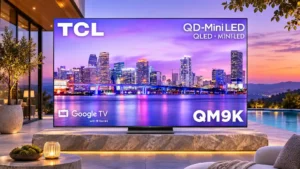
Choose TCL QM9K for peak brightness and HDR brightness.
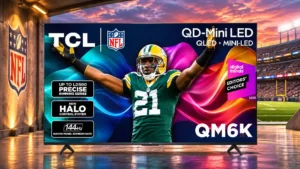
Choose TCL QM6K for Weight and handling and HDR tone mapping accuracy.
Why these recommendations?
TCL QM9K
Where It Has the Edge
peak brightness is 4.9 vs 2.5. Extreme light output is the QM9K's defining strength, with unusually intense highlights and plenty of brightness for bright...
HDR brightness is 4.8 vs 2.6. Small HDR highlights and larger bright scenes have formidable impact, making HDR one of the strongest reasons to...
color volume is 4.6 vs 2.5. Rich, highly saturated colors remain vibrant even in bright scenes. Some side-by-side comparisons find the palette a little...
TCL QM6K
Where It Has the Edge
Weight and handling is 4.8 vs 2.5. Relatively light construction can make the panel easier to move and position than similarly sized premium sets.
HDR tone mapping accuracy is 4.2 vs 2.1. The QM6K generally preserves highlight detail and follows HDR brightness intent respectably, with small deviations across the range.
judder handling is 4.5 vs 3.3. Ordinary 24p films are handled well, though certain 25p sources can show slight cadence irregularities without frame-rate matching.
TCL QM9K3.9 overall score
TCL QM6K4.0 overall score
Compare features
Scores are out of 5. Missing scores mean missing review evidence, not a missing feature.
Scored on both products
Performance
Picture quality
TCL QM9K
4.6
Pictures are punchy, detailed and often spectacular, particularly with HDR. Image accuracy and moving objects are less consistently polished than the raw brightness suggests.
TCL QM6K
4.6
Color-rich, convincing pictures and excellent blacks make the QM6K look pricier than it is. Bright HDR highlights and motion refinement are less consistent.
Peak brightness
TCL QM9K
4.9
Extreme light output is the QM9K's defining strength, with unusually intense highlights and plenty of brightness for bright rooms. Some scenes do not exploit all that measured headroom.
TCL QM6K
2.5
Brightness is adequate in many ordinary scenes, but the QM6K falls well short of more expensive Mini-LED sets and sometimes looks understated.
HDR brightness
TCL QM9K
4.8
Small HDR highlights and larger bright scenes have formidable impact, making HDR one of the strongest reasons to buy. Unusual mastering or tone-mapping behavior can reduce that advantage.
TCL QM6K
2.6
Dramatic specular highlights are its clearest picture compromise: some scenes look punchy, but bright sparks, sunlight and reflections seldom reach flagship intensity.
Overall image accuracy
TCL QM9K
3.0
The image can look attractive before calibration, but imperfect temperature and brightness tracking hold it short of consistently faithful reproduction.
TCL QM6K
4.8
Overall image accuracy is generally a clear strength, adding to the QM6K’s appealing balance of picture performance and practical features.
SDR brightness
TCL QM9K
4.8
Standard-range content is exceptionally luminous even in daylight, with enough headroom to overpower ordinary room light without sacrificing obvious contrast.
TCL QM6K
3.8
Regular television can look satisfyingly bright with appropriate settings. The default filmmaker presentation sometimes needs a boost for daytime use.
Audio passthrough
TCL QM9K
4.8
Broad audio-format passthrough helps connect receivers and soundbars without significant compatibility anxiety.
TCL QM6K
3.8
eARC enables advanced surround formats with compatible sound equipment, though sources handling some DTS formats may need direct receiver connections.
Daytime viewing performance
TCL QM9K
4.8
Daytime viewing is superb thanks to extraordinary SDR brightness and contrast. Positioning matters because direct reflections can still show through.
TCL QM6K
3.9
Normal daytime TV is workable when direct reflections are controlled. Strong window light is a different challenge, especially on smaller glossy sizes.
White balance accuracy
TCL QM9K
3.2
White balance is generally adjustable but can run cool or warm depending on format and luminance. Carefully chosen modes help, yet some HDR deviations remain.
TCL QM6K
4.1
Many tests commend the near-target color temperature, especially in HDR, while one technical evaluation finds SDR grayscale balance less convincing before calibration.
Color accuracy
TCL QM9K
4.0
Colors can be extremely accurate in the best settings, especially SDR, but HDR mapping, factory temperature and white balance vary enough to make accuracy a caveat.
TCL QM6K
4.6
Out-of-box color, especially in Filmmaker Mode and HDR, is repeatedly singled out for natural skin tones and faithful hues. Some other presets need adjustment.
Soundbar clearance
TCL QM9K
4.9
The raised pedestal setting gives most soundbars enough space without blocking the screen.
TCL QM6K
4.5
Raised feet leave room for many soundbars without blocking the image.
HDR performance
TCL QM9K
4.2
HDR images can be dazzling, with exceptional highlights and bold contrast. Uneven tone tracking and occasional black crush are the main compromises.
TCL QM6K
3.8
Dolby Vision and HDR10+ footage benefits from strong contrast and clean color. The modest peak brightness prevents full high-end HDR impact.
Local dimming performance
TCL QM9K
4.5
The dense Mini-LED backlight contains blooming effectively and preserves strong contrast. Rapid zone changes can still introduce visible flicker or occasional halos.
TCL QM6K
4.9
Its Mini-LED local dimming gives dark scenes convincing depth and often keeps bright areas tidy. The degree of blooming varies with demanding test patterns and seating angle.
Gaming performance
TCL QM9K
4.3
Powerful HDR, low input lag and modern gaming modes make it a strong gaming TV. Motion smearing, occasional tearing or firmware quirks temper its appeal for the most demanding players.
TCL QM6K
4.6
Native 4K high-refresh gaming is a major strength, with responsive controls and impressive dark-scene contrast. Some tests find blur and input lag less competitive than premium OLEDs.
Sound quality
TCL QM9K
3.8
Built-in audio earns both enthusiastic praise for presence and Atmos effects and criticism for thin bass or muddled dialogue in busy scenes. A soundbar remains an upgrade.
TCL QM6K
3.5
Stock audio divides opinion: some hear surprisingly full, clear sound, while others find it thin, boxy or metallic. A soundbar is the safer movie-night upgrade.
Contrast ratio
TCL QM9K
4.8
Powerful contrast makes bright objects pop against dark backgrounds. The refinement is not uniform across all HDR scenes, and OLED still offers stronger pixel-level control.
TCL QM6K
4.5
The QM6K delivers unusually strong contrast for its price, with rich blacks despite using an LCD backlight rather than OLED pixels.
Picture mode tuning
TCL QM9K
4.3
Filmmaker and custom picture presets offer meaningful improvements, though correct HDR balance can take tinkering.
TCL QM6K
4.6
Filmmaker Mode is a strong accuracy starting point, while Standard, Movie and other presets let owners prioritize brightness or punch.
Dark-room performance
TCL QM9K
4.4
Deep blacks and effective dimming create cinematic dark-room images, but accuracy-focused viewers may notice blooming, shadow crush and motion imperfections.
TCL QM6K
4.7
Dark-room performance is generally a clear strength, adding to the QM6K’s appealing balance of picture performance and practical features.
SDR picture performance
TCL QM9K
4.8
SDR color, contrast and clarity are frequently excellent, especially in Filmmaker Mode, with some warmer factory defaults.
TCL QM6K
4.5
Day-to-day SDR images remain clear and pleasantly colorful; tweaking gamma and peak luminance can help in brighter rooms.
Bass performance
TCL QM9K
3.0
Bass output is a divisive area: some large-set listening finds genuine punch, while other tests report little low-frequency weight.
TCL QM6K
2.9
The built-in bass channel adds a little weight, but deep impact remains limited and louder playback can sound strained.
Automatic brightness adjustment
TCL QM9K
5.0
Ambient-light adaptation keeps the picture comfortable across changing daylight and dimmer evenings, although manual control is still useful.
TCL QM6K
5.0
Automatic brightness adjustment is generally a clear strength, adding to the QM6K’s appealing balance of picture performance and practical features.
Noise reduction
TCL QM9K
3.0
Low-quality signal cleanup is useful but not foolproof; aggressive AI clarity options can amplify flicker or create strange artifacts.
TCL QM6K
3.0
Compression smoothing removes much visible blockiness but can also erase a little fine texture.
Other features
Motion handling
TCL QM9K
3.3
Sports and ordinary TV can look fluid, but rapid pans and challenging gaming motion can reveal blur, judder or tearing.
TCL QM6K
4.3
Motion is often pleasantly smooth for sports and gaming, but tougher tests reveal trailing and inconsistent moving-color edges.
Input lag
TCL QM9K
4.1
Game mode is usually fast and responsive, although measurements differ and leaving the mode off can cause extreme lag. Some OLED competitors remain faster.
TCL QM6K
4.1
Most reviewers find input lag low enough for responsive gaming, while one lab comparison calls it slightly behind rivals at 60Hz.
Ease of use
TCL QM9K
4.3
Google TV's straightforward content organization helps day-to-day use, even if initial account setup can take longer than desired.
TCL QM6K
4.5
The interface and basic picture controls are accessible even with many optional settings.
HDMI port accessibility
TCL QM9K
2.0
Side-facing sockets are neatly concealed but sit too far inward to access easily once the television is mounted close to a wall.
TCL QM6K
4.5
Side-facing connections and clear labels are welcome when the set is mounted close to a wall.
PC text clarity
TCL QM9K
5.0
PC text benefits from the regular RGB subpixel layout and high-bandwidth chroma support, producing unusually clean lettering for a television.
TCL QM6K
2.5
The BGR subpixel order can slightly soften small desktop text compared with standard RGB monitors.
Flicker control
TCL QM9K
2.8
High-frequency backlight flicker should be unobtrusive for most people, although one low-quality video test exposed amplified content flickering.
TCL QM6K
5.0
Its high-frequency backlight PWM is effectively invisible in normal viewing.
Maximum volume
TCL QM9K
4.5
The internal speakers can fill a room at useful volume without immediately needing external amplification.
TCL QM6K
2.3
The stock speakers do not get especially loud and can compress or distort when pushed.
Weight and handling
TCL QM9K
2.5
The larger panels are substantial enough to need two people for safe unpacking or wall mounting, even when their construction feels manageable for the size.
TCL QM6K
4.8
Relatively light construction can make the panel easier to move and position than similarly sized premium sets.
Color volume
TCL QM9K
4.6
Rich, highly saturated colors remain vibrant even in bright scenes. Some side-by-side comparisons find the palette a little less full or faithful than competing OLED sets.
TCL QM6K
2.5
Saturated dark colors look convincing, but the limited peak brightness prevents vivid bright HDR colors from reaching the intensity of pricier alternatives.
HDR highlight detail
TCL QM9K
3.8
Fine HDR highlight textures can survive extreme brightness well, although some tone settings overblow intense areas.
TCL QM6K
2.0
Bright HDR details can seem muted next to the step-up QM7K, even while the QM6K retains a natural overall image.
Stand stability
TCL QM9K
3.8
The central stand feels stable in ordinary use, although one assessment cautions that a pedestal design is easier to tip with children nearby.
TCL QM6K
2.0
One unboxing found the screen bottom-heavy and not particularly stable while removing protective film.
Shadow detail
TCL QM9K
2.7
Shadow detail is a significant point of disagreement: some dark scenes retain excellent texture, while others show crushed near-blacks that calibration cannot fully resolve.
TCL QM6K
4.4
Shadow detail is generally a clear strength, adding to the QM6K’s appealing balance of picture performance and practical features.
Screen coating clarity
TCL QM9K
4.5
The clear glossy finish preserves image crispness and saturation, although it sacrifices some direct-glare control.
TCL QM6K
2.8
Screen coating clarity earns qualified assessments: adequate in typical situations, with some noticeable limits under harder conditions.
Backlight strobing
TCL QM9K
4.0
Backlight strobing supports both 60Hz and 120Hz, providing a useful motion-clarity option at two common refresh rates.
TCL QM6K
2.5
Backlight strobing is a notable compromise, with weaknesses more apparent in demanding material or setups.
Remote layout
TCL QM9K
4.3
Controls are fairly uncluttered with handy app shortcuts, but the unused space could accommodate additional services.
TCL QM6K
2.9
The remote looks clean, but the prominent assistant key, distant mute button and lack of a dedicated play/pause key draw complaints.
Packaging and unboxing
TCL QM9K
4.5
Protective packaging allows large models to accept the stand while still supported in foam, reducing the difficulty of a two-person unpacking.
TCL QM6K
3.1
Unboxing reports range from thick screen protection to a flimsy outer carton and awkward initial handling.
Stand quality
TCL QM9K
4.4
The compact adjustable pedestal fits narrower furniture and accommodates different screen heights; the larger 98-inch model uses feet instead.
TCL QM6K
3.0
The simple feet keep the screen elevated, but plastic or slender legs lack the heft of pricier stands.
Treble clarity
TCL QM9K
4.0
Treble can sound clear and natural for TV speakers, even when the bass lacks deeper punch.
TCL QM6K
2.7
Higher frequencies sound crisp to some listeners, but one evaluator sharply criticizes thin, unclear upper-range reproduction.
Judder handling
TCL QM9K
3.3
Properly configured 24p movies look judder-free; some 25p signals and challenging pans still show periodic jitter.
TCL QM6K
4.5
Ordinary 24p films are handled well, though certain 25p sources can show slight cadence irregularities without frame-rate matching.
Low-resolution content handling
TCL QM9K
3.5
Compressed video is smoothed competently, at the cost of a little fine texture. Poorly encoded sources remain more noticeable on very large screens.
TCL QM6K
2.4
Lower-grade SD and 480p material is not a strength; picture detail is harder to recover than on better processors.
HDMI 2.1 port count
TCL QM9K
3.0
Only two high-bandwidth HDMI connections are confirmed in detailed testing, which limits elaborate console-and-PC setups despite four physical inputs.
TCL QM6K
4.1
The two 4K/144Hz inputs accommodate a console and PC, but three premium gaming sources would need switching hardware.
Gaming mode quality
TCL QM9K
3.8
Game mode preserves impressive image brightness while cutting lag, but normal modes can be much slower and do not suit gaming.
TCL QM6K
4.9
Game Master keeps latency low and exposes practical settings; some calibration options depend on VRR and high-frame-rate settings.
Black uniformity
TCL QM9K
4.5
Near-black and full-black uniformity can be excellent, though comparisons sometimes favor the QM8K's cleaner dark panels.
TCL QM6K
3.5
Black fields are generally even and convincingly dark, though highlights can expose localized halos when dimming is active.
Gradient handling
TCL QM9K
3.5
Gradients are usually smooth, but subtle gray bands remain visible and some rivals clean them up more completely.
TCL QM6K
2.5
Broad HDR gradients can expose noticeable banding, particularly in grays, greens and some dark red shades.
Color gamut
TCL QM9K
4.7
A wide HDR color range makes animation and brightly lit landscapes especially vivid, though the most extreme hues do not always match reference targets.
TCL QM6K
3.8
Quantum-dot color delivers a useful wide gamut and lively images, although coverage is more respectable than class-leading.
Content recommendations
TCL QM9K
4.4
Content discovery is flexible, with platform-based recommendations and smart searches. Context can change depending on whether an app or the TV home screen is active.
TCL QM6K
3.5
Rows and personalized suggestions can be convenient, but not every streaming service appears consistently.
Response time
TCL QM9K
2.6
Response times vary by transition, with slow movement between very dark and bright shades. Gaming remains responsive overall, but the panel is not an OLED-speed performer.
TCL QM6K
3.5
Pixel transitions are quick enough for most gaming, but technical measurements find overshoot and slower transitions in some tones.
Search quality
TCL QM9K
4.2
Gemini is helpful for conversational recommendations and follow-up questions, but it sometimes misunderstands device-specific requests and complex tasks.
TCL QM6K
5.0
Cross-service search works well in supported apps, simplifying content discovery.
Screen uniformity
TCL QM9K
2.5
Some panels look uniform in dark scenes, but one detailed evaluation found conspicuous edge vignetting and uneven light distribution.
TCL QM6K
3.3
Experiences vary from exceptionally clean skies to faint grids, vignetting and uneven patches, so panel variation remains a consideration.
Advertising intrusiveness
TCL QM9K
1.0
Advertising is built into the smart interface and cannot be disabled, a notable drawback for anyone wanting a cleaner home screen.
TCL QM6K
1.5
The Google TV home screen includes ads that cannot be disabled completely.
Large-screen immersion
TCL QM9K
5.0
At 85 or 98 inches, the high-contrast image is particularly immersive without needing an oversized OLED budget.
TCL QM6K
4.5
The larger panels magnify the QM6K’s strong contrast and provide substantial immersion without OLED-level pricing.
Local dimming zone transitions
TCL QM9K
3.0
Local-dimming transitions generally follow moving highlights quickly, but visible zone flicker can still occur in certain scenes.
TCL QM6K
2.5
The zones generally control contrast acceptably, but leading edges of moving bright objects can darken and show a visible halo.
Motion artifacts
TCL QM9K
2.5
Rapid pans, fast athletes and gaming action can show edge blur, flicker or judder that distract from an otherwise powerful picture.
TCL QM6K
2.0
Some scenes show unwanted color fringes or blur trails, especially at demanding refresh rates or with processing turned up.
Stand assembly
TCL QM9K
3.0
The pedestal can be assembled without unusual difficulty, although its interlocking pieces take some care.
TCL QM6K
2.5
Assembly is easy on some units, but at least one installer found the feet hard to seat before screwing them in.
Variable refresh rate
TCL QM9K
4.0
VRR works well on most modern gaming devices, but there are reports of tearing with particular PC settings and high-motion gameplay.
TCL QM6K
4.5
VRR and FreeSync are valuable additions for tear-free gaming, with generally broad compatibility and consistency.
Dialogue clarity
TCL QM9K
3.8
Voices are often crisp and clear, but deep dialogue can become indistinct and complex mixes may mask speech.
TCL QM6K
3.3
Some find speech clear at modest volume; others hear tinny voices and a treble deficiency that hurts intelligibility.
Reflection handling
TCL QM9K
2.9
Reflections are a real tradeoff. Massive brightness compensates for general daylight, while direct lamps and windows can remain distracting on the glossy screen.
TCL QM6K
2.5
The glossy 50–75-inch screens can mirror lamps and windows, so careful placement is important. Larger matte-coated sizes behave differently.
Viewing angles
TCL QM9K
3.9
The WHVA panel fares well against conventional VA LCDs, yet opinions differ on how much color and contrast shift off-center. Front-and-center seats remain best.
TCL QM6K
3.5
Some find HVA panels pleasantly improved over older VA screens, but wide side seats still lose contrast and saturation, especially in technical tests.
Auto low-latency mode
TCL QM9K
5.0
Automatic game switching is convenient because the TV selects its responsive gaming settings when a console starts.
TCL QM6K
4.7
Automatic game-mode switching saves manual adjustment when a supported console starts up.
Motion clarity
TCL QM9K
2.9
Fast motion is acceptable for a bright LCD, though dark-to-bright pixel transitions and quick action trails are less crisp than on OLED.
TCL QM6K
3.2
Fast action generally remains watchable, although 60Hz transitions and dark-to-light changes can leave blur or ghost trails.
Overall satisfaction
TCL QM9K
4.2
The QM9K is widely admired for flagship-level light output and strong all-around features, though the value case and a handful of processing flaws split opinions.
TCL QM6K
4.5
The QM6K earns enthusiastic recommendations as an unusually capable midpriced Mini-LED TV, although not everyone sees it as a substitute for brighter step-up sets.
Dirty screen effect
TCL QM9K
2.8
Dirty screen effect is restrained in some testing but prominent in another large sample, where streaks remain visible on pale images.
TCL QM6K
3.0
Some panels look unusually clean on pans and sports fields; others reveal faint grid patterns or patches in uniform backgrounds.
Upscaling quality
TCL QM9K
3.5
Upscaled sources generally remain clear without excessive artificial sharpening, but fine details and lower-quality streams can still be less convincing than premium processing rivals.
TCL QM6K
3.3
720p and HD sources generally look respectable, but DVD-quality material remains soft and can lose fine detail.
Gaming dashboard
TCL QM9K
4.5
The on-screen Game Bar provides quick gaming adjustments without interrupting play to navigate deeper menus.
TCL QM6K
4.7
The Game Master overlay provides convenient status, aiming aids and quick adjustments without closing a game.
Motion interpolation
TCL QM9K
3.9
Motion interpolation can tame judder and stutter without necessarily adding much lag, but settings require adjustment and results can be inconsistent.
TCL QM6K
4.1
Optional smoothing can make pans fluid without an exaggerated soap-opera look at restrained settings; high settings may add artifacts.
Blooming control
TCL QM9K
4.0
Halos are restrained compared with many LCDs but remain visible around subtitles, stars and other isolated lights, especially off-axis.
TCL QM6K
4.1
Several reviewers see minimal halos in ordinary content, while others notice glow around subtitles or isolated bright elements against black.
High-refresh-rate gaming
TCL QM9K
4.7
Fast PC modes and console-friendly refresh rates are big strengths, though a reported PC handshake problem and slower pixel transitions keep performance from being flawless.
TCL QM6K
4.7
Two HDMI 2.1 inputs support 4K up to 144Hz, with even higher rates at reduced resolution, making it unusually flexible at this price.
Black levels
TCL QM9K
4.8
Deep blacks are a major Mini-LED achievement here, creating convincing dark scenes without OLED pixels. The darkest details can still be crushed, and isolated highlights may produce halos.
TCL QM6K
4.8
Inky black scenes and dark letterbox bars are a recurring highlight. Small illuminated objects can still produce some halos.
Glare resistance
TCL QM9K
2.6
The glossy finish struggles with bright light sources directly opposite the panel, even though it performs well in diffuse daylight.
TCL QM6K
2.6
Direct glare is a recurring weakness despite adequate SDR brightness; reviewers disagree somewhat on how bothersome it is in ordinary rooms.
Burn-in resistance
TCL QM9K
5.0
The LCD panel avoids permanent burn-in, a reassuring trait for users worried about static images and long sessions.
TCL QM6K
5.0
An LCD panel avoids the permanent burn-in risk associated with static images on OLED.
HDMI port count
TCL QM9K
4.5
Four total HDMI connections provide practical room for a pair of consoles and other devices, though their bandwidth capabilities differ.
TCL QM6K
4.5
Four total HDMI inputs make mixed streaming and gaming setups practical, even though only two run at full gaming bandwidth.
Image processing
TCL QM9K
2.3
The processor produces excellent-looking high-quality video, but enhancement settings sometimes introduce artifacts or handle brightness inconsistently.
TCL QM6K
2.3
Image processing is a notable compromise, with weaknesses more apparent in demanding material or setups.
Remote control quality
TCL QM9K
4.6
The backlit metallic-looking remote is a welcome upgrade, particularly in dark rooms, though buttons and battery choices are not ideal for everyone.
TCL QM6K
4.6
The sleek backlit remote is an attractive upgrade, though button-placement choices are divisive.
Stutter handling
TCL QM9K
3.0
Slow movie pans can visibly stutter even though most film motion looks good. Interpolation offers an effective workaround for those who prefer smoother motion.
TCL QM6K
3.0
Slow camera pans can show occasional stutter, but motion controls reduce it and not everyone finds it distracting.
Ownership and support
Reliability
TCL QM9K
2.9
The LCD design avoids permanent OLED burn-in, but unresolved software glitches and one reported electrical buzz raise quality-control questions.
TCL QM6K
4.5
The LCD design has reassuringly low burn-in risk, although long-term component failures remain possible.
Value for money
TCL QM9K
3.0
At a substantial discount the QM9K is a tempting flagship, but the much cheaper QM8K frequently looks similar in everyday content. The price gap determines the recommendation.
TCL QM6K
4.7
The combination of dark-scene contrast, accurate colors and serious gaming hardware makes this a standout value when discounted. Its appeal narrows if it costs nearly as much as a brighter competitor.
4K at 144 Hz support
TCL QM9K
3.0
High-bandwidth inputs enable 4K at 144Hz gaming, but at least one PC tester could not make the mode work reliably with their graphics hardware.
TCL QM6K
4.5
4K/144Hz PC gaming looks sharp and responsive in favorable tests, and separate eARC helps preserve both fast inputs.
Tuner support
TCL QM9K
4.5
The integrated over-the-air tuner operated properly in a real-world trial, making antenna reception a useful option.
TCL QM6K
3.0
Tuner support earns qualified assessments: adequate in typical situations, with some noticeable limits under harder conditions.
Dolby Vision support
TCL QM9K
5.0
Dolby Vision material can look deep and striking, revealing textures and atmosphere. Its accuracy depends on mode and processing choices.
TCL QM6K
4.0
Dolby Vision support earns qualified assessments: adequate in typical situations, with some noticeable limits under harder conditions.
HDMI 2.1 support
TCL QM9K
5.0
High-bandwidth HDMI enables excellent console and PC modes. The practical limitation is how many full-speed inputs are available.
TCL QM6K
4.5
High-bandwidth HDMI makes the QM6K unusually capable for a value-oriented display.
Setup ease
TCL QM9K
4.3
Physical installation is manageable with assistance, while Google TV and Gemini setup can require more prompts and updates than expected.
TCL QM6K
3.8
Software setup is generally straightforward; a few units had stubborn stand fittings or slower first-run setup.
Large-screen value
TCL QM9K
4.5
Large 85- and 98-inch sizes can be compelling compared with giant OLEDs, especially when the QM9K is sold at a steep clearance price.
TCL QM6K
4.8
Upsizing a QM6K can deliver more immersive pictures for the budget than choosing a smaller premium model.
EARC support
TCL QM9K
5.0
eARC supports high-quality audio to an external sound system and sits separately from the two full-bandwidth gaming inputs.
TCL QM6K
4.9
Because eARC sits on a separate HDMI 2.0 input, connecting a soundbar does not take away either 4K/144Hz gaming port.
1080p at 288 Hz gaming support
TCL QM9K
4.5
A reduced-resolution high-refresh mode caters to twitchier PC games, trading 4K sharpness for exceptionally fast frame updates.
TCL QM6K
4.5
The 288Hz option works on eligible larger sizes and feels very smooth, but requires dropping to 1080p and suitable PC hardware.
Controls and connectivity
HDR tone mapping accuracy
TCL QM9K
2.1
HDR tracking can raise highlights too much, crush shadows and deviate from intended brightness. This is one of the biggest concerns for film purists.
TCL QM6K
4.2
The QM6K generally preserves highlight detail and follows HDR brightness intent respectably, with small deviations across the range.
Privacy controls
TCL QM9K
4.5
A physical microphone switch and optional AI features provide meaningful control, although always-listening hardware may still make privacy-conscious buyers uncomfortable.
TCL QM6K
2.8
Microphone muting is available, but setup prompts warrant attention to account and data-sharing terms.
Menu responsiveness
TCL QM9K
3.9
Most navigation is responsive, and picture settings are easy to reach, but occasional freezes and long initial configuration can frustrate.
TCL QM6K
4.9
Menus and settings feel quick and intuitive, with several reports of snappy navigation.
Picture settings menu flexibility
TCL QM9K
5.0
Customizable quick settings let enthusiasts reach preferred picture adjustments rapidly without scrolling through deep menus.
TCL QM6K
4.8
The many gamma, local-contrast and tone-mapping controls make it easy to tailor the picture; some options are restricted in gaming modes.
App selection
TCL QM9K
5.0
A wide range of popular streaming and game-streaming services is available without needing an extra box.
TCL QM6K
5.0
Major streaming services are easy to find, although specialized apps and recommendations vary.
Operating system speed
TCL QM9K
4.5
Menus and apps usually feel quick, though isolated freezes and setup delays keep the software from feeling completely seamless.
TCL QM6K
4.5
Google TV generally responds fluidly, an advantage for people switching frequently between apps and settings.
Voice control accuracy
TCL QM9K
3.5
Conversational voice requests often work naturally, but complicated instructions can yield incorrect answers or fail altogether.
TCL QM6K
3.5
Voice control accuracy earns qualified assessments: adequate in typical situations, with some noticeable limits under harder conditions.
Comfort and build
Size options
TCL QM9K
3.0
The four offered sizes cover large living rooms well, but the absence of smaller options limits installation flexibility.
TCL QM6K
4.6
The broad range from compact to 98-inch sizes makes the line adaptable to many rooms, with meaningful finish differences at the top sizes.
Design and appearance
TCL QM9K
4.5
The premium screen-forward appearance and metal accents earn broad praise. A few find the stand and finishing details less luxurious than the flagship price suggests.
TCL QM6K
4.5
Slim borders and a restrained finish look more expensive than expected, despite some budget-grade plastics.
Build quality
TCL QM9K
4.5
Construction feels sturdy and carefully assembled despite substantial use of plastic, with little flex or looseness noted.
TCL QM6K
4.5
Fit and finish range from surprisingly premium to merely adequate, with plastic construction and some panel flex.
Evidence available for one product
Ownership and support
4K at 120 Hz support
TCL QM9K
5.0
4K at 120Hz console play looks sharp and responsive, making full-resolution high-frame-rate games satisfying.
TCL QM6KNo score yet
4K gaming support
TCL QM9K
5.0
4K games can look detailed and vividly colored with responsive control, especially on current-generation consoles.
TCL QM6KNo score yet
Casting support
TCL QM9K
4.5
Casting support makes sharing from compatible phones and tablets convenient, including Apple's AirPlay and Google's Cast ecosystem.
TCL QM6KNo score yet
Cloud gaming support
TCL QM9K
4.0
Google TV includes several cloud-gaming apps, adding options beyond connected consoles, though app availability is not universal.
TCL QM6KNo score yet
Dolby Atmos support
TCL QM9K
4.5
Atmos effects can extend above and beside the screen surprisingly well for built-in speakers. Full external surround remains more immersive.
TCL QM6KNo score yet
HDR format support
TCL QM9KNo score yet
TCL QM6K
4.5
Support for major HDR standards gives the TV flexibility across discs and services, without changing the display’s brightness ceiling.
Other features
AI artwork generation
TCL QM9K
4.5
Generated artwork can create a personal ambient canvas, though it is more of a novelty than a core picture-quality advantage.
TCL QM6KNo score yet
AI scene optimization
TCL QM9K
2.0
Extra AI clarity enhancements can create strobe-like artifacts on lower-quality films; leaving those settings off produces a cleaner result.
TCL QM6KNo score yet
Banding control
TCL QM9K
3.0
Visible banding is mostly restrained, although certain gray gradients reveal uneven steps that smoothing options do not fully eliminate.
TCL QM6KNo score yet
Built-in speaker surround immersion
TCL QM9K
3.5
Height effects and directionality are unusually convincing from the TV itself, but very busy scenes can merge different sounds.
TCL QM6KNo score yet
Cable management
TCL QM9K
4.5
Cable channels and clips in the stand help tidy connections and keep the installation organized.
TCL QM6KNo score yet
Calibration options
TCL QM9K
4.4
Filmmaker Mode and calibration controls can yield excellent SDR accuracy, but HDR correction is more limited and some errors persist.
TCL QM6KNo score yet
Distortion control
TCL QM9K
5.0
The speakers remain clear during loud music and busy effects without obvious distortion in the favorable listening assessment.
TCL QM6KNo score yet
Filmmaker Mode availability
TCL QM9KNo score yet
TCL QM6K
4.7
The accurate Filmmaker Mode preset receives widespread praise for rich, natural images without excessive smoothing.
G-SYNC compatibility
TCL QM9K
2.5
G-SYNC-style VRR has a specific problem at a locked 60Hz desktop setting on certain older NVIDIA cards; higher-refresh connections perform normally.
TCL QM6KNo score yet
Game Mode interpolation
TCL QM9K
5.0
Low-lag interpolation is especially useful for smoothing game motion without paying the usual large responsiveness penalty.
TCL QM6KNo score yet
Gemini AI assistant
TCL QM9K
4.0
Gemini makes searching and follow-up questions feel more conversational, but complicated commands can produce misleading or incomplete answers. Its convenience does not outweigh privacy concerns for everyone.
TCL QM6KNo score yet
HGiG game HDR calibration
TCL QM9KNo score yet
TCL QM6K
4.5
HGiG game HDR calibration is generally a clear strength, adding to the QM6K’s appealing balance of picture performance and practical features.
Image realism and naturalness
TCL QM9K
3.0
Natural-looking colors are achievable in restrained presets, but the brighter default look and HDR tone errors can move away from creator intent.
TCL QM6KNo score yet
Near-black uniformity
TCL QM9KNo score yet
TCL QM6K
5.0
Near-black scenes are especially even, with little visible banding and only slight edge brightness on the tested panel.
Off-axis color shift
TCL QM9K
2.2
Colors can fade and shift when viewed far off-axis, particularly versus some competitors, even though the WHVA panel improves upon standard VA designs.
TCL QM6KNo score yet
Power-on readiness
TCL QM9K
5.0
The TV turns on quickly and is ready to navigate with little noticeable delay.
TCL QM6KNo score yet
Refresh rate
TCL QM9K
5.0
The high native refresh rate supports smooth sports and fast PC play, although display response and mode compatibility matter as much as the headline number.
TCL QM6KNo score yet
Remote control usability
TCL QM9KNo score yet
TCL QM6K
4.6
Remote control usability is generally a clear strength, adding to the QM6K’s appealing balance of picture performance and practical features.
Room presence automation
TCL QM9K
4.3
Presence detection can wake an ambient display and shut it down when the room empties, but sensitivity and accidental activations can require adjustment.
TCL QM6KNo score yet
SDR-to-HDR conversion
TCL QM9KNo score yet
TCL QM6K
4.0
The optional conversion can add a little apparent depth to SDR scenes. Its effect is subtle enough that some viewers may barely notice it.
Stand width
TCL QM9KNo score yet
TCL QM6K
4.5
Wide and narrow foot positions provide useful flexibility for cabinet placement.
VRR range
TCL QM9K
4.0
Low-frame-rate compensation helps preserve tear-free play when frame rates drop, making VRR useful across a broad range.
TCL QM6KNo score yet
Wall-mount compatibility
TCL QM9KNo score yet
TCL QM6K
5.0
VESA mounting and side-facing inputs make mounting relatively straightforward.
Wireless speaker expansion
TCL QM9K
4.8
FlexConnect offers an appealing route to room-calibrated wireless surround with compatible speakers, without requiring conventional fixed speaker placement.
TCL QM6KNo score yet
Performance
Art display mode
TCL QM9K
4.5
Artwork, photos and information can take over the screen when not watching TV, making the large display more useful between sessions.
TCL QM6KNo score yet
Audio settings
TCL QM9K
5.0
The Beosonic audio control allows tonal adjustments, helping tame bright sound without complicated equalizer work.
TCL QM6KNo score yet
Dolby Vision picture quality
TCL QM9KNo score yet
TCL QM6K
4.0
Dolby Vision picture quality earns qualified assessments: adequate in typical situations, with some noticeable limits under harder conditions.
Operating noise
TCL QM9K
1.0
One large sample exhibited an intrusive constant buzz, audible during quiet viewing regardless of picture settings; other assessments did not report this problem.
TCL QM6KNo score yet
Picture detail
TCL QM9K
4.8
Fine textures in animation and films remain clearly rendered, helping detailed 4K material look almost three-dimensional.
TCL QM6KNo score yet
Soundstage
TCL QM9KNo score yet
TCL QM6K
2.5
Stereo imaging follows sound reasonably, but the built-in stage stays close to screen width.
Sustained brightness
TCL QM9K
4.6
Large bright areas retain remarkable impact for an LCD, although peak output can decline over longer intervals and depends on the material.
TCL QM6KNo score yet
Comfort and build
Bezel size
TCL QM9K
4.9
Thin, nearly invisible bezels create an immersive edge-to-edge picture that looks more premium than a typical LCD TV.
TCL QM6KNo score yet
Controls and connectivity
Smart home integration
TCL QM9K
4.5
The TV can work with connected smart-home devices, giving its Google TV interface a useful role beyond streaming.
TCL QM6KNo score yet
Smart TV platform
TCL QM9K
4.8
Google TV is capable, convenient and content-rich, with the newer Gemini experience. Ads and occasional bugs make the interface less universally appealing.
TCL QM6KNo score yet
Smart TV platform
TCL QM9KNo score yet
TCL QM6K
4.6
Google TV is largely praised for straightforward navigation, plentiful major apps and helpful integrations.
Software updates
TCL QM9K
2.0
Software responsiveness is good much of the time, but at least one extended test found frustrating issues that remained unresolved after waiting for updates.
TCL QM6KNo score yet
Tone mapping
TCL QM9K
2.8
The set can push highlights well beyond intended levels and darken shadow regions, even while looking exciting. Some picture modes improve the balance without fully fixing it.
TCL QM6KNo score yet
Voice assistant support
TCL QM9K
4.0
Hands-free voice search can answer questions and control connected devices, though not every command works as expected.
Choose the S90H for bright-room OLED viewing, deep blacks and top-tier gaming without flagship pricing. Skip it if you want Dolby Vision, a glossy screen or the simplest smart-TV software.
Best for bright Mini-LED picture, excellent built-in audio, easy Roku navigation, and responsive 4K/120 gaming. Skip it if you want ad-free menus, premium motion consistency, or stronger confidence in long-term...
Choose the QM8L for a big, brilliantly bright TV with vivid HDR, deep mini-LED blacks, low input lag, and four HDMI 2.1 ports. Skip it if you need OLED-clean motion,...
Choose the G6 for class-leading bright-room OLED picture, rich color, deep blacks and elite gaming. Skip it if you want strong built-in audio, polished launch firmware, no account sign-in, or...