Compare Hisense U8QG vs Hisense QD7QF

Hisense U8QG

Hisense U8QG

Overall score 4.1 / 5

Based on 24 scored reviews

vs
Hisense QD7QF

Hisense QD7QF

Overall score 3.9 / 5

Based on 13 scored reviews

How we score

Scorata scores summarize analyzed review evidence on a 1–5 scale; they are not laboratory measurements or a simple average of customer star ratings. Feature scores summarize the reviews covering that feature. The overall score averages feature scores within each review, then combines review averages. When both expert and customer evidence are available, those two groups receive equal weight. Products can have different review coverage, so small score gaps do not establish a winner.

Recommendations prioritize important features for the category, with a score of at least 3.5, a gap of at least 0.25 points and at least two supporting reviews per product. Features with widely varying scores or broad connectivity contexts are excluded from recommendations. These safeguards do not establish statistical significance.

Quick verdict

What each product is best for

The review evidence points to a tradeoff: input lag and 1440p input compatibility versus SDR picture performance and Chassis thickness. Choose according to which strengths matter more to you; the overall score alone does not settle that choice.

Choose Hisense U8QG for input lag and 1440p input compatibility.

Choose Hisense QD7QF for SDR picture performance and Chassis thickness.

Why these recommendations?

Hisense U8QG

Where It Has the Edge

  • input lag is 4.7 vs 4.4. Control response is consistently quick across the tested sizes, including fast console and PC gaming modes.
  • 1440p input compatibility is 5.0 vs 2.0. The U8QG handles 1440p gaming signals, including PS5 output, without the compatibility hassles found on less versatile displays.
  • noise reduction is 4.2 vs 1.3. Compression artifacts and macroblocking are cleaned effectively, especially on YouTube and lower-quality TV sources.

Hisense QD7QF

Where It Has the Edge

  • SDR picture performance is 4.5 vs 3.5. Standard-range content benefits from accurate color, satisfying contrast, and generally pleasing factory presets.
  • Chassis thickness is 3.5 vs 3.0. The profile is acceptable on a stand but can look somewhat bulky when mounted close to a wall.
  • design and appearance is 4.3 vs 3.8. Slim borders and understated styling help the TV look modern, though some models are chunky when wall mounted...
Hisense U8QG 4.1 overall score
Hisense QD7QF 3.9 overall score

Compare features

Scores are out of 5. Missing scores mean missing review evidence, not a missing feature.

Scored on both products

Performance

Picture quality
Hisense U8QG
4.7

The bright, contrast-rich picture consistently impresses, but color accuracy, motion, and screen uniformity depend on model size.

Hisense QD7QF
4.4

Dark-scene depth and lively color make the QD7QF an appealing low-cost TV, although some assessments find its overall image less polished than brighter competitors.

Noise reduction
Hisense U8QG
4.2

Compression artifacts and macroblocking are cleaned effectively, especially on YouTube and lower-quality TV sources.

Hisense QD7QF
1.3

Poorly compressed sources may retain blocking and pixelation, so cleaner 4K streams are preferable.

Daytime viewing performance
Hisense U8QG
4.8

The panel's sheer light output helps overcome room illumination and maintains visible detail during daytime broadcasts.

Hisense QD7QF
2.0

SDR brightness handles some ambient light but loses the battle against stronger sunlight or lamps.

HDR brightness
Hisense U8QG
5.0

Specular highlights can look spectacularly intense, while default processing sometimes boosts them beyond a natural level.

Hisense QD7QF
2.5

The smaller-screen picture often lacks the punch needed for convincing bright HDR highlights, even though the larger model receives more favorable impressions.

SDR brightness
Hisense U8QG
4.4

Standard TV and streaming content can look exceptionally bright in daylight, sometimes brighter than viewers want in a restrained preset.

Hisense QD7QF
2.3

Everyday brightness is adequate in controlled light, but the smaller panels cannot reliably overcome strong room lighting.

HDR performance
Hisense U8QG
4.5

Extremely bright highlights and deep blacks deliver exciting HDR; restrained picture settings may be needed for more faithful movies.

Hisense QD7QF
3.0

Dolby Vision and HDR10+ content can look colorful and enjoyable, but limited highlight intensity and picture-mode adjustments temper the impact.

SDR picture performance
Hisense U8QG
3.5

High-quality non-HDR video looks sharp and vibrant, although preset choices can affect brightness and color naturalness.

Hisense QD7QF
4.5

Standard-range content benefits from accurate color, satisfying contrast, and generally pleasing factory presets.

Picture mode tuning
Hisense U8QG
4.2

Filmmaker and Theater presets can balance its powerful image, but some default brightness and color choices need adjustment.

Hisense QD7QF
3.3

Switching picture modes can rescue dark facial detail and improve HDR, but getting the best image may take experimentation.

Dark-room performance
Hisense U8QG
5.0

Deep blacks and strong contrast make dark-room viewing compelling from central seats, with some clipping or stray light in the toughest scenes.

Hisense QD7QF
4.3

Deep blacks and strong local-dimming contrast suit darker rooms, although halos can appear around small bright details.

Color accuracy
Hisense U8QG
3.9

Several sizes look lifelike and accurate, but the 100-inch model and certain factory presets can have obvious color-temperature errors.

Hisense QD7QF
4.6

Skin tones and SDR colors often look remarkably natural out of the box; calibration can refine an already strong starting point.

Bass performance
Hisense U8QG
3.6

Bass has more weight than typical TV audio, but its quality varies by size and powerful effects can cause audible buzzing or rattle.

Hisense QD7QF
3.0

Bass ranges from unexpectedly powerful to weak and poorly defined, with substantial differences between size-specific sound evaluations.

Local dimming performance
Hisense U8QG
4.7

Dense Mini-LED zones produce convincing blacks with little blooming in ordinary viewing, particularly on well-tuned smaller sizes.

Hisense QD7QF
4.3

The dimming system creates a meaningful leap in contrast over the QD6QF, though small bright objects can reveal its limited precision.

Sound quality
Hisense U8QG
3.4

Built-in sound can be surprisingly expansive, but tonal balance and bass reliability vary noticeably between sizes and scenes.

Hisense QD7QF
3.1

Audio varies by size and sound mode: one evaluation finds striking bass, while others hear weak, thin sound or muffled dialogue.

White balance accuracy
Hisense U8QG
3.3

Several calibrated units achieve pleasing neutrality, while the 100-inch sample and some factory modes exhibit conspicuous cool or warm casts.

Hisense QD7QF
3.5

Factory color balance is generally good, although darker tones can lean warm and higher backlight settings may introduce a slight blue tint.

Gaming performance
Hisense U8QG
4.6

Low lag and 4K high-refresh support impress, balanced against slower dark transitions on some tested panels.

Hisense QD7QF
4.5

Responsive controls and attractive game colors are strengths, though high-frame-rate compatibility differs dramatically between the 60Hz and 144Hz groups.

Picture detail
Hisense U8QG
4.9

Fine textures and distinct shadow shapes generally come through well, particularly with high-quality 4K material.

Hisense QD7QF
4.9

Fine textures and small details usually look sharp and well resolved, making higher-quality sources especially rewarding.

Contrast ratio
Hisense U8QG
4.8

The combination of bright highlights and dark local-dimmed shadows creates a dramatic image, though no LCD matches OLED's pixel-level black control.

Hisense QD7QF
4.8

Full-array local dimming gives dark scenes unusually strong depth for the price, with blacks that frequently outperform basic budget LCD sets.

Audio settings
Hisense U8QG
4.0

Bass Boost and audio presets give some control over the sound, including a way to lessen the subwoofer's rattle.

Hisense QD7QF
4.0

Changing from the standard sound preset to Movie mode can make voices clearer without additional speakers.

Peak brightness
Hisense U8QG
5.0

Enormous light output is the headline attraction, making sunlight, fire, and reflections dazzle far beyond typical midrange TVs.

Hisense QD7QF
5.0

In a side-by-side budget comparison, the QD7 stood out with substantially more light output than similarly priced rivals.

Other features

Motion handling
Hisense U8QG
3.4

Regular sports look smooth to many viewers, but 24fps movie pans, 60Hz content, and PC gaming show size- and mode-dependent weaknesses.

Hisense QD7QF
3.0

Some viewers find action acceptable after tuning, while others notice blur, choppiness, and distracting frame transitions, especially on 60Hz sizes.

Input lag
Hisense U8QG
4.7

Control response is consistently quick across the tested sizes, including fast console and PC gaming modes.

Hisense QD7QF
4.4

Game Mode can feel very responsive at standard signals, but a tested 1440p/120Hz mode showed a much slower response.

1440p input compatibility
Hisense U8QG
5.0

The U8QG handles 1440p gaming signals, including PS5 output, without the compatibility hassles found on less versatile displays.

Hisense QD7QF
2.0

1440p/120Hz can be accepted by the tested smaller model, but unusually high input lag makes that mode a poor choice for fast gaming.

VRR range
Hisense U8QG
5.0

A broad refresh range helps compatible games stay smooth even through frame drops, although motion behavior around 60fps can be erratic.

Hisense QD7QF
2.0

The narrow low-end operating window can allow tearing below roughly 48fps on tested smaller screens.

High-refresh-rate gaming
Hisense U8QG
4.7

Support up to 4K/165Hz is attractive to PC players, but the image can smear in difficult motion despite the high signal rate.

Hisense QD7QF
2.6

The big models make high-refresh gaming plausible with 144Hz panels, whereas the 60Hz versions are poor matches for serious high-frame-rate play.

Black uniformity
Hisense U8QG
5.0

Dark scenes can look strikingly even with local dimming enabled, although gray-screen uniformity on the 100-inch model is much less convincing.

Hisense QD7QF
3.0

Blacks are fairly deep, but oddly shaped highlights reveal clouding or halos depending on dimming settings.

HDMI port count
Hisense U8QG
2.2

The three-port limit is one of the most consistent complaints, especially when a soundbar occupies the eARC socket.

Hisense QD7QF
4.0

Multiple HDMI connections are convenient for attaching consoles and streamers, including the 100-inch configuration highlighted in stores.

HDR highlight detail
Hisense U8QG
3.7

Bright reflections often hold impressive definition, but aggressive tone mapping on some units can lose subtle information near the top end.

Hisense QD7QF
2.0

The brightest HDR elements may clip or lose subtle texture instead of showing clear separation between highlights.

Blooming control
Hisense U8QG
4.2

Haloing is often minor and well controlled, but difficult star fields and some 100-inch dark scenes reveal stray light.

Hisense QD7QF
2.6

Halos around subtitles and bright objects remain noticeable, particularly in dark scenes and when viewed from the side.

Low-resolution content handling
Hisense U8QG
4.3

SD and HD television feeds become clearer without much artificial edge sharpening, although old 4:3 content retains its sidebars.

Hisense QD7QF
2.7

Upscaling draws sharply divided opinions, ranging from remarkable restoration of old programs to weak cleanup of noisy low-bitrate video.

Variable refresh rate
Hisense U8QG
4.5

HDMI VRR keeps games nearly tear-free across a wide range, but the USB-C connector lacks VRR and certain frame rates expose motion artifacts.

Hisense QD7QF
3.0

VRR is available, yet the narrow usable range on smaller models can still permit tearing when frame rates fall.

Remote control quality
Hisense U8QG
4.3

The illuminated, microphone-equipped remote is handy after dark, with differing opinions about its length and plastic finish.

Hisense QD7QF
3.0

The remote works and covers essentials, though its basic feel is less polished than the TV's richer features.

Stand stability
Hisense U8QG
3.8

Smaller metal pedestals feel secure, but the huge 100-inch body wobbles more and needs a stable location.

Hisense QD7QF
5.0

The supplied stand gives the tested model a stable, reassuring stance.

Judder handling
Hisense U8QG
4.5

Some film material pans smoothly, while other sources and settings introduce judder-like or dropped-frame problems.

Hisense QD7QF
3.3

Motion cadence is inconsistent across sources, with film-based broadcasts sometimes handled cleanly but other content showing persistent judder.

Reflection handling
Hisense U8QG
3.9

The coating tames indirect reflections reasonably well, yet direct light remains distracting in several tested rooms.

Hisense QD7QF
2.8

Direct reflections can be distracting on smaller screens, despite a particularly favorable store demonstration of the 100-inch model.

Motion interpolation
Hisense U8QG
3.3

Judder-reduction settings help some scenes but can add artifacts or a soap-opera appearance when pushed too far.

Hisense QD7QF
2.3

Smoothing can help choppiness in some clips, but on other content it adds artifacts or makes motion look less natural.

Color volume
Hisense U8QG
4.0

Colors often remain striking at high brightness, but the 100-inch model is markedly weaker in SDR color volume than the 65-inch.

Hisense QD7QF
3.0

Deep HDR colors look solid, while brighter saturated colors often lose the intensity they should have.

Local dimming zone transitions
Hisense U8QG
3.0

Most moving highlights retain clean edges, though some flicker and weakened dark detail appear in Game Mode on the 100-inch.

Hisense QD7QF
2.0

The modest dimming-zone count struggles to track fine bright details without creating halos.

PC text clarity
Hisense U8QG
4.0

Text can be sharp from normal sofa distances, but the 100-inch BGR pixel layout is a potential issue for close-up desktop work.

Hisense QD7QF
3.0

Fine details appear reasonably crisp, but small text is less clearly processed than on an upgraded Hisense set.

Stutter handling
Hisense U8QG
3.0

Some slow movie pans stutter or drop frames, though controlled tests found decent cinematic response in other material.

Hisense QD7QF
2.0

Panning shots and 24fps material can stutter noticeably on the tested smaller model.

Screen uniformity
Hisense U8QG
2.8

Smaller units often look reasonably even, but the 100-inch panel's gray-screen patches and dark central spot stand out.

Hisense QD7QF
2.0

Broad, even surfaces can show distracting patches, particularly noticeable across sports fields or ice rinks.

Viewing angles
Hisense U8QG
2.9

This is very size-dependent: 55- and 75-inch units hold up well off-center, while the 100-inch drops color and contrast sharply.

Hisense QD7QF
2.2

Centered seating gives the best picture; off-axis colors and contrast often fade, although an 85-inch-focused account was more positive.

Gaming mode quality
Hisense U8QG
4.0

Games retain vivid contrast and strong impact, but tone-mapping behavior is less flexible than some rivals.

Hisense QD7QF
4.7

Game Mode can deliver fast, smooth controls, although the smaller models remain limited by their signal formats.

Remote control usability
Hisense U8QG
4.7

Backlighting, a microphone, and customizable shortcuts make day-to-day navigation convenient; opinions on the elongated shape vary.

Hisense QD7QF
4.0

Simple controls and voice access make the remote convenient, with no need to point it directly at the screen on tested smaller models.

Built-in speaker surround immersion
Hisense U8QG
4.4

Side and up-firing drivers create noticeably greater spaciousness than ordinary TV speakers, especially with immersive movie and concert mixes.

Hisense QD7QF
5.0

An 85-inch-focused account describes involving, room-filling effects from the built-in audio system.

Stand quality
Hisense U8QG
4.6

The compact pedestal looks sturdy and offers flexible height on smaller sizes, while the 100-inch requires wide-spaced feet.

Hisense QD7QF
4.0

The 75-inch unit's sturdy legs provide a reassuring base for its large panel.

Chassis thickness
Hisense U8QG
3.0

Its substantial audio and backlight hardware produces a bulky profile, so shoppers seeking a flush, ultra-slim display may prefer another design.

Hisense QD7QF
3.5

The profile is acceptable on a stand but can look somewhat bulky when mounted close to a wall.

Gradient handling
Hisense U8QG
4.5

Most transitions look smooth and clean, though some bright reds and greens still display mild banding.

Hisense QD7QF
4.0

Smooth tonal transitions generally look good, with little distracting banding noted in shaded areas.

Large-screen immersion
Hisense U8QG
5.0

The 100-inch picture changes the feel of racing, concerts, and movies, making small on-screen details part of a truly enveloping experience.

Hisense QD7QF
4.6

The 75-, 85-, and 100-inch versions provide a notably expansive, cinematic presentation without the usual premium-size price tag.

Glare resistance
Hisense U8QG
2.0

The coating helps with general room light, but sunlight or lamps aimed directly at the screen can remain obvious.

Hisense QD7QF
2.3

Direct light and windows trouble the smaller models, while an in-store look at the 100-inch version found much less visible glare.

HDMI 2.1 port count
Hisense U8QG
4.3

All three HDMI ports support high-bandwidth signals, a welcome upgrade in capability but still one connection short of many competing TVs.

Hisense QD7QF
4.0

Two high-bandwidth ports on larger variants offer useful connectivity for a console and PC, though input placement and exact signal support merit checking.

Response time
Hisense U8QG
2.0

The pixel response is uneven, causing blur in dark moving objects and occasional VRR overshoot despite low input lag.

Hisense QD7QF
2.3

Slow pixel transitions contribute to blur and color artifacts in motion, despite otherwise responsive game controls.

Dialogue clarity
Hisense U8QG
3.8

Voices are understandable on many sizes, but the 100-inch audio test and some 65-inch listening found dialogue less defined than ideal.

Hisense QD7QF
3.5

Voices are sometimes muffled in the default sound mode; changing audio presets or adding a soundbar can improve them.

Motion clarity
Hisense U8QG
2.8

Sports and bright gaming scenes often look clean, while dark transitions and demanding film tests reveal blur.

Hisense QD7QF
3.0

Moving subjects can look soft or trail, particularly on smaller models, despite some praise for the large models' smooth 144Hz presentation.

Color gamut
Hisense U8QG
4.7

Many sizes display broad, vivid HDR color, while the 100-inch version's simpler panel substantially narrows its color performance.

Hisense QD7QF
4.4

Quantum-dot color adds appealing saturation and nuanced skin tones, although the widest HDR colors and brighter shades are less convincing.

Upscaling quality
Hisense U8QG
4.7

Full HD, 720p, and even some DVD content look cleaner and more detailed than expected from such a large 4K panel.

Hisense QD7QF
4.5

Assessments diverge sharply: some praise surprisingly detailed upconversion, while others find little improvement in noisy or heavily compressed material.

Shadow detail
Hisense U8QG
4.2

Local dimming reveals impressive dark texture, although aggressive processing can flatten or crush the faintest information.

Hisense QD7QF
4.0

Strong contrast keeps many dark-scene objects visible, but particular modes or picture settings can hide detail until adjusted.

Black levels
Hisense U8QG
4.8

Mini-LED local dimming makes black scenes convincingly dark, though a high-end OLED still offers pixel-level precision.

Hisense QD7QF
4.6

Deep blacks are a recurring strength, especially in dark movie scenes; bright objects can still leave halos around otherwise dark areas.

Calibration options
Hisense U8QG
4.8

Calman support and comprehensive controls can greatly improve white balance and HDR presentation for patient owners.

Hisense QD7QF
5.0

Adjustment and calibration can yield excellent color fidelity, rewarding owners willing to tune the TV.

Image realism and naturalness
Hisense U8QG
4.9

Natural skin tones and lifelike landscapes are possible, but factory presets and panel differences can shift colors away from accuracy.

Hisense QD7QF
5.0

Convincing skin tones, natural gradations, and solid dark-scene depth can make films look more lifelike than expected at this price.

Maximum volume
Hisense U8QG
3.5

Some smaller sets play satisfyingly loudly, but the tested 100-inch speaker system reached its limits early.

Hisense QD7QF
3.4

Speaker output varies by size: some versions fill a room easily, while others are limited to smaller, quieter spaces.

Motion artifacts
Hisense U8QG
2.0

The most difficult gaming transitions can produce ghosting or inverse ghosting near certain variable-refresh frame rates.

Hisense QD7QF
2.0

Color trails and visible transition artifacts can distract during fast action, especially on the smaller 60Hz panels.

Remote layout
Hisense U8QG
4.0

Customizable streaming buttons are a plus; the elongated controller is less universally liked than compact rivals.

Hisense QD7QF
4.0

The uncomplicated remote is easy to understand, with basic navigation and shortcuts rather than an elaborate control layout.

Stand width
Hisense U8QG
2.0

The central stands fit ordinary consoles; the 100-inch version needs exceptionally wide furniture or wall mounting.

Hisense QD7QF
2.0

The widely spaced feet need a relatively broad TV console to support the panel safely.

Treble clarity
Hisense U8QG
4.0

Upper frequencies sound reasonably crisp across the tested sizes, with the strongest evaluation coming from the 75-inch model.

Hisense QD7QF
4.0

High frequencies are generally clean and articulate, though the sound can lean thin or bright.

Ownership and support

4K at 120 Hz support
Hisense U8QG
5.0

Console-friendly 4K/120Hz signals work well alongside the TV's low-lag gaming mode and variable refresh rate features.

Hisense QD7QF
1.5

Smaller QD7QF models cannot provide proper 4K/120Hz play; shoppers seeking that experience need to focus on the larger models.

Setup ease
Hisense U8QG
3.7

Google TV setup can be simple, but the heavy stand, excessive packing tape, and unusual mount placement may complicate installation.

Hisense QD7QF
5.0

Fire TV setup can be quick and intuitive, at least in one firsthand video experience.

HDMI 2.1 support
Hisense U8QG
4.7

Each HDMI port can serve a modern console or high-refresh PC, simplifying which socket to choose for demanding sources.

Hisense QD7QF
3.4

HDMI 2.1 is a major size-dependent advantage: only the 75-inch and larger sets receive the bandwidth needed for advanced console and PC signals.

4K gaming support
Hisense U8QG
4.8

The U8QG is responsive and visually punchy for 4K games, though its darkest motion transitions are not as clear as those on faster competing panels.

Hisense QD7QF
4.0

4K games are playable, but the advanced 120Hz experience depends on selecting one of the larger HDMI 2.1-equipped models.

4K at 144 Hz support
Hisense U8QG
5.0

A high-refresh 4K input is part of the strong PC gaming package, with the HDMI connection offering the fullest set of gaming options.

Hisense QD7QF
4.5

The 75-, 85-, and 100-inch models bring unusually fast native refresh rates to this budget series, enhancing their appeal for compatible gaming devices.

Large-screen value
Hisense U8QG
5.0

At steep discounts, 98-to-100-inch-class cinematic scale is compelling, even with meaningful compromises in color, motion, and seating flexibility.

Hisense QD7QF
4.5

The 75-inch and larger variants stand out as affordable ways to obtain a huge display, especially when sale prices are far below higher-tier models.

Value for money
Hisense U8QG
4.7

Discount pricing delivers unusually strong brightness, gaming, and screen size for the cost, but value varies by model and available alternatives.

Hisense QD7QF
4.6

Its strongest selling point is getting Mini-LED contrast and generous screen sizes at a low price, particularly when deeply discounted against more capable alternatives.

Controls and connectivity

Operating system speed
Hisense U8QG
4.6

Google TV generally keeps up with browsing and streaming, though a few reviewers noticed small delays in settings navigation.

Hisense QD7QF
3.0

Fire TV speed is contentious, with one 65-inch test reporting extremely slow launches and an 85-inch presentation describing fast navigation.

App performance
Hisense U8QG
4.2

Streaming apps generally launch briskly and feel polished, with isolated connection or app hiccups on some units.

Hisense QD7QF
3.0

Apps can be painful to launch on the slower tested configuration, although other accounts describe seamless app management.

Menu responsiveness
Hisense U8QG
3.7

Google TV navigation usually feels brisk, although settings button response and deeper menus can be slow or awkward.

Hisense QD7QF
3.0

The control interface is logically arranged, yet actual response times range from frustratingly slow to smooth.

HDR tone mapping accuracy
Hisense U8QG
2.5

HDR brightness is contentious: some calibrations look very accurate, while other testing finds conspicuous over-brightening and crushed nuances.

Hisense QD7QF
3.0

Midtones are close enough for casual viewing, yet clipping at peak brightness removes subtle detail in bright HDR scenes.

App selection
Hisense U8QG
4.6

Google TV covers the mainstream streaming services well, but built-in cloud gaming options are less comprehensive than some rivals.

Hisense QD7QF
4.5

Fire TV provides broad access to major video and music services, making it practical for everyday streaming.

Picture settings menu flexibility
Hisense U8QG
5.0

Picture shortcuts and deep calibration menus give enthusiasts plenty to work with, although some advanced controls take extra digging.

Hisense QD7QF
5.0

Quick menus expose extensive picture, audio, and Dolby Vision adjustments without burying owners in deeper screens.

Voice assistant support
Hisense U8QG
4.0

Hands-free Google Assistant and remote-based commands add convenient control when you want to search or change settings by voice.

Hisense QD7QF
4.0

Alexa is available through the remote and useful for ordinary searches and commands, though it is not always hands-free.

Voice control accuracy
Hisense U8QG
5.0

Natural-language searches work reliably in the 100-inch account, returning relevant films and other content across apps.

Hisense QD7QF
5.0

Alexa commands are described as easy and dependable for changing inputs, volume, and content.

Comfort and build

Size options
Hisense U8QG
4.5

A 55-to-100-inch range covers many spaces, but performance changes across those sizes mean choosing by diagonal alone is unwise.

Hisense QD7QF
3.0

The range extends from modest 50-inch screens to a giant 100-inch version, but the specifications change too drastically to treat the whole series alike.

Design and appearance
Hisense U8QG
3.8

Thin bezels and metallic trim look premium from the front, but the deep cabinet and large-screen stands reduce sleekness.

Hisense QD7QF
4.3

Slim borders and understated styling help the TV look modern, though some models are chunky when wall mounted and use visibly basic rear materials.

Inconsistent panel and coating by size
Hisense U8QG
2.0

The U8QG is not identical across sizes: the 100-inch panel has weaker measured color and uniformity, while 55- and 75-inch viewing angles fared better elsewhere.

Hisense QD7QF
1.7

The unusually large specification split is confusing: results from 50–65-inch models cannot be assumed to describe the 75–100-inch versions.

Bezel size
Hisense U8QG
4.4

The slim frame helps the picture feel expansive, particularly at larger sizes, despite the cabinet's overall depth.

Hisense QD7QF
4.7

Thin borders keep attention on the picture and make even the larger displays look sleek.

Build quality
Hisense U8QG
4.0

Premium materials and sturdy smaller-size stands are reassuring, though the enormous 100-inch cabinet can flex or wobble.

Hisense QD7QF
4.0

The chassis feels reasonably solid for the price, although the rear plastic looks basic.

Evidence available for one product

Other features

Ease of use
Hisense U8QGNo score yet
Hisense QD7QF
4.7

The basic interface layout is straightforward to navigate, although slow loading can undermine otherwise simple menus.

Advertising intrusiveness
Hisense U8QG
2.0

The Google TV home screen displays ads; opting out of personalization does not remove them, and the basic ad-free mode sacrifices smart features.

Hisense QD7QFNo score yet
AI scene optimization
Hisense U8QG
3.4

Content-aware processing can sharpen lower-quality material and adapt settings, but some automatic adjustments make good 4K HDR sources look overly processed.

Hisense QD7QFNo score yet
Antenna reception
Hisense U8QG
3.0

NextGen TV reception is a useful feature, although the software guide may hinder convenient browsing of tuned channels.

Hisense QD7QFNo score yet
Auto low-latency mode
Hisense U8QGNo score yet
Hisense QD7QF
4.0

Automatic game signal detection helps compatible consoles switch into responsive settings without manual steps.

Backlight strobing
Hisense U8QG
2.5

Motion Clearness offers limited help with blur, but testing found image duplication or a dimmer picture at aggressive settings.

Hisense QD7QFNo score yet
Banding control
Hisense U8QG
4.2

Low-quality color transitions are usually cleaned up well, but some bright gradients and HDR clips can still show banding.

Hisense QD7QFNo score yet
Broadcast TV guide functionality
Hisense U8QG
1.0

The U.S. broadcast tuner may work while the Google TV live-channel guide fails to show program details or permit expected channel selection.

Hisense QD7QFNo score yet
Built-in subwoofer
Hisense U8QG
2.4

The integrated woofer adds welcome weight, but effects-heavy soundtracks caused audible rattling in one 65-inch evaluation.

Hisense QD7QFNo score yet
Cable management
Hisense U8QG
4.0

Smaller pedestal models provide tidy routing options; the 100-inch feet offer only basic clips.

Hisense QD7QFNo score yet
Content recommendations
Hisense U8QG
5.0

Google TV aggregates suggestions across services to simplify finding a show, with useful personalized results.

Hisense QD7QFNo score yet
Device compatibility
Hisense U8QG
4.5

The side USB-C video connection makes connecting compatible phones or laptops easy without reaching behind the television.

Hisense QD7QFNo score yet
Dirty screen effect
Hisense U8QG
2.0

The 100-inch panel showed obvious central dirty-screen artifacts and patchiness, a concern for pans across uniform backgrounds.

Hisense QD7QFNo score yet
Distortion control
Hisense U8QG
2.0

Deep movie effects can overload the built-in woofer, producing intrusive rattling even when the rest of the sound is immersive.

Hisense QD7QFNo score yet
Energy efficiency
Hisense U8QG
4.0

Automatic brightness adjustment and reasonable reported draw make the huge 100-inch screen surprisingly practical for its size.

Hisense QD7QFNo score yet
Environmental sustainability
Hisense U8QG
4.0

The 100-inch installation described recyclable packaging and relatively restrained plastic use, though there is little broader environmental information.

Hisense QD7QFNo score yet
Filmmaker Mode availability
Hisense U8QGNo score yet
Hisense QD7QF
4.0

Having Filmmaker Mode is welcome for more consistent, accuracy-focused movie settings.

Flicker control
Hisense U8QG
4.0

Backlight modulation is very fast in ordinary modes, reducing visible flicker, though especially sensitive viewers may still need caution.

Hisense QD7QFNo score yet
Gaming dashboard
Hisense U8QG
4.5

The on-screen Game Bar makes it easy to adjust latency, refresh, and image options without digging through nested menus.

Hisense QD7QFNo score yet
HDMI CEC device control
Hisense U8QG
4.0

Device control was seamless in one setup, although another owner needed a workaround when switching between connected Apple TV and PlayStation equipment.

Hisense QD7QFNo score yet
HDMI port accessibility
Hisense U8QG
4.8

Side-facing connections make a meaningful difference when reaching around a large wall-mounted TV; the USB-C socket is particularly handy.

Hisense QD7QFNo score yet
Image processing
Hisense U8QGNo score yet
Hisense QD7QF
2.0

Processing is not this TV's main strength; rough streams and challenging motion expose limitations compared with higher-tier models.

Mini LED marketing clarity
Hisense U8QGNo score yet
Hisense QD7QF
2.0

Mini-LED describes the backlight, not premium performance; brightness, motion, and halo control still lag costlier models.

Overall satisfaction
Hisense U8QG
4.7

Exceptional punch and strong value make the U8QG enjoyable overall, with the right size and picture settings important to the final experience.

Hisense QD7QFNo score yet
Packaging and unboxing
Hisense U8QG
3.0

The huge 100-inch package is cleverly designed for attaching feet upright, but smaller sets can be heavy or frustratingly covered in tape.

Hisense QD7QFNo score yet
Power-on readiness
Hisense U8QGNo score yet
Hisense QD7QF
1.0

Startup can feel painfully slow, with one tested unit needing nearly a minute before becoming usable.

Refresh rate
Hisense U8QGNo score yet
Hisense QD7QF
3.3

The 50-, 55-, and 65-inch versions are constrained by 60Hz panels, while the 75-, 85-, and 100-inch variants offer much more appealing 144Hz capability.

Search quality
Hisense U8QG
5.0

Google TV's integrated search and voice queries find content from multiple apps quickly and naturally.

Hisense QD7QFNo score yet
Speaker quality
Hisense U8QG
3.7

The ambitious speaker system can beat cheap TV audio, but a good external setup still brings better polish and stronger bass.

Hisense QD7QFNo score yet
Stand assembly
Hisense U8QG
3.7

The central pedestal is secure once fitted but can require extra assembly work; the very large version benefits from careful two-person handling.

Hisense QD7QFNo score yet
Wall-mount compatibility
Hisense U8QG
3.0

The TV can be mounted, but unusual VESA positioning and the 100-inch set's weight make careful hardware planning essential.

Hisense QD7QFNo score yet
Weight and handling
Hisense U8QG
2.3

The heavy 65-inch set and enormous 100-inch option demand planning, with lifting or repositioning much harder than the slim appearance implies.

Hisense QD7QFNo score yet

Ownership and support

1080p at 288 Hz gaming support
Hisense U8QG
4.0

The HDMI gaming mode can trade resolution for 288Hz output, a useful option for high-frame-rate PC gaming; the USB-C input does not offer this mode.

Hisense QD7QFNo score yet
AirPlay support
Hisense U8QG
4.5

Wireless Apple-device playback and mirroring are convenient; one large-screen setup found laptop mirroring smooth enough for desktop use.

Hisense QD7QFNo score yet
Cloud gaming support
Hisense U8QG
2.0

Google TV lacks some direct cloud-gaming integrations offered by Samsung and LG, a disadvantage for gamers without a console.

Hisense QD7QFNo score yet
Dolby Atmos support
Hisense U8QGNo score yet
Hisense QD7QF
4.5

Atmos processing can widen the perceived sound field, but the built-in speakers cannot replace a dedicated home theater system.

Dolby Vision support
Hisense U8QGNo score yet
Hisense QD7QF
4.7

Dolby Vision can bring out vivid tones and shadow detail, especially once a suitable mode is selected.

EARC support
Hisense U8QGNo score yet
Hisense QD7QF
4.0

An eARC connection makes it straightforward to pair the TV with a modern soundbar or AV receiver for upgraded audio.

FreeSync support
Hisense U8QG
5.0

FreeSync Premium Pro helps compatible PCs maintain smoother gameplay without obvious tearing.

Hisense QD7QFNo score yet
HDR10+ support
Hisense U8QGNo score yet
Hisense QD7QF
5.0

HDR10+ is praised for handling scene-to-scene brightness changes and giving supported content a lively presentation.

HDR format support
Hisense U8QG
5.0

Dolby Vision and HDR10+ content are both well served, allowing a wide range of streaming and disc sources to use HDR.

Hisense QD7QFNo score yet
Wall-mount installation reliability
Hisense U8QG
2.5

The high VESA-hole placement required remounting an existing bracket in one case; oversized installation also takes patience and precision.

Hisense QD7QFNo score yet
Warranty
Hisense U8QG
5.0

The 100-inch purchaser appreciated coverage longer than the usual one-year baseline on similarly positioned TVs.

Hisense QD7QFNo score yet

Performance

AI audio processing
Hisense U8QG
4.7

Automatic sound adjustments help dialogue and spaciousness on some sizes, though they cannot prevent bass distortion in more demanding scenes.

Hisense QD7QFNo score yet
Audio passthrough
Hisense U8QG
5.0

HDMI audio passthrough makes upgrading to an external soundbar or receiver straightforward without format headaches.

Hisense QD7QFNo score yet
Automatic brightness adjustment
Hisense U8QG
4.0

The ambient-light sensor can ease the transition between daylight and evening viewing while cutting unnecessary output.

Hisense QD7QFNo score yet
Overall image accuracy
Hisense U8QGNo score yet
Hisense QD7QF
5.0

Calibration can bring gamma, white balance, and colors impressively close to target.

Soundbar clearance
Hisense U8QG
4.8

The height-adjustable pedestal on smaller sizes lets a soundbar sit beneath the picture without obscuring the image.

Hisense QD7QFNo score yet
Soundstage
Hisense U8QG
5.0

The side and height speakers provide a wider acoustic image than the ordinary front-firing TV speaker setup.

Hisense QD7QFNo score yet
Sustained brightness
Hisense U8QG
4.0

Large bright scenes remain dazzling, but the set sometimes reduces output during prolonged high-brightness content.

Hisense QD7QFNo score yet
USB-C DisplayPort connectivity
Hisense U8QG
3.3

Plugging in a laptop is convenient, but the port's lack of VRR and variable HDR support limits its appeal as a substitute for HDMI gaming.

Hisense QD7QFNo score yet

Controls and connectivity

Privacy controls
Hisense U8QG
3.0

Google TV allows ad-personalization choices, but completely removing ads requires giving up much of the smart experience.

Hisense QD7QFNo score yet
Smart home integration
Hisense U8QGNo score yet
Hisense QD7QF
5.0

Built-in Alexa adds convenient voice-based control for a connected living room.

Smart TV platform
Hisense U8QG
4.5

Google TV offers intuitive navigation, broad app access, and useful recommendations, though ads and some guide quirks remain.

Hisense QD7QFNo score yet
Smart TV platform
Hisense U8QGNo score yet
Hisense QD7QF
4.0

Fire TV offers a familiar app-centered experience with Alexa, but reported speed ranges from frustratingly sluggish to smooth depending on the assessment and size.

Wi-Fi performance
Hisense U8QG
2.0

Streaming can be quick and intuitive, but one setup experienced several unexpected disconnections that needed manual reconnection.

Hisense QD7QFNo score yet

Comfort and build

Size-specific gaming refresh limits
Hisense U8QGNo score yet
Hisense QD7QF
3.0

Make the size choice carefully: the smaller QD7QF models are basic 60Hz sets, while the three largest versions offer 144Hz and a substantially stronger gaming feature set.

Other Top TVs to Consider

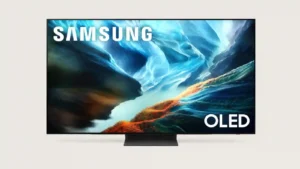
#1 Samsung S90H
4.5

Choose the S90H for bright-room OLED viewing, deep blacks and top-tier gaming without flagship pricing. Skip it if you want Dolby Vision, a glossy screen or the simplest smart-TV software.

Pros: glare resistance, black levels

Cons: Dolby Vision support, color gamut

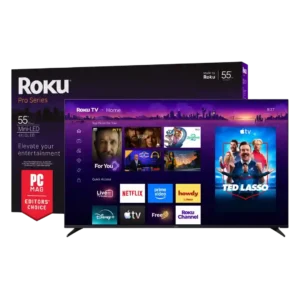
#2 Roku Pro Series (2025)
4.4

Best for bright Mini-LED picture, excellent built-in audio, easy Roku navigation, and responsive 4K/120 gaming. Skip it if you want ad-free menus, premium motion consistency, or stronger confidence in long-term...

Pros: overall satisfaction, picture quality

Cons: reliability, portability and versatility

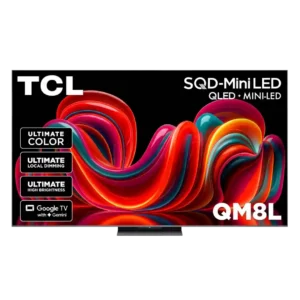
#3 TCL QM8L
4.4

Choose the QM8L for a big, brilliantly bright TV with vivid HDR, deep mini-LED blacks, low input lag, and four HDMI 2.1 ports. Skip it if you need OLED-clean motion,...

Pros: picture quality, value for money

Cons: stand quality, judder handling

#4 LG G6
4.4

Choose the G6 for class-leading bright-room OLED picture, rich color, deep blacks and elite gaming. Skip it if you want strong built-in audio, polished launch firmware, no account sign-in, or...

Pros: picture quality, peak brightness

Cons: value for money, sound quality