Scorata scores summarize analyzed review evidence on a 1–5 scale; they are not laboratory measurements or a simple average of customer star ratings. Feature scores summarize the reviews covering that feature. The overall score averages feature scores within each review, then combines review averages. When both expert and customer evidence are available, those two groups receive equal weight. Products can have different review coverage, so small score gaps do not establish a winner.
Recommendations prioritize important features for the category, with a score of at least 3.5, a gap of at least 0.25 points and at least two supporting reviews per product. Features with widely varying scores or broad connectivity contexts are excluded from recommendations. These safeguards do not establish statistical significance.
Quick verdict
What each product is best for
The review evidence points to a tradeoff: black levels and contrast ratio versus 4K at 120 Hz support and banding control. Choose according to which strengths matter more to you; the overall score alone does not settle that choice.
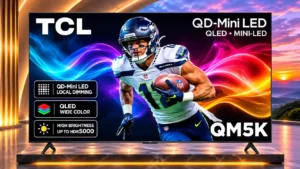
Choose TCL QM5K for black levels and contrast ratio.
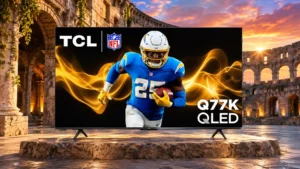
Choose TCL Q77K for 4K at 120 Hz support and banding control.
Why these recommendations?
TCL QM5K
Where It Has the Edge
black levels is 4.3 vs 2.0. Dark areas can look impressively deep for a budget TV. The backlight still has trouble around small bright...
contrast ratio is 4.2 vs 2.8. Contrast is a genuine step above basic LED televisions, lending dark scenes more depth; complicated images expose some...
dark-room performance is 3.5 vs 2.3. Strong black levels are appealing after dark, but halos, movie cadence flaws, and limited HDR highlights undermine more...
TCL Q77K
Where It Has the Edge
4K at 120 Hz support is 5.0 vs 1.1. Modern consoles can reach 4K at 120Hz on the high-bandwidth ports, with VRR and automatic Game Mode available.
banding control is 4.0 vs 2.0. Shaded gradients look mostly smooth, with relatively little obvious banding, although the darker end is less polished.
high-refresh-rate gaming is 5.0 vs 3.4. Fast PC modes are outstanding value at up to 4K/144Hz or 1080p/288Hz on supported sizes, despite slower 60Hz...
TCL QM5K3.6 overall score
TCL Q77K3.4 overall score
Compare features
Scores are out of 5. Missing scores mean missing review evidence, not a missing feature.
Scored on both products
Performance
Picture quality
TCL QM5K
4.3
Mini LED contrast and crisp detail give the QM5K an appealing picture for the money, although factory settings can look too bright and somewhat washed out.
TCL Q77K
3.5
Everyday 4K material can look crisp and colorful for the price, but rigorous testing finds obvious weaknesses in brightness, contrast and HDR.
Local dimming performance
TCL QM5K
3.7
Mini LED local dimming improves black depth considerably, but precision is mediocre around fine bright objects and moving highlights.
TCL Q77K
1.1
There is no zone-by-zone backlight control, so dark areas stay brightened and highlights lack the contrast of Mini LED competitors.
HDR brightness
TCL QM5K
2.8
Everyday HDR scenes are watchable, while sparkling highlights and intensely bright scenes lack the impact of stronger Mini LED sets.
TCL Q77K
1.2
HDR highlights fail to stand out against surrounding scenes, and overall brightness is too low to create dramatic impact.
Overall image accuracy
TCL QM5K
3.0
Factory calibration is uneven, especially in white balance, but a careful adjustment produces a much more accurate HDR picture.
TCL Q77K
4.5
Calibration can bring white balance and gamma very close to target, although some saturated blues remain slightly off.
Contrast ratio
TCL QM5K
4.2
Contrast is a genuine step above basic LED televisions, lending dark scenes more depth; complicated images expose some backlight compromises.
TCL Q77K
2.8
Native contrast is acceptable for the price, yet the lack of local dimming makes dark scenes visibly weaker than better TVs.
Dark-room performance
TCL QM5K
3.5
Strong black levels are appealing after dark, but halos, movie cadence flaws, and limited HDR highlights undermine more demanding viewing.
TCL Q77K
2.3
Dark rooms expose raised blacks and limited HDR punch; it works for casual viewing but disappoints for cinematic contrast.
Bass performance
TCL QM5K
2.3
Lower frequencies generally lack weight and definition; larger variants can fare a little better but still lack convincing depth.
TCL Q77K
1.3
The speakers lack genuine low-end weight and rumble, leaving music and action effects thin.
HDR performance
TCL QM5K
2.5
Dolby Vision and HDR10+ compatibility is useful, but limited highlight brightness keeps HDR from looking truly dramatic.
TCL Q77K
1.5
HDR format compatibility is broad, but contrast, color volume and brightness are too limited to make HDR particularly convincing.
Noise reduction
TCL QM5K
2.8
Low-bitrate noise is reduced somewhat, at the cost of fine detail; heavily compressed video remains a compromise.
TCL Q77K
3.5
Compressed videos receive useful smoothing, although finer details may look softened or waxy.
Audio passthrough
TCL QM5K
4.5
eARC passes the major high-quality audio formats to a compatible receiver or soundbar, offering flexibility beyond the TV's speakers.
TCL Q77K
4.0
Major audio formats pass through from connected external sources, although the same behavior is not guaranteed for every built-in app.
Peak brightness
TCL QM5K
2.2
Ordinary scenes can be adequately bright, but the set does not have the headroom for consistently punchy highlights and can look washed out when pushed too far.
TCL Q77K
1.8
Both HDR highlights and regular SDR scenes are relatively dim, limiting impact and daytime versatility.
Gaming performance
TCL QM5K
4.1
Exceptionally low input lag and useful gaming controls make this a lively budget gaming TV, with native 4K speed and Game Master HDR brightness as limits.
TCL Q77K
4.3
Gaming is the clearest strength thanks to rapid inputs, VRR and high-refresh modes, though fast pixels and dark-game contrast are weaker.
Sound quality
TCL QM5K
2.6
Built-in speakers range from below average to acceptable depending on screen size, with limited bass and less impact on movie soundtracks.
TCL Q77K
2.3
Built-in audio handles casual dialogue but lacks rich bass, spaciousness and consistent loudness across sizes.
Picture mode tuning
TCL QM5K
4.3
Adjustable picture and motion controls provide flexibility, including a useful way to reduce unwanted smoothing.
TCL Q77K
4.5
Changing brightness and color-temperature settings can improve dark or flat-looking content significantly.
White balance accuracy
TCL QM5K
2.0
A reddish-blue white-balance bias and overly cool HDR color temperature make professional or careful home calibration worthwhile.
TCL Q77K
2.3
The initial cool cast and gray inaccuracies are notable, but careful calibration can bring tones much closer to neutral.
SDR picture performance
TCL QM5K
3.7
Standard-definition-range viewing is a relative strength, offering solid brightness and pleasing contrast despite occasional overly bright factory settings.
TCL Q77K
3.5
Standard content is watchable and sometimes pleasantly colorful, especially when reflections and ambient light are managed.
Soundbar clearance
TCL QM5K
4.8
The tested 75-inch stand leaves generous clearance beneath the panel for most soundbars.
TCL Q77K
5.0
The stand leaves around 3.6 inches beneath the screen, enough space for most soundbars without blocking the picture.
Color accuracy
TCL QM5K
3.9
Natural skin tones and pleasing colors are strengths in several hands-on evaluations, but factory settings can be too cool or uneven on some samples.
TCL Q77K
3.8
Opinions diverge: fine flesh tones and detail can look natural, but uncalibrated color and white balance may be cool or inaccurate.
Picture detail
TCL QM5K
4.5
Fine image texture can look excellent, even if sharpening is a little aggressive and the lowest-quality sources lose definition.
TCL Q77K
4.6
Native 4K scenes look crisp with excellent fine detail; upscaled text and other tiny details are less dependable.
Other features
Motion handling
TCL QM5K
3.9
Results depend heavily on content and settings: one comparison praised factory smoothness, while other tests found blur, judder, and uneven interpolation.
TCL Q77K
2.6
Assessments vary, but detailed testing finds conspicuous 60Hz blur even as some evaluations praise ordinary motion.
Input lag
TCL QM5K
4.9
Controller inputs register very quickly in Game Master, making responsiveness one of the QM5K's standout strengths.
TCL Q77K
4.8
Very low input delay makes the Q77K feel responsive in supported console and PC modes.
Cable management
TCL QM5K
4.5
Basic clips behind the panel provide a neat, convenient place to secure loose cables.
TCL Q77K
1.0
There is no integrated cable-routing system, so wires need to be organized separately.
Blooming control
TCL QM5K
2.4
Expect visible halos around subtitles, stars, and small highlights against black. The effect can become more noticeable from an angled seat.
TCL Q77K
5.0
Bright subtitles do not create the usual local-dimming halos, but this advantage comes at the expense of deep blacks and strong highlights.
Judder handling
TCL QM5K
2.3
Film-rate content is a weak point, with visible 24p judder despite options to modify the look of motion.
TCL Q77K
4.8
24fps movies play without distracting cadence judder, and 1080i film broadcasts also receive strong frame-rate treatment.
Refresh rate
TCL QM5K
2.5
The native 4K ceiling is 60Hz. Larger models can trade resolution for up to 144Hz, but that does not make this a native high-refresh 4K display.
TCL Q77K
5.0
A native 144Hz panel is exceptional for this price range, though faster input support does not guarantee blur-free motion.
Gaming mode quality
TCL QM5K
1.7
Game Master gives fast response, but HDR brightness falls markedly when enabled, making highlights look flatter.
TCL Q77K
4.0
Game Mode keeps controls responsive, but it cannot fix flat HDR and blurry pixel transitions in every scene.
Black levels
TCL QM5K
4.3
Dark areas can look impressively deep for a budget TV. The backlight still has trouble around small bright objects and some letterbox bars.
TCL Q77K
2.0
Without local dimming, blacks look gray or washed out in darker scenes even though the native panel contrast is serviceable.
Banding control
TCL QM5K
2.0
Bright green transitions and certain HDR gradients can show distracting steps, although some test content appeared smoother.
TCL Q77K
4.0
Shaded gradients look mostly smooth, with relatively little obvious banding, although the darker end is less polished.
VRR range
TCL QM5K
2.5
The 4K VRR window is narrow and cannot use low-framerate compensation below its floor. Lower resolutions work across a more useful range.
TCL Q77K
4.5
Supported high-bandwidth HDMI inputs cover a broad VRR range, reducing tearing when frame rates dip; the 60Hz ports are less capable.
Stutter handling
TCL QM5K
2.6
Slow camera pans can stutter, although one assessment considered the effect relatively mild with basic settings.
TCL Q77K
4.5
Motion interpolation reduces stutter effectively on slow pans when enabled, with little variation in timing.
Motion artifacts
TCL QM5K
3.2
Most moving edges avoid serious artifacts, but trails and unintended color fringes can appear in fast scenes.
TCL Q77K
1.5
Slow dark transitions and variable-refresh overdrive can cause colored trails, overshoot and blurred moving edges.
High-refresh-rate gaming
TCL QM5K
3.4
The 55-inch and larger versions support up to 144Hz with lower-resolution signals; the 50-inch version lacks that option.
TCL Q77K
5.0
Fast PC modes are outstanding value at up to 4K/144Hz or 1080p/288Hz on supported sizes, despite slower 60Hz pixel response.
Motion clarity
TCL QM5K
3.3
Moderate motion is reasonably clear, yet dark transitions and quick-moving edges leave visible blur or smearing.
TCL Q77K
1.7
The high refresh-rate specification masks mediocre pixel transitions, especially in dark areas and ordinary 60Hz footage.
Motion interpolation
TCL QM5K
2.5
Adjustable smoothing can make some 24fps material look fluid, but consistency is poor and certain settings create obvious jerks.
TCL Q77K
3.8
Interpolation can smooth camera pans effectively, but some find motion processing artificial or blurry and prefer it off.
Dirty screen effect
TCL QM5K
3.2
Center-screen uniformity is generally good for sports, although the sides of some samples show uneven patches or blotches.
TCL Q77K
2.0
The tested 75-inch panel showed uneven patches and a pinch mark that could stand out on grass, ice or other broad flat colors.
Color volume
TCL QM5K
3.2
Color has reasonable substance in darker scenes, yet strong reds, greens, and brighter saturated tones are not its specialty.
TCL Q77K
2.0
The Q77K struggles to maintain saturated HDR colors, particularly darker tones, despite acceptable color presentation in standard content.
HDMI port count
TCL QM5K
2.9
Three HDMI inputs are enough for some setups but fewer than the four found on many competing televisions.
TCL Q77K
4.0
Four HDMI connections offer good basic connectivity, although not all can carry the highest refresh-rate signals.
HDMI port accessibility
TCL QM5K
4.4
Side-facing HDMI connections are easy to reach, even with the screen installed on a wall.
TCL Q77K
3.3
Rear inputs are generally workable but can be awkward to reach once the television is close to a wall.
Maximum volume
TCL QM5K
3.6
Some screen sizes play fairly loudly, but the overall volume headroom is not consistently impressive.
TCL Q77K
2.8
Loudness varies by size and source: the 55-inch test struggled in larger spaces, while the 65-inch unit and one video evaluation sounded adequate.
Advertising intrusiveness
TCL QM5K
2.0
Google TV includes ads. Disabling personalized targeting does not remove them, and the ad-free basic mode sacrifices many smart functions.
TCL Q77K
1.2
Google TV includes ads and recommendations that cannot be fully switched off, a drawback for people wanting an uncluttered home screen.
Glare resistance
TCL QM5K
2.0
There is enough SDR brightness for ambient light, but direct reflections remain intrusive and can spread across the image.
TCL Q77K
1.2
Glossy models visibly mirror lamps and windows. Matte finishes on the two largest sizes improve reflections but cannot add brightness.
Shadow detail
TCL QM5K
3.8
Darker scenes generally retain useful texture, though certain picture modes and low-end gamma behavior can obscure fine shadows.
TCL Q77K
3.2
Results are mixed: gentle tonal gradations can be reproduced well, yet some near-black areas appear crushed before calibration.
Treble clarity
TCL QM5K
2.6
Treble ranges from notably good on the 65-inch sample to lacking in detail on several other sizes.
TCL Q77K
2.0
High notes lack detail and contribute to a bright, closed-in sound presentation.
Calibration options
TCL QM5K
4.4
Adjustments can substantially improve white balance, color temperature, and accuracy, making this set rewarding to tune.
TCL Q77K
5.0
Calibration is straightforward and can improve white balance and overall color accuracy dramatically.
Screen uniformity
TCL QM5K
2.6
Local dimming keeps darker areas fairly even, but patchy sides and occasional blotches can show up, particularly on gray test images.
TCL Q77K
2.0
The tested panel had noticeable uneven gray shading and a pinch mark, so checking a new unit for patches is worthwhile.
Response time
TCL QM5K
2.2
Dark-to-bright pixel transitions are sluggish enough to create trails, especially in shadowy games.
TCL Q77K
2.7
Pixel response is mixed: high-refresh gaming feels responsive, but dark transitions and 60Hz scenes can be noticeably blurry.
Variable refresh rate
TCL QM5K
4.2
VRR reduces screen tearing, especially at 1080p and 1440p, but the narrow 4K range limits how well it handles drops in frame rate.
TCL Q77K
4.6
Wide VRR format and range compatibility keep games nearly tear-free as frame rates fluctuate, especially on the full-speed inputs.
Gradient handling
TCL QM5K
3.1
Shaded areas can look smooth on some tested sizes, but HDR gradients may show visible banding, especially in greens.
TCL Q77K
3.5
Color and brightness transitions are mostly smooth, though darker gradients can reveal some banding.
HDR highlight detail
TCL QM5K
2.0
Fine highlight information can clip, while peak highlights lack the visual separation found on more capable HDR sets.
TCL Q77K
1.7
Bright details can be lost or appear too dim, making HDR objects look flat rather than luminous.
1440p input compatibility
TCL QM5K
4.7
Supported larger models can use 1440p at up to 144Hz, a helpful compromise between sharpness and smoother play.
TCL Q77K
5.0
Both PlayStation 5 and Xbox gaming support 1440p at 120Hz, providing flexibility between image resolution and speed.
Viewing angles
TCL QM5K
2.7
The picture looks best from near center; the 65- and 75-inch Consumer Reports samples fared better off-axis than its 50- and 55-inch samples.
TCL Q77K
3.1
Off-center viewing is acceptable for a VA-style set, but saturation and image depth fade noticeably at steeper angles.
Low-resolution content handling
TCL QM5K
2.7
Compression smoothing is only fair. Heavily compressed streams and older broadcasts reveal soft textures and residual artifacts.
TCL Q77K
3.0
Compressed streams and old video remain watchable, though noise cleanup trades away some fine texture.
Off-axis color shift
TCL QM5K
2.6
Colors lose saturation and may shift red from the sides; some larger samples fare noticeably better.
TCL Q77K
2.4
Colors shift and fade toward the sides; it remains usable for some side seats but looks best head-on.
Reflection handling
TCL QM5K
2.0
The glossy panel does little to diffuse direct lamps and windows, making placement important in bright rooms.
TCL Q77K
1.8
Reflections are intrusive on glossy variants, whereas the 85- and 98-inch matte coatings make placement easier near bright lights.
Remote control quality
TCL QM5K
4.1
The remote is straightforward and pleasant to handle, with practical shortcuts and an uncomplicated layout.
TCL Q77K
4.2
The simple voice remote is functional and pleasant to use, with backlighting an unexpectedly helpful extra.
Color gamut
TCL QM5K
3.0
Color coverage is serviceable rather than expansive, with saturated greens and reds showing limitations in demanding material.
TCL Q77K
3.1
Cartoons and everyday SDR scenes can look lively, but the limited HDR color range prevents deeply saturated highlights from looking rich.
Upscaling quality
TCL QM5K
3.8
HD images generally hold together well, but DVD-quality or very low-resolution video remains soft, with fine details and edges degrading.
TCL Q77K
3.7
HD and some lower-resolution material upscale clearly, yet very fine text and textures can become soft.
Black uniformity
TCL QM5K
3.5
Mini LED dimming produces convincing dark areas and mostly even near-black shades, but raw backlight uniformity is poorer with dimming disabled.
TCL Q77K
3.5
Near-black scenes remain fairly even without obvious vertical bands, though some patchiness and warm spots occur.
Burn-in resistance
TCL QM5K
5.0
The LCD panel is effectively immune to permanent OLED-style burn-in, making varied and static content less concerning.
TCL Q77K
5.0
As a direct-lit LCD, the screen carries little risk of permanent burn-in from static game HUDs or channel logos.
Flicker control
TCL QM5K
1.5
Moving highlights can trigger obvious local-dimming flicker against dark areas, which may be distracting in action scenes.
TCL Q77K
1.5
Low-brightness settings use low-frequency backlight modulation that may bother sensitive viewers and cause visible image duplication.
PC text clarity
TCL QM5K
2.5
Full chroma support helps, but the BGR subpixel arrangement can reduce text clarity when used as a desktop monitor.
TCL Q77K
2.5
The BGR subpixel arrangement can make fine desktop text look less crisp than on a conventional RGB monitor.
Stand width
TCL QM5K
4.0
Adjustable foot positions on applicable larger sizes help fit the TV onto narrower furniture.
TCL Q77K
4.0
Two foot positions on the 75-inch model provide narrower or wider furniture options, a welcome flexibility for a large TV.
Ownership and support
Reliability
TCL QM5K
4.5
Its full-array backlight and LCD construction are judged low risk for common panel failures, though long-term results are necessarily prospective.
TCL Q77K
3.5
Expected longevity is decent rather than outstanding, with low burn-in risk offset by more vulnerable direct-lit backlight failure behavior.
4K at 120 Hz support
TCL QM5K
1.1
No QM5K size displays 4K at 120Hz; this is a key limitation for high-end console and PC setups.
TCL Q77K
5.0
Modern consoles can reach 4K at 120Hz on the high-bandwidth ports, with VRR and automatic Game Mode available.
Value for money
TCL QM5K
4.5
Its appealing Mini LED contrast, low-lag play, and Google TV features make the QM5K a convincing bargain when deeply discounted.
TCL Q77K
4.6
The low Costco pricing buys unusually advanced gaming features and large screen options, but picture weaknesses make a cheap Mini LED upgrade worth comparing.
EARC support
TCL QM5K
4.5
eARC supports uncompressed multichannel audio to compatible external audio gear, making a separate sound system easy to incorporate.
TCL Q77K
4.5
An eARC connection makes it easy to pair a soundbar or receiver and pass compatible surround audio from external devices.
Controls and connectivity
Privacy controls
TCL QM5K
2.5
Personalized advertising can be disabled, but that does not remove on-screen ads or all associated tradeoffs.
TCL Q77K
4.7
A physical microphone switch can fully disable the TV’s hands-free mic for added reassurance.
Operating system speed
TCL QM5K
3.4
Google TV is usable but shows a small amount of lag while moving around the interface.
TCL Q77K
4.5
The Google TV interface scrolls smoothly for most interactions and generally feels quicker than expected for a low-cost set.
Menu responsiveness
TCL QM5K
3.4
Menus remain manageable despite occasional sluggish reactions; the experience is not consistently instant.
TCL Q77K
4.4
Google TV is mostly quick and smooth for a budget set, with occasional hesitation during scrolling and app navigation.
HDR tone mapping accuracy
TCL QM5K
4.7
Brightness tracking follows intended HDR levels very closely, one of the QM5K's clearest technical strengths.
TCL Q77K
4.5
Tone tracking is surprisingly faithful for moderately bright HDR scenes, with a smooth highlight roll-off, yet hardware limits cap the final effect.
Smart TV platform
TCL QM5K
4.4
Google TV is easy to navigate and rich in apps, though its menus may lag and its home screen includes advertising.
TCL Q77K
4.5
Google TV supplies comprehensive apps and a familiar interface, but unavoidable ads diminish the experience.
App selection
TCL QM5K
4.8
Google TV provides broad access to major streaming services and downloadable apps, a clear convenience on an inexpensive TV.
TCL Q77K
4.8
Google TV offers a broad range of major streaming services and downloadable apps, making everyday content easy to access.
Comfort and build
Size-specific gaming refresh limits
TCL QM5K
2.3
The 50-inch model stays at 60Hz at every resolution, whereas 55-inch and larger models can reach 144Hz at 1080p or 1440p.
TCL Q77K
3.5
The 55-inch variant tops out at 1080p/240Hz, while listed larger models can reach 288Hz; specifications should be checked by size.
Design and appearance
TCL QM5K
4.3
The QM5K looks surprisingly polished for its price, with a textured back and simple feet despite its plastic construction.
TCL Q77K
3.3
The slim exterior is appealing for a budget television, although materials and frame details are less refined than premium models.
Build quality
TCL QM5K
3.5
Assembly is mostly plastic and feels fairly inexpensive, but examined units had no major structural defects.
TCL Q77K
3.6
Construction is adequate for the price but plastic-heavy. Metal feet are appreciated on the smaller showcased unit, while another sample showed a panel pinch mark.
Evidence available for one product
Other features
Ease of use
TCL QM5K
4.2
Backlit controls, sensible remote buttons, and an approachable smart-TV interface make daily operation straightforward.
TCL Q77KNo score yet
Account requirements
TCL QM5K
3.0
Full Google TV setup comes with account and connectivity expectations; the more private basic setup gives up key smart features.
TCL Q77KNo score yet
AI scene optimization
TCL QM5K
4.5
The automatic Intelligent picture mode can produce an appealing image without extensive manual adjustments.
TCL Q77KNo score yet
Antenna reception
TCL QM5KNo score yet
TCL Q77K
2.5
Missing ATSC 3.0 support limits over-the-air broadcasts to older standards rather than next-generation broadcasts.
Artwork library selection
TCL QM5KNo score yet
TCL Q77K
4.5
A varied selection of decorative seasonal and ambient art gives the display an entertaining second purpose.
Auto low-latency mode
TCL QM5KNo score yet
TCL Q77K
5.0
Automatic Game Mode removes the need to hunt through settings before gaming, keeping input lag low.
Broadcast TV guide functionality
TCL QM5KNo score yet
TCL Q77K
4.5
The live TV interface includes a useful program guide showing current broadcasts.
Built-in subwoofer
TCL QM5K
4.0
A rear-mounted subwoofer on certain larger variants is a welcome inclusion, although its presence does not guarantee powerful bass or fine control.
TCL Q77KNo score yet
Content recommendations
TCL QM5KNo score yet
TCL Q77K
4.0
Google TV collects shows and suggestions from several services in one home screen, helping reduce app hopping.
Dialogue clarity
TCL QM5KNo score yet
TCL Q77K
3.8
Speech is intelligible at normal volume, making news, sitcoms and casual TV easy to follow without external speakers.
Distortion control
TCL QM5K
2.5
The 55- and 65-inch samples showed a slight buzz on bass-heavy music, preventing completely clean playback.
TCL Q77KNo score yet
Free streaming channels
TCL QM5KNo score yet
TCL Q77K
4.5
TCL’s built-in live TV section loads fairly quickly and expands the selection of no-extra-cost viewing.
Gaming dashboard
TCL QM5KNo score yet
TCL Q77K
4.7
A capable game bar provides frame-rate readouts, aiming tools and quick access to VRR, picture modes and latency settings.
HDMI 2.1 port count
TCL QM5KNo score yet
TCL Q77K
3.1
The tested 75-inch unit has two full-speed gaming ports rather than four; other sizes may differ, so several high-bandwidth devices require planning.
Image processing
TCL QM5K
2.5
The TV can render impressive fine detail, but sharpening may look exaggerated and processing becomes less persuasive with poor sources.
TCL Q77KNo score yet
Image realism and naturalness
TCL QM5K
4.6
Natural colors and lifelike images are recurring strengths, even if some factory scenes look overly bright or washed out.
TCL Q77KNo score yet
Local dimming zone transitions
TCL QM5K
1.9
Backlight zones respond too slowly to moving bright objects and can briefly flicker or trail.
TCL Q77KNo score yet
Overall satisfaction
TCL QM5K
5.0
The owner is very happy with the 50-inch replacement, particularly its impressive picture and discount price.
TCL Q77KNo score yet
Remote control usability
TCL QM5KNo score yet
TCL Q77K
4.4
Backlit buttons and a simple layout make the remote comfortable to operate in the dark.
Remote layout
TCL QM5K
4.2
Backlit, simplified buttons make the remote easier to navigate, particularly in a dark room.
TCL Q77KNo score yet
Screen coating clarity
TCL QM5KNo score yet
TCL Q77K
3.0
The largest matte-screen variants reduce mirror-like reflections substantially compared with the glossy smaller sizes.
Stand assembly
TCL QM5K
5.0
Two feet attach easily with basic screws and an ordinary screwdriver.
TCL Q77KNo score yet
Stand quality
TCL QM5KNo score yet
TCL Q77K
4.3
Adjustable stand positions and sturdy feet are practical strengths, although construction varies and the overall set is budget-oriented.
Wall-mount compatibility
TCL QM5KNo score yet
TCL Q77K
4.5
Common VESA mounting options are available, although spacing, port access and handling become important with the biggest models.
Ownership and support
4K at 144 Hz support
TCL QM5KNo score yet
TCL Q77K
4.9
Two high-bandwidth ports on the tested 75-inch set enable 4K/144Hz, making high-frame-rate PC play a major attraction.
4K gaming support
TCL QM5K
2.8
Native 4K gaming works at up to 60Hz, but players must lower resolution for faster refresh on supported sizes.
TCL Q77KNo score yet
1080p at 240 Hz gaming support
TCL QM5KNo score yet
TCL Q77K
4.8
The 55-inch model can reach 240Hz at 1080p, offering a fast mode for PC gamers who prioritize frame rate over resolution.
1080p at 288 Hz gaming support
TCL QM5KNo score yet
TCL Q77K
5.0
Larger specified sizes can accept 1080p at 288Hz on supported inputs, an exceptional option at this price tier.
Dolby Vision support
TCL QM5K
4.5
Dolby Vision adds a broadly useful streaming and gaming format option, although it does not overcome the panel's modest HDR brightness.
TCL Q77KNo score yet
FreeSync support
TCL QM5KNo score yet
TCL Q77K
5.0
FreeSync Premium Pro helps Xbox and compatible gaming hardware deliver smoother play as frame rates vary.
HDMI 2.1 support
TCL QM5KNo score yet
TCL Q77K
4.3
Two HDMI inputs on the tested 75-inch unit handle modern 4K high-refresh signals, unlike the two limited 60Hz ports.
HDR10+ support
TCL QM5K
4.5
HDR10+ broadens compatibility with dynamic-HDR material, a welcome capability at this price.
TCL Q77KNo score yet
HDR format support
TCL QM5K
4.5
Support for both major dynamic HDR formats makes the QM5K flexible across streaming services and compatible sources.
TCL Q77KNo score yet
Large-screen value
TCL QM5KNo score yet
TCL Q77K
4.6
The 75-, 85- and 98-inch models provide substantial screen size for the money, with gaming support rarely found this cheaply.
Setup ease
TCL QM5K
4.0
Stand attachment is straightforward and Google TV configuration is manageable once the needed account details are available.
TCL Q77KNo score yet
Warranty
TCL QM5KNo score yet
TCL Q77K
4.8
The Costco bundle’s advertised five years of combined coverage and return window strengthen the value proposition, but the extra years are a protection plan, not manufacturer warranty.
Controls and connectivity
App performance
TCL QM5KNo score yet
TCL Q77K
3.5
Apps and the interface generally load quickly, with occasional brief hiccups during navigation.
Picture settings menu flexibility
TCL QM5KNo score yet
TCL Q77K
4.0
A generous selection of picture modes allows different looks for films, sports, games and Dolby Vision content.
A well-stocked Google TV catalog covers mainstream shows, movies, and live-streaming apps without requiring an external box.
TCL Q77KNo score yet
Tone mapping
TCL QM5K
4.5
Brightness curves are followed closely through most midtones, although very bright masters still run into the TV's limited output.
TCL Q77KNo score yet
Voice assistant support
TCL QM5KNo score yet
TCL Q77K
4.0
Hands-free and remote-based voice commands simplify searches and app launches, with a physical mic-off option available.
Performance
Art display mode
TCL QM5KNo score yet
TCL Q77K
4.3
T-Exhibition brings attractive looping 4K artwork to the screen, although some selections take a while to load.
Audio/video sync
TCL QM5K
1.8
Some owners reported severe audio delay through ARC or optical connections, although the issue appears setup-dependent.
TCL Q77KNo score yet
Audio settings
TCL QM5K
2.8
Sound modes and virtual surround options are plentiful, but the lack of a dedicated subwoofer level control is frustrating.
TCL Q77KNo score yet
Automatic brightness adjustment
TCL QM5K
2.8
Dynamic brightness can change picture output unexpectedly; turning it off is suggested for users seeking predictable manual settings.
TCL Q77KNo score yet
Daytime viewing performance
TCL QM5K
3.9
SDR content holds up reasonably well in daytime conditions if a window or lamp is not reflected directly in the screen.
TCL Q77KNo score yet
On-screen game visibility tools
TCL QM5KNo score yet
TCL Q77K
4.5
Aiming overlays, shadow controls and a visible FPS counter give gamers quick, practical tools during play.
SDR brightness
TCL QM5KNo score yet
TCL Q77K
1.5
Fine for ordinary SDR viewing in a controlled room but too dim to overcome direct sunlight or bright lamps.
Soundstage
TCL QM5KNo score yet
TCL Q77K
1.8
The built-in presentation is narrow and thin rather than immersive, particularly with demanding film soundtracks.
Comfort and build
Bezel size
TCL QM5KNo score yet
TCL Q77K
3.0
Bezels look slim at a glance, but the visible gap between the frame and first pixels reduces the premium effect.
Inconsistent panel and coating by size
TCL QM5KNo score yet
TCL Q77K
3.3
The 85- and 98-inch variants have reflection-friendly matte screens, while smaller models are glossy; refresh ceilings and port arrangements can vary too.
Size options
TCL QM5K
4.1
There is a useful range of screen sizes, but the 50-inch version lacks Game Accelerator and larger sizes may add audio advantages.
Choose the S90H for bright-room OLED viewing, deep blacks and top-tier gaming without flagship pricing. Skip it if you want Dolby Vision, a glossy screen or the simplest smart-TV software.
Best for bright Mini-LED picture, excellent built-in audio, easy Roku navigation, and responsive 4K/120 gaming. Skip it if you want ad-free menus, premium motion consistency, or stronger confidence in long-term...
Choose the QM8L for a big, brilliantly bright TV with vivid HDR, deep mini-LED blacks, low input lag, and four HDMI 2.1 ports. Skip it if you need OLED-clean motion,...
Choose the G6 for class-leading bright-room OLED picture, rich color, deep blacks and elite gaming. Skip it if you want strong built-in audio, polished launch firmware, no account sign-in, or...